

Saudi Arabia: Female Leadership Under Vision 2030
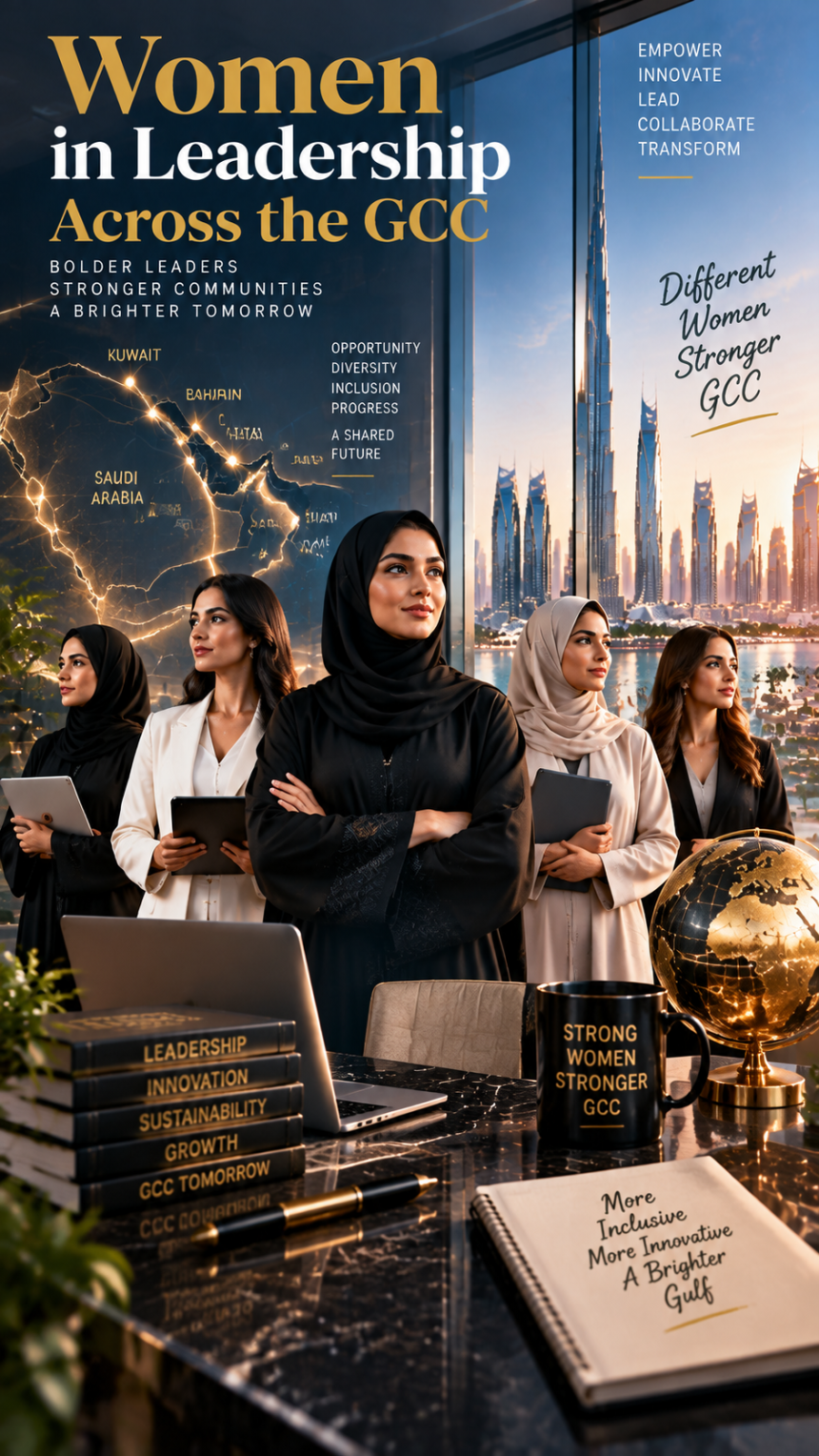
Women in leadership across the GCC has become one of the most important stories behind the region’s economic and social transformation. Over the past few decades, Gulf countries have experienced major changes in how women participate in education, employment, entrepreneurship and decision-making roles.
- The Future of Women in Leadership Across the GCC
- GCC Countries and Their Growing Support for Female Leaders
- UAE: Women Leading Innovation, Business and Public Transformation
- Saudi Arabia: Female Leadership Under Vision 2030
- Qatar, Bahrain, Oman and Kuwait: Expanding Opportunities for Women
- Qatar: Women Contributing to Knowledge and Innovation
- Bahrain: A Longstanding Role in Business and Finance
- Oman: Women Supporting Economic Development
- Kuwait: Women in Professional and Entrepreneurial Roles
- Women Entrepreneurs Building the Next Generation of Gulf Businesses
- Female Leaders Transforming Traditional and Emerging Industries
- Healthcare Leadership
- Finance and Investment
- Real Estate and Property Development
- Tourism and Hospitality
The modern GCC economy is moving beyond traditional industries and focusing on technology, tourism, finance, healthcare, renewable energy and innovation. This transition has created new opportunities for talented professionals, including women who are increasingly taking leadership positions across different sectors.
Today, women across the Gulf are not only contributing to organisations as employees but are also becoming founders, executives, policymakers, researchers and industry specialists. Their achievements reflect a wider regional shift towards developing knowledge-based economies where talent, creativity and leadership skills are essential for future growth.
The rise of female leaders in the GCC is also connected with national development strategies. Countries such as the UAE, Saudi Arabia, Qatar, Bahrain, Oman and Kuwait have introduced initiatives focused on education, professional growth, entrepreneurship and workplace participation.
While each country has its own approach, the common goal is creating stronger opportunities for women to contribute to economic development and participate in shaping the future of the region.
The Future of Women in Leadership Across the GCC
For many years, women’s professional participation in Gulf countries was concentrated mainly in sectors such as education, healthcare and public services. These areas continue to remain important, but today women are entering a much wider range of industries.
The expansion of higher education, international exposure, digital transformation and economic reforms has opened new career paths. Women professionals are now working in industries that were previously considered less accessible, including aviation, technology, finance, real estate, engineering and entrepreneurship.
This transformation can be seen through several important changes:
| Area | Earlier Role | Growing Role Today |
|---|---|---|
| Education | Teachers and academic professionals | University leaders, researchers and innovators |
| Healthcare | Medical professionals | Healthcare executives and specialists |
| Business | Limited ownership participation | Entrepreneurs and company founders |
| Finance | Professional roles | Banking executives and investors |
| Technology | Emerging participation | AI, cybersecurity and digital leaders |
| Government | Administrative roles | Policymakers and decision-makers |
One of the biggest drivers behind this progress has been education. Universities across the GCC have created opportunities for women to gain specialised knowledge and professional qualifications.
Many women are now pursuing degrees in science, technology, engineering, business management and finance. This educational growth has created a stronger pipeline of female professionals ready to take leadership positions.
Another important factor has been the growth of entrepreneurship. Digital platforms, e-commerce and startup ecosystems have allowed women to build businesses with fewer traditional barriers. From fashion brands and technology companies to consulting firms and healthcare ventures, female entrepreneurs are creating businesses that contribute to regional economies.
GCC Countries and Their Growing Support for Female Leaders
Across the GCC, governments and organisations have introduced programmes aimed at increasing women’s participation in economic and professional life. These initiatives focus on leadership development, entrepreneurship support, education and workplace opportunities.
Although approaches differ from one country to another, several common areas of focus include:
| Support Area | Importance for Women Leaders |
|---|---|
| Education programmes | Building professional skills and expertise |
| Leadership training | Preparing women for senior roles |
| Entrepreneurship support | Helping women launch businesses |
| Digital skills development | Creating opportunities in future industries |
| Networking platforms | Connecting professionals and mentors |
The development of women leaders is also closely linked with broader economic goals. As GCC countries work towards diversification, they need skilled professionals who can contribute across different sectors.
Women are increasingly becoming part of this workforce transformation, bringing expertise in management, innovation, research and business development.
UAE: Women Leading Innovation, Business and Public Transformation
The UAE has become one of the most visible examples of expanding women’s leadership opportunities in the GCC. Over the years, the country has focused on increasing women’s participation across government, business, science, technology and entrepreneurship.
Women in the UAE are contributing to national development projects and holding leadership positions in various fields. Their participation reflects the country’s focus on creating a competitive, innovation-driven economy.
The UAE’s business environment has also supported the growth of female entrepreneurs. Women-owned businesses are becoming increasingly active in sectors such as:
- Technology startups
- Retail and fashion
- Consulting services
- Healthcare and wellness
- Real estate
- Creative industries
Dubai and Abu Dhabi have developed strong ecosystems for entrepreneurs, providing access to investors, networking events and business support programmes.
Female professionals in the UAE are also making their mark in technology and science. As the country invests in artificial intelligence, space exploration and digital transformation, women are becoming part of these future-focused industries.
The growth of women leaders in the UAE can be seen across several sectors:
| Sector | Female Leadership Impact |
|---|---|
| Government | Policy development and public services |
| Technology | Digital innovation and AI projects |
| Finance | Banking and investment leadership |
| Healthcare | Medical management and research |
| Tourism | Hospitality and destination development |
| Entrepreneurship | Business creation and innovation |
Beyond professional achievements, women leaders in the UAE are also becoming role models for younger generations. Their journeys encourage more young women to explore ambitious career paths and leadership opportunities.
Saudi Arabia: Female Leadership Under Vision 2030
Saudi Arabia has witnessed significant changes in women’s professional participation as part of Vision 2030, the Kingdom’s long-term economic and social development plan.
The country has focused on expanding employment opportunities, supporting entrepreneurship and increasing women’s involvement across different sectors.
Saudi women are increasingly building careers in industries including:
- Finance
- Tourism
- Technology
- Healthcare
- Education
- Business services
The growth of tourism and entertainment industries has created additional opportunities for women professionals. New businesses, events and organisations require skilled leaders, allowing more women to participate in emerging economic sectors.
Entrepreneurship has also become an important area of growth. Saudi women are launching companies in areas such as digital services, retail, beauty, food, consulting and technology.
Several factors have contributed to this development:
Education and professional skills:
More women are gaining specialised qualifications that allow them to enter competitive industries.
Business opportunities:
Startup ecosystems and entrepreneurship programmes are helping women transform ideas into businesses.
Digital transformation:
Technology has created new career paths that depend on skills and innovation.
The increasing presence of women in professional environments is also influencing workplace culture, encouraging organisations to focus more on talent development and inclusive leadership.
Qatar, Bahrain, Oman and Kuwait: Expanding Opportunities for Women
While the UAE and Saudi Arabia often receive significant attention for their women’s leadership initiatives, other GCC countries have also made progress in creating professional opportunities for women.
Each country has developed its own approach based on economic priorities, workforce needs and national development goals. Across Qatar, Bahrain, Oman and Kuwait, women are increasingly participating in government, business, education, healthcare and entrepreneurship.
Qatar: Women Contributing to Knowledge and Innovation
Qatar has placed strong emphasis on education, research and knowledge-based industries. Women have become important contributors in universities, healthcare institutions, government organisations and business sectors.
The country’s investment in education has created opportunities for women to develop expertise in areas such as research, technology, medicine and management.
Women professionals in Qatar are contributing to:
| Sector | Contribution |
|---|---|
| Education | Academic leadership and research |
| Healthcare | Medical expertise and administration |
| Technology | Digital innovation and specialised roles |
| Business | Entrepreneurship and management |
| Public sector | Policy and development projects |
As Qatar continues developing sectors beyond traditional industries, women’s participation is becoming an important part of building a skilled workforce.
Bahrain: A Longstanding Role in Business and Finance
Bahrain has historically been one of the region’s important financial centres, creating opportunities for women in banking, investment and professional services.
Female professionals in Bahrain have built careers across financial institutions, government bodies, education and entrepreneurship.
The country’s startup ecosystem has also encouraged more women to establish businesses. Many female entrepreneurs are creating companies in creative industries, technology, retail and services.
Women’s leadership growth in Bahrain demonstrates how professional experience, education and business opportunities can work together to create stronger participation across industries.
Oman: Women Supporting Economic Development
Oman has focused on education and workforce development as part of its economic growth plans. Women professionals are contributing across sectors such as healthcare, education, tourism, administration and entrepreneurship.
As Oman develops industries including tourism, logistics and technology, new opportunities are emerging for women to participate in these sectors.
Female entrepreneurs in Oman are increasingly building businesses focused on:
- Tourism experiences
- Handcrafted products
- Food businesses
- Digital services
- Professional consulting
Kuwait: Women in Professional and Entrepreneurial Roles
Kuwait has a strong history of women participating in education, business and professional fields. Women have contributed significantly to sectors such as healthcare, finance, education and public services.
Today, many Kuwaiti women are also exploring entrepreneurship and private sector opportunities.
The growth of digital businesses has allowed more women to create companies with regional and international reach.
Women Entrepreneurs Building the Next Generation of Gulf Businesses
Entrepreneurship has become one of the strongest examples of women’s leadership growth across the GCC. Female founders are creating businesses that reflect changing consumer behaviour, digital transformation and new market opportunities.
From small businesses to growing companies, women entrepreneurs are contributing to economic diversification and job creation.
Many women-led businesses are emerging in areas such as:
| Business Sector | Examples of Opportunities |
|---|---|
| Technology | Digital platforms, software solutions and online services |
| Beauty and Wellness | Brands, clinics and lifestyle businesses |
| Fashion | Regional and international fashion labels |
| Food Industry | Restaurants, catering and speciality products |
| Education | Training platforms and learning services |
| Consulting | Professional and business advisory services |
One of the biggest advantages for modern entrepreneurs is access to digital tools. Social media, online marketplaces and e-commerce platforms have allowed many women to start businesses without requiring traditional large-scale infrastructure.
Women entrepreneurs are also benefiting from:
- Startup incubators
- Business networking communities
- Mentorship programmes
- Investment platforms
- Government entrepreneurship initiatives
These support systems are helping transform business ideas into sustainable companies.
Female Leaders Transforming Traditional and Emerging Industries
Women leaders across the GCC are not only entering new sectors but are also transforming traditional industries with fresh perspectives, innovation and strategic thinking.
Their influence can be seen across multiple areas.
Healthcare Leadership
Healthcare has been one of the strongest sectors for women professionals in the GCC. Women doctors, researchers, administrators and healthcare entrepreneurs are contributing to improving medical services and patient experiences.
Female healthcare leaders are involved in:
- Medical research
- Hospital management
- Public health programmes
- Healthcare technology
- Wellness businesses
As healthcare systems across the Gulf continue to modernise, women professionals are becoming important contributors to innovation.
Finance and Investment
The financial sector has created major opportunities for women leaders. Female professionals are working in banking, investment, wealth management and financial technology.
Their roles include:
- Financial strategy
- Risk management
- Investment planning
- Business development
- Digital finance solutions
The growth of fintech across the GCC has also opened new opportunities for women with expertise in technology and finance.
Real Estate and Property Development
The GCC real estate market has grown significantly, creating opportunities for women in property consulting, investment, marketing and business development.
Female professionals are contributing to:
- Luxury property sales
- Real estate advisory
- Property management
- Investment services
- Urban development projects
As cities across the Gulf continue expanding, women are becoming more visible in this competitive industry.
Tourism and Hospitality
Tourism is another major sector where women are taking leadership positions. With GCC countries investing heavily in tourism development, hospitality businesses require skilled professionals with international experience.
Women leaders are contributing to:
- Hotel management
- Guest experience development
- Destination marketing
- Luxury travel services
- Tourism entrepreneurship
Women in Technology, Science and Innovation
Technology is creating some of the most exciting opportunities for women leaders across the GCC. As the region invests in artificial intelligence, smart cities, cybersecurity and digital transformation, demand for skilled professionals continues to grow.
Women are increasingly participating in fields such as:
| Technology Field | Growing Female Participation |
|---|---|
| Artificial Intelligence | Research and AI applications |
| Cybersecurity | Digital protection and security roles |
| Data Science | Analytics and business intelligence |
| FinTech | Digital payments and financial solutions |
| Software Development | Technology products and platforms |
The growth of technology careers is especially important because these industries are based heavily on skills, knowledge and innovation.
Educational institutions and training programmes are encouraging more women to explore STEM fields. This is helping create a new generation of professionals who can contribute to future industries.
Challenges and Opportunities for Future Female Leaders
Although women’s leadership has grown significantly across the GCC, several challenges continue to influence career development and professional advancement.
One important area is increasing representation at the highest levels of leadership. While many women are entering professional fields, continued efforts are needed to create more pathways towards executive and board-level positions.
Other areas of focus include:
| Challenge | Opportunity for Improvement |
|---|---|
| Leadership representation | More mentorship and development programmes |
| Career progression | Stronger professional networks |
| Entrepreneurship funding | Increased access to investment |
| Workplace flexibility | Better support systems |
| STEM participation | More technology education opportunities |
Creating long-term leadership opportunities requires more than increasing participation. It also involves building environments where women can continue growing throughout their careers.
Mentorship plays an important role in this process. Experienced leaders can help younger professionals develop confidence, strategic thinking and industry knowledge.
The Role of Education in Creating Future Women Leaders
Education remains one of the strongest foundations behind women’s leadership growth in the GCC.
Universities and professional institutions across the region are producing highly qualified women professionals in areas including:
- Business management
- Engineering
- Medicine
- Technology
- Research
- Finance
Higher education has allowed women to compete in global industries and take part in international professional networks.
The future workforce will require skills related to innovation, sustainability and digital transformation. Women who develop expertise in these areas will continue to play an important role in shaping the region’s economy.
Professional development will also remain important. Leadership is not only about academic qualifications but also communication skills, strategic thinking, decision-making and the ability to adapt to changing industries.
The Future of Women in Leadership Across the GCC
The future of women in leadership across the GCC is closely connected with the region’s vision for economic transformation.
As Gulf countries continue investing in technology, sustainability, tourism, healthcare and innovation, women will become an increasingly important part of this growth story.
Future leadership opportunities are expected to expand in areas such as:
- Artificial intelligence and technology
- Renewable energy
- Sustainable business
- Financial innovation
- Healthcare development
- International entrepreneurship
The next generation of female leaders will likely play an important role in building companies, leading organisations and contributing to national development projects.
Women’s leadership growth is not only changing workplaces but also influencing society by creating new examples of professional success for younger generations.
Across the GCC, women are moving from participation to leadership. Their journeys reflect determination, education, innovation and the ability to create meaningful change.
Quick Takeaways
- Women in leadership across the GCC are transforming business, government and emerging industries.
- Education has played a major role in developing skilled female professionals.
- Entrepreneurship is creating new opportunities for women across the Gulf.
- Technology and innovation sectors are opening new leadership pathways.
- GCC countries are continuing to develop programmes supporting women’s professional growth.
- Female leaders are becoming an important part of the region’s economic future.
Do follow us on Instagram
Read More – Global Food Trends 2026: How Food Habits Are Changing Around the World