




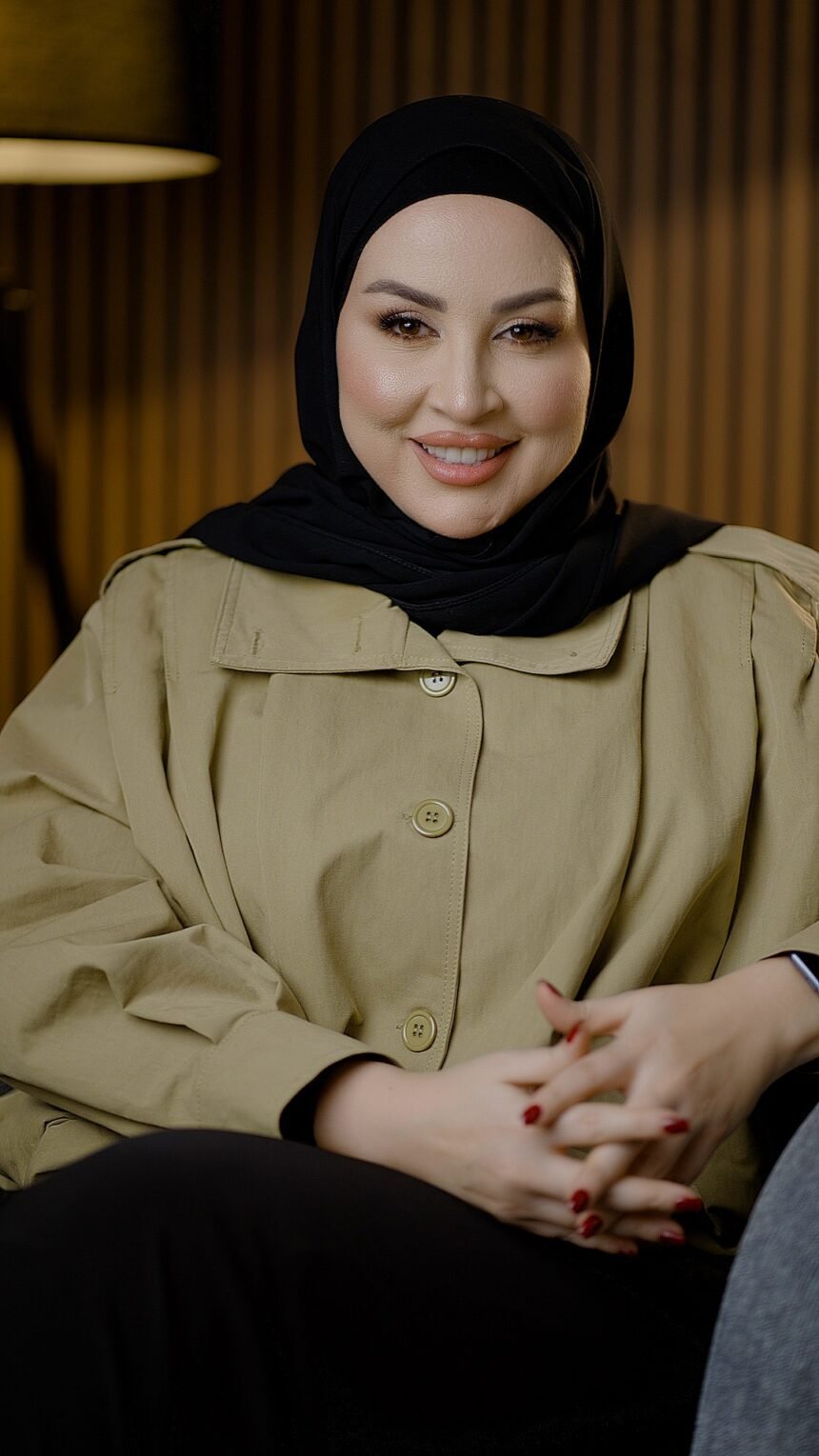
When Relationships Become a Mirror
Relationships often reveal parts of ourselves that we do not notice when life feels comfortable. They can bring happiness and connection, but they can also expose old fears, emotional habits and patterns that have been carried for years.
- From Understanding People to Understanding Herself
- A Different Conversation About Relationship Patterns
- Turning Personal Lessons Into Professional Purpose
- Bringing Relationship Awareness to a Wider Arab Audience
- Why Her Message Matters Today
- Zeina Al Zein Building a Leading Arab Voice in Healing
- A Journey That Turns Pain Into Perspective
For Zeina Al Zein, understanding these patterns has become much more than a professional interest. It has become the foundation of a career built around helping people understand themselves before they try to change their relationships.
A Lebanese relationship and healing coach with more than seven years of experience in understanding human behavior, emotional patterns and relationship dynamics, Zeina approaches her work from a deeply human perspective. Her focus is not simply on telling people what they should do in love. Instead, she encourages them to look at why they repeatedly experience certain situations and what those experiences may be trying to reveal.
Her professional profile also describes her as a certified life coach focused on personal development, relationships and life skills, with an approach tailored to individual needs.
This difference is important because relationship problems rarely exist in isolation. The way people communicate, attach, withdraw, overgive or tolerate unhealthy situations can often be connected to much earlier experiences.
Zeina’s work begins with that deeper question.
From Understanding People to Understanding Herself
Zeina’s interest in human behavior and relationships developed over many years, but one personal experience changed the way she understood healing.
The loss of her mother became a major turning point.
Grief forced her to experience healing not as an idea, but as something deeply personal. Losing someone important can change the way a person sees identity, security, family and even the future. For Zeina, that experience challenged her to look beyond simply understanding why people suffer.
She began thinking about what happens after pain.
How does a person rebuild?
How does someone move forward without allowing one difficult chapter to become the definition of an entire life?
These questions became increasingly connected to her professional work. What had once been an intellectual interest in people and relationships became something more embodied and personal.
Her journey demonstrates an important reality about helping others. Sometimes the strongest professional purpose develops when personal experiences force us to ask questions we might otherwise avoid.
For Zeina, grief did not become the end of her story. It became part of the understanding she carries into her work.
A Different Conversation About Relationship Patterns
One of the most distinctive aspects of Zeina’s philosophy is her belief that relationship coaching should go deeper than surface level advice.
Today, words such as trauma, attachment, boundaries and childhood wounds have become increasingly common in conversations about relationships. People have more access than ever to information about emotional health and relationship psychology.
But awareness does not automatically create change.
A person can understand their attachment style and still repeat the same relationship.
Someone can know what a boundary is and still struggle to maintain one.
A person can recognize an unhealthy pattern and still return to it because the pattern feels familiar.
This is where Zeina wants her work to make a difference. Her approach combines emotional work, childhood patterns, relationship dynamics and nervous system awareness while keeping the conversation practical and accessible.
Her message is not about becoming perfect.
It is about becoming conscious.
As Zeina puts it, “Healing is not becoming someone new. It is remembering who you were before pain taught you who you had to be.”
That idea captures the heart of her philosophy. Healing, in her view, is less about creating a completely different identity and more about reconnecting with the parts of yourself that became hidden beneath survival, expectations and emotional pain.
Turning Personal Lessons Into Professional Purpose
Zeina’s journey also highlights the relationship between compassion and boundaries.
One of the most valuable lessons she shares is that understanding another person does not require abandoning yourself.
This can be difficult to accept, especially for people who have learned to measure love through sacrifice. Many individuals grow up believing that being patient, loyal or understanding means continuing to tolerate situations that repeatedly hurt them.
Zeina challenges that idea.
Her philosophy allows compassion and self protection to exist at the same time. A person can understand another individual’s history, wounds and fears while still deciding that their behavior is not healthy for them.
This creates a more mature understanding of relationships.
Love does not have to mean unlimited tolerance.
Understanding does not have to mean accepting everything.
And compassion does not have to come at the cost of self respect.
For people who have spent years trying to save relationships by losing themselves, this distinction can become an important part of personal growth.
Bringing Relationship Awareness to a Wider Arab Audience
One of Zeina’s significant professional achievements has been creating and hosting the podcast وعي العلاقات, or Relationship Awareness, on Shahid by MBC.
The program gives her an opportunity to discuss relationships through subjects including love languages, relationships with oneself and different dimensions of human connection. Shahid lists the first season as a 10 episode talk and podcast program.
Her earlier podcast work also explored subjects such as emotional regulation, separation and the importance of maintaining self worth within relationships.
For Zeina, the significance of such a platform goes beyond visibility.
It creates space for conversations that are often difficult to have openly.
Relationships are deeply personal, but they are also shaped by culture, family expectations and social ideas about love and responsibility. Bringing these discussions to an Arab audience allows Zeina to explore emotional subjects through a cultural lens rather than simply repeating ideas created for another audience.
That is increasingly central to her vision.
Why Her Message Matters Today
Modern relationships exist in a complicated environment.
People are more connected digitally but can still feel emotionally isolated. Social media has created new expectations around love and lifestyle, while conversations about boundaries and self worth have become increasingly visible.
At the same time, many people are still learning how to recognize the difference between genuine connection and familiar emotional patterns.
Zeina believes that people need more than awareness.
They need practical transformation.
Her work encourages people to examine the roles they repeatedly play in relationships. Are they always the rescuer? The giver? The peacemaker? The person who stays quiet to avoid conflict? The person who keeps hoping someone else will finally change?
These questions can be uncomfortable, but they can also open the door to meaningful self awareness.
Her message is ultimately about responsibility without self blame.
The past deserves understanding, but it does not have to become a permanent blueprint for the future.
Zeina Al Zein Building a Leading Arab Voice in Healing
Zeina’s current ambition is to build a leading Arab voice in relationships, emotional healing and self awareness.
Her vision extends beyond individual coaching. Through programs, media appearances, educational content and future projects, she wants to create work that can reach people across the Arab world.
The goal is especially relevant at a time when emotional vocabulary is becoming more common but deeper application remains challenging.
For Zeina, the next chapter is about helping people move from knowing their patterns to changing them.
That means encouraging people to ask difficult questions about the relationships they choose and the identities they develop inside those relationships.
It also means changing the way healing is discussed.
Healing is not about pretending that the past never happened.
It is about understanding what happened, recognizing what it taught you and deciding which lessons still belong in your future.
A Journey That Turns Pain Into Perspective
What makes Zeina’s story compelling is the connection between her professional purpose and her personal journey.
She did not arrive at relationship coaching simply through an interest in giving advice. Her path has been shaped by years of studying human behavior, professional experience, personal loss and an ongoing desire to understand why people repeat the emotional patterns they do.
Today, her work reflects a simple but powerful idea.
People should not have to spend their entire lives becoming better at surviving what hurts them.
Sometimes the more important question is why they learned to call that pain love, loyalty, strength or patience.
That question sits at the center of Zeina’s philosophy and the future she is building.
Her journey suggests that healing is not necessarily about becoming someone entirely different.
Sometimes it is about finding your way back to yourself.
And for Zeina Al Zein, that return has become both a personal journey and a professional mission.
Follow Zeina Al Zein on Instagram
Read More – Agostina González Pérez: Turning Global Complexity Into Business Clarity