



From Sushi to Shawarma: How Global Cuisine Changed Our Plates
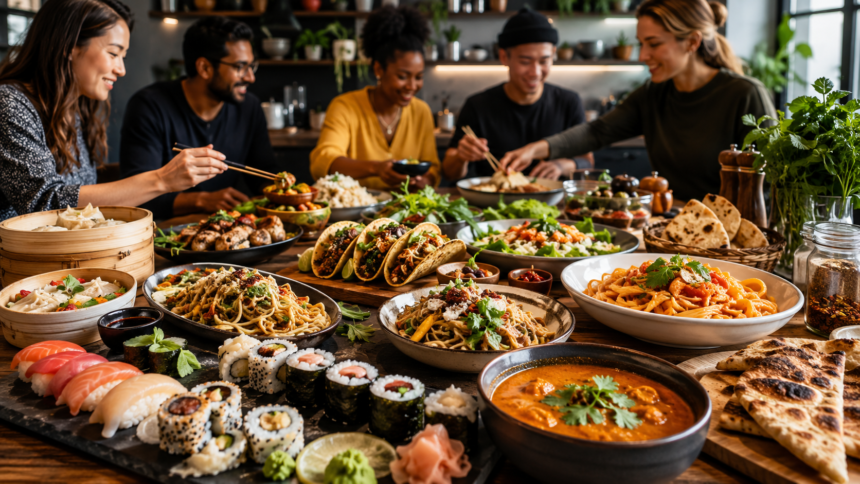
Walk through a busy neighbourhood in Dubai, London, New York, Singapore or Toronto today and you can experience several countries without getting on a plane. Breakfast might include a French croissant, lunch could be Japanese sushi, an afternoon coffee may come with a Middle Eastern dessert, and dinner could combine Korean flavours with an American-style burger.
- What Does Global Cuisine Actually Mean?
- 1. Migration Is Bringing Food Cultures Together
- Dubai Is a Strong Example of Multicultural Food Culture
- 2. Travel Is Turning Food Into an Experience
- 3. Social Media Has Made Food Global Overnight
- Food Has Become Visual Entertainment
- 4. Fusion Cuisine Is Creating Entirely New Dishes
- Fusion Food Works Best When Cultures Are Understood
- 5. Ingredients That Once Felt Exotic Are Becoming Everyday Products
- Supermarkets Are Becoming More International
- 6. Traditional Foods Are Finding New Audiences
- Traditional Emirati Food Is a Good Example
- 7. Restaurants Are Becoming More Experimental
- Fine Dining Has Become More Global
- 8. Street Food Is Influencing Mainstream Restaurants
- 9. Health Trends Are Crossing Borders Too
- Plant-Based Food Is Becoming More International
- 10. Global Cuisine Is Changing Our Cultural Identity
- Food Can Create Cultural Understanding
- But Cultural Respect Still Matters
- Authenticity vs Adaptation
- Global Food Culture and Sustainability
- Technology Is Accelerating Global Food Culture
- Delivery Culture Has Expanded Culinary Choice
- How Global Cuisine Influences Home Cooking
- Modern Food Culture at a Glance
- What Does the Future of Global Cuisine Look Like?
- FAQs About Global Cuisine
- Conclusion
This is the everyday influence of Global Cuisine.
Food traditions that were once strongly connected to individual regions are now travelling across borders faster than ever. Migration, international tourism, social media, global trade and multicultural cities have introduced millions of people to ingredients and cooking traditions that previous generations may never have encountered.
But this transformation is about more than having more restaurant choices.
Global Cuisine is changing how people cook, eat, socialize, travel and even understand other cultures.
What Does Global Cuisine Actually Mean?
Global Cuisine refers broadly to foods, ingredients, recipes and culinary traditions that move beyond their places of origin and become part of international food culture.
Think about foods such as:
- pizza,
- sushi,
- tacos,
- curry,
- shawarma,
- hummus,
- ramen,
- pasta,
- biryani,
- dumplings.
Most have strong cultural and geographical origins.
Yet today, versions of these foods can be found thousands of kilometres away from the communities that created them.
That movement creates an interesting culinary exchange.
A traditional dish arrives in another country. Local chefs adapt it. New ingredients are introduced. Consumers develop different preferences. Eventually, entirely new variations emerge.
This is one of the forces shaping modern food culture.
1. Migration Is Bringing Food Cultures Together
Migration has always influenced cuisine.
When people move, they rarely leave their food traditions completely behind.
They carry:
- recipes,
- cooking techniques,
- spices,
- family traditions,
- religious food practices,
- dining customs.
Restaurants and grocery stores often follow immigrant communities.
Over time, foods initially consumed mainly within those communities begin attracting a wider audience.
This pattern can be seen in cities around the world.
Indian cuisine became deeply established in Britain.
Italian food became part of everyday American dining.
Middle Eastern food expanded internationally.
South Asian cuisines became central to the food landscape of many Gulf cities.
Migration therefore does more than change population demographics.
It changes what a city tastes like.
Dubai Is a Strong Example of Multicultural Food Culture
Few cities demonstrate this better than Dubai.
Its large international population has created an unusually diverse restaurant environment.
A resident can move between Emirati, Lebanese, Indian, Pakistani, Filipino, Japanese, Korean, Persian, Turkish, Italian and African food experiences within the same city
This diversity has helped make international food feel normal rather than exotic.
For younger residents especially, eating across different cuisines can simply be part of weekly life.
2. Travel Is Turning Food Into an Experience
Modern tourism is increasingly connected with food.
Travellers do not only want to photograph famous buildings.
They want to taste a destination.
Someone visiting Japan may search for authentic ramen.
A visitor to the UAE may want Emirati dishes.
Travellers to Italy may look for regional pasta and pizza.
Visitors to Thailand often seek local street food.
Food has become part of the reason people travel.
This has helped create concepts such as:
- culinary tourism,
- food tours,
- cooking classes,
- market experiences,
- farm-to-table visits,
- chef-led dining.
When travellers return home, they often bring new preferences with them.
They may search for the dish they discovered abroad or try preparing it themselves.
Travel therefore helps international cuisine spread organically.
3. Social Media Has Made Food Global Overnight
There was a time when a local restaurant could remain unknown outside its neighbourhood for decades.
Social media changed that.
One visually striking dish can now travel around the world within hours.
TikTok, Instagram and YouTube have turned food into highly shareable digital content.
People discover:
- recipes,
- restaurants,
- street foods,
- unusual ingredients,
- cooking techniques,
- food challenges,
- traditional dishes
without travelling anywhere.
A viewer in Dubai can watch a Korean street-food vendor.
Someone in London can learn how to prepare Indian dosa.
A home cook in Canada can discover Emirati luqaimat.
The geographical barrier between cuisines has become dramatically smaller.
Food Has Become Visual Entertainment
Modern dishes are increasingly designed with cameras in mind.
Restaurants understand that customers may photograph food before eating it.
That has encouraged greater attention to:
- plating,
- colours,
- presentation,
- table design,
- dramatic preparation.
This creates opportunities for restaurants because diners effectively become marketers.
But it can also create a problem.
A dish that looks spectacular online does not necessarily taste spectacular.
The most successful restaurants still need to combine visual appeal with flavour and consistency.
4. Fusion Cuisine Is Creating Entirely New Dishes
One of the most visible effects of Global Cuisine is fusion food.
Fusion cuisine combines ingredients, cooking techniques or traditions associated with different culinary cultures.
Examples might include:
- Korean tacos,
- sushi burritos,
- butter chicken pizza,
- shawarma-inspired burgers,
- matcha desserts with European pastry techniques,
- Middle Eastern-inspired pasta.
These dishes do not necessarily belong entirely to one traditional cuisine.
That is the point.
They represent cultural interaction.
Fusion Food Works Best When Cultures Are Understood
There is a difference between thoughtful fusion and randomly mixing ingredients.
Good fusion usually requires understanding:
- flavour balance,
- cooking techniques,
- ingredient compatibility,
- cultural context.
A chef who understands both cuisines can identify genuine connections.
For example, different cultures may use:
- fermented ingredients,
- grilled meats,
- flatbreads,
- rice,
- chilli,
- pickling.
These similarities can provide a natural foundation for experimentation.
5. Ingredients That Once Felt Exotic Are Becoming Everyday Products
Global food culture has changed supermarket shelves.
Ingredients that were once difficult to find outside particular regions are increasingly mainstream.
Depending on the market, these can include:
- tahini,
- miso,
- gochujang,
- kimchi,
- quinoa,
- za’atar,
- harissa,
- matcha,
- sriracha,
- different curry pastes.
Home cooks no longer need to depend exclusively on restaurants to experience international flavours.
Online shopping has accelerated this further.
Specialist ingredients can often be ordered directly to the home.
Supermarkets Are Becoming More International
Large supermarkets increasingly dedicate significant space to international foods.
This reflects both migration and changing consumer curiosity.
A shopper may buy Italian pasta, Japanese noodles, Indian spices, Mexican tortillas and Lebanese hummus in a single visit.
This would have been unusual in many markets several decades ago.
Today, it can feel completely ordinary.
6. Traditional Foods Are Finding New Audiences
Globalization is sometimes described as a threat to traditional food.
But it can also preserve and promote it.
A small regional dish that once had limited visibility can now attract international attention through:
- tourism,
- social media,
- diaspora communities,
- restaurants,
- food documentaries,
- celebrity chefs.
Traditional recipes can become a source of cultural pride.
Restaurants increasingly use heritage and authenticity as part of their identity.
Consumers often want to know:
Where did this dish come from?
Who traditionally made it?
What does it mean to that community?
This curiosity creates opportunities for deeper cultural understanding.
Traditional Emirati Food Is a Good Example
Dubai is famous for international restaurants, but growing interest in local culture also encourages visitors to discover Emirati cuisine.
Dishes associated with Emirati food traditions can introduce visitors to ingredients, flavours and hospitality practices connected with the region’s history.
Global food culture does not necessarily mean every cuisine becomes the same.
It can also encourage people to appreciate what makes each cuisine different.
7. Restaurants Are Becoming More Experimental
Restaurant menus are changing because diners are changing.
Consumers who regularly experience different cuisines develop broader flavour expectations.
They may be more comfortable with:
- spice,
- fermentation,
- unusual textures,
- international sauces,
- unfamiliar ingredients.
That gives chefs greater freedom.
A modern restaurant may not describe itself as strictly French, Japanese or Middle Eastern.
Instead, it may combine techniques and ingredients from several culinary traditions.
This approach is especially common in major international cities.
Fine Dining Has Become More Global
High-end restaurants were once strongly influenced by European culinary traditions.
That landscape has broadened significantly.
Chefs from Asia, the Middle East, Latin America and Africa are bringing their culinary heritage into premium dining environments.
Traditional ingredients can appear in sophisticated tasting menus.
Street-food flavours can inspire fine-dining dishes.
Regional techniques can be presented through modern plating.
This has helped expand the definition of luxury food.
8. Street Food Is Influencing Mainstream Restaurants
Some of the world’s most exciting food culture happens outside formal restaurants.
Street food reflects:
- affordability,
- speed,
- local ingredients,
- community,
- tradition.
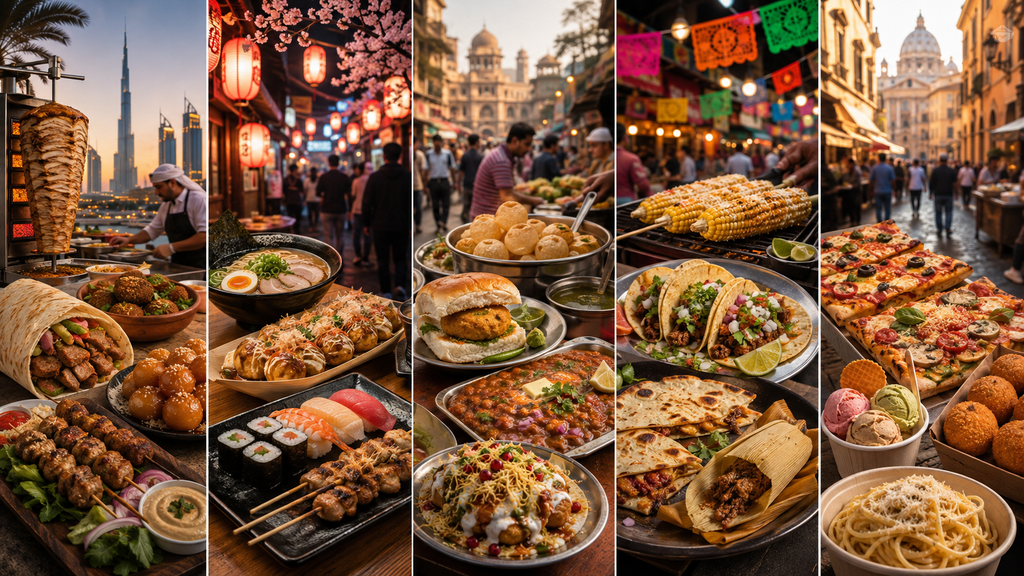
Tacos, kebabs, dumplings, noodles and countless regional snacks have travelled internationally.
Restaurant chefs often reinterpret these foods in more formal environments.
At the same time, consumers increasingly value casual dining experiences.
A memorable meal does not need white tablecloths.
Sometimes the best culinary experience comes from a simple dish prepared extremely well.
9. Health Trends Are Crossing Borders Too
Global food culture does not involve only indulgent dishes.
Ideas about healthy eating also travel internationally.
Consumers are exploring foods and practices associated with different cultures, including:
- Mediterranean-style eating,
- fermented foods,
- plant-based dishes,
- whole grains,
- traditional herbal ingredients.
This has encouraged restaurants and food brands to rethink menus.
Modern consumers increasingly look for food that offers:
flavour + convenience + nutrition
rather than treating these as separate categories.
Plant-Based Food Is Becoming More International
Vegetarian food was once sometimes presented as a niche lifestyle category.
But many traditional cuisines have always included substantial plant-based cooking.
Indian cuisine offers countless vegetarian dishes.
Middle Eastern cuisine includes hummus, falafel, tabbouleh and vegetable-based mezze.
Mediterranean food uses grains, legumes, vegetables and olive oil extensively.
Global food exploration therefore gives plant-focused consumers far more options than simply replacing meat with imitation products.
10. Global Cuisine Is Changing Our Cultural Identity
Food is deeply personal.
It connects people to:
- childhood,
- family,
- religion,
- nationality,
- celebrations,
- memories.
As societies become more multicultural, food identities can become more complex.
Someone born in one country, raised in another and living in Dubai may feel connected to several culinary cultures simultaneously.
Their home kitchen might naturally combine them.
Children growing up in multicultural cities may consider sushi, pasta, biryani and shawarma equally familiar.
This is creating a generation with a more international relationship with food.
Food Can Create Cultural Understanding
Sharing food is one of the easiest ways to introduce someone to another culture.
A person may know very little about Lebanon before eating Lebanese food.
They may know little about Korea before discovering Korean barbecue.
Food creates curiosity.
Curiosity can lead to questions about:
- history,
- language,
- traditions,
- geography,
- people.
That gives cuisine cultural importance beyond nutrition.
But Cultural Respect Still Matters
The globalization of food also raises important questions.
When traditional dishes become commercially successful internationally, their cultural origins can sometimes disappear from the story.
A recipe may be heavily modified and still marketed as “authentic.”
Traditional ingredients may be renamed.
Food associated with immigrant communities can suddenly become fashionable when presented by someone outside that community.
This is why responsible culinary storytelling matters.
Chefs, restaurants and food media can acknowledge:
- origins,
- communities,
- traditions,
- influences.
Innovation does not require pretending history does not exist.
Authenticity vs Adaptation
One of the biggest debates in modern food culture is whether international dishes should remain authentic.
There is no simple answer.
Adaptation has always been part of food history.
Ingredients travel.
Communities migrate.
Recipes evolve.
What people consider “traditional” today may itself be the result of centuries of cultural exchange.
The important distinction is transparency.
A restaurant can say:
traditional Japanese ramen
or
Japanese-inspired fusion ramen
Both can be excellent.
They simply represent different intentions.
Global Food Culture and Sustainability
Food globalization creates environmental questions too.
International demand can increase the transportation of ingredients over long distances.
Consumers may expect fresh products from another continent throughout the year.
Restaurants may import ingredients to preserve authenticity.
This creates tension between:
global choice
and
local sustainability.
A growing response is the idea of combining international cooking techniques with locally available ingredients.
A chef might create a globally inspired dish while sourcing vegetables, seafood or other ingredients locally.
This allows cultural creativity while potentially reducing dependence on long-distance supply chains.
Technology Is Accelerating Global Food Culture
Technology is transforming how international cuisine reaches consumers.
Food-delivery applications allow customers to explore dozens of cuisines from home.
Restaurant discovery platforms make it easier to find specialized regional food.
Online grocery services deliver international ingredients.
AI-powered recommendations can introduce customers to dishes based on previous preferences.
Digital platforms have therefore reduced the friction involved in trying something new.
Previously, discovering a small Ethiopian, Korean or Uzbek restaurant might require local knowledge.
Today, it may appear on a phone screen beside familiar options.
Delivery Culture Has Expanded Culinary Choice
Food delivery has had a particularly strong impact in cities such as Dubai.
Consumers are no longer limited to restaurants within walking distance.
A single app can provide access to:
- Emirati,
- Indian,
- Chinese,
- Japanese,
- Lebanese,
- Turkish,
- Italian,
- Mexican,
- Thai
food.
That makes culinary diversity part of everyday convenience.
How Global Cuisine Influences Home Cooking
The transformation is not happening only inside restaurants.
Home kitchens are becoming multicultural too.
Someone may prepare pasta on Monday, curry on Tuesday, tacos on Wednesday and homemade hummus at the weekend.
Recipes are easier to access than ever.
YouTube videos can demonstrate techniques visually.
Short-form videos can introduce unfamiliar ingredients.
Online communities can answer cooking questions.
The result is a much more adventurous home cook.
Modern Food Culture at a Glance
| Influence | Impact on Food Culture |
|---|---|
| Migration | Introduces traditional cuisines to new communities |
| International travel | Encourages culinary tourism and food discovery |
| Social media | Makes dishes and food trends globally visible |
| Fusion cuisine | Combines culinary traditions creatively |
| Global supermarkets | Makes international ingredients accessible |
| Delivery platforms | Expands everyday cuisine choices |
| Tourism | Creates demand for authentic local food |
| Health trends | Spreads different approaches to nutrition |
| Technology | Improves food discovery and access |
| Multicultural cities | Creates new hybrid food identities |
What Does the Future of Global Cuisine Look Like?
The next stage of Global Cuisine will probably involve even more interaction between local tradition and international influence.
Several trends are likely to remain important:
- greater interest in regional cuisines rather than generic national labels,
- more multicultural chefs,
- stronger culinary storytelling,
- international ingredients becoming mainstream,
- growth of plant-based international dishes,
- locally sourced fusion cuisine,
- technology-driven restaurant discovery.
Consumers are also becoming more knowledgeable.
Someone interested in Italian food may move beyond pizza to discover regional Sicilian or Sardinian cooking.
A fan of Indian food may begin exploring Gujarati, Bengali, Kerala or Rajasthani cuisine.
Interest becomes more specific as knowledge grows.
That creates opportunities for restaurants specializing in foods that were previously considered too regional for international audiences.
FAQs About Global Cuisine
What is Global Cuisine?
Global Cuisine describes culinary traditions, foods and ingredients that move across national and cultural boundaries and become part of international food culture.
How is Global Cuisine changing modern food culture?
It is increasing access to international dishes, encouraging fusion cooking, changing restaurant menus, expanding supermarket choices and introducing consumers to new ingredients and traditions.
What is fusion cuisine?
Fusion cuisine combines elements from different culinary traditions. This can involve ingredients, techniques, flavours or presentation styles from two or more cultures.
How does migration influence food culture?
Migrants bring recipes, ingredients and cooking traditions to their new communities. Restaurants, markets and home cooking then help those foods reach wider audiences.
How does social media influence global food trends?
Social platforms allow recipes, restaurants and dishes to become internationally visible very quickly. Consumers can discover foods from other countries without travelling.
Is globalization damaging traditional cuisine?
It can create challenges when traditions are misrepresented or origins are ignored. However, globalization can also help preserve and promote traditional dishes by introducing them to larger audiences.
Why is Dubai important to global food culture?
Dubai’s international population and tourism industry create strong demand for cuisines from around the world, making the city a major environment for multicultural dining and culinary experimentation.
Will fusion cuisine replace traditional food?
Unlikely. Traditional and fusion cuisine can exist together. In fact, growing international interest in food can encourage consumers to learn more about authentic regional cooking.
Conclusion
The influence of Global Cuisine on modern food culture is much deeper than the growing number of international restaurants in major cities.
It represents a fundamental change in how people experience food.
Migration has carried family recipes across continents.
Travel has transformed local dishes into global discoveries.
Social media can turn an unknown street food into an international trend.
Supermarkets have made once-unfamiliar ingredients part of ordinary home cooking.
Fusion cuisine has created new flavours by bringing culinary traditions together.
And multicultural cities such as Dubai have shown what happens when dozens of food cultures share the same urban space.
Yet the most interesting part of this transformation may be what it does to people.
Food can make another culture feel less distant.
A dish can encourage someone to learn where it came from, why it is prepared in a certain way and what it means to the people who created it.
At the same time, globalization makes cultural respect increasingly important. Traditional dishes have histories, and innovation becomes more meaningful when those origins are understood rather than erased.
The future of food is therefore unlikely to be purely global or purely local.
It will be both.
People will continue protecting family recipes and regional traditions while experimenting with flavours from thousands of kilometres away.
That balance between heritage and creativity, authenticity and adaptation, local identity and global curiosity is what makes modern food culture so dynamic.
And perhaps that is Global Cuisine’s greatest influence: it reminds us that although the world contains thousands of different culinary traditions, sharing a meal remains one of the simplest ways for cultures to meet.
follow us on Instagram
Read More – Mortgage Guide for Gulf: 10 Powerful Tips for Homebuyers