



Understand the Difference Between a Veterinary Clinic and a Veterinary Hospital
Choosing a Veterinary Clinic in Dubai is one of the most important decisions a pet owner makes. A clinic may become the place you visit for routine vaccinations, annual health checks and microchipping, but it could also be where you turn during an unexpected illness, injury or late-night emergency.
- Start by Checking Whether the Veterinary Clinic Is Properly Licensed
- Understand the Difference Between a Veterinary Clinic and a Veterinary Hospital
- Choose a Clinic That Matches Your Pet’s Needs
- Look at the Veterinarians, Not Just the Clinic
- Observe How Staff Handle Your Pet
- Check What Diagnostic Equipment Is Available
- Ask What Happens During an Emergency
- Do Not Choose a Clinic Based Only on Distance
- Ask About 24-Hour Hospitalisation
- Examine the Clinic’s Cleanliness and Organisation
- Look for Transparent Veterinary Pricing
- Check Whether the Clinic Works With Your Pet Insurance
- Make Sure Routine Preventive Care Is Easy
- Ask About Microchipping and Dubai Pet Registration
- Frequent Travellers Should Ask About Pet Travel Services
- Continuity of Care Can Be More Important Than a Fancy Facility
- Read Reviews Carefully, Not Blindly
- Your First Appointment Can Be a Test Visit
- Red Flags Pet Owners Should Watch For
- Questions to Ask Before Registering With a Dubai Veterinary Clinic
- Create an Emergency Plan Before You Need One
- A Simple Veterinary Clinic Checklist
- Should You Choose the Cheapest Veterinary Clinic in Dubai?
- Should You Have More Than One Vet?
- The Right Veterinary Clinic Should Work for Both You and Your Pet
Dubai has a large and increasingly sophisticated veterinary sector. In July 2026, Dubai Municipality said it had licensed 176 veterinary establishments in the clinic and hospital categories, including 103 comprehensive veterinary clinics, 67 primary clinics, two specialised clinics, three comprehensive veterinary hospitals and one specialised veterinary hospital. The Municipality also carries out inspections and monitors establishments for compliance with health and technical requirements.
That range gives pet owners plenty of choice, but it also makes choosing the right veterinary clinic in Dubai more complicated. The clinic closest to home may be convenient, but location should not be the only consideration. Qualifications, emergency capabilities, diagnostic equipment, communication, pricing and the way staff handle animals can all make a significant difference.
Here is what Dubai pet owners should look for before deciding where their dog, cat or other companion animal receives care.
Start by Checking Whether the Veterinary Clinic Is Properly Licensed
The first consideration should be basic but non-negotiable: the veterinary facility should be properly licensed and regulated.
Dubai Municipality’s Veterinary Services Section is responsible for protecting animal health and welfare in the emirate. Its responsibilities include monitoring and certifying veterinary establishments, clinics and pharmacies to ensure that they comply with applicable health requirements.
Dubai Municipality also sets technical and health requirements for veterinary clinics operating in the emirate. These rules cover areas such as facilities, equipment, hygiene, veterinary services and operational standards.
For pet owners, this means a polished reception area or impressive social media account should never substitute for proper licensing.
Before registering your pet, ask whether the establishment and the veterinarian treating your animal are appropriately licensed. A reputable practice should have no difficulty explaining its credentials.
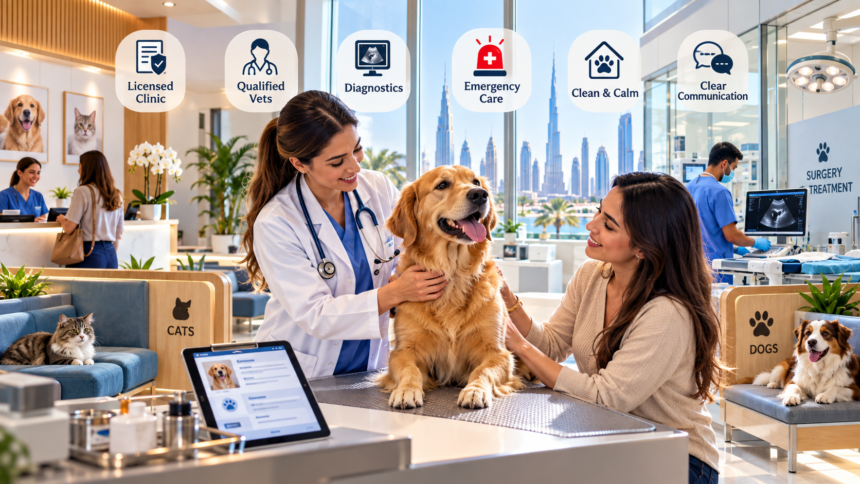
Understand the Difference Between a Veterinary Clinic and a Veterinary Hospital
One of the most useful distinctions for Dubai pet owners is the difference between a regular veterinary clinic and a veterinary hospital.
They are not necessarily the same thing.
Under UAE veterinary establishment requirements issued in 2026, veterinary hospitals can provide a broader range of services. Specialised veterinary hospitals, for example, can perform different types of surgery, provide medical imaging, conduct laboratory testing, house sick animals under continuous supervision and provide round-the-clock ambulance and emergency services for the animal species covered by their licence.
A smaller clinic may be perfectly suitable for vaccinations, routine examinations, minor illnesses and basic procedures. However, complicated surgery, intensive inpatient monitoring or advanced diagnostic imaging may require referral to a better-equipped hospital.
Before choosing a clinic, ask a simple question:
What happens if my pet develops a serious problem that cannot be treated here?
A good clinic should have a clear answer and a referral process.
Choose a Clinic That Matches Your Pet’s Needs
Not every animal requires the same type of veterinary care.
A young indoor cat may initially need routine vaccinations, parasite prevention, sterilisation and annual health checks. An older dog with a chronic condition may require regular blood tests, imaging and medication monitoring.
Breed can also matter. Some dogs and cats are more likely to develop particular respiratory, orthopaedic, skin, dental or hereditary conditions. Exotic pets may require veterinarians with completely different knowledge and equipment.
Think about your pet’s current and likely future requirements.
| Your Pet’s Situation | Services Worth Looking For |
|---|---|
| Puppy or kitten | Vaccinations, microchipping, nutrition advice, sterilisation |
| Adult dog or cat | Preventive checks, dentistry, laboratory testing |
| Senior pet | Blood tests, imaging, chronic disease monitoring |
| Pet with recurring skin problems | Dermatology experience and testing |
| Animal with mobility problems | Orthopaedic assessment and imaging |
| Pet needing surgery | Surgical facilities, anaesthesia monitoring and post-operative care |
| Exotic pet | Veterinarian experienced with that species |
| Pet with chronic disease | Consistent veterinarian and long-term medical records |
Choosing a clinic with the right capabilities can save you from repeatedly moving between facilities later.
Look at the Veterinarians, Not Just the Clinic
Pet owners often choose a veterinary practice based on its name, location or online reputation. However, the relationship with the individual veterinarian can matter just as much.
Find out who will normally treat your pet and what experience they have with your animal’s species, breed or medical condition.
You should also pay attention to how the veterinarian communicates.
A good consultation should leave you understanding what the veterinarian found, what they are concerned about, what tests they recommend and what happens next.
Medical terminology is sometimes unavoidable, but it should be explained rather than simply presented.
You should feel comfortable asking questions such as:
- Why is this test necessary?
- Are there alternative treatment options?
- What should I watch for at home?
- When should my pet return for another examination?
- What would make this situation an emergency?
- What will the estimated treatment cost be?
A veterinarian who welcomes reasonable questions can make long-term pet care much easier.
Observe How Staff Handle Your Pet
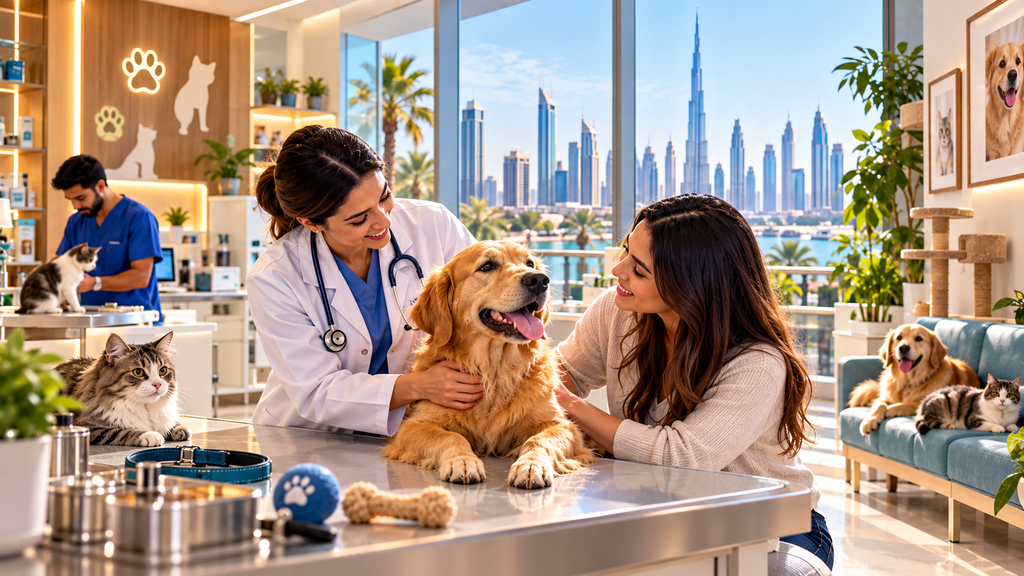
Technical expertise matters, but so does handling.
Dogs and cats often arrive at veterinary clinics already anxious. Strange smells, unfamiliar animals, slippery examination tables and previous medical experiences can make visits stressful.
Watch how the veterinarian and nursing team approach your pet.
Do they give a nervous animal time to settle? Do they handle the pet firmly but gently? Do they explain what they are doing before restraining the animal?
For particularly anxious pets, ask whether the clinic uses fear-reducing handling techniques, separate waiting areas or appointment scheduling designed to minimise contact with other animals.
The way staff behave when your pet is difficult or frightened can tell you considerably more about a clinic than how they behave during an easy routine appointment.
Check What Diagnostic Equipment Is Available
Veterinary medicine increasingly depends on diagnostics.
A physical examination can reveal a great deal, but blood tests, X-rays, ultrasound and other tools may be necessary when symptoms are unclear.
Ask what the clinic can perform in-house.
Useful capabilities may include:
- Blood testing
- Urine testing
- Digital X-rays
- Ultrasound
- Dental X-rays
- Laboratory testing
- Microscopy
- Anaesthesia monitoring
- Blood-pressure measurement
Not every neighbourhood clinic needs every machine. The important issue is whether it can provide the level of care your pet requires and whether referrals are handled efficiently when more advanced testing is needed.
A smaller clinic with an excellent referral network can sometimes be a better choice than a larger facility that offers many services but provides poor continuity of care.
Ask What Happens During an Emergency
This question should be answered before an emergency occurs.
Some clinics advertise long opening hours but are not true 24-hour hospitals. Others may have emergency phone numbers but refer serious cases to another facility after normal operating hours.
Ask specifically:
Is a veterinarian physically present overnight?
Can my pet remain hospitalised overnight?
Who monitors hospitalised animals?
Is emergency surgery available?
If you are closed, where should I take my pet?
Do I need to call before arriving?
The distinction matters because UAE requirements for veterinary hospitals include more extensive emergency and inpatient capabilities than ordinary clinic services. Under the 2026 federal requirements, specialised veterinary hospitals are expected to provide round-the-clock ambulance and emergency services and maintain veterinary medical staff for continuous monitoring of hospitalised animals.
Save your chosen emergency facility’s telephone number and location before you actually need it.
Do Not Choose a Clinic Based Only on Distance
A veterinary clinic five minutes from home is useful, especially for routine appointments.
But convenience should be balanced with capability.
For vaccinations or a minor examination, a nearby clinic may be ideal. If your pet needs complicated surgery or specialist care, travelling an additional 15 or 20 minutes may be worthwhile.
Dubai’s traffic also makes this worth thinking about.
A clinic that seems close on a map might take considerably longer to reach during peak hours. Test the route from your home and consider how long it would take during both normal conditions and an emergency.
For many pet owners, the most practical solution is to know two facilities: a trusted regular veterinary clinic and a fully equipped emergency hospital.
Ask About 24-Hour Hospitalisation
Hospitalisation is different from a clinic simply remaining open late.
If your pet needs intravenous fluids, oxygen, pain relief or observation after surgery, someone needs to monitor its condition.
Ask who remains with hospitalised pets after closing time.
Some facilities have veterinary teams physically present throughout the night. Others may provide different levels of supervision.
Neither should be assumed.
If your animal is likely to require complex treatment, choosing a facility with reliable inpatient monitoring may become particularly important.
Examine the Clinic’s Cleanliness and Organisation
You do not need to be a veterinary professional to notice whether a clinic appears organised.
Reception areas and consultation rooms should look reasonably clean. Treatment areas should be maintained appropriately, and staff should follow sensible hygiene practices between patients.
Strong animal smells alone do not automatically indicate poor hygiene because veterinary facilities naturally deal with sick animals. Instead, look for broader signs.
Does equipment appear organised? Are consultation tables cleaned between animals? Does the staff appear to follow consistent procedures? Are dogs and cats managed in a way that minimises unnecessary contact?
Dubai Municipality states that it performs routine inspections of veterinary clinics using its inspection system to check compliance with veterinary legislation and local technical and health requirements.
Regulatory inspection is important, but pet owners should still pay attention to what they observe during visits.
Look for Transparent Veterinary Pricing
Veterinary treatment can become expensive, particularly when diagnostic tests, surgery, hospitalisation or specialist consultations are involved.
The cheapest clinic is not automatically the best clinic. Equally, higher prices do not automatically mean better medicine.
Transparency is more useful than simply looking for the lowest consultation fee.
Before agreeing to a non-emergency procedure, ask for an estimate showing major expected costs. If several tests are recommended, ask what each one is intended to determine.
For surgery, it can also help to ask whether the estimate includes:
- Pre-operative blood testing
- Anaesthesia
- Surgical procedure
- Medication
- Hospitalisation
- Post-operative checks
- Take-home medication
- Follow-up treatment
Unexpected medical findings can always change the final bill, but a good clinic should be willing to discuss the expected range beforehand.
Check Whether the Clinic Works With Your Pet Insurance
Pet insurance is becoming increasingly relevant for owners who want protection against large unexpected veterinary bills.
If you already have insurance, ask whether the clinic has experience dealing with your provider.
Some insurers operate through reimbursement, meaning the owner pays the clinic and later submits a claim. Others may have different arrangements depending on the provider and policy.
The important issue is understanding what your own policy covers.
Routine vaccinations, dental treatment, pre-existing conditions, hereditary conditions, emergency treatment and diagnostic imaging may all be treated differently.
Do not assume that a clinic being popular automatically means your insurer will cover every service provided there.
Make Sure Routine Preventive Care Is Easy
The majority of veterinary visits should ideally be preventive rather than emergency treatment.
A useful long-term clinic should make it straightforward to manage regular health care such as vaccinations, parasite prevention, dental checks, weight monitoring and routine examinations.
Dubai Municipality provides approved vaccination programmes through its veterinary services. Its published guidance lists rabies and combination vaccines among vaccination programmes for dogs and cats.
Your veterinarian can advise on the appropriate vaccination schedule based on your animal’s age, lifestyle, travel history and health.
This is another reason continuity matters. A veterinarian who has followed your pet over several years can compare weight, laboratory results, behaviour and physical changes over time rather than starting from zero during every appointment.
Ask About Microchipping and Dubai Pet Registration
Microchipping is another area in which having an organised veterinary clinic can simplify pet ownership.
Dubai Municipality states that its pet services include registration, identification and updates to registration details for cats and dogs. Microchipping and registration also become particularly important when travelling internationally.
Ask your clinic whether it can assist with:
- Microchip implantation
- Registration requirements
- Updating owner details
- Vaccination records
- Rabies documentation
- Health certificates
- Travel documentation
Keeping accurate records becomes especially important if you move home, change telephone numbers or relocate outside the UAE.
Frequent Travellers Should Ask About Pet Travel Services
Dubai has a highly mobile population, and many residents eventually travel or relocate internationally with their pets.
That process can involve far more than purchasing an airline ticket.
Dubai Municipality advises owners travelling with pets to ensure that the animal is microchipped and registered, vaccinations remain valid and the required veterinary health certificate is obtained. Owners may also need to check destination-specific requirements through the Ministry of Climate Change and Environment and confirm airline transport conditions in advance.
If international travel is likely, ask whether your clinic has experience preparing export documentation.
A veterinarian familiar with the process can help identify timing problems before they affect your journey.
Some countries require blood tests, waiting periods, additional vaccinations or specific health documentation. These requirements can change, so final travel rules should always be verified for your particular destination.
Continuity of Care Can Be More Important Than a Fancy Facility
Modern clinics with advanced equipment are attractive, but there is another factor that is less visible: medical continuity.
Ideally, the veterinarian treating your pet should be able to see previous vaccination records, blood results, medication history, allergies, surgeries and previous diagnoses.
Ask how medical records are stored and whether you can request copies.
It can also be useful to know whether you can book appointments with the same veterinarian.
Seeing the same vet repeatedly allows that person to become familiar with your pet’s normal behaviour and physical condition. Small changes may be easier to identify when the veterinarian already knows the animal.
Read Reviews Carefully, Not Blindly
Online ratings can help narrow down options, but they should not make the entire decision for you.
A single angry review does not necessarily indicate a bad clinic, just as hundreds of five-star ratings do not prove that every veterinarian there will be right for your pet.
Look for patterns instead.
Repeated comments about good communication, gentle handling, emergency responsiveness and clear pricing may be useful.
Repeated complaints about poor communication, unexpected billing or difficulty obtaining medical records deserve attention too.
Pay particular attention to detailed reviews explaining what actually happened rather than extremely short comments saying only that a clinic was “amazing” or “terrible.”
Then visit the clinic yourself before making a final judgment.
Your First Appointment Can Be a Test Visit
You do not need to wait until your pet becomes seriously ill before evaluating a veterinary clinic.
A routine wellness check or vaccination appointment can act as a useful introduction.
Observe the entire experience.
Was booking straightforward? Did the appointment begin reasonably close to the scheduled time? Did the veterinarian examine your pet carefully? Were your questions answered? Were treatment recommendations explained?
Most importantly, ask yourself whether you would feel comfortable returning there during a stressful medical situation.
If the answer is no, it may be better to keep looking while your pet is healthy.
Red Flags Pet Owners Should Watch For
No single inconvenience automatically means a clinic provides poor veterinary medicine, but certain patterns deserve attention.
Be cautious if a clinic repeatedly cannot explain recommended tests, refuses to provide basic cost information, makes it difficult to obtain medical records or gives vague answers about overnight monitoring.
Other concerns can include rushed consultations, rough handling, unclear medication instructions or poor communication after a major procedure.
The same applies when every condition immediately appears to lead to numerous expensive tests without a clear explanation of what information those tests are intended to provide.
Good veterinary medicine sometimes requires costly investigations. The key difference is whether the veterinarian explains the reasoning and helps you understand the choices.
Questions to Ask Before Registering With a Dubai Veterinary Clinic
A short conversation can reveal a great deal about how a clinic operates.
Consider asking:
- Is the clinic and treating veterinarian properly licensed?
- Which species do your veterinarians regularly treat?
- Do you have veterinarians with specialist interests?
- What diagnostic tests can you perform in-house?
- Do you have X-ray and ultrasound facilities?
- Can animals stay overnight?
- Is veterinary staff present overnight with hospitalised pets?
- What happens if my pet needs emergency care after closing?
- Where do you refer patients requiring specialist treatment?
- Can I receive an estimate before major treatment?
- Can I request copies of my pet’s medical records?
- Do you assist with microchipping and pet registration?
- Can you prepare documentation for international pet travel?
- Do you work with pet insurance providers?
- Can I normally book with the same veterinarian?
You may not need every service immediately. The answers help you understand what will happen when your pet eventually needs more than a routine check-up.
Create an Emergency Plan Before You Need One
Even pet owners who have found an excellent neighbourhood clinic should know where the nearest suitable emergency veterinary hospital is located.
Save the telephone number on your phone and keep the location accessible to other members of the household.
If your pet suddenly develops severe breathing difficulty, collapses, experiences uncontrolled bleeding, has repeated seizures, suffers major trauma or may have swallowed something toxic, contact a veterinary professional immediately rather than waiting for a routine appointment.
It can also help to keep your pet’s carrier accessible rather than stored somewhere difficult to reach.
An emergency is not the right moment to begin searching online for a veterinarian.
A Simple Veterinary Clinic Checklist
Before making your final choice, use this checklist:
| Question | Check |
|---|---|
| Properly licensed | Yes / No |
| Experienced veterinarian for your pet | Yes / No |
| Clean and organised facility | Yes / No |
| Gentle animal handling | Yes / No |
| Clear treatment explanations | Yes / No |
| Transparent cost estimates | Yes / No |
| In-house diagnostics | Yes / No |
| Emergency plan | Yes / No |
| Overnight monitoring if required | Yes / No |
| Reliable referral network | Yes / No |
| Accessible medical records | Yes / No |
| Microchip and vaccination support | Yes / No |
| Travel-document assistance | Yes / No |
| Convenient location | Yes / No |
| Comfortable long-term relationship | Yes / No |
A clinic does not necessarily need every box ticked. What matters is whether the services match your pet’s needs and whether any gaps are covered by reliable referrals.
Should You Choose the Cheapest Veterinary Clinic in Dubai?
Price matters, particularly because veterinary expenses can accumulate quickly.
However, choosing purely on consultation price can create problems.
A low-cost clinic may be completely suitable for straightforward preventive care. A more expensive hospital may make sense when advanced diagnostics or intensive monitoring are necessary.
Compare like with like.
One clinic’s consultation fee might appear higher but include a longer examination or certain basic services. Another may charge separately for each component.
The most useful question is not simply, “Which clinic is cheapest?”
It is: What care am I receiving for the price, and has the clinic explained why my pet needs it?
Should You Have More Than One Vet?
For many Dubai pet owners, having one regular clinic plus knowledge of a separate emergency hospital is a sensible arrangement.
Your regular veterinarian can handle vaccinations, preventive care, routine illness and long-term health monitoring.
A larger hospital can provide backup when advanced surgery, overnight care, intensive monitoring or specialised diagnostics become necessary.
This does not mean constantly moving between clinics.
Your regular vet should remain the centre of your pet’s medical history, while referral facilities provide additional capabilities when needed.
Ask both facilities how records can be transferred so that important medical information follows your pet.
The Right Veterinary Clinic Should Work for Both You and Your Pet
There is no single veterinary clinic that will be perfect for every animal in Dubai.
A healthy young cat may need something very different from an ageing Labrador, a nervous rescue dog or an exotic pet.
Location, opening hours and price matter, but they should sit alongside more important questions about licensing, veterinary experience, emergency care, diagnostics, communication and animal handling.
Dubai Municipality regulates veterinary establishments and reported a substantial network of licensed clinics and hospitals across the emirate in 2026, giving owners many options to consider.
Take advantage of that choice.
Visit a clinic before an emergency happens, meet the veterinarian, ask questions and understand what services are available. Find out where your pet would be sent if specialist treatment were needed and save an emergency option in advance.
The best veterinary relationship is not simply one that solves a problem when your animal becomes sick. It is one that helps you keep your pet healthy, understands its medical history and gives you confidence about what to do when something changes.
For a pet that may spend well over a decade as part of your household, choosing that relationship carefully is time well spent.
Do follow us on Instagram
Read More – World’s Best Coffee Cities: 15 Amazing Places to Visit