


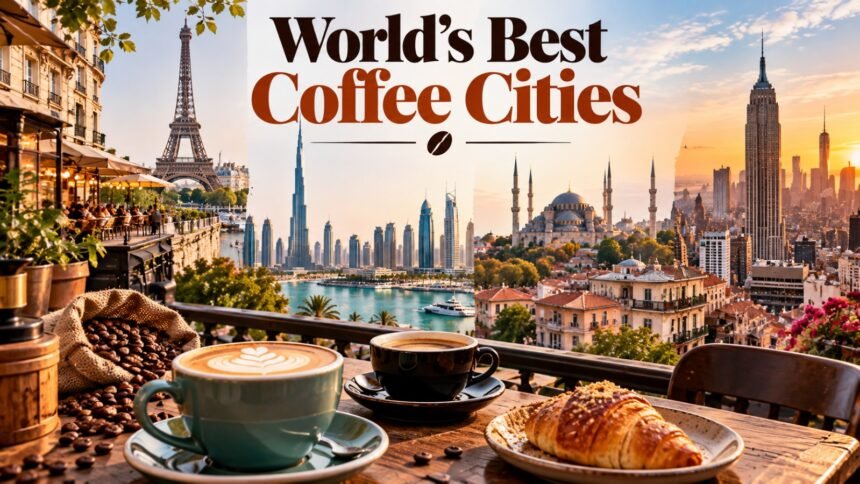
World’s Best Coffee Cities
Coffee can tell you a surprising amount about a city. In some destinations, it is a quick espresso taken while standing at a counter. Elsewhere, coffee means spending an hour talking with friends, watching the street from a tiny café, working through a carefully brewed single-origin pour-over or taking part in a ritual that has survived for generations.
- World’s Best Coffee Cities at a Glance
- 1. Melbourne, Australia
- 2. Vienna, Austria
- 3. Copenhagen, Denmark
- 4. Tokyo, Japan
- 5. Seoul, South Korea
- 6. Hanoi, Vietnam
- 7. Addis Ababa, Ethiopia
- 8. Istanbul, Türkiye
- 9. Bogotá, Colombia
- 10. Seattle, United States
- 11. Stockholm, Sweden
- 12. Dubai, UAE
- 13. Singapore
- 14. London, United Kingdom
- 15. Milan, Italy
- Traditional Coffee Cities vs Specialty Coffee Capitals
- Which Coffee City Is Best for Your Travel Style?
- What Makes a City One of the World’s Great Coffee Destinations?
- How to Explore a City Through Coffee
- Are the World’s Best Coffee Cities Changing?
- The World’s Best Coffee City Depends on What You Want From the Cup
The world’s best coffee cities are therefore not simply places with a lot of cafés. The most memorable destinations have their own coffee identity. Melbourne has its laneway espresso culture, Vienna its grand coffeehouses, Hanoi its egg coffee, Istanbul its centuries-old Turkish tradition and Addis Ababa a coffee ceremony deeply connected to Ethiopian hospitality.
There is no universally accepted ranking of the world’s best coffee cities, so this guide focuses on cities with strong local traditions, influential specialty-coffee scenes, distinctive drinks and experiences worth travelling for.
World’s Best Coffee Cities at a Glance
| City | Coffee experience | Drink to try |
|---|---|---|
| Melbourne | Laneway cafés and specialty roasting | Flat white |
| Vienna | Historic coffeehouses | Wiener Melange |
| Copenhagen | Nordic light-roast specialty coffee | Filter coffee |
| Tokyo | Kissaten and precision brewing | Hand-drip coffee |
| Seoul | Design-led cafés and specialty coffee | Pour-over |
| Hanoi | Traditional Vietnamese coffee culture | Egg coffee |
| Addis Ababa | Ethiopian coffee ceremony | Traditional buna |
| Istanbul | Centuries-old Turkish coffee culture | Türk kahvesi |
| Bogotá | Colombian single-origin coffee | Pour-over Colombian coffee |
| Seattle | Independent roasters and espresso heritage | Espresso |
| Stockholm | Swedish fika culture | Filter coffee with a cinnamon bun |
| Dubai | International specialty-coffee scene | V60 or Spanish latte |
| Singapore | Kopitiams and modern specialty cafés | Kopi |
| London | Independent roasters and global café culture | Flat white |
| Milan | Italian espresso culture | Espresso |
1. Melbourne, Australia
Few cities are as closely associated with modern café culture as Melbourne.
Coffee here is woven into everyday life. Tiny espresso bars occupy narrow laneways, neighbourhood cafés double as breakfast institutions, and specialty roasters pay close attention to bean origin, extraction and milk texture. Visit Melbourne describes coffee as practically a way of life in the city and highlights established names including Market Lane, Seven Seeds, Industry Beans and Proud Mary.
Italian and Greek migration played an important role in building Melbourne’s espresso tradition, while later generations helped push the city toward specialty roasting and increasingly experimental brewing.
The flat white has become closely associated with Australian coffee culture, although its exact origin remains disputed between Australia and New Zealand. Melbourne’s contribution is less about claiming one invention and more about establishing consistently high expectations for everyday coffee.
What makes Melbourne special: you do not necessarily have to find a famous café. Excellent coffee is often available from an independent shop around the corner.
Coffee to try: Flat white.
2. Vienna, Austria
If Melbourne represents contemporary specialty coffee, Vienna demonstrates how coffee can become part of a city’s cultural identity.
Traditional Viennese coffeehouses are places where customers historically came not only to drink but to read newspapers, exchange ideas, write and spend considerable amounts of time at a table. Vienna’s tourism authority notes that traditional Viennese coffeehouse culture was added to Austria’s inventory of intangible cultural heritage in 2011.
Historic institutions remain central to the experience. Café Sperl dates to 1880, while Café Central opened in 1876. The city also has a growing third-wave scene that now sits alongside its more traditional establishments.
Order a Wiener Melange, find a marble-topped table and resist the temptation to rush.
What makes Vienna special: coffee is treated as an excuse to occupy time and space rather than simply consume caffeine.
Coffee to try: Wiener Melange.
3. Copenhagen, Denmark
Copenhagen has become one of the most influential destinations for anyone interested in modern specialty coffee.
The city’s style tends to favour carefully sourced beans, comparatively light roasting and brewing methods designed to highlight acidity, sweetness and individual characteristics rather than hiding them beneath heavy roasting.
Visit Copenhagen describes the Danish capital as a city that “runs on coffee” and highlights respected specialty operators including Coffee Collective, Prolog, ROAST, La Cabra and Democratic Coffee. Coffee Collective is especially known for maintaining close relationships with farmers throughout its sourcing process.
Copenhagen’s coffee experience also fits naturally with the city’s wider emphasis on minimalist design and craftsmanship. Many cafés feel deliberately simple, allowing the coffee itself to become the centre of attention.
What makes Copenhagen special: some of the world’s most influential ideas around light roasting, transparent sourcing and precision brewing are visible in everyday cafés.
Coffee to try: A single-origin filter coffee.
4. Tokyo, Japan
Tokyo manages to preserve old-school coffee traditions while continuously reinventing them.
Long before the current specialty-coffee movement, Japanese kissaten were serving carefully brewed coffee in intimate spaces where owners often developed highly individual roasting and preparation styles.
Tokyo’s official tourism guide explains that kissaten played an important role in developing Japan’s modern coffee scene, with pioneering roastery cafés helping spread knowledge about roasting and home brewing.
Today, those establishments coexist with minimalist specialty cafés, experimental roasters and highly technical brew bars. A Tokyo coffee itinerary can therefore move from a dark-roasted hand-drip in a decades-old kissaten to a bright, lightly roasted single-origin coffee prepared with extraordinary precision.
This contrast makes Tokyo particularly rewarding.
What makes Tokyo special: tradition and innovation operate side by side rather than replacing each other.
Coffee to try: Japanese hand-drip coffee.
5. Seoul, South Korea
In Seoul, café culture is as much about space and creativity as the drink itself.
The city has an enormous variety of cafés, ranging from nostalgic Korean dabang and small specialty roasters to huge concept cafés whose interiors change with the seasons.
Seoul’s official tourism guide describes modern cafés as places where residents socialise, study and spend time, while traditional dabang demonstrate that Korea’s social coffee culture existed long before today’s design-focused café boom.
Specialty coffee has become increasingly important as well. Cafés such as Lowkey roast beans in-house, while other shops concentrate on pour-over brewing and high-end single-origin coffees.
Seoul is especially interesting for travellers who care about both coffee quality and visual atmosphere.
What makes Seoul special: cafés frequently become destinations in their own right rather than simply places to stop between attractions.
Coffee to try: Single-origin pour-over.
6. Hanoi, Vietnam
Hanoi offers one of the world’s most distinctive coffee experiences.
Vietnamese coffee culture is closely connected to robusta beans and the traditional phin, a small metal filter that allows coffee to drip slowly into a cup. Vietnam Tourism describes this unhurried preparation as a ritual encouraging conversation and connection.
But Hanoi’s signature contribution is cà phê trứng, or egg coffee.
The drink combines strong coffee with a creamy mixture based on egg yolk and condensed milk, producing something halfway between coffee and dessert. Vietnam’s official tourism portal identifies Hanoi as the birthplace of the drink and highlights Giang Café as closely associated with its history.
Modern specialty cafés are now appearing alongside traditional street-side coffee shops, adding experimental fermentation, new roasting techniques and unusual drinks to the city’s established traditions.
What makes Hanoi special: few cities have developed coffee drinks with such a recognisable local identity.
Coffee to try: Egg coffee.
7. Addis Ababa, Ethiopia
To understand coffee at its deepest cultural level, Addis Ababa deserves a place on any serious coffee journey.
Ethiopia is widely recognised as coffee’s historic homeland, and the traditional Ethiopian coffee ceremony remains an important expression of hospitality and community.
During the ceremony, green beans are roasted, ground and brewed in front of guests, traditionally using a clay pot known as a jebena. Ethiopia’s tourism authorities describe the ceremony as central to social life and hospitality.
Addis Ababa allows travellers to experience that heritage while also seeing a more contemporary side of Ethiopian coffee. The city’s tourism commission specifically highlights coffee culture as part of Addis Ababa’s visitor experience, while modern spaces increasingly offer cupping, specialty brewing and explanations of different Ethiopian origins.
Here, coffee feels less like a trend than a living cultural tradition.
What makes Addis Ababa special: visitors can experience coffee close to the cultural and geographical origins of the drink.
Coffee to try: Traditional Ethiopian buna.
8. Istanbul, Türkiye
Coffee has been part of social life in Istanbul for centuries.
Traditional Turkish coffee is prepared using very finely ground coffee brewed with water, and sometimes sugar, in a small pot called a cezve. Unlike filtered coffee, the grounds remain in the cup.
Türkiye’s coffee tradition was inscribed on UNESCO’s Representative List of the Intangible Cultural Heritage of Humanity in 2013. The tradition encompasses not only preparation but hospitality, conversation, celebrations and even fortune-telling using the grounds left behind in the cup.
Modern Istanbul adds another layer. Contemporary specialty roasters have appeared across neighbourhoods such as Karaköy, Kadıköy and Cihangir, meaning travellers can drink a meticulously prepared V60 in the morning and traditional Turkish coffee later the same day.
What makes Istanbul special: the city’s coffee identity connects history, ritual and modern specialty culture.
Coffee to try: Türk kahvesi.
9. Bogotá, Colombia
Colombia produces some of the world’s most celebrated coffee, and Bogotá is increasingly becoming a place where visitors can explore the country’s diversity without travelling immediately to a farm.
Coffee from Colombia’s producing regions arrives in the capital, where roasters, baristas and specialty shops present different varieties, processing methods and regional flavour profiles.
In 2025, Bogotá launched Conexión Bogotá: Experiencias de Café, an initiative bringing together producers, cafés, baristas and tourism organisations. Twenty-five specialty coffee shops were recognised as ambassadors of 100 percent Colombian coffee.
Bogotá has also been selected to host World of Coffee 2027 and the World Brewers Cup from September 30 to October 2, 2027, further strengthening its international coffee profile.
For travellers, the great advantage is variety. Coffees grown across Colombia can be compared within one city.
What makes Bogotá special: direct access to an extraordinary range of Colombian origins.
Coffee to try: A single-origin Colombian pour-over.
10. Seattle, United States
Seattle’s association with coffee extends far beyond Starbucks.
The company began there in 1971, but the city’s independent roasting and café culture has also developed over decades. Visit Seattle highlights long-established and independent names including Espresso Vivace, Caffe Vita, Victrola, Monorail Espresso and Elm Coffee Roasters.
Seattle helped normalise espresso-based café culture for a huge American audience, but today’s scene is much broader. Small-batch roasting, single-origin beans, Vietnamese coffee, experimental drinks and minimalist craft coffee bars can all be found around the city.
Neighbourhoods such as Capitol Hill, Pioneer Square, Belltown and Fremont make it easy to construct an entire coffee crawl.
What makes Seattle special: it combines enormous historical influence on modern American coffee with a strong independent scene.
Coffee to try: Espresso or a locally roasted filter coffee.
11. Stockholm, Sweden
In Stockholm, understanding coffee means understanding fika.
Fika is difficult to translate perfectly because it is more than a coffee break. It usually means consciously stopping, sitting with someone and enjoying coffee alongside something sweet.
Stockholm’s tourism authority describes fika as an everyday Swedish social ritual and notes that cafés across the city serve pastries such as cinnamon and cardamom buns alongside coffee.
The city also has a serious specialty scene. Södermalm alone contains well-known coffee destinations such as Johan & Nyström and Drop Coffee, while Stockholm’s barista culture has produced national champions competing internationally.
The coffee may be excellent, but Stockholm’s deeper lesson is that taking time to drink it matters too.
What makes Stockholm special: coffee is built into one of Sweden’s most recognisable everyday social customs.
Coffee to try: Filter coffee with a cardamom or cinnamon bun.
12. Dubai, UAE
Dubai may not have centuries of café history like Vienna or Istanbul, but its specialty-coffee scene has developed rapidly.
The city’s international population means coffee traditions from the Middle East, Europe, Australia, Asia and the Americas often coexist within a relatively small area.
Visit Dubai highlights an expanding collection of specialty cafés where baristas focus on premium beans, specialist roasting and different extraction methods.
Dubai is particularly strong for travellers interested in variety. One café may specialise in Ethiopian filter coffee, another in Japanese-style hand brewing, while another builds a menu around espresso, cold brews or the regional favourite Spanish latte.
The city’s late-night culture also changes the experience. Coffee is not limited to the early morning commute. Cafés frequently remain social destinations well into the evening.
What makes Dubai special: an unusually international coffee scene where global brewing traditions intersect.
Coffee to try: V60 or Spanish latte.
13. Singapore
Singapore offers two coffee worlds at once.
The first is the traditional kopitiam, where locals order kopi using a vocabulary that specifies milk, sugar, strength and temperature. A classic breakfast pairs strong local coffee with kaya toast and soft-boiled eggs. Singapore’s tourism authority identifies kaya toast and kopi as a familiar local breakfast combination.
The second world is modern specialty coffee.
Singapore has developed a substantial artisan-coffee scene with independent roasters, barista-led cafés and international influences. Tourism material has highlighted areas such as Jalan Besar and Tiong Bahru as important parts of this evolving café culture.
Experiencing both sides is essential. Only visiting trendy specialty cafés means missing the vocabulary and rituals that make Singapore’s everyday coffee culture distinctive.
What makes Singapore special: heritage kopitiam coffee and third-wave specialty culture exist side by side.
Coffee to try: Kopi with kaya toast.
14. London, United Kingdom
London’s coffee scene benefits from the same characteristic that shapes its food culture: international influence.
Australian and New Zealand café culture helped popularise flat whites, while Scandinavian-style roasting, Italian espresso traditions and independent British roasters have all contributed to the city’s modern coffee identity.
Visit London highlights a large independent scene that includes specialist roasters, multi-roaster cafés and barista-training spaces. Prufrock, for example, was established by former World Barista Champion Gwilym Davies and incorporates professional coffee training alongside its café operation.
The advantage of London is scale. Excellent coffee can be found across neighbourhoods rather than being concentrated in one café district.
From Soho and Shoreditch to Borough, Hackney and Clerkenwell, coffee can become an entire way of exploring the city.
What makes London special: enormous diversity and one of Europe’s deepest independent café ecosystems.
Coffee to try: Flat white or rotating single-origin filter coffee.
15. Milan, Italy
Italian coffee culture is built around different expectations from much of the modern specialty world.
In Milan, coffee is often quick, social and woven into the rhythm of the day. Espresso is commonly consumed standing at the bar rather than treated as a long café session.
Milan’s official tourism organisation describes espresso as the central form of Italian coffee and explains the city’s broad vocabulary of ristretto, lungo, macchiato and other variations.
Historic pastry shops and cafés preserve the traditional experience, while contemporary coffee concepts have introduced alternative brewing methods and specialist roasting. Milan’s Starbucks Reserve Roastery, for example, incorporates methods ranging from Chemex and siphon brewing to espresso and cold brew, illustrating how newer coffee ideas now coexist with Italian tradition.
Still, the most authentic introduction is wonderfully uncomplicated: walk into a neighbourhood bar, order an espresso and drink it at the counter.
What makes Milan special: coffee functions as an everyday urban ritual rather than a special occasion.
Coffee to try: Espresso.
Traditional Coffee Cities vs Specialty Coffee Capitals
The idea of the world’s best coffee city becomes more interesting when you realise that cities can excel for completely different reasons.
Vienna, Istanbul, Addis Ababa and Milan are deeply connected to established coffee rituals. Visiting them is partly an encounter with history.
Copenhagen, Melbourne and modern Tokyo place greater emphasis on sourcing, roasting, brewing accuracy and the characteristics of individual beans.
Hanoi and Singapore stand somewhere between those categories. Strong local traditions remain visible while younger specialty-coffee communities reinterpret them.
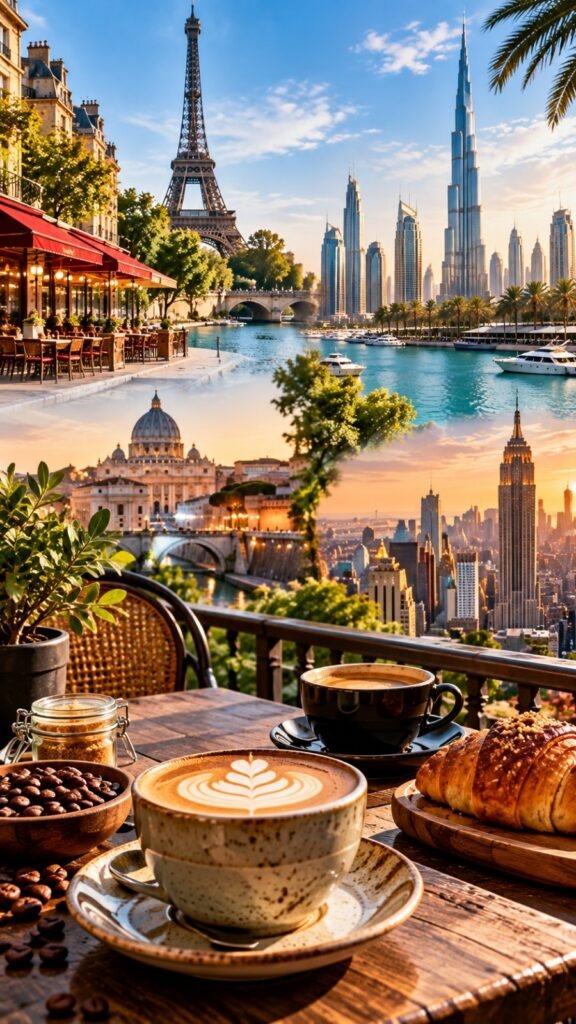
Then there are cities such as Seoul and Dubai, where cafés increasingly function as lifestyle, design and social spaces as much as places to drink coffee.
That diversity is exactly why comparing coffee cities is more meaningful than simply asking which one makes the technically “best” cup.
Which Coffee City Is Best for Your Travel Style?
A traveller who loves specialty coffee and precision brewing may naturally gravitate toward Copenhagen, Melbourne or Tokyo.
Someone interested in historic café culture will probably find Vienna, Istanbul and Milan more rewarding.
For genuinely distinctive local drinks, Hanoi’s egg coffee and Singapore’s kopi are difficult to replicate anywhere else.
Travellers interested in understanding where coffee comes from should look particularly closely at Addis Ababa and Bogotá. The relationship between the cup and the producing regions feels much more immediate in Ethiopia and Colombia.
Those who enjoy café interiors, architecture and social-media-friendly spaces will find almost endless possibilities in Seoul and Dubai.
And if coffee needs to be paired with pastries, Stockholm and Vienna make especially convincing cases for extending the coffee break much longer than originally planned.
What Makes a City One of the World’s Great Coffee Destinations?
Quantity alone is not enough.
A city with thousands of cafés can still feel generic if most of them serve the same drinks in the same way. The strongest coffee cities have something more distinctive: local habits, vocabulary, rituals and expectations.
Melbourne has extraordinarily high everyday standards. Vienna protects the idea of the coffeehouse as a social institution. Addis Ababa connects coffee with hospitality. Hanoi turns robusta into drinks unlike almost anything found elsewhere. Stockholm builds an entire pause in the day around fika.
Specialty coffee adds another dimension by encouraging drinkers to think about origin, processing, roasting and brewing.
The greatest coffee cities manage to combine these elements without losing their personality.
How to Explore a City Through Coffee
Instead of searching only for one famous café, treat coffee as a route through different neighbourhoods.
Start with the traditional drink associated with the destination. Then visit a respected modern specialty roaster and compare how the city’s younger coffee scene is changing that tradition. A market, bakery or neighbourhood café can reveal another side again.
Timing also matters.
Milanese espresso culture makes the most sense during a busy morning. Hanoi’s sidewalk cafés reward slow observation. Stockholm fika should not feel rushed, while traditional Ethiopian coffee ceremonies deliberately require time.
In other words, drinking the right coffee is only half the experience. Drinking it in the way the city does is what makes it memorable.
Are the World’s Best Coffee Cities Changing?
Absolutely.
Specialty coffee has become increasingly international, making excellent beans and sophisticated brewing equipment available in cities that were barely part of the global coffee conversation a generation ago.
Dubai is an obvious example. Seoul has also developed a highly visible café culture combining design, desserts and specialty coffee. Bogotá is strengthening the connection between Colombian producers and urban consumers, while Hanoi’s younger roasters are bringing fresh attention to high-quality Vietnamese robusta.
At the same time, traditional coffee cities are adapting rather than disappearing. Vienna now has third-wave cafés alongside historic coffeehouses, and Tokyo’s specialty movement exists beside its surviving kissaten.
That combination of preservation and reinvention makes the global coffee scene more interesting than ever.
The World’s Best Coffee City Depends on What You Want From the Cup
There is no single city that owns coffee.
Melbourne demonstrates what happens when excellent espresso becomes an everyday expectation. Vienna shows how a café can become part of a city’s intellectual and social life. Copenhagen treats beans with almost scientific attention. Tokyo turns preparation into craft. Hanoi produces drinks unmistakably connected to Vietnam, while Addis Ababa takes travellers closer to coffee’s cultural roots.
Istanbul preserves ritual. Bogotá connects the urban café with one of the world’s great producing countries. Stockholm gives coffee its own social pause, Singapore develops an entire language around ordering it, and Milan proves that sometimes the best coffee experience lasts only a few minutes at a crowded bar.
That variety is what makes coffee worth travelling for.
The world’s best coffee cities are not necessarily competing to produce the same perfect cup. Each one shows a different idea of what coffee can mean.
Do follow us on Instagram
Read More – 9 Best Places to Celebrate Negroni Week in Abu Dhabi