


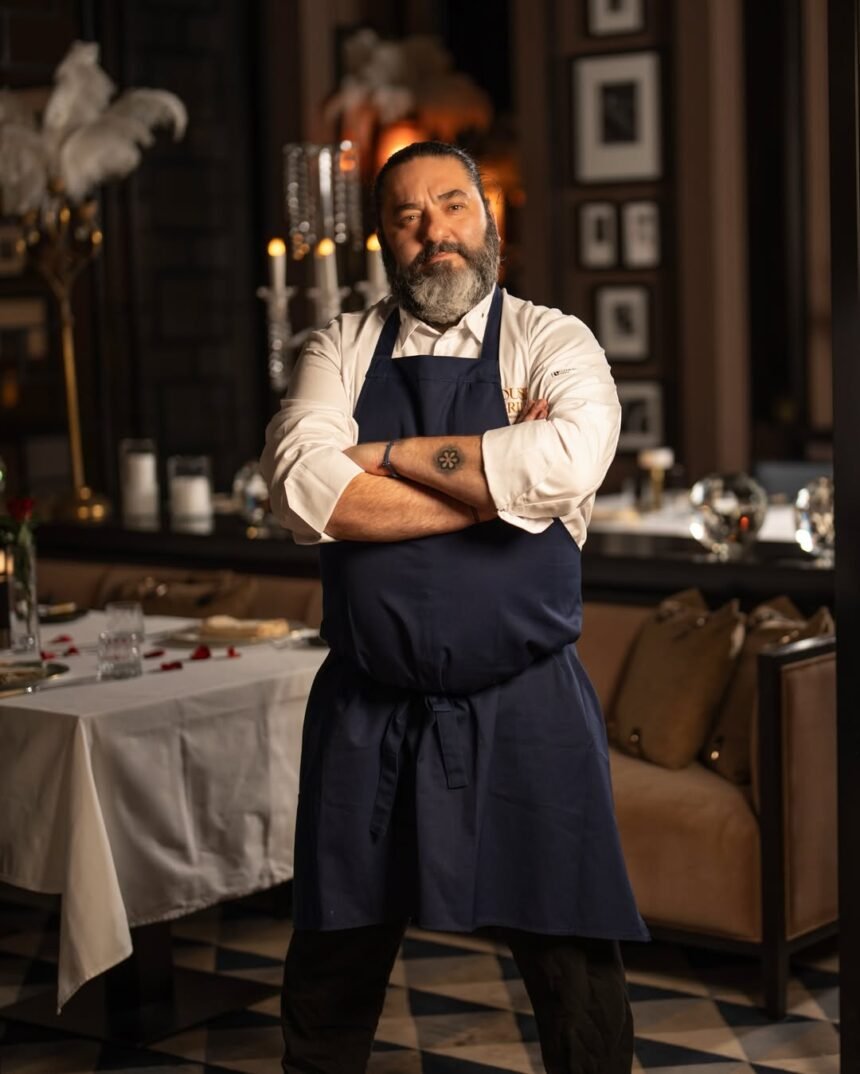
Reveals The Journey Behind His Global Kitchen
For Nicolas Isnard, cooking has never been simply about preparing a beautiful plate. It has been about curiosity, discipline, movement and the ability to make people feel something through food. From his early days in French kitchens to his work across Europe, Asia and the Middle East, his career reflects a constant desire to learn, experiment and create experiences that stay with people.
- A Passion That Started Early
- Learning From France’s Great Kitchens
- The Courage To Build His Own Culinary Identity
- A Kitchen Influenced By The World
- Nicolas Isnard Taking The Experience To The Middle East
- More Than A Restaurant Career
- Keeping Tradition While Embracing Change
- The Road Ahead For Nicolas
- A Journey Built On Curiosity
Today, Nicolas is recognised for bringing his French culinary background into international settings while continuing to remain connected to the restaurant that helped define his identity, Auberge de la Charme in Prenois, France. His work also extends to destinations such as the United Arab Emirates and Saudi Arabia, where his approach to cuisine meets new audiences and different food cultures.
His journey is not only the story of a chef who reached international kitchens. It is the story of someone who kept moving forward without losing sight of the craft that started it all.
A Passion That Started Early
Nicolas was introduced to the pleasure of food from a young age. His culinary path developed naturally, supported by a genuine love for good ingredients and the excitement of creating something with his hands.
His formal training began at hotel schools in Sète and Béziers, where he followed the traditional French culinary education route. These early years gave him an important foundation in technique, discipline and professional kitchen culture.
But education alone does not create a great chef. Nicolas understood early that the real learning would happen inside working kitchens.
His first major professional experiences exposed him to demanding culinary environments where precision and consistency were essential. Working alongside respected chefs helped him understand that excellence is built through repetition, patience and attention to detail.
One of the lessons from those early years continues to define his career: great cooking begins with respect for the product.
Learning From France’s Great Kitchens
Nicolas career developed through some of the most respected names in French gastronomy. His experience included working at establishments such as Le Prieuré and later in Paris at legendary luxury hotels including the Ritz, Plaza Athénée and Crillon.
These experiences gave him more than technical knowledge. They introduced him to different approaches to service, luxury hospitality and the expectations that come with operating at the highest levels of the industry.
He also worked alongside Gilles Goujon at Auberge du Vieux Puits, where he progressed to become sous chef and eventually a key member of the kitchen team.
Each position added another layer to his understanding of food.
Rather than treating each kitchen as simply another job, Nicolas used every experience as an opportunity to absorb knowledge. Sauces, cooking techniques, presentation, ingredient selection and kitchen organisation all became part of a larger culinary vocabulary.
That ability to keep learning would later become one of the strongest elements of his international career.
The Courage To Build His Own Culinary Identity
In 2006, Nicolas took charge of the kitchens at La Cédraie at Château de Curzay. His work quickly attracted recognition, including the Jeune Talent distinction from Gault and Millau and later the Grand de Demain recognition.
These achievements were important because they showed that Nicolas was no longer simply following the direction of established chefs. He was beginning to develop a voice of his own.
In 2008, another defining chapter began when Nicolas and David Le Comte took over Auberge de la Charme in Prenois.
The restaurant became a significant part of his professional identity.
Located near Dijon, Auberge de la Charme combines a warm, traditional setting with contemporary and creative cuisine. Nicolas and David developed a style that allows French foundations to meet influences discovered during their travels.
The result is food that can feel familiar and surprising at the same time.
One phrase from Nicolas early description of his motivation captures the personal side of his relationship with food: “Ma gourmandise, 115 kg de gourmandise.”
Behind the humour is a simple idea. His connection with food began with genuine enjoyment, and that sense of pleasure remains central to his work.
A Kitchen Influenced By The World
One of the most interesting aspects of Nicolas career is his relationship with travel.
His work has taken him to different parts of Asia and the Middle East, where he has encountered new ingredients, techniques, dining traditions and hospitality cultures.
Rather than treating international cuisine as something separate from French gastronomy, Nicolas often uses travel as a source of inspiration.
At Auberge de la Charme, the influence of destinations such as Asia, the Middle East and Mauritius can be found in the culinary experience. The restaurant presents a journey through dishes rather than relying only on traditional French expectations.
This approach reflects something important about modern gastronomy. Culinary identity does not have to remain fixed.
A chef can respect tradition while still allowing new experiences to influence the way food is prepared and presented.
For Nicolas, travel appears to have become part of that creative process.
Nicolas Isnard Taking The Experience To The Middle East
Nicolas international work has also brought him to the Middle East, a region that has rapidly developed into an important destination for luxury hospitality and ambitious culinary projects.
In Riyadh, his name is associated with House of Grill at Fairmont Riyadh, where the concept focuses on premium grilled meats, refined sides and an atmosphere inspired by the glamour of the Gatsby era.
The project demonstrates another side of Nicolas culinary identity.
While French cuisine has played a major role in his career, he is not restricted to one format. His experience allows him to work across different concepts while maintaining attention to quality, flavour and presentation.
His presence in Saudi Arabia also reflects the growing movement of internationally recognised culinary talent into the region.
For chefs like Nicolas, the Middle East provides an opportunity to engage with new audiences while participating in a rapidly evolving hospitality landscape.
More Than A Restaurant Career
Behind the awards, kitchens and international projects is a career built through years of demanding work.
Professional kitchens can be unforgiving environments. They require long hours, discipline, teamwork and the ability to remain consistent even when pressure is high.
Nicolas journey demonstrates why success in gastronomy rarely happens overnight.
His career developed step by step, from culinary school to demanding kitchens, from senior positions to leading his own restaurant, and eventually to international culinary projects.
Every stage contributed something different.
The early years built technique. The major French kitchens built discipline. Auberge de la Charme created space for personal expression. International travel expanded his perspective.
Together, these experiences created the chef that Nicolas is today.
Keeping Tradition While Embracing Change
What makes Nicolas journey particularly relevant today is his ability to balance two seemingly different ideas.
One is tradition.
The other is constant change.
French gastronomy has a deep history and strong culinary principles. Yet modern diners are increasingly interested in experiences that cross borders and cultures.
Nicolas work reflects this changing landscape.
His cooking remains connected to French technique, but his ideas are shaped by the places he visits, the people he meets and the ingredients he discovers.
This balance allows him to remain rooted without becoming limited.
It also offers an important lesson for aspiring chefs and entrepreneurs. Building a strong identity does not necessarily mean refusing outside influences. Sometimes, identity becomes stronger when it is tested, expanded and refined through new experiences.
The Road Ahead For Nicolas
Nicolas continues to operate across different culinary environments, with Auberge de la Charme remaining an important foundation while his international work takes him to new destinations.
His professional journey shows that the modern chef can be much more than the person working behind a kitchen pass.
A chef can become an entrepreneur, creative director, international collaborator, mentor and storyteller.
For Nicolas, every restaurant becomes an opportunity to communicate something through food.
That could be a connection to French culinary tradition, an influence from a journey through Asia, an interpretation of Middle Eastern hospitality or a completely new dining concept.
The common thread is the desire to create an experience rather than simply serve a meal.
A Journey Built On Curiosity
Nicolas story ultimately comes down to one powerful quality: curiosity.
He has spent decades learning from chefs, ingredients, cultures and destinations. Instead of seeing experience as something that ends once a certain level of success is reached, he has continued to treat every new environment as another classroom.
That mindset has helped him move from the traditional kitchens of France into an increasingly international culinary world.
His journey also offers inspiration beyond gastronomy. Success can be built gradually through education, hard work, mentorship, experimentation and the courage to step into unfamiliar territory.
For Nicolas, the kitchen has always been more than a workplace. It has been a place where discipline meets creativity and where tradition can meet discovery.
As his international journey continues, his story remains a reminder that the most memorable careers are often created by people willing to keep learning long after they have already achieved success.
Follow Nicolas Isnard on Instagram
Read More – Sanjeev Sampat on Real Estate Investment, Leadership, and Growth