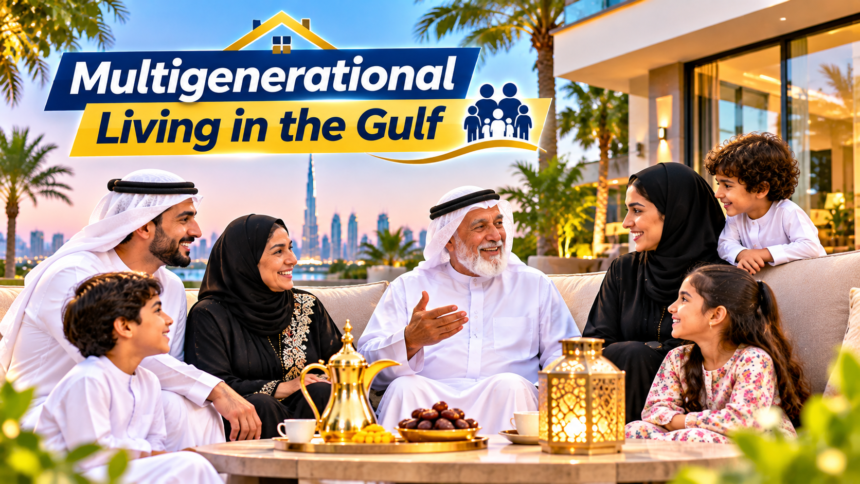
How Modern Gulf Homes Are Being Redesigned for Multiple Generations
For many families across the Gulf, the idea of grandparents, parents and children sharing a home is far from new. Extended-family households have traditionally played an important role in family life, providing opportunities for shared responsibilities, regular interaction and support between generations. However, as cities expanded and lifestyles changed, smaller households and independent apartments became increasingly common in many urban communities.
- What Is Multigenerational Living in the Gulf?
- 7 Reasons Multigenerational Living Is Making a Comeback
- How Dubai and Saudi Arabia Are Responding to Family Housing Needs
- How Modern Gulf Homes Are Being Redesigned for Multiple Generations
- The Economics of Sharing a Family Home
- Challenges of Multigenerational Living in Modern Gulf Homes
- The Future of Multigenerational Living in the Gulf and FAQs
Today, multigenerational living in the Gulf is receiving renewed attention as families reconsider how their homes can accommodate changing needs, rising housing costs and long-term responsibilities.
In cities such as Dubai, Abu Dhabi and Riyadh, the discussion is no longer simply about fitting more people into a larger property. Increasingly, architects, developers and homeowners are examining how different generations can live together while maintaining privacy, independence and comfort.
A modern multigenerational home might feature a separate ground-floor suite for grandparents, private living quarters for adult children and shared spaces where the family gathers.
Other households prefer relatives to live in separate homes within the same compound or neighbourhood.
Both arrangements can provide family connections without requiring everyone to follow identical routines.
Recent housing developments and policy changes reflect growing interest in adaptable family accommodation.
In March 2025, Dubai Municipality introduced its Home First initiative, expanding certain design and construction options for Emirati families. The initiative allows eligible homeowners to create additional family accommodation, including a separate villa for a son within an existing family property, subject to applicable conditions.
Property research also points towards sustained demand for family-oriented villas and townhouses.
According to Cushman & Wakefield Core, Dubai villa prices increased by approximately 15% in 2025, compared with 12% for apartments. The firm identified demand from end users seeking larger homes as one contributing factor.
However, the distinction is important: demand for larger homes does not necessarily prove that more households contain three generations.
The available evidence supports growing attention to flexible family housing, but comprehensive Gulf-wide statistics demonstrating a uniform increase in multigenerational households remain limited.
The more accurate picture is one of renewed interest in an established living arrangement, shaped by modern economic pressures, demographic changes and evolving residential design.
What Is Multigenerational Living in the Gulf?
Multigenerational living refers to a household arrangement where people from different generations live together or in closely connected residences.
It may involve grandparents, parents and children living under one roof, adult siblings sharing a family property or several related households occupying separate units within a compound.
The arrangement is not limited to one particular type of family.
Some households share expenses and responsibilities, while others maintain separate finances and independent daily routines.
Traditional Family Homes
Across different Gulf communities, extended families have historically maintained close residential relationships.
Traditional houses and compounds often placed considerable importance on communal gathering areas, hospitality and family privacy.
However, arrangements have varied across countries, communities and income groups.
It would be misleading to suggest that every Gulf family historically lived in a large shared household.
The Modern Multigenerational Home
Contemporary families may want the advantages of shared living without sacrificing independence.
A property might include multiple entrances, private bathrooms, separate kitchens and adaptable bedrooms.
These features make it easier for relatives to share a property while respecting different schedules and preferences.
Common Living Arrangements
| Housing Model | Typical Arrangement | Main Advantage |
|---|---|---|
| Shared Family Villa | Multiple generations in one home | Daily family interaction |
| Villa With Separate Annex | Private accommodation on one property | Balance of closeness and privacy |
| Family Compound | Separate homes within shared grounds | Greater independence |
| Adjacent Townhouses | Relatives living next door | Convenience without shared interiors |
| Large Apartment | Shared urban accommodation | Potentially lower housing costs |
| Same-Neighbourhood Living | Independent homes nearby | Flexible support |
The defining feature is the relationship between generations rather than the property’s size or architectural style.
7 Reasons Multigenerational Living Is Making a Comeback
The renewed interest in extended-family housing reflects several interconnected considerations.
For some households, the arrangement is primarily cultural. For others, it offers practical benefits involving finances, childcare or support for older relatives.
1. Rising Housing Costs
Housing expenses can influence how families organise their living arrangements.
Rent, mortgage payments, utilities and maintenance can represent significant household commitments.
When relatives share one suitable property, they may be able to divide certain expenses.
However, larger homes often involve higher purchase prices, electricity consumption and maintenance costs.
Sharing accommodation is therefore not automatically cheaper.
2. Supporting Older Family Members
Some families prefer arrangements that allow older relatives to remain close to children and grandchildren.
This can make everyday assistance and social interaction more convenient.
A ground-floor bedroom, accessible bathroom and suitable circulation space may also help residents with changing mobility needs.
However, living together should not be regarded as a substitute for professional healthcare or appropriate support services.
3. Easier Family Coordination
Busy work and school schedules can make it difficult for relatives to spend time together.
Living in the same home or compound may make shared meals, celebrations and family activities easier to organise.
It can also reduce the travel involved in visiting relatives.
4. Sharing Childcare Responsibilities
Some households value having grandparents or other adult relatives nearby when raising children.
Family members may be able to help with school pickups, supervision or routine activities.
However, childcare responsibilities should be agreed upon rather than automatically assigned to older relatives.
5. Maintaining Cultural Connections
Extended-family living can support the sharing of traditions, languages and family experiences.
Children may have regular opportunities to interact with older generations.
However, family relationships depend on mutual respect and communication, not simply physical proximity.
6. Greater Housing Flexibility
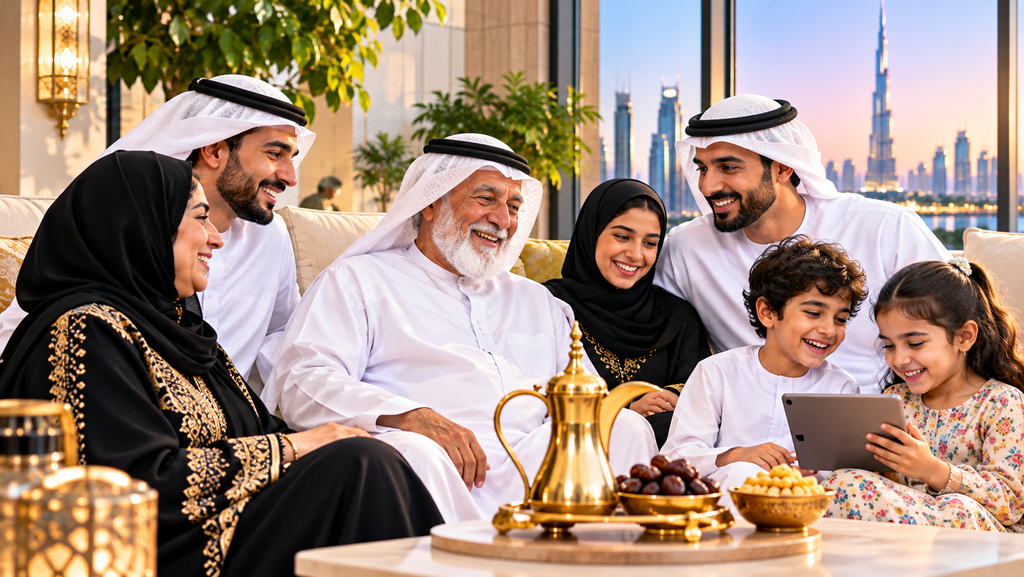
Modern villa layouts can provide separate spaces for family members.
A household may adapt its accommodation as children become adults or older residents need different facilities.
This flexibility can make a property more useful over time, although structural modifications must comply with local regulations.
7. Long-Term Residential Planning
Families increasingly need to consider how their housing arrangements may change over several years.
Rather than moving whenever their circumstances change, some homeowners may prefer a property capable of accommodating different life stages.
Such flexibility can be valuable, provided the home remains affordable and suitable for its occupants.
Seven Benefits Compared
| Factor | Potential Benefit | Important Consideration |
|---|---|---|
| Shared Expenses | Lower individual costs | Total property expenses |
| Older Family Support | Easier everyday assistance | Accessibility and care needs |
| Family Coordination | More frequent interaction | Different schedules |
| Childcare | Additional family support | Clear responsibilities |
| Cultural Connections | Intergenerational relationships | Respect for independence |
| Flexible Housing | Adaptable living spaces | Building approvals |
| Long-Term Planning | Fewer disruptive moves | Changing family circumstances |
These advantages explain why shared family housing remains attractive, but they do not apply equally to every household.
How Dubai and Saudi Arabia Are Responding to Family Housing Needs
Housing policies and market developments provide useful evidence of how Gulf cities are adapting to changing family requirements.
The UAE and Saudi Arabia offer examples of residential planning that emphasises flexibility, suitable housing options and family well-being.
Dubai’s Home First Initiative
Dubai Municipality launched the Home First initiative on March 17, 2025.
It introduced planning amendments intended to support Emirati family housing needs and improve the flexibility of residential development.
Among its provisions, eligible homeowners can construct a side family annex containing spaces such as bedrooms, living rooms and kitchens.
The initiative also permits the construction of a separate villa for a son within an existing family property, subject to the relevant requirements.
Other changes include greater flexibility for upper-floor extensions and setbacks.
These measures can help families adapt properties to accommodate changing needs.
However, the initiative is directed towards eligible Emirati homeowners and should not be interpreted as permission for every Dubai property owner to construct additional accommodation.
Dubai’s Demand for Larger Homes
Residential market reports indicate continued interest in villas and townhouses.
Cushman & Wakefield Core reported that Dubai’s residential sales prices increased by 13% year-on-year in 2025.
Villas recorded approximately 15% growth, compared with 12% for apartments.
The firm’s research also identified limited villa supply and demand for larger housing formats as important market factors.
However, these statistics measure property performance, not the number of multigenerational households.
Saudi Arabia’s Evolving Housing Market
Saudi Arabia is expanding access to different housing formats through its Housing Program and Sakani initiatives.
According to the Ministry of Municipalities and Housing, 63,076 Saudi families moved into their first homes during the first half of 2026.
The ministry also reported that Saudi household homeownership reached 66.24% by the end of 2025.
These figures demonstrate progress in homeownership, but they do not establish how many households include multiple generations.
Changing Residential Communities
Research published by Knight Frank in January 2026 highlights the development of integrated residential communities in Saudi Arabia.
The report identifies growing demand for different housing formats, including townhouses and low-rise apartments, alongside changing household structures.
These developments suggest that flexible housing choices are becoming increasingly important.
UAE and Saudi Housing Developments
| Market | Relevant Development | Implication |
|---|---|---|
| Dubai | Home First initiative | More flexible eligible family housing |
| Dubai | Strong villa demand | Continued interest in larger homes |
| Saudi Arabia | Sakani housing options | Greater choice for eligible households |
| Saudi Arabia | Integrated communities | More varied residential formats |
| Wider GCC | Adaptable housing design | Potential for changing family needs |
While these developments support family-oriented housing, the Gulf should not be treated as one uniform residential market.
How Modern Gulf Homes Are Being Redesigned for Multiple Generations
The modern multigenerational home is increasingly discussed in terms of adaptability.
The challenge is to create spaces where relatives can remain connected while maintaining appropriate personal boundaries.
This requires more than simply adding bedrooms.
Separate Entrances and Living Areas
Independent entrances can reduce disruption when different generations follow different schedules.
Some homes also provide separate lounges or kitchen facilities.
This arrangement can be useful when adult family members want greater independence.
However, additional kitchens or residential units may require specific planning approval.
Ground-Floor Accommodation
A bedroom on the ground floor can be useful for older residents or family members with mobility limitations.
Design considerations may include avoiding unnecessary steps, providing suitable bathroom facilities and ensuring adequate lighting.
Accessibility should be planned around the actual needs of residents.
Shared Family Spaces
Common dining areas, courtyards and living rooms can encourage family interaction.
However, shared spaces should not eliminate the need for private accommodation.
A balanced layout gives residents opportunities to gather and spend time alone.
Adaptable Rooms
Some families want rooms that can change purpose over time.
A home office might later become a bedroom, while another space could serve as a study or sitting room.
Adaptability can make housing more suitable for changing household circumstances.
Privacy in Gulf Residential Design
Privacy remains an important consideration in many Gulf homes.
Architectural research published in Frontiers in Built Environment in 2025 discusses the continuing influence of family structures, cultural expectations and adaptable housing design in the region.
However, privacy preferences vary between households and should not be treated as identical across all Gulf societies.
Design Features Compared
| Feature | Purpose | Consideration |
|---|---|---|
| Separate Entrance | Independent access | Planning rules |
| Ground-Floor Suite | Easier accessibility | Bathroom design |
| Multiple Living Areas | Privacy and flexibility | Space requirements |
| Adaptable Rooms | Changing family needs | Construction feasibility |
| Shared Courtyard | Family interaction | Climate and maintenance |
| Acoustic Separation | Reduced noise disturbance | Building materials |
| Energy-Efficient Systems | Operational efficiency | Installation and maintenance costs |
A successful design supports both shared family life and individual independence.
The Economics of Sharing a Family Home
Financial considerations may influence a family’s decision to live together.
However, comparing housing arrangements requires examining more than rent or mortgage payments.
The total cost depends on property size, location, financing, utilities and household responsibilities.
Shared Expenses
Relatives living together may divide expenses such as internet access, maintenance and certain household services.
They may also reduce the need to maintain multiple properties.
However, larger households can consume more water and electricity and generate additional maintenance requirements.
Buying a Larger Property
A family considering a larger villa may face a higher purchase price or mortgage commitment.
Other expenses can include insurance, registration fees, maintenance and renovation.
The decision should reflect affordability and long-term financial stability.
An Illustrative Housing Comparison
Consider a hypothetical family comparing two separate residences with one larger shared property.
| Annual Expense | Two Separate Homes | Shared Family Home |
|---|---|---|
| Housing Payments | AED 180,000 | AED 145,000 |
| Utilities | AED 20,000 | AED 25,000 |
| Maintenance | AED 12,000 | AED 18,000 |
| Internet and Shared Services | AED 8,000 | AED 5,000 |
| Total Annual Cost | AED 220,000 | AED 193,000 |
Under these fictional assumptions, the shared arrangement costs AED 27,000 less annually.
However, the figures are illustrative, not actual market quotations. They exclude moving expenses, financing differences, renovations, taxes and transaction fees.
A different property comparison could produce the opposite outcome.
Financial Agreements Matter
Families sharing a property should discuss how expenses will be divided.
Questions may include who pays for maintenance, whether adult relatives contribute to utilities and how major renovations will be funded.
Clear expectations can reduce misunderstandings.
Property Ownership Considerations
Shared living does not automatically mean shared ownership.
One family member may own the home while others contribute to operating expenses.
Families considering joint ownership should obtain appropriate legal and financial advice concerning their particular jurisdiction.
Challenges of Multigenerational Living in Modern Gulf Homes
Living with several generations can offer benefits, but it also introduces challenges.
Different routines, expectations and financial responsibilities may create tension if they are not addressed clearly.
Privacy and Personal Boundaries
Family members may want different levels of social interaction.
Younger adults may require private working spaces, while older relatives may prefer quieter surroundings.
A suitable home should allow people to spend time together without feeling obligated to participate in every activity.
Different Daily Schedules
Work, school and retirement routines can vary considerably.
Noise, visitors and shared facilities may become sources of disagreement.
Separate living areas and clear household arrangements can help manage these differences.
Financial Responsibilities
Shared housing costs need to be discussed openly.
Without clear agreements, one person may feel responsible for a disproportionate share of expenses.
Families should also plan for unexpected maintenance and changes in income.
Caregiving Expectations
Living near older family members can make everyday assistance easier.
However, caregiving can involve substantial time and emotional responsibilities.
These duties should be discussed fairly and supplemented by professional care when necessary.
Legal and Planning Restrictions
Property modifications must comply with applicable construction rules, approvals and ownership arrangements.
For example, Dubai’s Home First provisions apply under specific eligibility and planning conditions.
Owners should not assume that an annex, separate entrance or second residential unit can be constructed without authorisation.
Main Challenges and Responses
| Challenge | Potential Difficulty | Practical Response |
|---|---|---|
| Limited Privacy | Lack of personal space | Separate living zones |
| Conflicting Schedules | Noise and disruption | Clear household routines |
| Unequal Expenses | Financial tension | Written cost-sharing plan |
| Caregiving Pressure | Uneven responsibilities | Agreed support arrangements |
| Property Modifications | Regulatory issues | Check approvals |
| Family Disagreements | Reduced household harmony | Regular communication |
Multigenerational living works best when participation is voluntary and family members respect one another’s independence.
The Future of Multigenerational Living in the Gulf and FAQs
As Gulf cities continue to develop, housing needs are likely to remain diverse.
Some residents will prefer compact apartments and independent living, while others may seek larger homes or arrangements that keep relatives nearby.
The renewed interest in multigenerational housing reflects this diversity rather than a complete reversal of urban living trends.
Flexible Housing Could Become More Important
Homes that accommodate different life stages may appeal to families planning for long-term residence.
Separate suites, adaptable rooms and accessible facilities could make properties more useful over time.
However, these features require appropriate design and investment.
Community Planning Matters
Families may not need to share one roof to benefit from living close to each other.
Neighbourhoods with different property sizes, accessible public spaces and essential services can make nearby independent living practical.
This may offer a useful alternative to large shared households.
What Developers Should Consider
Developers interested in family-oriented projects can assess demand for adaptable layouts, multiple living areas and accessibility features.
However, project decisions should be based on verified buyer preferences, affordability and local regulations.
Frequently Asked Questions
What is multigenerational living?
Multigenerational living involves people from different generations sharing a home or living in closely connected residences.
Why is multigenerational living attracting attention in the Gulf?
Families may value shared expenses, proximity to relatives, childcare support and adaptable housing.
Is multigenerational living a new trend in the UAE?
No. Extended-family living has historical roots. The current interest concerns how these arrangements can work in modern urban homes.
Are more families living together in the Gulf?
There is evidence of interest in flexible family housing, but comprehensive Gulf-wide data confirming a uniform increase in multigenerational households is limited.
What is Dubai’s Home First initiative?
It is a Dubai Municipality initiative launched in March 2025 that provides eligible Emirati homeowners with greater flexibility for certain residential extensions and family accommodation.
Can families build a second villa on one property in Dubai?
Eligible Emirati homeowners may be able to do so under the Home First initiative, subject to the applicable planning and social eligibility conditions.
Is sharing a home always cheaper?
No. Savings depend on the costs of the larger property, utilities, financing and maintenance.
What is the best home design for multiple generations?
There is no universal design. Suitable features may include private living areas, accessible bedrooms and adaptable spaces.
Can adult children maintain independence in a shared home?
Yes. Separate entrances and private living areas may help, alongside clear household expectations.
Will multigenerational living replace independent housing?
There is no evidence that it will. Gulf housing markets serve households with different preferences, needs and budgets.
Final Thoughts
Multigenerational living is attracting renewed interest as Gulf families reconsider the relationship between housing, finances and long-term family support.
For some households, sharing a property offers opportunities to maintain close relationships and divide certain responsibilities.
For others, living in separate homes within the same compound or neighbourhood provides a better balance between independence and family connection.
Recent initiatives such as Dubai Municipality’s Home First programme demonstrate how housing regulations can respond to family needs.
Meanwhile, property research highlights continued demand for larger homes and more varied residential layouts in parts of the region.
However, modern multigenerational housing should not be understood simply as a return to traditional living arrangements.
Today’s households may require greater privacy, accessible facilities, flexible spaces and clear financial agreements.
Ultimately, multigenerational living in the Gulf is part of a wider conversation about designing homes that remain useful as families change.
Its future will depend on affordability, individual preferences and the ability of residential design to accommodate both togetherness and independence.
Do follow us on Instagram
Read More – Personal AI Assistants: 7 Serious Risks and Who Is Responsible