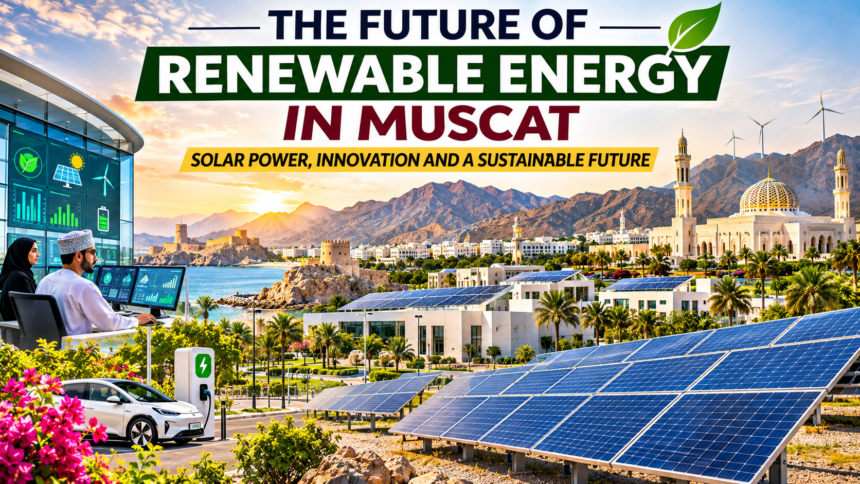
The Future of Renewable Energy in Muscat
Muscat, the capital of Oman, is gradually moving towards a cleaner and more sustainable energy future. As the city grows, its demand for electricity is also increasing. Homes, offices, shopping centres, hotels, hospitals, and industries all need a reliable supply of power, especially during the hot summer months when air conditioning is essential.
- 1. Why Is Renewable Energy Important for Muscat?
- 2. Oman’s Renewable Energy Targets and Vision 2040
- 3. Solar Energy Has Strong Potential in Muscat
- 4. Major Solar Projects Are Already Operating in Muscat
- 5. Rooftop Solar Can Give Homes and Businesses More Choices
- 6. Battery Storage Will Make Solar Power More Useful
- 7. Wind Energy Can Support Muscat’s Renewable Energy Future
- 8. Green Hydrogen May Create New Energy Opportunities
- 9. Electric Vehicles and Renewable Energy Can Work Together
- 10. Energy-Efficient Buildings Will Reduce Electricity Demand
- 11. Investment Will Create New Business and Career Opportunities
- 12. Challenges Facing Renewable Energy in Muscat
- 13. What Does the Future of Renewable Energy in Muscat Look Like?
- Conclusion: Muscat Is Moving Towards a Cleaner Energy Future
- Frequently Asked Questions (FAQs)
For many years, natural gas and other traditional energy sources have played a major role in supplying electricity across Oman. However, the country is now investing in renewable energy to reduce carbon emissions, improve energy security, and support long-term economic growth.
Solar energy has a particularly important role in this transition. With strong sunlight for much of the year, Muscat has good opportunities to use rooftop solar panels and other solar power systems. The Oman Convention and Exhibition Centre, for example, already operates a large rooftop solar installation. Petroleum Development Oman has also developed a major solar car park at its Mina Al Fahal headquarters.
The future of renewable energy in Muscat will involve more than installing solar panels. It will also depend on battery storage, electric vehicles, smart electricity networks, energy-efficient buildings, green hydrogen, and investment in new technologies.
In this article, we explore the future of renewable energy in Muscat, including current projects, government targets, solar opportunities, challenges, business investment, and the changes that could shape the city’s energy system in the coming years.
1. Why Is Renewable Energy Important for Muscat?
Muscat is an expanding city with growing residential areas, commercial buildings, transport networks, and public facilities. As more people and businesses use electricity, the need for a reliable and sustainable power supply becomes increasingly important.
Renewable energy can help meet part of this demand while reducing dependence on fossil fuels. It can also support Oman’s wider efforts to protect the environment and diversify its economy.
There are several reasons why renewable energy matters for Muscat:
- Reducing carbon emissions: Solar and wind power produce electricity without directly burning fossil fuels during operation.
- Improving energy security: Using different sources of energy can reduce dependence on a single fuel source.
- Supporting economic growth: Renewable energy projects can attract investment and create new jobs.
- Reducing electricity costs: Suitable solar installations may help homes and businesses lower their electricity purchases over time.
- Encouraging innovation: Clean energy projects create demand for modern equipment, digital systems, and technical skills.
- Supporting national goals: Renewable energy is an important part of Oman’s long-term sustainability and development plans.
The aim is not to replace every traditional energy source immediately. Instead, Oman is gradually increasing the contribution of renewable energy to its electricity supply.
Across Oman, major solar and wind projects, including Ibri II, Manah, and the Dhofar Wind Farm, provide around 1,550 MW of renewable energy. This accounts for about 9.26% of the country’s total electricity generation, and more renewable energy projects are being developed.
2. Oman’s Renewable Energy Targets and Vision 2040
The future of renewable energy in Muscat and across Oman focuses on reducing pollution, using more clean energy, and depending less on fossil fuels. The country plans to expand solar and wind energy as part of its Oman Vision 2040 goals.
Oman’s renewable energy plans are closely connected with Oman Vision 2040 and the country’s goal of achieving net-zero emissions by 2050.
The government is investing in solar and wind energy, developing new electricity projects, and encouraging private companies to participate in the energy transition.
In a Ministry of Foreign Affairs update published on 9 March 2026, Oman outlined targets to increase renewable energy’s share of national electricity generation to:
- 30–40% by 2030
- 60–70% by 2040
- 90–100% by 2050
The same update reported that grid-connected renewable sources accounted for 9.46% of electricity generation in 2025, compared with 4.26% in 2024. Renewable electricity production exceeded four million megawatt-hours during 2025.
These are national targets, not targets limited to Muscat. However, they are important for the capital because electricity generated by renewable projects across Oman can contribute to the wider national electricity system.
The government’s plans show that renewable energy is becoming an important part of the country’s future development.
3. Solar Energy Has Strong Potential in Muscat
Solar power is one of the most promising renewable energy options for Muscat. The city receives strong sunlight for much of the year, making solar photovoltaic (PV) systems suitable for many buildings and facilities.
Solar panels convert sunlight into electricity. They can be installed on rooftops, parking structures, commercial buildings, industrial facilities, and suitable open spaces.
Oman has opened its first 1.5 MW community solar station in Muscat under the Imtidad programme. It allows residents to use clean solar energy without having to install solar panels on their own rooftops.
Muscat has several types of buildings that could benefit from solar power, including:
- Residential villas and apartment buildings.
- Shopping centres and supermarkets.
- Hotels and resorts.
- Schools and universities.
- Office buildings.
- Warehouses and industrial facilities.
- Government buildings and public facilities.
One advantage of rooftop solar is that it can use existing building space rather than requiring a separate area of land.
However, solar panels in Muscat need regular cleaning and maintenance because dust can collect on their surfaces. High temperatures can also affect panel performance, so good system design and suitable equipment are important.
4. Major Solar Projects Are Already Operating in Muscat
Muscat is already home to important solar energy projects. One of the best-known examples is the rooftop solar installation at the Oman Convention and Exhibition Centre (OCEC).
The project was officially commissioned in April 2025 through a partnership between OCEC, TotalEnergies Renewables Distributed Generation Middle East and Africa, and OMRAN Group.
The installation includes:
- 8,300 solar photovoltaic panels.
- Approximately 16,600 square metres of rooftop coverage.
- A total capacity of around 4.6 megawatt-peak (MWp).
- Expected generation of more than 7,000 megawatt-hours annually.
According to TotalEnergies, the system supplies around 25% of the venue’s total energy needs and is expected to avoid approximately 3,300 tonnes of carbon dioxide emissions each year.
The panels also provide shade to parts of the building, helping reduce direct heat exposure on the roof.
This project shows how large commercial and public buildings in Muscat can use available rooftop space to produce clean electricity.
5. Rooftop Solar Can Give Homes and Businesses More Choices
Rooftop solar is likely to become an important part of Muscat’s renewable energy future.
Homes and businesses can install solar panels to generate electricity for their own use. Depending on the system, regulations, and connection arrangements, they may also be able to connect their solar installations to the electricity grid.
Oman’s Sahim initiative, launched in 2017, established a framework for households and businesses to install grid-connected solar photovoltaic systems.
A later Sahim II residential programme was planned to encourage wider rooftop solar installations, with its first phase envisaging systems for up to 3,000 residential buildings in Muscat Governorate.
In June 2026, the Authority for Public Services Regulation also launched Imtidad, a community solar programme. It is designed to allow eligible households and organisations to benefit from solar electricity without having to install individual rooftop panels or purchase their own systems.
These programmes could help more people access renewable electricity, including those whose buildings are not suitable for rooftop solar.
Before installing a system, homeowners should:
- Contact their electricity distribution company.
- Check the current approval and connection requirements.
- Use approved solar contractors.
- Compare equipment quality and warranties.
- Understand installation and maintenance costs.
- Check how electricity credits or savings are calculated.
6. Battery Storage Will Make Solar Power More Useful
One challenge with solar power is that electricity generation depends on sunlight. Solar panels produce most of their electricity during daylight hours, while homes and businesses may also need power in the evening.
Battery storage can help manage this difference.
A battery system stores electricity generated by solar panels and makes it available later when sunlight is limited or demand is higher.
For Muscat, battery storage could support:
- Residential solar systems.
- Commercial buildings.
- Hospitals and other important facilities.
- Electricity network stability.
- Charging stations for electric vehicles.
- Larger solar power projects.
At the national level, Oman is already moving towards combining renewable generation with storage. The Ministry of Foreign Affairs reported in March 2026 that the Ibri solar project under development includes a battery electricity storage system with a capacity of 100 megawatt-hours, expected to support grid flexibility.
Although this project is outside Muscat, its importance extends to the national electricity system.
As more renewable energy is added to the grid, storage will become increasingly useful for managing changes in electricity supply.
7. Wind Energy Can Support Muscat’s Renewable Energy Future
Solar energy receives much of the attention in Oman, but wind power is also an important part of the country’s renewable energy plans.
Wind turbines use moving air to generate electricity. Their output depends on wind speed, location, and the design of the turbines.
Oman has already developed the Dhofar Wind Farm, which is located outside Muscat. According to Nama Electricity Generation, the project has a capacity of 50 megawatts and includes 13 wind turbines. It was developed to supply clean electricity to communities in Dhofar.
Other wind projects are also being planned or developed in locations such as Dhofar, Duqm, Mahout, and Sadah.
For Muscat, this means that wind power may contribute to the electricity supply through the national grid even though the main wind farms are located in other parts of the country.
Oman has been selected to host the 23rd World Wind Energy Conference in 2027. This shows the country’s growing importance in wind energy development, innovation, and investment across the region.
The future role of wind energy will depend on careful studies of wind conditions, land suitability, environmental effects, and connection costs.
8. Green Hydrogen May Create New Energy Opportunities
Green hydrogen is another area that could support Oman’s long-term energy transition.
It is produced by using renewable electricity to separate hydrogen from water through a process called electrolysis. When renewable power is used, the production process can have lower carbon emissions than conventional hydrogen production.
Oman is developing its green hydrogen sector as part of a wider national strategy. Although many large hydrogen developments are planned in areas outside Muscat, the capital can play an important role in research, investment, technical services, and energy-sector coordination.
Muscat also has a practical example of green hydrogen technology.
In February 2025, Oman’s first hydrogen vehicle filling station was launched near Muscat International Airport. The station uses solar-powered electrolysis and is designed to produce up to 130 kilograms of green hydrogen per day. It also provides electric vehicle charging services.
The project demonstrates how solar power can support new forms of transport fuel.
Green hydrogen may create future opportunities in:
- Heavy transport.
- Industrial energy.
- Shipping fuels.
- Energy storage.
- Export markets.
- Clean technology research.
However, green hydrogen production requires electricity, water, and specialised equipment. Its future success will depend on costs, infrastructure, demand, and responsible resource management.
9. Electric Vehicles and Renewable Energy Can Work Together
Transport is another area where renewable energy can make a difference.
Electric vehicles (EVs) use electricity instead of petrol or diesel for driving. When they are charged using renewable electricity, they can help reduce emissions from transport.
Muscat is gradually developing its electric vehicle charging network. In March 2026, Muscat Municipality expanded charging facilities to locations including Al Khuwair Square and the Green Walkway in Al Seeb.
According to Oman Observer, the national network had 160 charging points in 2025, including 49 in Muscat. The government planned to increase the number of charging stations across Oman to 350 by 2027.
Solar-powered charging stations and charging facilities connected to renewable electricity could become more common as the network grows.
Some possible future developments include:
- Solar-powered parking canopies.
- Public charging stations.
- Charging facilities at shopping centres.
- Workplace charging points.
- Electric buses and commercial vehicles.
- Smart systems that manage charging times.
This combination of renewable electricity and cleaner transport could support a more sustainable urban environment.
10. Energy-Efficient Buildings Will Reduce Electricity Demand
Renewable energy is important, but using electricity efficiently is equally necessary.
Muscat’s hot climate means that air conditioning can account for a large share of electricity use in many buildings. Better building design can reduce cooling requirements and lower energy demand.
Energy-efficient buildings use design features and technology that help maintain comfortable indoor temperatures while using less electricity.
Some useful measures include:
- Better roof and wall insulation.
- Energy-efficient air-conditioning systems.
- Double-glazed windows.
- Shading devices and covered parking.
- LED lighting.
- Smart temperature controls.
- Solar panels on suitable rooftops.
The German University of Technology in Oman has also developed research and demonstration work around climate-responsive building design, including its GUtech Eco House in Muscat.
These ideas show that renewable energy and energy efficiency should work together. Producing clean electricity is useful, but reducing unnecessary consumption can make the overall energy system more effective.
11. Investment Will Create New Business and Career Opportunities
The growth of renewable energy is creating opportunities for local and international businesses.
Muscat can benefit from its position as Oman’s administrative, commercial, and educational centre. Many companies involved in energy services, engineering, construction, consulting, and technology operate from or serve the capital.
Renewable energy development can support jobs in areas such as:
- Solar panel installation and maintenance.
- Electrical engineering.
- Battery storage systems.
- Energy auditing.
- Project management.
- Green building design.
- Electric vehicle charging services.
- Hydrogen technology.
- Environmental consulting.
- Research and technical training.
Small businesses may also find opportunities to supply solar equipment, provide cleaning and maintenance services, develop energy-monitoring software, or install charging points.
Training will be important because modern energy systems need people with practical technical knowledge.
Oman can increase local economic benefits by developing skills, supporting local suppliers, and encouraging companies to participate in renewable energy projects.
12. Challenges Facing Renewable Energy in Muscat
Although Muscat has strong solar potential and increasing investment, the transition to renewable energy also has challenges.
High temperatures: Solar panels operate in hot conditions, and excessive heat can reduce their efficiency. Suitable equipment and ventilation are important.
Dust and sand: Dust can collect on panels and reduce electricity generation. Regular cleaning and maintenance are needed.
Electricity storage: Solar output changes according to sunlight, so batteries and other flexibility systems will be important.
Initial costs: Installing solar panels, batteries, and electrical equipment requires investment. Some households may find the upfront cost difficult.
Grid connections: Large numbers of rooftop systems need suitable network planning, technical standards, and approval processes.
Land and planning: Large solar and wind projects require appropriate land and environmental assessments.
Public awareness: Many people need clearer information about solar benefits, installation requirements, costs, and available programmes.
Addressing these challenges will help Oman expand renewable energy while maintaining a reliable electricity supply.
13. What Does the Future of Renewable Energy in Muscat Look Like?
The future of renewable energy in Muscat is likely to involve a combination of rooftop solar, larger national solar and wind projects, battery storage, efficient buildings, and cleaner transport.
Some important developments to watch include:
- More solar panels on homes and commercial buildings.
- Expansion of community solar programmes.
- Greater use of battery storage.
- More electric vehicle charging stations.
- Renewable electricity for public facilities.
- Green hydrogen applications in transport and industry.
- Improved energy management through digital technology.
- More investment in renewable energy training and local businesses.
The city’s energy future will also depend on projects outside Muscat. Large solar and wind farms in other governorates can supply electricity to the interconnected national grid, allowing the capital to benefit from renewable energy generated across Oman.
The transition will not happen overnight. It requires long-term planning, investment, updated infrastructure, and cooperation between government organisations, private companies, and consumers.
Conclusion: Muscat Is Moving Towards a Cleaner Energy Future
The future of renewable energy in Muscat is becoming more promising as Oman invests in solar power, wind energy, battery storage, green hydrogen, and cleaner transport.
Projects such as the Oman Convention and Exhibition Centre rooftop solar installation and PDO’s Mina Al Fahal solar car park show that renewable electricity is already being used in the capital. Programmes such as Sahim and Imtidad also point towards wider opportunities for households and organisations to benefit from solar power.
However, the success of this transition will depend on more than installing renewable energy equipment. Oman will need reliable storage systems, efficient buildings, modern electricity networks, skilled workers, and clear rules for connecting new projects.
Muscat’s renewable energy future is about creating a cleaner and more reliable energy system. By making better use of sunlight, investing in new technology, and encouraging responsible energy use, the city can contribute to Oman’s goal of building a more sustainable economy by 2050.
Frequently Asked Questions (FAQs)
1. What is the future of renewable energy in Muscat?
The future is likely to include more rooftop solar, community solar programmes, battery storage, electric vehicle charging, and greater use of renewable electricity from large projects across Oman.
2. Why is solar energy suitable for Muscat?
Muscat receives strong sunlight for much of the year, making solar photovoltaic panels suitable for homes, commercial buildings, parking areas, and public facilities.
3. What is Oman’s renewable energy target for 2030?
A Ministry of Foreign Affairs update published in March 2026 outlined a target range of 30–40% of national electricity generation from renewable energy by 2030.
4. Does Muscat already have solar power projects?
Yes. Examples include the rooftop solar installation at the Oman Convention and Exhibition Centre and the large solar car park developed by Petroleum Development Oman at Mina Al Fahal.
5. What is the Imtidad community solar programme?
Imtidad is a community solar initiative launched by the Authority for Public Services Regulation in June 2026. It is designed to let eligible households and organisations benefit from solar electricity without having to install their own rooftop panels.
6. Can homes in Muscat install solar panels?
Yes. Oman’s regulatory framework allows households and businesses to install approved grid-connected solar systems, subject to the required permissions and connection procedures.
7. What role does battery storage play in renewable energy?
Battery storage saves electricity generated during periods of high solar production and makes it available later. It can help improve electricity supply flexibility and support greater use of renewable energy.
8. Is wind energy used in Oman?
Yes. The Dhofar Wind Farm is an operational example. Oman is also developing further wind projects in different governorates to increase renewable electricity generation.
9. How can renewable energy create jobs in Muscat?
It can create opportunities in solar installation, electrical engineering, energy management, battery systems, EV charging, green hydrogen, research, and environmental services.
10. What are the main challenges for renewable energy in Muscat?
The main challenges include high temperatures, dust accumulation, installation costs, electricity storage, grid connections, and the need for trained workers and clear regulations.
Do follow us on Instagram
Read More – The Future of Agricultural Development in Dhofar