
Complete Step-by-Step Guide for First-Time Buyers and Investors: How to Buy Dubai Property?
Dubai has become one of the world’s most attractive destinations for property buyers and real estate investors. With its modern infrastructure, luxury residential developments, international business environment, and diverse lifestyle opportunities, the city attracts buyers from different parts of the world. Whether you are planning to purchase a family home, a luxury apartment, a waterfront villa, or an investment property, understanding how to buy Dubai property can help you make a confident and informed decision.
- 1. Can Foreigners Buy Property in Dubai?
- 2. Which Are the Best Areas to Buy Property in Dubai?
- 3. What Type of Property Can You Buy in Dubai?
- 4. How Much Money Do You Need to Buy Property in Dubai?
- 5. How Can You Find the Right Property for Sale in Dubai?
- 6. Should You Hire a Real Estate Agent in Dubai?
- 7. What Documents Are Required to Buy Property in Dubai?
- 8. How Does the Dubai Property Buying Process Work?
- 9. Can You Buy Property in Dubai Through a Mortgage?
- 10. How Can You Buy Off-Plan Property in Dubai?
- 11. Can Non-Residents Buy Property in Dubai Without a UAE Visa?
- 12. Is Buying Property in Dubai a Good Investment?
- 13. What Mistakes Should You Avoid When Buying Property in Dubai?
- 14. Can Buying Property in Dubai Help You Obtain Residency?
- 15. What Should You Check Before Finalising Your Dubai Property Purchase?
- 16. What Is the Best Way to Start Buying Property in Dubai?
Buying property in Dubai can be a straightforward process when you understand the legal requirements, available property options, registration procedures, and associated costs. Both UAE residents and international buyers can purchase property in designated ownership areas, subject to applicable regulations.
But where should you begin? How much money do you need? Can foreigners buy property in Dubai? What documents are required? This guide explains everything you need to know about buying property in Dubai, from choosing the right location to receiving your official title deed.
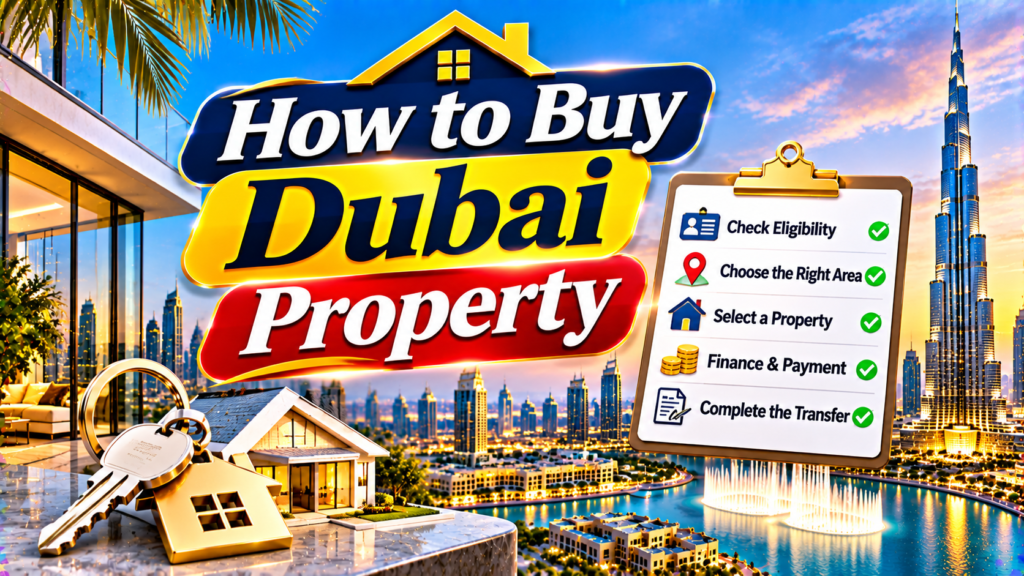
1. Can Foreigners Buy Property in Dubai?
Yes. Foreign nationals can buy property in Dubai, including apartments, villas, townhouses, and certain commercial properties. Dubai permits foreign ownership in designated freehold areas, where eligible buyers can acquire full ownership rights without a time restriction.
One of the biggest advantages of the Dubai real estate market is that international buyers do not necessarily need to be UAE residents to purchase property. Non-residents can also invest in eligible developments, provided they meet the relevant registration and documentation requirements.
Foreign buyers can explore different ownership options, including:
- Freehold ownership: Provides full ownership rights over an eligible property without a time limit.
- Leasehold ownership: Provides the right to use a property for an agreed period, which can extend up to 99 years.
- Usufruct rights: Provides the right to use and benefit from a property under the applicable agreement and legal framework.
Before making a purchase, buyers should confirm whether the selected development is located in an area where their nationality and ownership structure are permitted to acquire the intended property rights.
2. Which Are the Best Areas to Buy Property in Dubai?
Choosing the right location is one of the most important decisions when purchasing real estate. Dubai offers several residential communities, each providing different property types, facilities, lifestyles, and investment opportunities.
Some popular areas to explore include:
Downtown Dubai
Downtown Dubai is a prestigious residential and commercial destination known for its iconic skyline, shopping attractions, restaurants, and premium apartments. It may appeal to buyers looking for an urban lifestyle and convenient access to major business and entertainment destinations.
Dubai Marina
Dubai Marina is popular for its waterfront lifestyle, residential towers, restaurants, and leisure facilities. Apartments in this area attract both residents and tenants looking for a well-connected community.
Palm Jumeirah
Palm Jumeirah is internationally recognised for its luxury waterfront residences, private beaches, and premium villas and apartments. It is worth considering for buyers interested in exclusive residential properties.
Business Bay
Business Bay combines residential towers, commercial offices, hotels, and lifestyle facilities. Its location near Downtown Dubai makes it an attractive option for professionals and investors exploring city-centre properties.
Dubai Hills Estate
Dubai Hills Estate is a master-planned community featuring villas, townhouses, apartments, green spaces, and recreational facilities. It can be suitable for families seeking a community-oriented residential environment.
Jumeirah Village Circle (JVC)
Jumeirah Village Circle offers a variety of apartments, townhouses, and residential developments. Buyers often consider this neighbourhood when comparing different property sizes and price points.
Dubai Creek Harbour
Dubai Creek Harbour is a developing waterfront destination featuring modern residential buildings, leisure spaces, and views of the surrounding landscape. Buyers interested in emerging communities may wish to explore its available developments.
How should you choose a location?
Consider the following factors before making a decision:
- Distance from your workplace or business district.
- Access to public transport and major roads.
- Availability of schools, hospitals, and supermarkets.
- Community facilities and lifestyle preferences.
- Current property prices and comparable transactions.
- Rental demand and long-term resale considerations.
- Future development plans and infrastructure.
The best location depends on your budget, lifestyle, and investment objectives rather than popularity alone.
3. What Type of Property Can You Buy in Dubai?
Dubai provides a wide selection of residential and commercial properties. Understanding the available options can help you identify a property that matches your requirements.
Apartments: Apartments are available in different sizes, from studios to spacious multi-bedroom residences. They can suit individuals, couples, families, and investors interested in rental properties.
Villas: Villas offer more private living spaces, often with gardens, parking areas, and additional facilities. They are particularly attractive to families looking for larger homes.
Townhouses: Townhouses combine features of apartments and villas, offering multi-level living within planned residential communities.
Penthouses: Luxury penthouses generally feature spacious layouts, premium interiors, panoramic views, and exclusive facilities.
Off-plan properties: These are properties purchased directly from developers before construction is completed. They may offer staged payment plans, but buyers should carefully assess the developer, project approvals, construction progress, and contractual terms.
Ready properties: Completed properties allow buyers to inspect the actual unit before purchase and may offer the opportunity to move in or rent the property after the transfer is completed.
4. How Much Money Do You Need to Buy Property in Dubai?
Your budget should include more than the advertised property price. Buyers must account for registration charges, agency commissions where applicable, mortgage expenses, service charges, and other transaction costs.
Some important expenses include:
- Property purchase price: The agreed amount payable to the seller or developer.
- Dubai Land Department (DLD) registration fee: The official property sale registration service lists a fee of 2% for the seller and 2% for the buyer. The contractual allocation should be checked before signing.
- Title deed issuance: Additional charges apply for issuing the title deed.
- Real estate trustee charges: Service partner fees apply when using the relevant registration service.
- Agency commission: A brokerage commission may be payable depending on the agreement with the real estate agent.
- Mortgage expenses: Buyers using bank financing may need to pay valuation, mortgage registration, and other bank-related charges.
- Service charges: Owners may have to pay annual maintenance and community service charges.
- Other expenses: Legal advice, property inspections, insurance, and furnishing may add to the overall budget.
The Dubai Land Department’s published property sale registration fee schedule includes additional charges for title deed issuance, maps, and service partners. These should be confirmed against the latest applicable schedule before completing the transaction.
Why is calculating the total cost important?
A buyer who focuses only on the property’s advertised price may underestimate the amount needed to complete the purchase. Preparing a complete financial plan helps avoid unexpected expenses and makes it easier to compare different properties.
5. How Can You Find the Right Property for Sale in Dubai?
Finding the right property requires research, comparison, and a clear understanding of your requirements. Dubai has thousands of residential developments, so buyers should narrow their search before arranging property visits.
Start by identifying your preferred neighbourhood, property type, size, and budget. Then explore verified property listings through reputable real estate portals, established agencies, and developer websites.
You should also compare multiple properties rather than making a decision based on a single listing.
Important factors to compare include:
- Property price per square foot.
- Number of bedrooms and bathrooms.
- Built-up area and layout.
- Building age and maintenance condition.
- Parking availability.
- Building amenities and facilities.
- Community service charges.
- Nearby transport and essential services.
- Recent comparable sales.
For investment buyers, it is also important to research rental demand, vacancy risks, expected expenses, and realistic rental income.
Avoid making a purchase decision based entirely on attractive photographs, promotional material, or projected returns.
6. Should You Hire a Real Estate Agent in Dubai?
Working with a professional real estate agent can make the property-buying process easier, particularly if you are unfamiliar with the Dubai market.
A qualified agent can help identify suitable properties, arrange viewings, negotiate prices, explain transaction procedures, and coordinate with sellers, developers, and other parties.
However, buyers should verify the agent’s credentials before entering into an agreement.
Consider these points when selecting a real estate agent:
- Check the agent’s registration and professional credentials.
- Confirm that the brokerage is appropriately licensed.
- Ask about the commission structure.
- Request clear information about the property’s ownership and status.
- Avoid agents who pressure you into making immediate payments.
- Make sure all important agreements are documented.
Buyers should independently verify property details with the relevant authorities rather than relying exclusively on an agent’s statements.
7. What Documents Are Required to Buy Property in Dubai?
The documentation required depends on whether you are a UAE resident, a non-resident foreign buyer, or purchasing through an eligible company.
For an individual buyer, commonly required documents include:
- A valid passport for international buyers.
- Emirates ID, where applicable.
- Contact details and personal information.
- Proof of funds or financing approval, where relevant.
- Signed purchase agreement and transaction documents.
- Additional documents requested by the bank, developer, or registration authority.
For mortgage buyers, banks may request salary certificates, bank statements, employment details, credit information, and other financial documents.
If a legal representative is completing the transaction on your behalf, an appropriately executed and valid power of attorney may be required.
The Dubai Land Department lists a valid passport as an acceptable identity document for non-resident foreign buyers during property sale registration.
8. How Does the Dubai Property Buying Process Work?
Understanding the buying process can help you avoid unnecessary delays. Although individual transactions may differ, purchasing a ready property generally involves several important stages.
Step 1: Decide Your Budget
Determine how much you can comfortably spend on the property. Include registration charges, agency fees, mortgage expenses, and other additional costs.
If you are planning to use a mortgage, approach banks or financing providers to understand your eligibility and available financing options.
Step 2: Research the Property Market
Explore different neighbourhoods, compare property prices, and identify developments that meet your requirements.
Check recent transactions and market information where available. This will help you assess whether the asking price is reasonable.
Step 3: Arrange Property Viewings
Visit shortlisted properties and inspect their condition, layout, facilities, and surroundings.
For ready properties, check:
- Plumbing and electrical systems.
- Air conditioning.
- Windows and doors.
- Water leakage or structural concerns.
- Parking arrangements.
- Building maintenance.
- Access to shared facilities.
Consider arranging an independent property inspection where appropriate.
Step 4: Make an Offer
Once you identify a suitable property, submit an offer to the seller through the agreed negotiation process.
The offer should clearly mention the proposed purchase price, payment arrangements, and any important conditions.
Step 5: Sign the Memorandum of Understanding
After the buyer and seller agree on the terms, they generally proceed with a sale agreement or Memorandum of Understanding (MOU), commonly associated with Form F in Dubai resale transactions.
The agreement should clearly establish:
- Agreed property price.
- Buyer and seller details.
- Deposit arrangements.
- Completion and transfer date.
- Responsibilities of both parties.
- Conditions relating to mortgage approval, where applicable.
- Consequences of failing to complete the transaction.
Read the agreement carefully before signing. Consider professional legal advice if any condition is unclear.
Step 6: Arrange the Deposit
A deposit is generally paid according to the agreed sale contract. In many resale transactions, a deposit of around 10% is customary, although the amount and payment arrangements should be confirmed in the contract.
Make sure the deposit is handled through an appropriate, documented arrangement and that you understand the conditions governing its release or refund.
Step 7: Obtain the Developer’s No-Objection Certificate
For eligible resale transactions in freehold developments, the developer’s No-Objection Certificate (NOC) may be required.
The developer may check outstanding service charges and other obligations before issuing the NOC.
Buyers should confirm the applicable requirements and costs with the developer.
Step 8: Complete the Property Transfer
The buyer and seller, or their legally authorised representatives, complete the registration process through the relevant Dubai Land Department service channel or Real Estate Registration Trustee Centre.
The required documents are checked, transaction details are entered, and applicable fees are paid.
Step 9: Receive Your Title Deed
After successful registration, the buyer receives the electronic title deed confirming ownership of the property.
This is an important final step because the purchase is formally recorded in the Dubai real estate registry.
9. Can You Buy Property in Dubai Through a Mortgage?
Yes. Eligible buyers can purchase property in Dubai through mortgage financing from UAE banks and other authorised financing institutions, subject to the lender’s requirements.
Mortgage eligibility depends on several factors, including:
- Monthly income.
- Employment or business status.
- Existing loans and financial commitments.
- Credit history.
- Property valuation.
- Down payment availability.
- Bank-specific lending policies.
The mortgage process generally involves submitting an application, providing financial documents, obtaining preliminary approval, arranging a property valuation, and completing the lender’s legal and registration requirements.
Before accepting a mortgage offer, compare interest or profit rates, repayment periods, processing charges, early settlement conditions, and other associated expenses.
Buyers should also maintain sufficient savings for the down payment and transaction charges rather than using their entire available funds for the property purchase.
10. How Can You Buy Off-Plan Property in Dubai?
Off-plan properties are residential or commercial units purchased before construction is completed. Dubai has an active off-plan market, with developers offering apartments, villas, and townhouses in different communities.
Some buyers consider off-plan developments because they may provide staged payment arrangements and access to newly launched projects.
However, buying off-plan property requires careful research.
Before investing, check:
- Whether the developer is properly registered.
- Whether the project is registered with the relevant authorities.
- Whether the required escrow arrangements are in place.
- The construction progress and expected completion date.
- The payment schedule and contractual obligations.
- The specifications and floor plan.
- The terms governing delays, cancellation, and refunds.
- The process for registering the initial sale.
Buyers should review the Sale and Purchase Agreement (SPA) carefully and confirm that project details match the official information.
Never rely solely on marketing brochures or verbal promises when making an off-plan investment.
11. Can Non-Residents Buy Property in Dubai Without a UAE Visa?
Yes. Foreign nationals do not necessarily need a UAE residence visa to purchase eligible properties in Dubai’s designated ownership areas.
This makes Dubai accessible to international buyers who want to own a second home, purchase a holiday residence, or invest in the local real estate market.
Non-resident buyers can generally complete the transaction using a valid passport and the other documents required for registration.
However, purchasing property does not automatically provide UAE residency.
Certain qualifying property owners may be eligible to apply for a residence visa under applicable immigration programmes, subject to property value, ownership, and other eligibility conditions.
Always confirm the latest visa requirements with the relevant UAE immigration authority before making a purchase based on residency expectations.
12. Is Buying Property in Dubai a Good Investment?
Dubai attracts real estate investors because of its international business environment, tourism sector, infrastructure, and growing residential communities.
However, whether a property is a good investment depends on its purchase price, location, rental demand, ownership expenses, financing costs, and future resale prospects.

Some potential advantages include:
- Access to an international property market.
- A wide choice of residential and commercial developments.
- Opportunities to generate rental income.
- Established infrastructure and transport networks.
- Availability of different property categories and price ranges.
- Potential long-term capital appreciation.
Nevertheless, property investment involves risks. Market conditions can change, rental income is not guaranteed, and property values may rise or fall.
Investors should calculate expected net returns after accounting for service charges, maintenance, management expenses, insurance, financing costs, and periods without tenants.
A property should be selected on the basis of research and financial suitability rather than assumptions about guaranteed profits.
13. What Mistakes Should You Avoid When Buying Property in Dubai?
Buying property is a significant financial decision. Even in a well-regulated market, insufficient research can create unnecessary risks.
Here are some common mistakes buyers should avoid:
1. Ignoring Additional Costs: Always calculate the total purchase expenses instead of focusing only on the advertised price.
2. Not Verifying Ownership: Confirm the seller’s ownership and the property’s registration details before proceeding.
3. Choosing a Property Without Research: Compare locations, facilities, prices, and market conditions before making a decision.
4. Overlooking Service Charges: Annual community and building maintenance charges can affect your ownership costs and investment returns.
5. Relying on Guaranteed Rental Returns: Check the contractual conditions and independently assess realistic rental expectations.
6. Ignoring Legal Agreements: Read the MOU, SPA, and other transaction documents carefully before signing.
7. Not Checking Developer Credentials: For off-plan purchases, verify the developer and project through official channels.
8. Making Unverified Payments: Use documented payment arrangements and verify the recipient’s identity and authority.
9. Overlooking Resale Potential: Consider future buyer demand, property condition, and the overall location before investing.
10. Making Decisions Under Pressure: Take sufficient time to verify all relevant information and compare alternatives.
14. Can Buying Property in Dubai Help You Obtain Residency?
Property ownership may provide a route to UAE residency for buyers who meet the applicable property investment and immigration conditions.
The UAE offers property-related residency options, including qualifying investor residence programmes. The requirements can differ depending on the visa category, property value, ownership status, and whether the property is mortgaged or jointly owned.
Applicants may need to provide a valid title deed, passport, medical fitness documentation, health insurance, and other supporting documents.
Importantly, property ownership alone does not guarantee a residence visa. Buyers should check the current requirements with the General Directorate of Residency and Foreigners Affairs (GDRFA) or the relevant UAE authority.
15. What Should You Check Before Finalising Your Dubai Property Purchase?
Before completing the transaction, review the property and all financial and legal arrangements.
Use this practical checklist:
- Confirm that the property is in an eligible ownership area.
- Verify the seller’s identity and ownership.
- Check the property’s title deed and registration details.
- Review any existing mortgage or outstanding obligations.
- Confirm the agreed purchase price.
- Review the MOU or SPA.
- Check the developer’s NOC requirements.
- Confirm service charges and outstanding payments.
- Arrange mortgage approval if required.
- Calculate all registration and transaction expenses.
- Ensure payments are properly documented.
- Confirm the transfer appointment and registration procedure.
Taking these steps can help protect your interests and make the purchase process more organised.
16. What Is the Best Way to Start Buying Property in Dubai?
The best way to start is by identifying your property requirements and preparing a realistic financial plan.
First, decide whether you want a residential property for personal use, a holiday home, or an investment opportunity. Next, select a suitable neighbourhood and compare available apartments, villas, and townhouses.
Research the developer or seller, verify the property’s legal status, and understand the complete purchase costs before signing any agreement.
If you are an international buyer, make sure you understand the ownership regulations, documentation requirements, and any currency transfer or financing considerations that apply to your situation.
Professional support from a registered real estate agent, property lawyer, or mortgage adviser can also help you navigate the process.
Conclusion: Is Now the Right Time to Buy Dubai Property?
Buying Dubai property can be an exciting opportunity for homebuyers and international investors. The city offers a diverse real estate market, modern residential communities, luxury developments, and properties across a range of budgets.
However, successful property ownership requires more than finding an attractive apartment or villa. Buyers must understand ownership regulations, research locations, evaluate developers, calculate additional expenses, and complete the necessary legal registration procedures.
Whether you are a first-time buyer, an expatriate, or an overseas investor, following a structured approach can make buying property in Dubai easier and more transparent.
Start with thorough research, compare your options, verify every important document, and seek professional advice when necessary. With the right preparation, you can make a more informed decision when purchasing your dream home or exploring Dubai real estate investment opportunities.
Do follow us on Instagram
Read More – How to Buy Property in Dubai