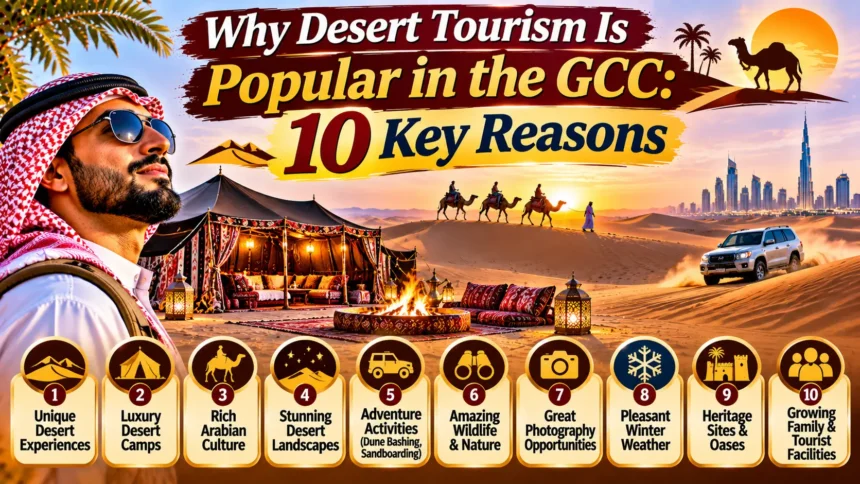
Why Desert Tourism Is Popular in the GCC
Desert tourism has become an important part of the travel experience in the Gulf Cooperation Council (GCC). From the golden sand dunes of Saudi Arabia and the United Arab Emirates to the famous Inland Sea of Qatar and the vast landscapes of Oman, the Arabian desert attracts visitors looking for adventure, culture, natural beauty and peaceful holidays.
- 1. Beautiful Desert Landscapes Offer Something Different
- 2. Adventure Activities Make Desert Trips Exciting
- 3. Desert Tourism Connects Visitors with Arabian Heritage
- 4. Winter Weather Makes Outdoor Activities More Comfortable
- 5. Luxury Desert Camps Combine Comfort with Nature
- 6. Desert Nights Create Excellent Stargazing Opportunities
- 7. Desert Wildlife Attracts Nature Lovers
- 8. Desert Trips Offer Peace Away from Busy Cities
- 9. Desert Landscapes Are Popular with Photographers
- 10. Improved Tourism Facilities Make Desert Travel Easier
- Desert Tourism Experiences Across the Six GCC Countries
- Why Responsible Desert Tourism Is Important
- The Future of Desert Tourism in the GCC
- Conclusion
- Frequently Asked Questions
For many travellers, a desert trip is a chance to experience something different from everyday city life. They can ride camels, drive across sand dunes, enjoy traditional Arabian food, spend a night in a desert camp or watch the sunset over an open landscape. Some visitors prefer exciting outdoor activities, while others want a quiet place to relax and enjoy nature.
The popularity of desert tourism is also connected to the region’s history. For generations, people in the Arabian Peninsula have lived, travelled and developed communities in desert environments. Today, tourism allows visitors to learn about these traditions while enjoying modern facilities and organised outdoor experiences.
The six GCC countries—Bahrain, Kuwait, Oman, Qatar, Saudi Arabia and the UAE—each offer different ways to explore the desert. Their landscapes, local traditions and tourism experiences make the region an attractive destination for both international visitors and people living in the Gulf.
But why has desert tourism in the GCC become so popular? Here are some of the main reasons behind its growing appeal.
1. Beautiful Desert Landscapes Offer Something Different
One of the biggest attractions of desert tourism is the natural beauty of the landscape. The Arabian Peninsula has enormous sand dunes, rocky plains, open valleys and unusual natural formations. These landscapes create a different travel experience from the beaches, shopping districts and modern city attractions for which the Gulf is also known.
Visitors can enjoy traditional Bedouin experiences such as camel rides, falconry, henna painting, Arabic coffee, dates, and barbecue dinners.
Many desert camps also offer live shows, including Tanura dancing, belly dancing, and fire performances.
Places like AlUla in Saudi Arabia also allow visitors to enjoy beautiful desert scenery and explore important historical sites, including UNESCO World Heritage Sites.
The appearance of the desert changes throughout the day. In the morning, the sand may look pale and soft under the early sunlight. At midday, strong light creates sharp shadows across the dunes. During sunset, the landscape often takes on shades of gold, orange and red.
Some of the region’s best-known desert landscapes include:
- Rub’ al Khali, Saudi Arabia: Also known as the Empty Quarter, this enormous sandy region is famous for its high dunes and wide-open views.
- Liwa Desert, UAE: Located in the Al Dhafra region, Liwa is known for its impressive dunes and its connection to the wider Empty Quarter.
- Al Sharqiyah Sands, Oman: This desert area is recognised for its colourful dunes, which range from pale yellow to orange and reddish shades.
- Khor Al Adaid, Qatar: Known as the Inland Sea, this unusual landscape features sand dunes surrounding a tidal lagoon.
These destinations attract visitors who want to enjoy natural scenery, explore less crowded places and discover a different side of the Gulf.
2. Adventure Activities Make Desert Trips Exciting
Desert tourism is not only about enjoying the scenery. It also offers outdoor activities that attract adventure lovers. Wide sandy spaces and rolling dunes provide suitable settings for guided driving experiences, sports and exploration.
One of the most popular activities is dune bashing. In this experience, a trained driver takes visitors across sandy slopes in a specially equipped four-wheel-drive vehicle. The vehicle moves up and down the dunes, creating an exciting ride.
Other activities allow visitors to explore the desert in different ways. Some are suitable for beginners, while others require more experience and preparation.
Popular desert activities include:
- Sandboarding: Sliding down a sand dune using a board.
- Camel riding: Exploring the desert on an animal that has been part of Arabian life for centuries.
- Quad biking: Riding a four-wheel vehicle on permitted routes.
- Desert trekking: Walking through the dunes and enjoying the surrounding scenery.
- Off-road driving: Exploring suitable desert routes with a qualified guide.
- Hot-air ballooning: Enjoying views of the landscape from above in selected destinations.
- Falconry experiences: Learning about the traditional role of falcons in Arabian culture.
Many desert safari packages combine several activities in one trip. Visitors may enjoy a guided drive, try sandboarding, ride a camel and finish the evening with a meal at a desert camp.
3. Desert Tourism Connects Visitors with Arabian Heritage
The desert has played an important role in the history and culture of the Arabian Peninsula. Before modern roads, airports and large cities developed, communities relied on their knowledge of the desert to travel, find water, raise animals and support their daily lives.
These traditions continue to influence the region’s identity. Camels, falcons, traditional tents, Arabic coffee, local food and storytelling are all connected to the history of desert communities.
Desert tourism gives visitors an opportunity to learn about this heritage through organised cultural experiences. Many camps welcome guests with Arabic coffee and dates, offer traditional meals and arrange demonstrations of local activities.
Depending on the destination, visitors may also learn about:
- Traditional Bedouin tents and everyday life.
- The importance of camels in desert travel and trade.
- Falconry and its cultural significance.
- Traditional clothing, food and hospitality.
- How people adapted to limited water and difficult weather conditions.
In Liwa, the connection between desert landscapes and Emirati heritage is an important part of the visitor experience. The area has a long history of settlement around its oases, and visitors can explore traditional activities such as camel riding and falconry. Oman’s Al Sharqiyah Sands also offers opportunities to experience Bedouin camps and local traditions.
For international tourists, these experiences offer more than entertainment. They provide a better understanding of how people developed a way of life in one of the world’s most challenging environments.
4. Winter Weather Makes Outdoor Activities More Comfortable
Weather is another major reason why desert tourism is popular in the GCC. Summers across much of the region can be extremely hot, which makes long outdoor activities difficult. During the cooler months, however, spending time outside becomes more comfortable.
From around November to March, many destinations see increased interest in desert safaris, camping, outdoor dining and nature trips. The exact season varies by country, and visitors should always check local weather conditions before travelling.
Winter desert activities often include:
- Morning walks across the dunes.
- Afternoon desert safaris.
- Outdoor meals at traditional camps.
- Overnight camping with family and friends.
- Photography during sunrise and sunset.
- Stargazing on clear nights.
In Kuwait, seasonal desert camping is a well-known social tradition. The country’s winter camps provide places for families and friends to gather, prepare food and enjoy time away from busy urban areas. Saudi Arabia also sees increased interest in winter camping, with desert camps attracting families, nature lovers and photographers.
The cooler season makes these activities more enjoyable and helps explain why desert destinations become especially popular during winter.
5. Luxury Desert Camps Combine Comfort with Nature
In the past, a desert trip often meant simple camping with limited facilities. Today, visitors can choose from a wider range of accommodation, including traditional-style camps, comfortable tents, private lodges and luxury desert resorts.
These places allow travellers to enjoy natural surroundings without giving up every modern comfort. Depending on the property, facilities may include comfortable beds, private bathrooms, restaurants, swimming pools, guided activities and outdoor seating areas.
Luxury desert stays attract couples, families and travellers who want a peaceful holiday away from crowded city centres. Some visitors choose a private tent with views of the dunes, while others prefer a camp that offers organised activities and family facilities.
Saudi Arabia’s AlUla is one destination where desert scenery, heritage and modern hospitality come together. Visitors can explore ancient sites, rock formations and outdoor attractions while choosing from different types of accommodation. The region’s tourism offering includes hiking, hot-air ballooning and stargazing experiences.
The UAE also offers a range of desert accommodation, particularly around Abu Dhabi and the Liwa region. This mix of traditional camping and luxury stays makes desert holidays suitable for different budgets and travel styles.
6. Desert Nights Create Excellent Stargazing Opportunities
The desert offers an experience that can be difficult to find in a busy city: a wide view of the night sky. In remote areas with little artificial light, visitors may be able to see many stars and familiar constellations.
After sunset, the atmosphere becomes quieter. Travellers can sit outside their tents, enjoy a warm drink and watch the sky. On clear nights and in suitable locations, the Milky Way may also be visible.
Stargazing has become an attractive part of nature-based travel because it does not require expensive equipment or physical effort. Visitors mainly need a dark location, suitable weather and enough time to enjoy the view.
AlUla in Saudi Arabia is known for experiences that connect its dramatic landscape with the night sky. Desert camps in Oman also provide opportunities to enjoy open skies away from bright city lights.
For many travellers, a quiet evening under the stars can become one of the most memorable parts of a desert holiday.
7. Desert Wildlife Attracts Nature Lovers
Deserts may appear empty at first glance, but they support many plants and animals. Wildlife in these environments has developed ways to survive with limited water, changing temperatures and difficult living conditions.
Visitors interested in nature can learn about desert ecosystems through guided trips and protected areas. Depending on the location, they may have opportunities to see Arabian oryx, gazelles, desert foxes, reptiles and different types of birds.
The Arabian oryx is one of the best-known animals associated with the region. It has broad hooves that help it move across soft sand and has become an important symbol of wildlife conservation in the UAE. Conservation programmes have helped establish populations of Arabian oryx in protected areas.
Qatar’s Khor Al Adaid is another interesting destination for nature lovers. Its combination of desert dunes and coastal water supports wildlife, marine life and vegetation. The area is recognised as an important natural reserve and offers opportunities for nature walks and birdwatching.
Wildlife experiences make desert tourism more educational. They help visitors understand that deserts are living ecosystems and that their plants and animals need protection.
8. Desert Trips Offer Peace Away from Busy Cities
The GCC is home to some of the world’s most modern urban areas. Cities such as Dubai, Doha and Riyadh offer shopping centres, restaurants, entertainment and busy business districts. However, not every traveller wants to spend an entire holiday in an urban environment.
Many travellers, especially those from busy cities, enjoy the peaceful desert surroundings, beautiful starry nights, and pleasant winter weather. The desert provides a change of pace. Wide-open landscapes, natural surroundings and fewer buildings create an opportunity to slow down and enjoy simple experiences.
Visitors can spend an afternoon watching the sunset, enjoy a meal outdoors, sit around a campfire or take a peaceful walk across the sand. These activities do not require a packed schedule.
Desert camping is especially popular with people who want to spend time with family and friends. In Kuwait, for example, seasonal camping is linked to local traditions of hospitality and social gatherings. Saudi Arabia’s winter camping culture also brings people together in traditional outdoor settings.
For people who spend most of their time in busy cities, even one night in the desert can feel like a refreshing break.
9. Desert Landscapes Are Popular with Photographers
The desert offers many interesting subjects for travel photography. Its wide dunes, changing light, traditional camps and open skies create natural scenes that look different throughout the day.
Sunrise and sunset are especially popular times for photography. The low sunlight creates shadows across the sand and highlights the shapes of the dunes. These conditions help photographers capture the depth and texture of the landscape.
Some popular desert photography ideas include:
- Golden sand dunes during sunset.
- Camel caravans moving across the landscape.
- Traditional tents and campfire scenes.
- Patterns formed by wind on the sand.
- Falcons and other cultural experiences.
- Desert plants and wildlife.
- Star-filled skies at night.
AlUla, Liwa, Al Sharqiyah Sands and Khor Al Adaid each offer different scenery for travel photography. In Qatar, the contrast between the golden dunes and turquoise water at the Inland Sea creates a particularly distinctive setting.
Travel photography and social media have also helped more people discover desert destinations. Visitors share photographs and videos of safaris, camps and natural landscapes, giving others ideas for their next trip.
However, photography should never disturb wildlife or damage the environment. Travellers should avoid driving through sensitive areas or leaving objects behind to create a picture.
10. Improved Tourism Facilities Make Desert Travel Easier
Better tourism services have made many desert experiences easier to plan. Visitors can now book guided safaris, arrange transport, choose accommodation and select activities before reaching their destination.
Organised tours are particularly useful for first-time visitors. Desert driving requires knowledge of the terrain, suitable vehicles and safety preparation. A qualified local guide can help visitors travel more safely and understand the surrounding environment.
Many tour packages also bring several experiences together. A single trip may include a guided 4×4 drive, sandboarding, camel riding, sunset viewing and dinner at a desert camp.
Tourism development also creates opportunities for local businesses and communities. Guides, drivers, camp operators, restaurants, accommodation providers and activity organisers all take part in the visitor economy.
Across the GCC, official tourism programmes promote desert adventures, cultural experiences and outdoor activities. These developments make desert tourism more accessible while offering visitors more choices.
Desert Tourism Experiences Across the Six GCC Countries
Although the GCC countries share an Arabian desert environment, their destinations and visitor experiences are not exactly the same.
United Arab Emirates
The UAE is well known for desert safaris, dune bashing, camel rides and luxury camps. Liwa and the Al Dhafra region are popular for large dunes, while desert areas around Abu Dhabi offer guided adventures and overnight stays.
Saudi Arabia
Saudi Arabia is home to the vast Empty Quarter and the dramatic landscapes of AlUla. Visitors can explore dunes, historical sites, rock formations and desert camps. Winter tourism also includes outdoor activities in several regions of the country.
Oman
Oman’s Al Sharqiyah Sands is one of its best-known desert destinations. Visitors can enjoy dune driving, camel trekking, camping, sandboarding and visits to Bedouin villages. The changing colours of its dunes make the area especially attractive to photographers.
Qatar
Qatar’s Khor Al Adaid, or Inland Sea, is a distinctive natural attraction where sand dunes meet a tidal lagoon. Visitors can enjoy guided 4×4 trips, sandboarding, beach activities, camping and nature experiences.
Kuwait
Desert camping is an important part of Kuwait’s winter culture. Families and friends traditionally gather in camps to enjoy outdoor meals, social activities and the cooler weather. Visitors should check the latest municipal announcements and camping rules before making plans.
Bahrain
Bahrain offers a different type of desert experience, combining natural attractions with history and heritage. The Tree of Life in the Sakhir desert is one of its best-known landmarks. Visitors can also explore desert tours that include places connected to the country’s history and culture.
Together, these destinations show why desert tourism appeals to so many types of visitors. The experience can be adventurous, cultural, relaxing or focused on nature.
Why Responsible Desert Tourism Is Important
As more people visit the Arabian desert, protecting its natural environment becomes increasingly important. Desert ecosystems can be fragile, even when the landscape appears wide and empty.
Uncontrolled driving, littering, disturbance to wildlife and damage to native plants can affect these environments. Seasonal camping also needs careful management. Vehicle traffic and poorly managed campsites can place pressure on desert soil and vegetation.
Travellers can help protect desert destinations by following a few simple practices:
- Choose experienced and responsible tour operators.
- Use approved driving routes and camping areas.
- Take all rubbish away after a visit.
- Do not feed, chase or disturb wild animals.
- Respect local communities and private property.
- Follow fire-safety and camping instructions.
- Carry enough drinking water and avoid wasting it.
- Follow local rules for protected areas.
Responsible tourism helps protect the places that make desert holidays special. It also supports local communities and allows future visitors to enjoy these landscapes.
The Future of Desert Tourism in the GCC
Desert tourism is likely to remain an important part of the GCC travel industry. The region has a natural advantage: large desert landscapes, a strong cultural connection to the land and cooler months that support outdoor activities.
Tourism businesses are also offering more choices than before. Visitors can select adventure trips, cultural experiences, wildlife tours, desert camps or luxury stays. This variety helps destinations attract families, couples, photographers and international adventure travellers.
GCC countries are investing more in tourism to reduce their dependence on oil. Countries like the UAE, Saudi Arabia, Qatar, and Oman are developing desert resorts, nature reserves, and eco-friendly adventure activities to attract more visitors.
There is also an opportunity to develop more nature-focused and responsible tourism experiences. Visitors increasingly look for trips that allow them to understand local culture and explore natural places. Desert destinations can respond by supporting local guides, protecting wildlife and managing visitor activities carefully.
The long-term success of desert tourism will depend on balancing visitor growth with environmental protection. The desert is not simply a backdrop for tourism; it is an important part of the region’s natural and cultural heritage.
Conclusion
Desert tourism is popular in the GCC because it combines adventure, natural beauty, culture and relaxation in one travel experience. Visitors can explore huge sand dunes, enjoy outdoor activities, learn about Arabian traditions, discover desert wildlife and spend peaceful evenings under the stars.
Each GCC country offers something different. The UAE is known for organised desert safaris and luxury camps, Saudi Arabia offers remarkable landscapes and heritage destinations, Oman provides traditional desert experiences, and Qatar is home to the unusual Inland Sea. Kuwait and Bahrain add their own camping traditions and desert attractions.
As the region continues to develop its tourism industry, desert destinations have an opportunity to welcome more visitors while protecting their natural environment and supporting local communities. With responsible planning, the Arabian desert can remain one of the most memorable parts of travelling through the Gulf.
Frequently Asked Questions
1. Why is desert tourism popular in the GCC?
Desert tourism is popular because it combines adventure activities, beautiful natural scenery, traditional culture, wildlife experiences and peaceful accommodation. The cooler winter months also make outdoor trips more comfortable.
2. Which GCC country is best known for desert tourism?
The UAE, Saudi Arabia and Oman are well known for their desert landscapes and activities. Qatar is famous for Khor Al Adaid, where dunes meet the sea. The best destination depends on the type of experience a traveller wants.
3. What activities can tourists enjoy in the Arabian desert?
Visitors can enjoy dune bashing, camel riding, sandboarding, quad biking, desert trekking, camping, wildlife watching and stargazing. Activities vary by destination and local regulations.
4. When is the best time for desert tourism in the GCC?
The cooler months, usually from November to March, are popular for many outdoor activities. Weather conditions and suitable visiting periods vary between countries, so visitors should check local forecasts before travelling.
5. Is desert tourism suitable for families?
Yes. Many desert destinations offer family-friendly activities such as guided safaris, camel rides, cultural experiences and comfortable camps. Families should choose activities that are suitable for the age and needs of everyone travelling.
6. How can tourists protect the desert environment?
Visitors should use approved routes, avoid disturbing wildlife, follow camping rules and take all rubbish with them. Choosing responsible tour operators also helps protect natural areas.
Do follow us on Instagram
Read More – 10 Beautiful Places to Experience Winter in the Gulf