



Why GCC Homegrown Brands Need Franchise Development Support
Across the Gulf Cooperation Council, entrepreneurship is creating a new generation of locally developed businesses with ambitions extending beyond their domestic markets. From independent restaurants and speciality coffee concepts to retail stores, wellness services, educational businesses, and lifestyle brands, entrepreneurs are building companies that reflect the region’s changing consumer preferences.
- 1. Why Franchise Incubation in the GCC Is Becoming More Important
- 2. How Saudi Arabia Is Developing Its Franchise Support Ecosystem
- 3. What UAE Homegrown Brands Reveal About International Franchising
- 4. How Franchise Incubators Could Prepare Brands for International Expansion
- 5. Why Legal Compliance and Brand Protection Matter for Gulf Franchises
- 6. The Financial and Operational Challenges of Franchise Expansion
- 7. The Future of Franchise Incubation for Homegrown Gulf Brands
- Conclusion
However, developing a successful business in one city is very different from operating the same concept across several countries.
A restaurant that performs well in Dubai may need different suppliers, pricing structures, employees, and regulatory approvals when entering Saudi Arabia, Oman, or a European market. Similarly, a retail business that has established a loyal domestic audience may struggle to reproduce its customer experience through independently operated international outlets.
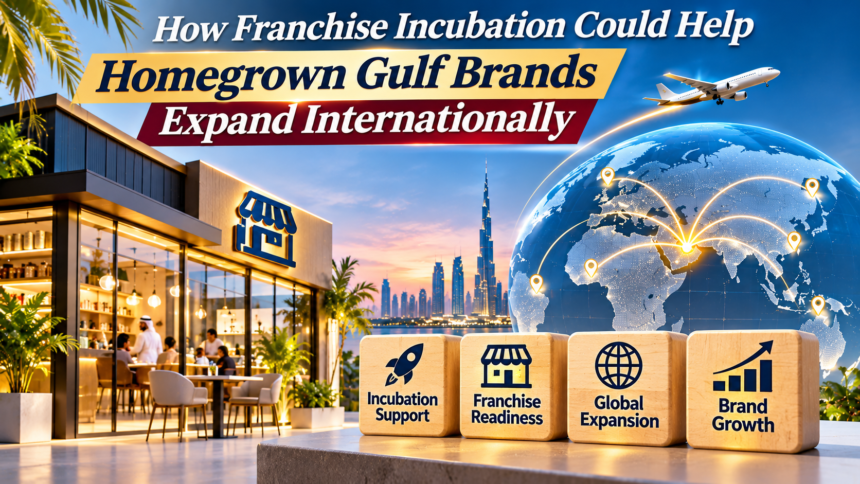
These challenges explain why franchise incubation in the GCC could become an increasingly valuable part of the region’s entrepreneurship ecosystem.
Franchise incubation refers to structured support that helps an existing business become ready for franchising. This can include business-model assessment, financial planning, operating manuals, staff training, legal documentation, brand protection, and the identification of suitable franchise partners.
Unlike a conventional startup incubator, which may help an entrepreneur develop an initial business idea, a franchise incubation programme generally focuses on turning an operating business into a model that another qualified operator can reproduce.
Across the Gulf, institutional support for franchising is becoming more visible. Saudi Arabia’s Small and Medium Enterprises General Authority, Monsha’at, operates a dedicated Franchise Center and brand development services. The UAE’s Emirates Franchise Association is also working to support the regional and international expansion of locally developed brands.
Examples of Gulf-origin businesses entering international markets demonstrate that cross-border growth is possible. However, successful expansion depends on much more than selling the right to use a company name.
A franchise must deliver consistent products, reliable operational support, transparent financial arrangements, and appropriate compliance with local laws.
Understanding how incubation can develop these capabilities reveals why franchising could become a useful international growth strategy for selected Gulf businesses.
1. Why Franchise Incubation in the GCC Is Becoming More Important
Franchising allows a business owner, known as the franchisor, to grant another party the right to operate a business using an agreed brand, system, and associated intellectual property.
The operating party, known as the franchisee, generally pays specified fees or other consideration and must follow contractual requirements.
However, the exact legal characteristics of a franchise depend on the relevant jurisdiction.
The Difference Between a Successful Business and a Franchise-Ready Business
A company may operate successfully because its founder personally supervises employees, selects suppliers, and resolves problems.
That approach may work with a small number of locations.
However, it becomes difficult when the brand expands into markets where the founder cannot provide daily oversight.
A franchise-ready business requires documented processes that trained operators can follow.
These may include product preparation, customer service, inventory management, staff recruitment, purchasing, and quality control.
What Franchise Incubation Provides
Franchise incubation can help businesses identify gaps between their existing operations and the requirements of a scalable franchise network.
A programme may review financial performance, document operating procedures, provide legal guidance, and develop a franchise partner selection process.
However, incubation does not automatically make every participating company suitable for franchising.
Some businesses may need to strengthen their underlying operations before attempting expansion.
Why Gulf Brands Are Considering International Markets

Local brands may wish to enter neighbouring GCC countries, build a presence in wider Middle Eastern markets, or reach customers in Asia and Europe.
Franchising can provide access to local partners with market knowledge and capital.
However, expansion should be based on demonstrated demand and commercially viable agreements rather than geographical ambition alone.
Business Growth Models Compared
| Growth Model | Main Characteristics | Important Consideration |
|---|---|---|
| Company-Owned Expansion | Founder or company funds new outlets | Greater capital requirements |
| Unit Franchising | Individual operator receives rights to one outlet | Requires ongoing support |
| Area Development | Partner agrees to develop multiple outlets | Performance commitments |
| Master Franchising | Partner may receive sub-franchising rights | Greater governance complexity |
| Brand Licensing | Permission to use specified intellectual property | May not include a complete business system |
| Joint Venture | Parties share ownership and responsibilities | Requires aligned interests |
Why Business Readiness Matters
A franchise system that expands before its processes are reliable may create problems for both the founder and franchise partners.
Incubation can help entrepreneurs identify these weaknesses before they enter expensive international commitments.
2. How Saudi Arabia Is Developing Its Franchise Support Ecosystem
Saudi Arabia offers one of the clearest regional examples of formal support for franchise development.
Monsha’at operates programmes intended to encourage small and medium-sized enterprises to adopt franchising and develop scalable business models.
The Monsha’at Franchise Center
Monsha’at’s Franchise Center was established to strengthen the commercial franchise sector and help businesses use franchising as a growth strategy.
Its services include training, guidance, franchise-related information, and support for business owners exploring the model.
The centre also provides tools for assessing whether a brand is ready for franchising.
This is important because not every operating business has the procedures, financial information, or management systems required for expansion.
The Franchise Development Programme
Saudi Arabia’s National Platform describes a Franchise Development Programme designed to help brands adopt the franchise system.
The initiative supports the development of businesses that may be suitable for franchise operations.
Another service, the Brand Transformation Support Programme, targets eligible SMEs operating two or more branches.
It helps businesses improve elements of their operating model to become more suitable for franchising.
This approach recognises that successful replication should normally be demonstrated before expanding through independent operators.
The Franchise Accelerator
In March 2025, the Alsulaiman Foundation announced a Franchise Accelerator in partnership with Monsha’at, the Social Development Bank, and the Salem Bin Mahfouz Foundation.
The programme provides training, mentoring, access to financing institutions, and structured support for aspiring franchise entrepreneurs.
Its announced pathway includes gradual franchise ownership over a period of up to two years.
However, this particular programme focuses significantly on preparing entrepreneurs to become franchise operators.
It should not be described as exclusively incubating homegrown franchisor brands.
Reported Franchise Sector Activity
Monsha’at reported that 1,514 franchise brands were operating in Saudi Arabia by the end of the second quarter of 2026.
This figure includes franchise brands active within the Saudi market.
It does not mean that 1,514 Saudi-origin brands had entered international markets.
Saudi Franchise Development Initiatives
| Initiative | Main Purpose | Potential Value |
|---|---|---|
| Monsha’at Franchise Center | Franchise awareness and support | Business readiness |
| Franchise Development Programme | Develop brands for franchising | Operating model improvement |
| Brand Transformation Support | Support eligible multi-branch SMEs | Franchise preparation |
| Franchise Readiness Assessment | Evaluate business suitability | Identify operational gaps |
| Franchise Accelerator | Prepare franchise entrepreneurs | Training and mentorship |
| Social Development Bank Financing | Support eligible franchise businesses | Access to finance |
Why Institutional Support Matters
Small-business owners may understand their products but lack experience in franchise agreements, territorial planning, or international partner management.
Training and specialist guidance can help address these gaps.
However, the commercial success of a franchise remains dependent on the business and its operators.
3. What UAE Homegrown Brands Reveal About International Franchising
The UAE has developed a business environment in which international franchises operate alongside locally created concepts.
Some homegrown brands have begun extending their presence beyond their original markets.
These examples provide useful lessons about brand identity, operating systems, and expansion partnerships.
The Role of the Emirates Franchise Association
The Emirates Franchise Association supports the development of franchising and engagement with international franchise organisations.
In October 2026, the association highlighted franchising as a pathway for UAE-origin food businesses seeking regional and international expansion.
Its activities include promoting best practices and creating opportunities for business connections.
However, association support should not be confused with a guarantee of investment or operational success.
Pickl’s Regional Expansion
Pickl began as a Dubai burger concept in 2019.
The brand subsequently expanded into several regional markets, including Bahrain, Qatar, Saudi Arabia, Jordan, Egypt, and Oman.
Its official website identifies operating restaurants across these markets and promotes franchise opportunities.
In May 2026, Pickl announced its entry into Oman through a partnership with MENA Foods & Investments.
This provides a practical example of a Gulf-origin restaurant using commercial partnerships to expand beyond its domestic market.
What Pickl Illustrates
A restaurant entering another country needs more than attractive branding.
It requires suitable ingredient sourcing, menu consistency, staff training, location selection, and local operating expertise.
A franchise partner can contribute market knowledge, but the brand owner must establish expectations and provide appropriate support.
Oman’s Seven Fries
Another example comes from Oman.
Muscat Daily reported in June 2026 that Seven Fries, founded in Seeb in 2021 by Issa Saleh Al Aghbari, had developed franchise operations and partnerships in India, Saudi Arabia, the UAE, Iraq, and Pakistan.
The report described the brand’s development from a local food concept into an international network.
These details are based on the published report and should not be treated as an independently audited outlet count.
Saudi Arabia’s KUDU
Saudi quick-service restaurant brand KUDU announced its first international franchise opening in Kuwait in 2026.
The move demonstrates how an established domestic business can begin international expansion through a franchise arrangement.
However, opening the first overseas franchise does not establish how rapidly or profitably the brand will expand afterward.
Examples of Gulf-Origin Expansion
| Brand | Country of Origin | Reported Expansion |
|---|---|---|
| Pickl | UAE | Multiple GCC and regional markets |
| Seven Fries | Oman | GCC and selected Asian markets |
| KUDU | Saudi Arabia | International franchise entry into Kuwait |
Why These Examples Matter
They show that homegrown brands can develop recognition beyond their country of origin.
However, they represent individual business experiences, not proof that franchising is appropriate for every Gulf entrepreneur.
4. How Franchise Incubators Could Prepare Brands for International Expansion
The central challenge in franchise development is turning a business that works under one management team into a system that another operator can reproduce.
This requires detailed preparation.
Assessing Unit Economics
Before franchising, a company should understand the financial performance of its existing outlets.
Relevant measurements include revenue, gross margins, labour costs, occupancy expenses, inventory losses, and operating profitability.
These figures help assess whether an independently operated outlet could be commercially viable after paying franchise-related fees.
However, performance in the home market does not guarantee equivalent results overseas.
Developing Operating Manuals
An operating manual describes the procedures required to deliver the brand’s products or services.
For a restaurant, it may include recipes, food safety procedures, equipment specifications, hygiene standards, and customer-service requirements.
For a service brand, it may address appointment scheduling, staff training, complaint handling, and professional standards.
The manual should be clear enough for qualified operators to follow and updated as practices change.
Creating Training Systems
Franchisors need to prepare franchisees and their employees.
Training may cover operations, management, technology systems, product quality, and brand communication.
Initial training alone may be insufficient.
Ongoing support is important when products, regulations, or customer expectations change.
Preparing Franchise Documentation
A franchise incubation programme can help a brand work with qualified lawyers to prepare suitable agreements and disclosure materials.
Documents may address fees, territorial rights, intellectual property, quality requirements, termination, renewal, and dispute resolution.
However, franchise documentation must be adapted to the laws of the intended market.
Core Franchise Incubation Activities
| Incubation Stage | Main Objective | Expected Output |
|---|---|---|
| Business Assessment | Evaluate readiness | Operational gap analysis |
| Financial Modelling | Assess commercial viability | Franchise financial model |
| Brand Development | Define consistent identity | Brand standards |
| Operations Documentation | Standardise processes | Operating manuals |
| Legal Preparation | Define rights and responsibilities | Appropriate agreements |
| Partner Selection | Identify qualified operators | Franchise screening system |
| Training Development | Transfer operational knowledge | Training curriculum |
| Pilot Expansion | Test replication | Evidence from new operating locations |
Why Pilot Operations Are Valuable
A company may test its processes through another location before seeking international franchise partners.
The pilot can reveal problems with staffing, training, supply chains, and consistency.
However, pilot results should be evaluated objectively.
One successful opening does not prove that the concept can operate in every country.
5. Why Legal Compliance and Brand Protection Matter for Gulf Franchises
International franchising involves contractual and intellectual property rights.
A company expanding overseas must understand how its brand will be protected and how agreements are regulated in the destination country.
Saudi Arabia’s Franchise Law
Saudi Arabia has a dedicated Commercial Franchise Law.
The framework includes requirements concerning disclosure, franchise agreements, and registration.
Under the law, a franchisor generally must provide the disclosure document at least 14 days before signing the agreement or receiving a relevant payment, whichever occurs first.
The Ministry of Commerce also requires registration of signed franchise agreements and related disclosure documents within 90 days.
The law includes conditions concerning the period and manner in which a franchise business model has already operated.
These requirements demonstrate why franchise preparation must include legal compliance, not only marketing.
International Rules Are Not Uniform
A Gulf brand expanding into another country cannot assume that its domestic franchise documentation will be sufficient.
Different jurisdictions may impose registration, disclosure, licensing, tax, employment, and competition-law requirements.
Some countries regulate franchising through specific legislation.
Others rely more heavily on general contract, commercial, and intellectual property law.
Qualified legal assessment is therefore necessary before offering franchises.
Protecting Trademarks
The World Intellectual Property Organization identifies trademarks as central to franchising.
A franchisee commonly receives permission to use the franchisor’s name, logos, and other protected business assets.
However, trademark rights are territorial.
A brand registered in the UAE is not automatically protected in every overseas market.
Companies should assess registration requirements before entering new territories.
Protecting Confidential Business Information
Some franchise businesses depend on proprietary recipes, operating techniques, customer systems, or supplier arrangements.
Contracts may include confidentiality obligations and restrictions on the use of protected information.
However, practical security controls and staff training also matter.
Legal Preparation Checklist
| Area | Important Question |
|---|---|
| Trademark Registration | Is the brand protected in the destination market? |
| Franchise Disclosure | What information must be provided before signing? |
| Franchise Agreement | Are obligations and rights clearly defined? |
| Territorial Rights | What geographic exclusivity is being granted? |
| Competition Law | Are restrictions legally permissible? |
| Employment Rules | What obligations apply to local staff? |
| Product Regulation | Are relevant goods or services approved? |
| Dispute Resolution | How will disagreements be handled? |
Why Incubation Can Reduce Avoidable Mistakes
Structured preparation can help founders identify missing legal and operational requirements.
However, incubation is not a substitute for market-specific professional advice.
6. The Financial and Operational Challenges of Franchise Expansion
Franchising is sometimes described as a low-capital method of expansion because franchisees finance much of the outlet investment.
However, developing and managing a franchise network can still be expensive.
The Costs of Becoming a Franchisor
A brand owner may need to invest in legal documentation, manuals, technology, training, recruitment, marketing, and support teams.
International expansion can also require travel, supply-chain coordination, market research, and quality monitoring.
These costs may arise before the franchise generates substantial recurring revenue.
Understanding Franchise Revenue
Franchisors may receive initial franchise fees, continuing royalties, or other contractually agreed payments.
However, these receipts are not necessarily profit.
The franchisor must fund training, support, administration, and other obligations.
Similarly, a franchisee must evaluate whether expected outlet revenue is sufficient to cover rent, labour, goods, franchise payments, and other costs.
An Illustrative Franchise Financial Scenario
The following figures are hypothetical and do not represent actual GCC franchise terms.
| Item | Illustrative Amount |
|---|---|
| Monthly outlet revenue | AED 200,000 |
| Product and direct operating costs | AED 125,000 |
| Rent and other overheads | AED 45,000 |
| Franchise royalty at 6% of revenue | AED 12,000 |
| Remaining amount before other costs and taxes | AED 18,000 |
The example excludes possible marketing contributions, financing costs, depreciation, taxes, and other expenses.
Its purpose is to show how franchise fees interact with operating economics, not to forecast profitability.
Supply-Chain Consistency
A restaurant may need specific ingredients or equipment to maintain consistent products.
Different countries have different import requirements, availability, and costs.
Franchise systems should define which products must be sourced centrally and where approved local alternatives are allowed.
Overly restrictive sourcing arrangements may raise costs or create operational difficulties.
Maintaining Quality Across Borders
An international franchise partner may operate far from the founder’s original business.
The franchisor needs appropriate monitoring and support systems.
These can include inspections, training reviews, customer feedback analysis, and product-quality assessments.
However, monitoring should be proportionate and consistent with the franchise agreement.
Major Risks and Possible Responses
| Risk | Potential Consequence | Response |
|---|---|---|
| Weak Franchise Economics | Financial strain on operators | Realistic unit modelling |
| Poor Partner Selection | Operational underperformance | Thorough due diligence |
| Inconsistent Service | Brand reputation problems | Training and quality controls |
| Unprotected Trademarks | Intellectual property disputes | Timely registration |
| Supply Problems | Product inconsistency | Supplier contingency planning |
| Excessive Expansion | Inadequate support capacity | Phased market entry |
| Regulatory Differences | Legal noncompliance | Local professional advice |
| Franchisee Disputes | Business interruption | Clear contracts and communication |
Why Partner Selection Is Critical
Franchisees need more than the ability to pay an initial fee.
The business should assess operational experience, financial resources, management capability, reputation, and commitment to brand standards.
A poorly selected partner can create costs that extend beyond a single outlet.
7. The Future of Franchise Incubation for Homegrown Gulf Brands
Franchise incubation could become more important as GCC entrepreneurship programmes seek to help established businesses expand into wider regional and international markets.
However, the most useful programmes will be those that improve operating capability rather than simply encouraging businesses to sell franchise rights.
Specialised Incubation for Different Industries
Restaurant franchises face challenges involving food quality, hygiene, location selection, and supply chains.
Education businesses must consider curriculum, staff qualifications, and local licensing.
Wellness services may require professional certifications and health-related regulatory approvals.
Franchise incubation should therefore reflect sector-specific needs.
The Role of Digital Technology
Cloud-based management systems can support inventory monitoring, sales reporting, training, and communication between franchisors and franchisees.
Online learning platforms may help train international teams.
However, technology cannot fully replace onsite assessments or professional oversight.
Connecting Gulf Brands With International Partners
Trade exhibitions, franchise associations, and business networks can introduce local brands to potential operators.
These connections may support expansion when followed by thorough commercial due diligence.
However, a franchise exhibition agreement or expression of interest should not be confused with an operational outlet.
A Practical Franchise Readiness Checklist
- Demonstrate consistent performance in existing operations.
- Evaluate whether the model can be replicated by another operator.
- Prepare reliable financial information and unit economics.
- Develop operating manuals and brand standards.
- Create initial and ongoing training programmes.
- Identify trademark and intellectual property requirements.
- Obtain relevant franchise legal advice.
- Establish partner selection and due diligence procedures.
- Assess international demand and competition.
- Review local licensing, employment, and tax requirements.
- Develop supply-chain and quality-control arrangements.
- Test expansion in a manageable number of markets.
- Monitor franchisee performance and update support systems.
Measuring Franchise Incubation Success
The number of franchise agreements signed is one possible indicator of activity.
However, it does not reveal whether the resulting businesses remain commercially sustainable.
Programmes should also examine the quality of business preparation and long-term outlet performance.
Suggested Performance Indicators
| Indicator | What It Measures |
|---|---|
| Franchise Readiness | Completion of operational and legal preparation |
| Pilot Outlet Performance | Evidence of replicability |
| Franchisee Survival | Continued outlet operations |
| Unit-Level Profitability | Commercial viability |
| Training Completion | Operator preparation |
| Brand Compliance | Consistency of customer experience |
| Franchisee Satisfaction | Quality of ongoing support |
| International Market Entry | Actual operational expansion |
| Customer Retention | Sustained consumer demand |
Why Regional Collaboration Could Matter
Gulf entrepreneurship institutions, franchise associations, investors, and educational organisations may collaborate to support business readiness.
Such partnerships could provide specialist training, financial guidance, market research, and introductions to potential franchise partners.
However, programmes should establish clear eligibility criteria and evaluate outcomes independently.
Moving From Local Popularity to Global Competitiveness
A homegrown brand may attract attention because of its identity, product quality, or customer experience.
However, becoming internationally competitive requires operational consistency and an ability to adapt appropriately to different markets.
Franchising should therefore be understood as a long-term business system rather than a shortcut to rapid growth.
Conclusion
Franchise incubation could help homegrown Gulf brands expand internationally by providing the professional preparation needed to turn successful local businesses into repeatable commercial systems.
As entrepreneurship develops across the GCC, more businesses may explore international opportunities through franchise partnerships.
However, expansion requires more than attracting an investor or signing an agreement.
Brands need reliable operating procedures, clear financial models, appropriate legal documentation, protected intellectual property, trained partners, and consistent quality management.
Saudi Arabia’s Monsha’at Franchise Center and development programmes demonstrate how structured support can help businesses prepare for franchising.
The UAE’s franchise ecosystem and regional expansion examples such as Pickl illustrate how local concepts can build a presence beyond their original markets.
Businesses from Oman and Saudi Arabia also provide examples of homegrown concepts pursuing international franchise opportunities.
For entrepreneurs, the priority should be proving that their business model can perform consistently without depending on the founder’s daily involvement.
For incubators, the opportunity lies in providing practical technical, legal, financial, and operational assistance.
For investors and franchise partners, careful due diligence remains essential.
Ultimately, franchise incubation could contribute to the Gulf’s economic diversification by helping selected local companies develop internationally recognised brands.
Its greatest value will come from preparing businesses for sustainable growth rather than encouraging expansion for its own sake.
Do follow us on Instagram
Read More – Why Local Supplier Development Matters for the Gulf’s Industrial Diversification