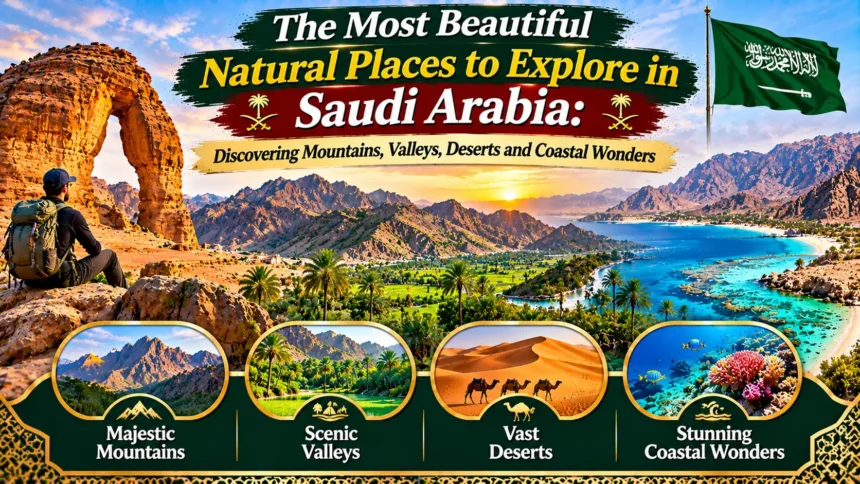
The Most Beautiful Natural Places to Explore in Saudi Arabia
Saudi Arabia is a country with a surprising variety of natural landscapes. Although it is widely known for its deserts, the Kingdom also has green mountain regions, beautiful islands, deep valleys, volcanic formations and coastal areas filled with marine life. These different environments create wonderful opportunities for travellers who enjoy spending time outdoors.
- 1. Wadi Al Disah: A Green Valley Surrounded by Huge Sandstone Cliffs
- 2. AlUla: A Natural Landscape of Sandstone Mountains and Desert Wonders
- 3. The Edge of the World: Dramatic Cliffs near Riyadh
- 4. Jabal Soudah: Exploring the Cool Mountain Scenery of Asir
- 5. Farasan Islands: A Beautiful World of Coral Reefs and Marine Life
- 6. Umluj: White-Sand Islands Along the Red Sea
- 7. Al-Ahsa Oasis: A Green Landscape in Eastern Saudi Arabia
- 8. ‘Uruq Bani Ma’arid: Discovering the Empty Quarter’s Wildlife
- 9. Al Wahbah Crater: A Unique Geological Wonder
- 10. The Asir Highlands and Jurf Raydah: Green Forests and Mountain Wildlife
- 11. The Red Sea Coast: A Paradise for Marine Nature Lovers
- 12. Taif and Al Shafa: Mountain Views, Farms and Fresh Air
- Best Time to Explore Natural Places in Saudi Arabia
- Tips for Exploring Nature in Saudi Arabia Responsibly
- Conclusion
- Frequently Asked Questions (FAQs)
Saudi Arabia is home to beautiful natural landscapes, including deep canyons, volcanic craters, misty mountains, and Red Sea islands. The best time to enjoy outdoor activities in most parts of the country is from October to March or April, when the weather is cooler and more pleasant.
The natural beauty of Saudi Arabia changes from one region to another. In the southwest, the mountains of Asir offer cooler weather, misty views and juniper forests. In the northwest, Wadi Al Disah is known for its tall sandstone cliffs and palm-filled valley. Along the Red Sea coast, islands and coral reefs attract people interested in beaches and marine wildlife.
Some destinations are also important for protecting rare animals and plants. Places such as the Farasan Islands and ‘Uruq Bani Ma’arid show how valuable Saudi Arabia’s natural environments are.
Whether you enjoy hiking, photography, camping, wildlife watching or exploring new landscapes, the country has plenty to offer. Let’s discover some of the most beautiful natural places to explore in Saudi Arabia.
1. Wadi Al Disah: A Green Valley Surrounded by Huge Sandstone Cliffs
Wadi Al Disah is one of the most attractive natural destinations in northwestern Saudi Arabia. Located in Tabuk Province, this beautiful valley is known for its tall sandstone cliffs, palm trees, natural springs and peaceful surroundings.
Wadi Al Disah, also known as Wadi Qaraqir or the “Valley of Palm Trees,” is a beautiful 15-kilometre-long canyon in Saudi Arabia’s Tabuk region.
It is known for its tall red rock cliffs, flowing freshwater streams, and green palm trees. Located within the Prince Mohammed bin Salman Royal Reserve, it offers a beautiful mix of rocky desert landscapes and green surroundings.
The landscape looks very different from the open desert areas that many people associate with Saudi Arabia. Large rock formations rise on both sides of the valley, while green plants and palm trees grow along parts of its floor. The contrast between the reddish cliffs and green vegetation creates wonderful scenery.
Water is one of the special features of Wadi Al Disah. Several springs are found in the wider valley area, and seasonal water flows support plant life. The area also has narrow passages and rocky formations that make it interesting for people who enjoy photography and nature walks.
Visitors can explore the valley through guided trips, hiking and photography. Four-wheel-drive vehicles are often used to reach suitable sections, depending on local conditions.
Some experiences to enjoy include:
- Walking through scenic sections of the valley.
- Photographing the sandstone cliffs and palm trees.
- Exploring natural springs and surrounding vegetation.
- Enjoying a guided outdoor trip.
- Watching the changing colours of the rocks during sunset.
Wadi Al Disah shows that Saudi Arabia’s natural beauty is not limited to sand dunes. Its combination of rock formations, greenery and water makes it a memorable destination.
2. AlUla: A Natural Landscape of Sandstone Mountains and Desert Wonders
AlUla is one of Saudi Arabia’s most remarkable destinations. AlUla is a beautiful desert valley in northwestern Saudi Arabia.
It is known for its ancient sandstone mountains, volcanic rock formations, green date palm farms, and historic tombs carved into rocks by the Nabataeans. Covering more than 22,000 square kilometres, AlUla brings together stunning natural landscapes and thousands of years of history.
Millions of years of natural processes have shaped the area’s rocks into unusual forms. Wind and weather have gradually changed the sandstone, creating tall pillars, narrow passages and dramatic cliffs.
One of the best-known natural landmarks in AlUla is Elephant Rock, also called Jabal AlFil. Its large rock formation looks like an elephant with a long trunk, making it one of the area’s most recognisable sights.
AlUla also has peaceful green areas, including its historic oasis, where date palms and other plants grow among the surrounding desert landscape.
Nature lovers can enjoy different activities in the region:
- Exploring sandstone formations.
- Taking guided walks through selected natural areas.
- Enjoying desert photography.
- Experiencing stargazing away from city lights.
- Visiting the AlUla Oasis.
- Discovering the natural surroundings of Sharaan Nature Reserve through authorised experiences.
The best-known natural and historical sites may have separate entry arrangements, so checking official visitor information before travelling is important.
3. The Edge of the World: Dramatic Cliffs near Riyadh
The Edge of the World, also known as Jebel Fihrayn, is a beautiful natural attraction located about 90 to 120 kilometres northwest of Riyadh. It is famous for its tall limestone cliffs, which rise around 300 metres above an ancient, dried-up ocean floor.
The cliffs are part of the Tuwaiq Escarpment and offer wide, uninterrupted views of the desert, which is how the place got its name. It forms part of the Tuwaiq Escarpment, a long limestone formation that stretches across central Saudi Arabia.
The main attraction is its dramatic cliff edge. From the top, visitors can look across a vast open plain that appears to continue towards the horizon. The steep rock faces and wide desert views create an impressive landscape.
The area is popular among hikers, photographers and people who enjoy outdoor adventures. The views are especially beautiful during the late afternoon, when sunlight creates shadows across the cliffs and surrounding land.
However, the destination requires preparation. Some access routes are rough, and visitors should use a suitable vehicle or travel with an experienced tour operator. It is also important to remain well away from cliff edges.
Popular experiences include:
- Hiking on suitable rocky paths.
- Enjoying wide views of the desert plain.
- Photographing the limestone cliffs.
- Watching the sunset.
- Exploring nearby sections of the Tuwaiq Escarpment.
For visitors looking for dramatic natural scenery near Riyadh, the Edge of the World is an excellent place to consider.
4. Jabal Soudah: Exploring the Cool Mountain Scenery of Asir
Jabal Soudah, in the Asir region of southwestern Saudi Arabia, offers a refreshing contrast to the country’s dry desert landscapes. The mountain area is known for its cool weather, green vegetation, foggy views and steep mountain slopes.
Jabal Soudah, also known as Jabal Sawda, is the highest mountain peak in Saudi Arabia, rising about 3,015 metres above sea level.
It is located in the Sarawat Mountains, around 20 to 30 kilometres northwest of Abha. Covered with green trees and often surrounded by mist. Located within Asir National Park, it provides a refreshing contrast to the country’s dry desert landscapes.
The landscape forms part of the Sarawat Mountains. At higher elevations, visitors can find juniper trees, rocky slopes and valleys covered with natural vegetation.
During certain seasons, clouds and mist move across the mountains, creating beautiful views. The cooler conditions also make the area attractive to people who prefer mountain destinations over hot desert environments.
The wider Asir region is home to different plant and animal species. Its mountain ecosystems include juniper forests, wild olive trees, acacia and other vegetation.
Visitors can enjoy:
- Mountain sightseeing and photography.
- Walking on suitable trails.
- Exploring the surrounding villages.
- Enjoying cool weather and natural viewpoints.
- Discovering local food and regional culture.
Jabal Soudah is particularly attractive during the warmer months, although weather conditions can change quickly at higher elevations.
5. Farasan Islands: A Beautiful World of Coral Reefs and Marine Life
The Farasan Islands are among the most beautiful coastal destinations in Saudi Arabia. Located in the Red Sea off the coast of Jazan, the archipelago contains more than 170 islands and islets. They are recognised as Saudi Arabia’s first UNESCO Biosphere Reserve.
The islands are known for their clear coastal waters, sandy beaches, coral reefs, mangrove forests and rich marine life. Their natural environment makes them especially important for wildlife and conservation.
The warm, clear waters around the islands are home to many colourful fish, including parrotfish, butterflyfish, angelfish, groupers, and barracuda. Visitors may also spot sea turtles, manta rays, reef sharks, dolphins, and even rare dugongs feeding on underwater seagrass.
The surrounding waters support different species of fish, turtles, dolphins and other marine animals. The islands also provide habitat for seabirds and the Farasan gazelle.
In 2021, the Farasan Islands became Saudi Arabia’s first UNESCO Biosphere Reserve. The protected landscape includes coral reefs, seagrass meadows, mangroves and coastal vegetation.
Visitors can enjoy several nature-based experiences, including:
- Exploring coastal beaches.
- Boat trips around the islands.
- Snorkelling and diving with responsible operators.
- Birdwatching and wildlife observation.
- Enjoying the peaceful island surroundings.
The Farasan Islands are especially valuable because their marine and land environments support a wide range of wildlife. Visitors should follow local conservation rules and avoid touching coral or disturbing animals.
6. Umluj: White-Sand Islands Along the Red Sea
Umluj, located in Tabuk Province, is known for its beautiful coastline and island scenery. Sometimes called the Saudi Maldives, the area attracts visitors with its white sandy beaches, clear water and surrounding islands.
Located roughly halfway between Yanbu and Al Wajh, the area is part of Saudi Arabia’s Red Sea tourism region. Despite its growing tourism importance, it still has the calm and simple feel of a traditional fishing town.
The coastal landscape is quite different from the country’s inland deserts. The blue sea, soft sand and scattered islands create a peaceful setting for people who enjoy beach holidays and marine activities.
The waters around Umluj support coral reefs and different types of marine life. Dolphins, sea turtles and other species are associated with the wider coastal environment.
Popular experiences include:
- Boat trips to nearby islands.
- Snorkelling in suitable areas.
- Swimming at designated beaches.
- Beach photography.
- Enjoying peaceful coastal views.
Umluj is also part of an important natural region along the Red Sea. Responsible tourism is especially important because coral reefs and coastal habitats can be damaged by careless activities.
Visitors should use authorised boat operators and follow local instructions about swimming, marine protection and beach access.
7. Al-Ahsa Oasis: A Green Landscape in Eastern Saudi Arabia
Al-Ahsa Oasis is one of the most remarkable natural and cultural landscapes in Saudi Arabia. Located in the Eastern Province, it is known for its date-palm gardens, traditional farms, water channels, springs and historic settlements.
The oasis provides a beautiful contrast to the surrounding dry landscape. Rows of palm trees create green spaces, while traditional irrigation channels help distribute water across agricultural areas.
Al-Ahsa has more than 2.5 million palm trees and is recognised by UNESCO as the world’s largest oasis. Its long history of agriculture and water management makes it an important example of how people have adapted to a dry environment.
The natural landscape is also connected with traditional life. Date farming, local markets and agricultural practices remain important parts of the region’s identity.
Visitors can explore:
- Palm gardens and agricultural areas.
- Traditional villages and markets.
- Springs and historic water channels.
- Natural viewpoints around the oasis.
- Local food and date products.
Al-Ahsa is a good destination for travellers who want to experience both natural scenery and cultural heritage in one place.
8. ‘Uruq Bani Ma’arid: Discovering the Empty Quarter’s Wildlife
The Empty Quarter, also known as Rub’ al Khali, is one of the largest continuous sand deserts in the world. Its Saudi Arabian landscapes contain enormous dunes, rocky plains and wide desert valleys.
One of the most important protected areas in this region is ‘Uruq Bani Ma’arid, located along the western edge of the Empty Quarter.
The reserve protects a spectacular desert environment with large linear dunes, limestone formations and vegetation in some valleys and low-lying areas.
It is also important for wildlife conservation. Arabian oryx and Arabian sand gazelles have been successfully reintroduced to the protected landscape. These animals are adapted to survive in dry conditions and are important examples of desert wildlife.
The reserve became Saudi Arabia’s first natural property to be added to the UNESCO World Heritage List in 2023.
Visitors interested in desert nature may enjoy:
- Guided desert exploration.
- Learning about desert wildlife.
- Observing the landscape and its large dunes.
- Stargazing in areas with little artificial light.
- Understanding local conservation efforts.
Because this is a protected and remote environment, visitors should follow reserve rules and use authorised arrangements. It is not suitable for an unplanned desert journey.
9. Al Wahbah Crater: A Unique Geological Wonder
Al Wahbah Crater, also known as Maqla Tamiyah, is one of Saudi Arabia’s most unusual natural formations. Located in the western part of the country near the Harrat Kishb volcanic field, it is a huge circular crater surrounded by rocky land.
The crater was formed through volcanic activity around 1.1 million years ago. It is approximately 2.3 kilometres wide and around 250 metres deep.
One of its most interesting features is the broad crater floor, which contains a pale salt-rich area. This creates a striking contrast with the darker volcanic rock surrounding it.
The crater is especially attractive to people interested in geology, photography and natural landscapes. From the rim, visitors can enjoy a wide view of the crater and the surrounding volcanic terrain.
Some things to enjoy include:
- Viewing the crater from safe designated areas.
- Photographing the unusual geological formations.
- Learning about volcanic landscapes.
- Exploring the surrounding region with suitable guidance.
In 2024, the Saudi Geological Survey announced that Al Wahbah Crater had been selected among the world’s important geological heritage sites. The destination is a reminder of the powerful natural processes that have shaped Saudi Arabia over millions of years.
10. The Asir Highlands and Jurf Raydah: Green Forests and Mountain Wildlife
The Asir Highlands are among the greenest natural regions in Saudi Arabia. Their higher elevations receive more rainfall than many other parts of the Kingdom, creating conditions for forests, shrubs and a wider variety of plants.
One important protected area is Jurf Raydah, located on the steep slopes of the Sarawat Escarpment near the highest mountain region in Saudi Arabia.
The reserve is known for its cloud forest environment, mist, rich soils and plant diversity. Juniper trees and other species grow across the slopes, creating a very different landscape from the central desert.
This region is also important for wildlife. Mountain habitats support birds, small mammals and other species that depend on cooler, greener environments.
Visitors can enjoy the natural scenery through suitable guided experiences, photography and authorised hiking routes.
The Asir Highlands show that Saudi Arabia’s natural environment is far more diverse than many people imagine.
11. The Red Sea Coast: A Paradise for Marine Nature Lovers
Saudi Arabia’s Red Sea coast is another beautiful natural destination. It stretches along the country’s western side and includes beaches, islands, coral reefs and coastal habitats.
The underwater environment is especially rich in marine life. Coral reefs provide shelter and feeding areas for different fish, while seagrass beds and mangroves support other marine species.
Coastal destinations such as Yanbu, Umluj, Al-Wajh and the Farasan Islands attract people interested in swimming, snorkelling and diving.
The Red Sea also supports sea turtles, dolphins, dugongs and many different reef fish. These habitats are important for marine biodiversity and need careful protection.
Visitors can enjoy:
- Snorkelling and diving with responsible operators.
- Boat trips and island visits.
- Exploring suitable beaches.
- Underwater photography.
- Learning about coral reef conservation.
Marine environments are sensitive. Visitors should avoid standing on coral, collecting marine life or leaving rubbish on beaches.
12. Taif and Al Shafa: Mountain Views, Farms and Fresh Air
Taif is a beautiful highland destination in western Saudi Arabia. It is well known for its mountain scenery, pleasant summer weather, traditional farms and rose-growing heritage.
The surrounding areas of Al Shafa and Al Hada are particularly attractive for nature lovers. Rocky mountains, winding roads and agricultural landscapes create wonderful views.
Al Shafa is known for its higher mountain areas and farms where crops such as figs, grapes and pomegranates are grown. During the suitable seasons, local markets sell fresh fruit and other agricultural products.
The mountain roads around Al Hada also offer impressive views of the surrounding valleys. Travellers can enjoy photography, sightseeing and exploring local villages.
Taif is a good destination for visitors who want a combination of mountain scenery, outdoor experiences and local culture.
Best Time to Explore Natural Places in Saudi Arabia
Saudi Arabia has different climates across its regions, so the best time to visit depends on the destination and planned activity.
Generally, the cooler months from October to March are comfortable for exploring many desert, mountain and coastal areas. However, some highland regions have their own weather patterns, and coastal destinations can be warm throughout much of the year.
Here is a simple seasonal guide:
- October to December: Suitable for many desert trips, hiking experiences and outdoor sightseeing.
- January to February: Comfortable for exploring several inland regions, although nights in deserts and mountains can be cold.
- March to April: A good period for coastal activities and some mountain visits, depending on local weather.
- May to September: Hot conditions are common in many lowland areas. The Asir highlands may offer a cooler alternative, while coastal activities should be planned carefully.
Before travelling, check the weather, road conditions, opening arrangements and any access requirements for protected areas.
Tips for Exploring Nature in Saudi Arabia Responsibly
Saudi Arabia has many beautiful natural environments, but visitors need to take care when exploring them. Some locations are remote, while others contain sensitive wildlife habitats.
Keep these simple tips in mind:
- Carry enough drinking water, especially when visiting deserts and mountains.
- Use suitable vehicles and experienced guides in remote areas.
- Wear comfortable clothing, closed shoes and sun protection.
- Stay on marked trails and authorised routes.
- Never leave rubbish behind.
- Avoid feeding or disturbing wildlife.
- Do not touch coral reefs or remove plants and natural objects.
- Check local rules before entering protected areas.
- Inform someone about your plans when visiting remote places.
Responsible travel helps protect these destinations and supports the communities connected with them.
Conclusion
The most beautiful natural places to explore in Saudi Arabia reveal a country with remarkable environmental diversity. From the green valley of Wadi Al Disah and the sandstone formations of AlUla to the mountains of Asir and the peaceful islands of Farasan, every region offers something different.
The Empty Quarter shows the scale of the Arabian desert, while Al-Ahsa Oasis demonstrates how nature and traditional farming can exist together. The Red Sea coast adds another dimension with its coral reefs, marine life and sandy beaches.
These destinations are valuable not only for tourism but also for wildlife conservation, environmental protection and local communities. Exploring them gives visitors a better understanding of Saudi Arabia’s natural beauty and the importance of preserving it for future generations.
Frequently Asked Questions (FAQs)
1. What are the most beautiful natural places in Saudi Arabia?
Some of the most beautiful natural destinations include Wadi Al Disah, AlUla, the Edge of the World, Jabal Soudah, the Farasan Islands, Umluj, Al-Ahsa Oasis and Al Wahbah Crater.
2. Which place in Saudi Arabia is best for mountain scenery?
Jabal Soudah and the wider Asir Highlands are excellent destinations for mountain views, cool weather, forests and natural scenery. Jebel Fihrayn near Riyadh is another popular place for dramatic cliff views.
3. Where can visitors see coral reefs in Saudi Arabia?
The Red Sea coast, including areas around Farasan, Umluj and Yanbu, has coral reefs and rich marine life. Visitors can explore suitable locations through responsible diving and snorkelling operators.
4. Which natural destination in Saudi Arabia is best for desert landscapes?
‘Uruq Bani Ma’arid, located along the western edge of the Empty Quarter, is one of the country’s most important desert landscapes. It is known for large sand dunes and wildlife conservation.
5. What makes Wadi Al Disah special?
Wadi Al Disah is known for its towering sandstone cliffs, palm trees, natural springs and beautiful valley scenery. It offers a striking contrast to the surrounding dry landscape.
6. Can visitors explore the Farasan Islands?
Yes, visitors can explore the Farasan Islands through available transport and authorised local experiences. It is important to check ferry arrangements, weather conditions and protected-area rules before travelling.
7. What is the best time to visit Saudi Arabia’s natural attractions?
The cooler months, generally from October to March, are suitable for many outdoor activities. However, the best time depends on the region, weather and type of experience.
Do follow us on Instagram
Read More – Beautiful Natural Places to Explore Across the UAE