Beautiful Natural Places to Explore Across the UAE: 15 Stunning Spots
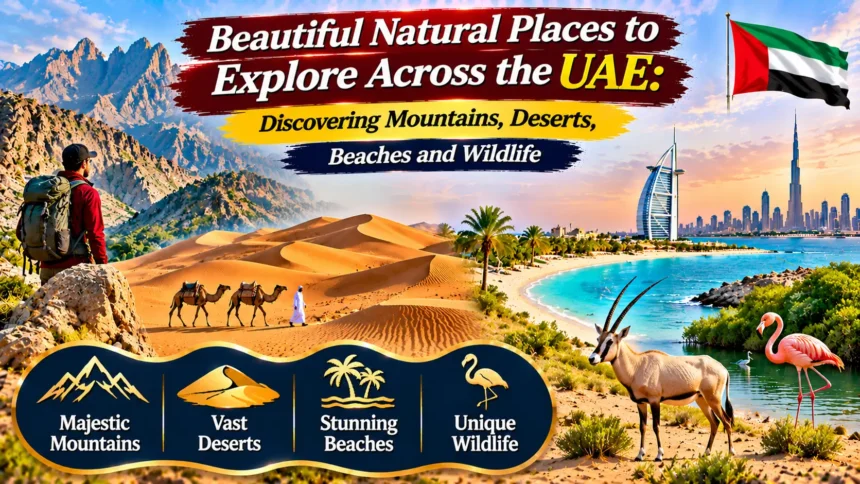
The United Arab Emirates is often associated with modern cities, luxury hotels and impressive buildings. However, beyond its busy streets and famous attractions, the country has a beautiful natural side that is worth exploring. From towering mountains and golden sand dunes to peaceful beaches and green mangrove forests, the UAE offers a surprising variety of landscapes.
- 1. Hatta: A Beautiful Escape into the Hajar Mountains
- 2. Jebel Jais: The Majestic Mountain Beauty of Ras Al Khaimah
- 3. Jebel Hafeet: Stunning Natural Views in Al Ain
- 4. Liwa Desert: Endless Golden Sand Dunes
- 5. Al Qudra Lakes: A Peaceful Desert Oasis in Dubai
- 6. Ras Al Khor Wildlife Sanctuary: A Haven for Birds in Dubai
- 7. Mangrove National Park: A Green Paradise in Abu Dhabi
- 8. Jubail Mangrove Park: Walking Along Beautiful Coastal Forests
- 9. Khor Kalba Mangroves: Discovering Sharjah’s Coastal Wildlife
- 10. Sir Bani Yas Island: A Natural Home for Wildlife
- 11. Al Wathba Wetland Reserve: A Special Place for Flamingos
- 12. Al Wathba Fossil Dunes: A Unique Natural Formation
- 13. Fujairah’s Beaches and Eastern Coastline: Natural Beauty by the Sea
- 14. Why the UAE’s Natural Landscapes Are Worth Exploring
- 15. Best Time to Explore Natural Places Across the UAE
- Conclusion
- Frequently Asked Questions (FAQs)
Each emirate has something different for nature lovers. Ras Al Khaimah is known for its dramatic mountain scenery, Abu Dhabi has beautiful wetlands and desert landscapes, while Fujairah attracts visitors with its beaches and rugged eastern coastline. Dubai and Sharjah also offer natural areas where people can enjoy wildlife, outdoor activities and peaceful surroundings.
These places are perfect for travellers who want to spend time outdoors, discover local wildlife or take a break from city life. Whether you enjoy hiking, kayaking, photography, birdwatching or simply watching the sunset, the UAE has many natural destinations to discover.
Let’s explore some of the most beautiful natural places across the UAE and understand what makes each one special.
1. Hatta: A Beautiful Escape into the Hajar Mountains
Hatta is a beautiful mountain area belonging to Dubai, located in the Hajar Mountains. It is known for its cooler weather, rocky peaks, and clear blue lakes, offering a refreshing change from the busy coastal cities and hot deserts of the UAE.
Unlike the flat desert surroundings found in many parts of the country, Hatta has a completely different landscape. Large mountain peaks rise above the valleys, creating a peaceful setting for outdoor activities and photography.
One of its most popular attractions is Hatta Dam, where calm blue-green water sits between rocky mountain slopes. Visitors can enjoy kayaking and other water activities while taking in the surrounding scenery.
Hatta also offers several hiking and cycling routes for people who enjoy exploring nature. Some paths pass through rocky landscapes, old farms and traditional settlements. The area also has ancient archaeological remains that show how people lived in this mountain region thousands of years ago.
Popular activities in Hatta include:
- Kayaking at Hatta Dam.
- Hiking through mountain trails.
- Mountain biking across rocky routes.
- Visiting traditional farms and mountain villages.
- Enjoying photography and peaceful outdoor surroundings.
The cooler months are generally more comfortable for exploring Hatta, especially when planning longer outdoor activities.
2. Jebel Jais: The Majestic Mountain Beauty of Ras Al Khaimah
Jebel Jais is one of the UAE’s most impressive natural landmarks. Located in Ras Al Khaimah, it forms part of the Hajar Mountain range and is recognised as the highest peak in the country.
Jebel Jais is the highest mountain in the UAE, standing 1,934 metres above sea level. It offers beautiful mountain views, deep valleys, and winding roads.
The weather is also around 10°C cooler than in the lowland areas, making it a great place to escape the heat.
The mountain is famous for its rugged slopes, deep valleys, winding roads and spectacular views. As visitors travel higher, the scenery changes from dry rocky land to dramatic mountain surroundings with layers of peaks stretching into the distance.
Jebel Jais is particularly popular among people who enjoy adventure and outdoor activities. The mountain has designated hiking trails, viewpoints and cycling opportunities. Visitors can stop at different viewing areas to enjoy the scenery or photograph the surrounding valleys.
The natural environment also supports wildlife. Mountain animals, birds and different plant species are found across the wider Hajar range.
Some popular experiences include:
- Hiking on designated mountain trails.
- Enjoying panoramic views from viewing areas.
- Cycling along mountain roads.
- Taking photographs of the rocky landscape.
- Experiencing adventure activities offered by authorised operators.
Jebel Jais is an excellent destination for travellers who want to experience the mountainous side of the UAE.
3. Jebel Hafeet: Stunning Natural Views in Al Ain
Jebel Hafeet is located near Al Ain and stands 1,249 metres above sea level, making it the highest peak in Abu Dhabi. It is famous for its winding mountain road, beautiful desert views, and natural hot springs at its base.
Jebel Hafeet is another beautiful mountain destination. Rising above the surrounding desert landscape, this rocky mountain offers impressive views of Al Ain and the nearby areas.
The mountain is especially attractive during sunrise and sunset. As sunlight falls across its rocky slopes, the landscape changes into different shades of brown, gold and orange.
Visitors can reach the upper areas through a winding mountain road. The journey itself is an enjoyable experience, with several viewpoints along the way.
The mountain also has an interesting natural and historical background. Its foothills contain more than 500 ancient tombs dating back around 5,000 years. These remains are part of the wider cultural landscape of Al Ain, which is recognised as a UNESCO World Heritage Site.
At the foot of the mountain, Jebel Hafeet Desert Park offers opportunities for hiking, cycling, horse riding and camel riding in a beautiful natural setting.
For nature lovers, Jebel Hafeet combines mountain scenery, wildlife and history in one destination.
4. Liwa Desert: Endless Golden Sand Dunes
The Liwa region in Abu Dhabi is one of the most beautiful desert areas in the UAE. Located in the Al Dhafra region, it forms part of the larger Rub’ al Khali, also known as the Empty Quarter.
Liwa is famous for its enormous sand dunes, which stretch across the landscape in beautiful golden and reddish shades. Some dunes rise high above the surrounding sand, creating dramatic views that attract photographers and desert travellers.
One of the most recognised landmarks in this region is Tel Moreeb, also known as Moreeb Dune. Its steep sandy slope rises more than 300 metresv and has a steep 50-degree slope and attracts visitors interested in desert scenery and motorsport events.
The best way to experience Liwa’s natural beauty is to visit during the cooler months. Early mornings and evenings are particularly attractive because the sunlight creates beautiful patterns across the dunes.
Visitors can enjoy:
- Guided four-wheel-drive desert trips.
- Desert photography and sunset views.
- Camping in suitable organised areas.
- Watching traditional desert activities.
- Exploring the surrounding oasis landscapes.
The Liwa region also has a strong connection with traditional Emirati life. Date farming, camel traditions and desert communities have been part of its history for generations.
5. Al Qudra Lakes: A Peaceful Desert Oasis in Dubai
Al Qudra Lakes is one of Dubai’s most interesting natural-style outdoor destinations. Located within the Al Marmoom Desert Conservation Reserve, the lakes create a beautiful contrast with the surrounding desert.
The area includes several lakes surrounded by sand, small plants and open landscapes. It provides a peaceful setting for visitors who want to enjoy nature without travelling too far from the city.
Al Qudra is also known for its birdlife. Different bird species can be found around the lakes, and the wider Al Marmoom area supports desert wildlife such as gazelles and other animals adapted to the dry environment.
Many visitors come here for picnics, cycling, photography and quiet walks. The surrounding desert scenery also makes the lakes an attractive place for watching the sunrise or sunset.
Some popular things to enjoy at Al Qudra include:
- Birdwatching around the lakes.
- Cycling on nearby desert tracks.
- Photography and nature walks.
- Enjoying a picnic in permitted areas.
- Watching the sunset over the desert.
Visitors should avoid feeding wildlife, disturbing birds or leaving rubbish behind. Keeping the surroundings clean helps protect this special outdoor space.
6. Ras Al Khor Wildlife Sanctuary: A Haven for Birds in Dubai
Dubai may be famous for its modern skyline, but it also has important natural habitats. One of the best examples is Ras Al Khor Wildlife Sanctuary, a protected wetland located near Dubai Creek.
The sanctuary includes mangroves, mudflats, shallow lagoons and other wetland habitats. These areas provide food and shelter for many species of birds and other wildlife.
Ras Al Khor is particularly famous for its greater flamingos. During the winter season, large numbers of these beautiful pink birds gather in the wetland. Their presence creates a wonderful sight, especially for visitors interested in nature photography and birdwatching.
The sanctuary is also home to different types of ducks, wading birds and other wildlife. It is an important reminder that healthy natural habitats can exist close to major urban areas.
Visitors can observe birds from designated viewing hides. However, access arrangements may vary, so checking Dubai Municipality’s official visitor information before travelling is recommended.
7. Mangrove National Park: A Green Paradise in Abu Dhabi
Mangrove National Park offers a different natural experience from the UAE’s mountains and deserts. Located along Abu Dhabi’s coastline, this protected area is filled with mangrove trees, calm water channels and wildlife.
Mangroves are special coastal plants that can grow in salty water and help protect coastal environments. Their roots provide shelter for small marine animals, while the surrounding water supports fish, crabs and other species.
The park is particularly attractive for kayaking. Visitors can move slowly through the water channels and enjoy the green surroundings from a close distance.
Birdwatchers may also spot flamingos, herons and other birds that use the mangroves as feeding or resting areas.
Some experiences to enjoy here include:
- Guided kayaking through mangrove channels.
- Exploring the coastal ecosystem.
- Watching birds and marine wildlife.
- Taking nature photographs.
- Learning about the importance of mangrove conservation.
Mangroves also help protect coastlines from waves and support biodiversity. Exploring these forests gives visitors a better understanding of the UAE’s marine environment.
8. Jubail Mangrove Park: Walking Along Beautiful Coastal Forests
Another wonderful place to experience mangrove scenery is Jubail Mangrove Park on Jubail Island in Abu Dhabi.
The park is known for its wooden boardwalks that pass through the mangrove environment. Visitors can walk above the water and observe the roots, trees and wildlife living around them.
The peaceful setting makes it a popular destination for people who enjoy nature photography and relaxing outdoor experiences.
Kayaking is another popular activity. Moving through the narrow water channels allows visitors to see the mangroves from a different angle. Depending on the season and conditions, they may also spot birds, crabs and other small animals.
Jubail Mangrove Park is also an educational destination. It helps visitors understand why mangroves are important for coastal protection, wildlife habitats and environmental health.
Its combination of walking trails, water activities and natural surroundings makes it a wonderful place to explore.
9. Khor Kalba Mangroves: Discovering Sharjah’s Coastal Wildlife
Khor Kalba, located on the eastern coast of Sharjah, is home to one of the UAE’s most important mangrove forests. The area is especially known for its natural beauty and rare wildlife.
The mangrove forest creates a green coastal environment that looks very different from the dry mountains and deserts nearby. Its waterways and trees provide shelter for different birds and marine species.
Khor Kalba is particularly important for bird conservation. Rare birds, including the white-collared kingfisher, are associated with this coastal habitat.
Visitors can enjoy kayaking, wildlife watching and nature photography. Nearby beaches and coastal areas also add to the beauty of the region.
The area is a good choice for people who want to explore the natural side of the UAE’s east coast.
Because it is a sensitive wildlife habitat, visitors should follow local instructions and avoid disturbing birds or damaging the mangroves.
10. Sir Bani Yas Island: A Natural Home for Wildlife
Sir Bani Yas Island is one of Abu Dhabi’s most interesting nature destinations. Located off the western coast of the emirate, the island is known for its wildlife reserve and long-running conservation work.
The island is home to thousands of free-roaming animals and large areas of planted vegetation. Visitors may see Arabian oryx, gazelles, deer, giraffes and other animals during organised wildlife experiences.
One of the most important parts of the island’s conservation story is the effort to protect endangered species and create suitable habitats for wildlife.
Sir Bani Yas also offers outdoor activities such as:
- Guided wildlife safaris.
- Kayaking and other water activities.
- Hiking and mountain biking.
- Snorkelling in selected coastal areas.
- Nature and cultural experiences.
The island is especially suitable for travellers who want to experience wildlife in a natural setting rather than visiting a traditional city attraction.
Access arrangements are linked to the island’s tourism facilities and accommodation, so visitors should check the official information before planning a trip.
11. Al Wathba Wetland Reserve: A Special Place for Flamingos
Al Wathba Wetland Reserve, located near Abu Dhabi, is an important natural habitat for birds and other wildlife.
The reserve developed from a coastal salt flat into a wetland with lakes and shallow water areas. These habitats provide food and shelter for different bird species.
It is particularly well known for its greater flamingo population. Thousands of flamingos have been recorded in the reserve during the autumn and spring seasons.
The area also supports many other bird species, plants and aquatic life. Its importance is recognised internationally, and it was designated as a Ramsar site in 2013.
The reserve has previously offered walking trails and a birdwatching hide where visitors can observe wildlife without disturbing it.
Visitor note: The official Environment Agency – Abu Dhabi website currently lists the reserve as temporarily closed for development until further notice. Check its official website before planning a visit.
12. Al Wathba Fossil Dunes: A Unique Natural Formation
Another interesting natural site near Abu Dhabi is Al Wathba Fossil Dunes Protected Area. Unlike ordinary sand dunes, these formations have hardened over time, creating unusual shapes and patterns.
The fossil dunes were formed through natural processes involving sand, groundwater and mineral deposits. Wind helped shape their surfaces, creating structures that look almost like stone sculptures.
The protected area contains more than 1,700 fossil dunes spread across seven square kilometres. Scientists estimate that the formations are more than four million years old.
The unusual shapes make the area particularly interesting for geology enthusiasts, photographers and people who enjoy learning about natural landscapes.
The site also helps visitors understand how wind and minerals can change the appearance of desert environments over long periods.
Visitor note: The official Environment Agency – Abu Dhabi currently lists the site as temporarily closed for development. Check its latest visitor information before travelling.
13. Fujairah’s Beaches and Eastern Coastline: Natural Beauty by the Sea
Fujairah offers some of the most attractive coastal scenery in the UAE. Located along the Gulf of Oman, the emirate has a beautiful combination of beaches, rocky mountains and clear coastal waters.
Unlike the western coastline, the eastern side of the UAE has a more mountainous background. This creates beautiful views where the Hajar Mountains meet the sea.
The coastline is popular for swimming, snorkelling, diving and relaxing by the water. Some areas have rocky sections and marine habitats that attract underwater enthusiasts.
Snoopy Island, near Al Aqah Beach, is particularly well known for its distinctive shape and snorkelling opportunities. Visitors may see colourful fish and other marine life around the island, depending on water and weather conditions.
Fujairah is also a great place for photography because the combination of mountains, beaches and sea creates a different type of landscape from the UAE’s desert regions.
Visitors should choose designated swimming areas, follow local safety advice and avoid disturbing marine life.
14. Why the UAE’s Natural Landscapes Are Worth Exploring
The natural beauty of the UAE lies in its variety. Within one country, visitors can explore mountains, deserts, mangroves, beaches, wetlands and wildlife reserves.
Each destination offers a different experience. Hatta and Jebel Jais are ideal for people who enjoy mountain activities. Liwa offers enormous desert dunes, while Al Qudra and Ras Al Khor provide opportunities to observe birds and other wildlife.
Coastal areas such as Khor Kalba, Jubail and Fujairah show the importance of marine habitats and natural beaches.
These places are also important for environmental conservation. Mangroves protect coastlines, wetlands support migratory birds, and mountain reserves provide habitats for rare plants and animals.
Exploring these locations helps visitors understand that the UAE is not only a country of cities and modern development. It also has natural environments that deserve attention and protection.
15. Best Time to Explore Natural Places Across the UAE
The weather plays an important role when planning outdoor activities in the UAE. Summers are extremely hot, so many visitors prefer exploring natural areas during the cooler months.
The period from October to March is generally more comfortable for hiking, camping, kayaking and desert trips. Early mornings and late afternoons are also suitable for outdoor visits.
Here is a simple seasonal guide:
- October to November: A good period for exploring mountains, deserts and coastal areas as temperatures become more comfortable.
- December to February: Popular months for hiking, camping, photography and outdoor activities.
- March to April: A pleasant time for many outdoor experiences, although temperatures gradually increase.
- May to September: Summer heat can be intense. Water-based activities and early-morning visits may be more suitable, depending on local conditions.
Always check the weather, access rules and seasonal opening arrangements before visiting a natural reserve.
Conclusion
The beautiful natural places to explore across the UAE reveal a side of the country that goes far beyond its modern cities. From the rocky peaks of Hatta and Jebel Jais to the golden dunes of Liwa, every region offers a different landscape and experience.
The mangroves of Abu Dhabi and Kalba, the wetlands of Dubai and Abu Dhabi, and the beaches of Fujairah also show the country’s rich natural diversity. These environments support wildlife, protect ecosystems and provide peaceful spaces for outdoor activities.
Exploring these destinations is a wonderful way to discover the natural beauty of the Emirates. Whether you enjoy hiking, kayaking, birdwatching or simply spending time outdoors, the UAE has many landscapes waiting to be appreciated and protected.
Frequently Asked Questions (FAQs)
1. What are the most beautiful natural places in the UAE?
Some of the most beautiful natural destinations include Hatta, Jebel Jais, Jebel Hafeet, Liwa Desert, Al Qudra Lakes, Ras Al Khor Wildlife Sanctuary, Mangrove National Park, Khor Kalba and Sir Bani Yas Island.
2. Which place in the UAE is best for mountain views?
Jebel Jais in Ras Al Khaimah, Hatta in Dubai and Jebel Hafeet in Al Ain are among the best destinations for mountain scenery and outdoor experiences.
3. Where can visitors see flamingos in the UAE?
Ras Al Khor Wildlife Sanctuary in Dubai and Al Wathba Wetland Reserve near Abu Dhabi are well known for greater flamingos. Visitors should check current access information before travelling to the reserves.
4. Which UAE destination is best for desert landscapes?
Liwa Desert in Abu Dhabi is famous for its large sand dunes and wide open landscapes. Al Qudra Lakes in Dubai also offers a different desert experience with lakes and wildlife.
5. Where can visitors explore mangrove forests in the UAE?
Visitors can explore mangrove environments at Mangrove National Park and Jubail Mangrove Park in Abu Dhabi, as well as Khor Kalba in Sharjah.
6. What is the best time to explore natural places in the UAE?
October to March is generally a comfortable period for outdoor activities such as hiking, camping, desert trips and nature walks. Always check local weather conditions before travelling.
7. Are there wildlife reserves in the UAE?
Yes. The UAE has several protected natural areas, including Sir Bani Yas Island, Ras Al Khor Wildlife Sanctuary, Al Wathba Wetland Reserve, Dubai Desert Conservation Reserve and Khor Kalba. These areas help protect different species and natural habitats.
Do follow us on Instagram
Read More – The History Behind Traditional Saudi Arabian Clothing