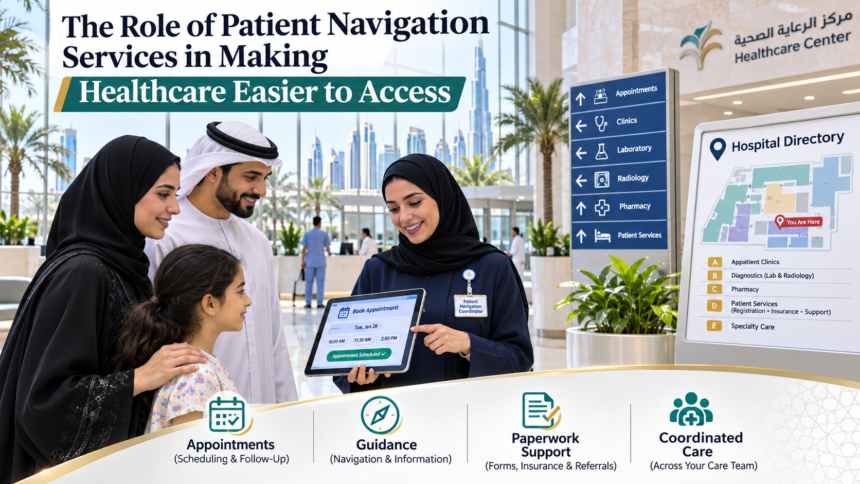
How Patient Navigators Help Patients Overcome Healthcare Barriers
Healthcare systems across the Gulf Cooperation Council (GCC) have undergone significant development as countries invest in advanced hospitals, specialised medical treatments, digital healthcare platforms and modern patient services. The United Arab Emirates, Saudi Arabia, Qatar, Kuwait, Oman and Bahrain continue working to improve healthcare quality and make medical services more accessible to their populations.
- 1. What Are Patient Navigation Services and How Do They Work?
- 2. Why Patients Still Face Barriers in Modern Healthcare Systems
- 3. How Patient Navigation Can Improve Cancer Care and Chronic Disease Management
- 4. How Patient Navigation Is Relevant to Healthcare Development in the GCC
- 5. The Role of Technology in Making Patient Navigation More Efficient
- 6. Why Patient Navigators Need Training, Clear Responsibilities and Cultural Awareness
- 7. What Challenges Could Limit Patient Navigation Services?
- 8. How GCC Healthcare Systems Can Build Effective Patient Navigation Programmes
However, accessing healthcare does not always become easier simply because more hospitals, doctors and technologies are available.
Patients may face difficulties understanding which specialist to consult, arranging appointments, managing referrals, checking insurance coverage or coordinating treatment across different healthcare facilities. These challenges can become particularly demanding for people with chronic illnesses, complex medical conditions or limited familiarity with the healthcare system.
This is where patient navigation services can make a meaningful difference.
Patient navigation involves helping individuals understand and move through healthcare systems so they can receive appropriate medical services without unnecessary barriers. Patient navigators may help arrange appointments, coordinate referrals, explain healthcare processes and connect patients with relevant support services.
Rather than providing medical treatment themselves, navigators generally focus on making the patient’s journey through the healthcare system more organised and understandable. Some navigation roles are held by qualified nurses or other clinical professionals who can also provide support within their licensed scope of practice.
The World Health Organization’s European Observatory on Health Systems and Policies describes patient navigation as a service designed to help individuals overcome barriers to accessing healthcare and improve coordination between services. OBS
The importance of navigation has been particularly well studied in cancer care, where patients may require repeated consultations, diagnostic tests, specialist appointments and long-term treatment.
A 2024 systematic review found that patient navigation programmes can support timely access to cancer treatment and improve aspects of treatment coordination and patient experience. PubMed Central (PMC)
For GCC healthcare systems, the approach could also be useful in areas such as chronic disease management, rehabilitation, post-discharge support and specialist referrals.
As regional healthcare services become more advanced, patient navigation could help ensure that people can use those services effectively.
1. What Are Patient Navigation Services and How Do They Work?
Patient navigation services provide personalised assistance to individuals who need help accessing and coordinating healthcare.
A patient navigator acts as a point of contact who helps patients understand the steps involved in receiving medical services.
The specific responsibilities depend on the healthcare organisation, the patient’s needs and the navigator’s professional qualifications.
For example, a patient who has received an abnormal screening result may need an additional diagnostic test, a specialist consultation and follow-up treatment.
Without clear guidance, arranging these services can become confusing.
A patient navigator may help organise appointments, explain the referral process and identify practical difficulties that could delay care.
Different types of patient navigators
Patient navigation can be provided by professionals with different backgrounds.
Some navigators are registered nurses with specialist clinical knowledge.
Others are social workers, trained community health workers or non-clinical healthcare support professionals.
Their responsibilities should remain within their training and authorised professional scope.
A non-clinical navigator may assist with appointments and practical information but should not diagnose conditions, interpret clinical findings independently or recommend medicines.
A qualified nurse navigator may provide additional clinical education and coordination appropriate to their professional licence.
How navigation differs from ordinary administration
Hospital reception and appointment teams provide essential administrative services.
Patient navigation generally goes further by identifying the barriers affecting an individual and helping coordinate solutions over time.
For example, booking a specialist appointment is an administrative task.
Helping a patient understand their referral pathway, arrange necessary records, address language difficulties and complete recommended follow-up can form part of a broader navigation service.
Common navigation activities
| Service | What a navigator may do | Potential patient benefit |
|---|---|---|
| Appointment coordination | Help arrange consultations and tests | Fewer scheduling difficulties |
| Referral assistance | Explain how to access specialist services | Clearer treatment pathways |
| Medical records coordination | Help ensure authorised records reach relevant providers | Better continuity of information |
| Language support | Connect patients with interpreters | Improved understanding |
| Insurance guidance | Explain administrative requirements and direct coverage questions | Fewer administrative barriers |
| Patient education | Explain non-clinical processes and approved information | More informed participation |
| Follow-up support | Remind patients about necessary appointments | Better continuity of care |
| Community referrals | Connect patients with appropriate support organisations | Access to additional resources |
Patient navigation should complement healthcare professionals rather than replace clinical decision-making.
Its central purpose is to make services easier to understand and access.
2. Why Patients Still Face Barriers in Modern Healthcare Systems
Modern healthcare can be highly specialised.
Patients may need to move between primary care, diagnostic centres, hospitals, pharmacies and rehabilitation facilities.
Although specialisation can improve medical treatment, it can also make the patient journey more complicated.
Difficulty identifying the right service
A patient experiencing a health concern may not know whether to contact a general practitioner, specialist clinic or another healthcare service.
After an initial consultation, additional tests and referrals may be necessary.
Without clear guidance, patients may struggle to understand which steps should happen next.
A navigation service can help explain the approved care pathway while directing clinical questions to qualified professionals.
Managing multiple appointments
Patients with complex conditions may need several appointments involving different departments.
These may include laboratory tests, diagnostic imaging, specialist consultations and follow-up visits.
Scheduling difficulties can become especially challenging when patients must travel between healthcare facilities.
Language and communication barriers
The GCC has diverse resident populations who communicate in Arabic, English, Hindi, Urdu, Malayalam and many other languages.
Patients who cannot understand medical or administrative instructions clearly may experience difficulties accessing services.
Navigation programmes can help connect people with trained interpreters and understandable information.
However, interpretation involving medical decisions should be handled by appropriately qualified language professionals rather than relying on unverified translations.
Insurance and financial questions
Healthcare financing arrangements differ between GCC countries and patient groups.
Some services may require referrals, prior authorisation or confirmation of insurance coverage.
Patients may also need information about available financial assistance or payment procedures.
Navigators can help direct these questions to authorised insurance and financial teams.
They should not promise coverage or financial support that has not been confirmed.
Transportation and accessibility
Distance, mobility difficulties and transportation costs can prevent patients from attending appointments.
These barriers may be particularly important for older adults, people with disabilities and patients requiring frequent treatment.
Navigation can help identify available accessibility or transportation support, although it cannot guarantee that such services exist.
Common healthcare access barriers
| Barrier | Potential consequence | Navigation response |
|---|---|---|
| Unclear referral process | Delayed specialist consultation | Explain approved referral steps |
| Multiple appointments | Scheduling confusion | Coordinate appointments |
| Language differences | Misunderstood instructions | Arrange appropriate interpretation |
| Insurance procedures | Administrative delays | Connect patients with coverage specialists |
| Transportation difficulties | Missed healthcare visits | Identify available support |
| Incomplete records | Repeated administrative work | Coordinate authorised information sharing |
| Uncertain follow-up | Missed tests or consultations | Support reminders and follow-up planning |
Recognising these barriers is the first step toward designing effective navigation services.
3. How Patient Navigation Can Improve Cancer Care and Chronic Disease Management
Patient navigation has been studied extensively in oncology because cancer care often involves multiple stages.
Patients may move through screening, diagnosis, treatment, rehabilitation and long-term follow-up.
Each stage can involve different specialists, facilities and decisions.
Supporting cancer screening and diagnosis
Cancer screening programmes aim to identify certain conditions before symptoms develop or at earlier stages.
However, an abnormal screening result may require additional diagnostic tests.
If patients struggle to arrange or attend follow-up appointments, delays can occur.
Navigators can help explain the next steps, arrange appointments and address practical obstacles.
A systematic review and meta-analysis published in 2025 examined 42 randomised clinical trials involving 39,111 participants. It found that patient navigation improved participation in breast and cervical cancer screening and follow-up in the populations studied. PubMed Central (PMC)
These findings support navigation as a useful strategy, although outcomes can vary between settings and programmes.
Coordinating cancer treatment
Cancer treatment may involve surgery, chemotherapy, radiotherapy or other specialised services.
Patients may receive care from several departments.
A nurse navigator or other qualified professional can help coordinate communication, identify barriers and guide patients through the relevant pathway.
The Oncology Nursing Society describes oncology nurse navigators as registered nurses with specialist knowledge who help patients and families overcome healthcare system barriers. Oncology Nursing Society
Supporting chronic disease care
Patient navigation may also be useful for people managing long-term conditions such as diabetes or cardiovascular disease.
These patients may require periodic assessments, specialist consultations, medicines and lifestyle support.
A navigator can help coordinate appointments and connect patients with relevant healthcare professionals.
However, the strongest research evidence currently comes from particular areas, especially cancer care. Benefits in other conditions should be evaluated rather than assumed.
Improving post-discharge follow-up
Patients leaving hospital may receive instructions involving medicines, rehabilitation and outpatient appointments.
Navigation services can help make these arrangements clearer.
This may be particularly useful when a patient needs care from multiple providers after discharge.
Potential applications across healthcare
| Healthcare area | Possible navigation role |
|---|---|
| Cancer screening | Supporting follow-up after abnormal results |
| Oncology treatment | Coordinating specialists and appointments |
| Diabetes care | Helping arrange reviews and education services |
| Cardiovascular care | Supporting referrals and follow-up |
| Rehabilitation | Coordinating therapy and specialist services |
| Hospital discharge | Explaining follow-up arrangements |
| Older adult care | Connecting multiple providers and support services |
The objective is to reduce avoidable gaps between services while keeping treatment decisions with the responsible healthcare professionals.
4. How Patient Navigation Is Relevant to Healthcare Development in the GCC
The GCC’s healthcare environment provides several opportunities for patient navigation.
Regional healthcare systems include public hospitals, specialist medical centres, primary care facilities, insurance providers and private healthcare organisations.
Coordinating access between these services can be complicated for some patients.
Although the availability of formal navigation programmes varies, examples from the UAE, Saudi Arabia and Qatar demonstrate how related services are already being used.
United Arab Emirates: Oncology and international patient support
In the UAE, NMC Healthcare describes the use of dedicated oncology nurse navigators in its surgical oncology services.
According to the provider, these professionals help coordinate appointments, provide patient education and act as a consistent point of contact during the treatment process. Advanced Cancer Surgery and Tumour Care
This is an example of formal navigation within a specialised clinical service.
Cleveland Clinic Abu Dhabi also provides international patient coordination services.
Patients travelling to the hospital can receive assistance with appointment scheduling, medical records, travel arrangements, estimated costs and relevant administrative processes.
The hospital describes its international patient coordinator as a dedicated contact throughout the care journey. Cleveland Clinic Abu Dhabi
International patient coordination overlaps with some navigation functions, although it is not identical to a comprehensive clinical navigation programme.
Saudi Arabia: A hospital-based cancer navigation initiative
Saudi Arabia provides an example of navigation being evaluated through healthcare quality improvement.
A study published in April 2026 examined a multidisciplinary cancer care pathway at Al Hada Armed Forces Hospital in Taif.
The initiative used nurse case managers as cancer navigators, coordinated clinical services and introduced virtual follow-up arrangements.
Researchers reported a reduction in the average interval from diagnosis to treatment, alongside improvements in patient satisfaction and measured quality of life.
The findings came from one hospital using a before-and-after evaluation, so they should not be treated as proof that identical results would occur throughout Saudi Arabia. OUP Academic
Nevertheless, the study illustrates how navigation can be incorporated into local healthcare improvement programmes.
Qatar: Helping patients understand cancer services

Qatar has developed initiatives intended to make cancer care pathways easier to understand.
Its Ministry of Public Health, working with Hamad Medical Corporation and other organisations, introduced a guide to cancer services.
The guide aims to help individuals with suspected or diagnosed cancer identify available services and navigate the healthcare system. Hamad Medical Corporation
A service guide is not the same as assigning every patient a dedicated navigator.
However, it can support similar objectives by providing clearer information about access to care.
Potential across Kuwait, Oman and Bahrain
Other GCC countries could evaluate navigation within selected clinical services, particularly where patients face multiple referrals or follow-up requirements.
However, the presence of appointment systems, call centres or general patient relations departments does not automatically establish a dedicated navigation programme.
Healthcare authorities should assess their existing services before designing additional ones.
GCC healthcare navigation opportunities
| Country | Documented example or potential direction |
|---|---|
| UAE | Oncology nurse navigation and international patient coordination |
| Saudi Arabia | Evaluated multidisciplinary cancer navigation pathway in Taif |
| Qatar | Cancer service guidance and coordinated support services |
| Kuwait | Potential integration into specialist referrals and chronic care |
| Oman | Potential support for patients navigating geographically dispersed services |
| Bahrain | Potential coordination across primary, specialist and follow-up care |
These examples show why patient navigation can be relevant to Gulf healthcare, while also demonstrating that programmes differ in structure and purpose.
5. The Role of Technology in Making Patient Navigation More Efficient
Digital healthcare systems can make patient navigation easier by improving access to information and supporting communication between healthcare teams.
However, digital tools should complement human support rather than become the only way patients can access assistance.
Some patients may prefer speaking with a trained navigator, particularly when they are unfamiliar with healthcare procedures or facing a complex diagnosis.
Electronic health records
Electronic health records help authorised professionals access relevant clinical information.
For navigation teams, accurate records may support referral tracking, appointment coordination and continuity of care.
For example, a navigator may be able to identify whether a specialist referral has been received or whether a scheduled follow-up is pending.
Access must remain subject to privacy requirements and the navigator’s authorised responsibilities.
Digital appointment systems
Online booking platforms, automated reminders and secure messaging can help patients manage appointments.
These tools may reduce certain administrative burdens.
However, patients with limited digital skills, disabilities or language barriers may still require direct assistance.
Patient portals
Patient portals allow individuals to access selected medical information, appointment details and healthcare communications.
Navigators can help patients understand how to use these systems.
The objective should be to improve accessibility without requiring every patient to rely on a smartphone or computer.
Artificial intelligence and navigation
AI tools may help identify incomplete referrals, flag overdue appointments or direct routine administrative questions to suitable services.
However, algorithms can produce incorrect information.
AI should not independently interpret medical results, determine emergency priorities or promise insurance coverage without appropriate professional and institutional controls.
Using technology responsibly
| Technology | Potential application | Important safeguard |
|---|---|---|
| Electronic health records | Coordinating authorised patient information | Privacy and access controls |
| Appointment platforms | Scheduling and reminders | Accessible alternatives |
| Referral tracking | Identifying delayed processes | Reliable workflow data |
| Patient portals | Accessing appointment and care information | Usability and language support |
| Secure messaging | Communication with navigation teams | Confidentiality |
| AI-assisted administration | Identifying routine service needs | Human oversight and verification |
The US President’s Cancer Panel’s 2024 report recognises the potential of technology to strengthen navigation but warns that poorly designed systems can also introduce new barriers and widen disparities. President’s Cancer Panel
For GCC healthcare organisations, digital accessibility should therefore be considered alongside technological efficiency.
6. Why Patient Navigators Need Training, Clear Responsibilities and Cultural Awareness
Patient navigation requires more than good communication skills.
Navigators must understand healthcare processes, professional boundaries, confidentiality and the practical challenges that patients experience.
The qualifications required depend on the responsibilities assigned.
Clinical and non-clinical navigation
Some navigation tasks can be performed by trained administrative professionals or community support workers.
These may include scheduling assistance, explaining service procedures and connecting patients with approved resources.
Clinical responsibilities require appropriately qualified professionals.
For example, a registered nurse navigator may provide clinical education and assess certain concerns within their authorised scope.
An administrative navigator should refer medical questions to qualified clinicians.
Understanding healthcare pathways
Navigators need sufficient knowledge of their organisation’s services and referral procedures.
They should know how patients move between departments, how relevant appointments are arranged and when a concern needs escalation.
Without this knowledge, navigation may simply create another administrative layer.
Cultural and language awareness
Healthcare providers in the Gulf serve diverse communities.
Navigators should communicate respectfully across languages, cultures and different levels of health literacy.
When necessary, they should arrange qualified interpretation rather than providing inaccurate medical translations.
Confidentiality and consent
Patient navigation often involves access to sensitive information.
Healthcare organisations must define which records navigators may access and when information may be shared with relatives or other services.
Family involvement should respect the patient’s wishes and applicable confidentiality requirements.
Recognising clinical warning signs
Navigators may receive calls from patients experiencing new or worsening symptoms.
They need clear procedures for directing urgent concerns to qualified healthcare professionals or emergency services.
Navigation should never delay medical attention while staff attempt to resolve administrative questions.
Essential navigator competencies
| Competency | Why it matters |
|---|---|
| Healthcare system knowledge | Supports appropriate referrals |
| Communication skills | Improves patient understanding |
| Cultural awareness | Supports respectful interaction |
| Confidentiality | Protects personal health information |
| Organisation | Coordinates multiple appointments |
| Problem-solving | Helps address practical barriers |
| Professional boundaries | Prevents unqualified clinical advice |
| Escalation procedures | Directs urgent concerns appropriately |
Clear job descriptions, supervision and continuing training can help organisations establish reliable navigation services.
7. What Challenges Could Limit Patient Navigation Services?
Although patient navigation may improve access and coordination, establishing effective programmes requires investment and careful planning.
Healthcare organisations must avoid assuming that hiring navigators will automatically resolve every access problem.
Some barriers arise from limited specialist availability, insurance restrictions or broader infrastructure difficulties that individual navigators cannot eliminate.
Funding and staffing requirements
Navigation programmes require trained personnel, supervision, communication systems and administrative support.
A hospital must decide which patient groups will receive navigation and how staffing will be organised.
For example, patients receiving complex cancer treatment may require more intensive support than individuals attending routine appointments.
Workloads should reflect actual patient needs.
Unclear professional responsibilities
Navigation roles can overlap with nursing, social work, patient relations and case management.
Without clear responsibilities, tasks may be duplicated or overlooked.
Healthcare organisations should establish who is responsible for coordinating services and who has authority to make clinical decisions.
Variation in patient needs
Some patients require only basic appointment guidance.
Others may need language assistance, disability accommodations, multiple referrals or help identifying financial support.
A uniform service may therefore be insufficient.
Individual assessments can help navigation teams prioritise appropriate support.
Difficulties measuring outcomes
Healthcare organisations may find it easy to count navigation calls or appointments arranged.
However, these numbers do not necessarily demonstrate improved healthcare access.
More meaningful measures include timely completion of referrals, reduced missed appointments and patient-reported barriers that have been resolved.
Limited research outside oncology
Much of the available research on patient navigation comes from cancer programmes, especially in North America.
A WHO European Observatory policy brief notes that evidence on navigation in other healthcare settings is promising but remains uneven. NCBI
GCC healthcare organisations should therefore evaluate new programmes using local data.
Financial sustainability
Navigation may reduce certain delays or unnecessary service use, but the financial benefits depend on programme design.
A service that requires substantial staffing may not produce immediate net savings.
Cost assessments should examine staffing expenses, patient outcomes and changes in healthcare utilisation rather than assuming navigation is automatically cost-saving.
Implementation challenges and responses
| Challenge | Possible response |
|---|---|
| Limited programme funding | Begin with clearly defined priority groups |
| Unclear staff responsibilities | Establish formal job descriptions |
| High patient demand | Use needs-based prioritisation |
| Language differences | Provide appropriate interpreter access |
| Incomplete health records | Improve authorised information sharing |
| Limited outcome data | Track barriers and care completion |
| Digital exclusion | Maintain telephone and in-person options |
| Weak coordination | Build agreed referral and escalation pathways |
A successful navigation programme should address genuine patient barriers rather than create additional procedures that make healthcare more complicated.
8. How GCC Healthcare Systems Can Build Effective Patient Navigation Programmes
The future of patient navigation in the GCC will depend on connecting individual patient support with wider improvements in healthcare organisation.
Hospitals and health authorities can begin by identifying where patients experience the greatest difficulties accessing treatment.
This may involve reviewing referral delays, missed appointments, complaints and feedback from patients and caregivers.
Identify patients who need the most support
Not every patient requires intensive navigation.
Healthcare organisations can prioritise patients with complex treatment pathways, repeated referrals or significant access barriers.
Eligibility should be transparent and designed to avoid unfair exclusion.
Develop standardised referral pathways
Navigation teams need clear information about where patients should be referred and how appointments are arranged.
Agreed pathways between primary care, specialists and diagnostic services can reduce confusion.
However, clinical professionals must retain responsibility for determining the medical appropriateness and urgency of referrals.
Integrate navigation into existing healthcare teams
A navigation programme should work with clinicians, pharmacists, social workers and administrative departments.
This avoids creating separate systems that require patients to repeat information.
Offer multilingual and accessible communication
Navigation services should consider the languages and accessibility needs of their patient populations.
Possible support includes trained interpreters, accessible written information and telephone assistance.
Digital-only access should not become a requirement for receiving essential navigation help.
Monitor patient experience and outcomes
Programmes should measure whether support makes healthcare easier to access.
Useful indicators include the time between referral and appointment, completion of diagnostic follow-up, missed appointments and patient satisfaction.
Where possible, results should also be examined across different patient groups to identify inequalities.
A practical implementation roadmap
- Identify common access barriers: Review patient feedback, referral delays and service gaps.
- Define the target population: Select patients who could benefit most from navigation.
- Establish professional responsibilities: Clarify clinical and non-clinical duties.
- Train navigation teams: Include communication, confidentiality and escalation procedures.
- Connect healthcare services: Develop reliable referral and information-sharing processes.
- Introduce accessible communication tools: Provide telephone, digital and in-person support where appropriate.
- Measure performance: Track meaningful access and patient-experience indicators.
- Improve and expand programmes: Use evaluation findings to guide future investment.
What should a successful navigation service achieve?
| Outcome | Suggested measure |
|---|---|
| Faster access to appropriate care | Time from referral to relevant appointment |
| Better follow-up | Completion of recommended consultations or tests |
| Fewer unresolved barriers | Documented barriers successfully addressed |
| Improved communication | Patient understanding and satisfaction |
| Better continuity | Successful coordination between providers |
| More equitable access | Outcomes across different patient groups |
| Efficient service delivery | Costs relative to measurable benefits |
The strongest programmes will focus on whether patients receive appropriate care rather than simply how many navigation interactions occur.
Conclusion: Making Healthcare Easier to Understand and Access
Patient navigation services offer an important opportunity to make healthcare more organised, accessible and patient-centred.
As healthcare systems across the GCC introduce more specialised services, patients may need additional assistance understanding referrals, arranging appointments and coordinating treatment between providers.
Patient navigators can help address these challenges by providing personalised guidance and connecting individuals with appropriate healthcare resources.
Evidence from cancer care suggests that well-designed navigation programmes can improve screening participation, diagnostic follow-up and aspects of treatment access.
Examples from the UAE, Saudi Arabia and Qatar demonstrate how navigation and related coordination services are being incorporated into regional healthcare.
However, their success depends on clear professional responsibilities, qualified staff, reliable information systems and appropriate evaluation.
Navigation cannot replace medical professionals, create unavailable services or remove every financial barrier.
Its purpose is to help patients access existing healthcare resources more effectively while identifying obstacles that organisations may need to address.
Ultimately, patient navigation services could play an increasingly important role in GCC healthcare by making treatment pathways clearer, improving care coordination and helping more people receive appropriate healthcare without avoidable confusion or delay.
Do follow us on Instagram
Read More – How Assistive Communication Technologies Could Improve Education for Children With Disabilities