


Dubai Restaurant Etiquette Starts With Choosing the Right Venue
Understanding Dubai restaurant etiquette can make dining in the city much easier for first-time visitors. Dubai is one of the world’s most international dining destinations, with everything from small neighbourhood cafés and Emirati restaurants to luxury hotel dining, beach clubs and Michelin-recognised venues.
- Dubai Restaurant Etiquette Starts With Choosing the Right Venue
- Dress Respectfully Without Overthinking the Rules
- Understand Tipping in Dubai Restaurants
- Know How Alcohol Works in Dubai Restaurants
- Understand Dining Etiquette During Ramadan
- Respect Local Hospitality and Table Customs
- Reservations, Timing and Restaurant Behaviour Matter
- Family Dining, Children and Public Behaviour in Dubai
- Common Dubai Restaurant Etiquette Mistakes Visitors Should Avoid
- Dubai Restaurant Etiquette: Quick Visitor Checklist
The city is also culturally diverse, so restaurant customs are generally flexible. Visitors are not expected to know complicated rules before sitting down for a meal, but understanding a few local habits can help avoid awkward situations and show respect to restaurant staff and other diners.
Dubai’s dining culture combines international hospitality with local traditions. In one neighbourhood, you might find Emirati food served alongside Lebanese, Indian, Pakistani, Filipino, Iranian, African or European cuisine. In another, you may find formal hotel restaurants where reservations, dress codes and table service are more structured.
Visitors should also understand rules around tipping, alcohol, Ramadan dining and appropriate behaviour in public. Visit Dubai states that tipping is appreciated but not compulsory, while alcohol is only served at licensed establishments to people aged 21 and over.
The best approach is not to worry about following a complicated list of formalities. Instead, be polite, dress appropriately for the venue, check the bill before tipping, respect local customs and remember that expectations can differ between a casual café and a luxury restaurant.
Dubai Restaurant Etiquette Starts With Choosing the Right Venue
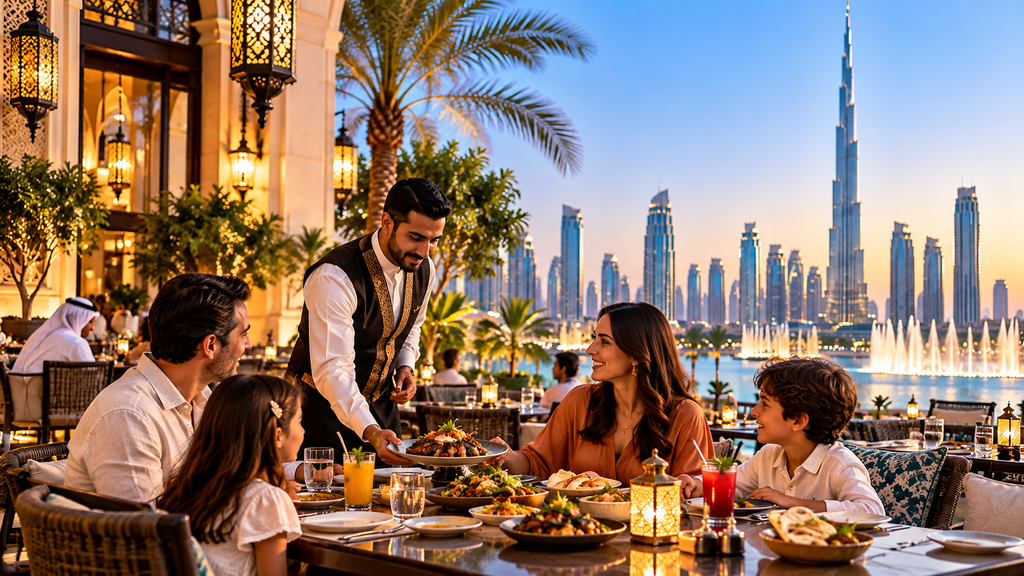
Dubai has restaurants for almost every budget and type of traveller, but the level of formality can vary significantly. A casual restaurant in Karama or Deira may have very different expectations from a fine-dining venue in Downtown Dubai or a luxury hotel on Palm Jumeirah.
Before visiting an expensive restaurant, check whether reservations are recommended. Popular weekend brunches, rooftop restaurants, celebrity-chef venues and restaurants with Burj Khalifa or waterfront views can become busy, especially during weekends and the cooler tourism season.
Casual restaurants
Most everyday restaurants in Dubai are relaxed. Visitors can usually arrive without a reservation, particularly outside peak dining periods. Clothing should still be clean and appropriate, but there is generally no expectation of formal dress.
Fine-dining restaurants
Premium restaurants may apply a smart-casual or formal dress code. Men may be expected to avoid beachwear, sportswear or open footwear, while some venues may have specific guidance for all guests.
It is always better to check the restaurant’s own policy before arriving. Dress requirements are venue-specific rather than one universal rule applying to every restaurant in Dubai.
Hotel restaurants
Many licensed restaurants serving alcohol are located inside hotels. These establishments can range from casual poolside restaurants to very formal dining rooms, so the fact that a restaurant is inside a hotel does not automatically indicate the dress code.
If the restaurant has a reservation confirmation, read it carefully. Many venues include information about age restrictions, dress requirements, minimum spending or cancellation policies in the booking terms.
Dress Respectfully Without Overthinking the Rules
Dubai is accustomed to international visitors, and restaurant clothing standards are usually straightforward. Travellers do not need to wear traditional local clothing, and ordinary Western clothing is widely accepted in restaurants throughout the city.
However, what is appropriate for a beach may not be appropriate for a shopping mall restaurant or an elegant dinner. Swimwear should normally remain at the beach or pool unless the restaurant is explicitly part of a beach-club environment.
Casual dining
For ordinary cafés and restaurants, comfortable everyday clothes are generally fine. Shorts and casual clothing are common in tourist areas, particularly during the warmer months.
Visitors should still avoid clothing that would be considered inappropriate for a public family environment. A restaurant may also have stricter standards than the wider shopping centre or neighbourhood around it.
Luxury restaurants
Smart-casual clothing is a safer choice when visiting a high-end venue. This might include a collared shirt, trousers or neat jeans for men and a smart dress, trousers or similar clothing for women.
Specific requirements vary, so a restaurant’s published dress code should always take priority over general advice.
During Ramadan
Visitors may choose slightly more modest clothing during Ramadan as a sign of respect for the atmosphere of the Holy Month. Dubai remains welcoming to tourists throughout Ramadan, and restaurants generally continue operating.
The main rule is simple: dress for the type of restaurant you are visiting rather than trying to follow one clothing rule across the entire city.
Understand Tipping in Dubai Restaurants
Tipping is common in Dubai, but it is not compulsory. Visit Dubai describes the city’s tipping culture as relaxed and notes that restaurant staff generally appreciate gratuities for good service.
For restaurants, Visit Dubai suggests approximately 10% to 15% as a customary tip when service has been good. In cafés or more casual establishments, AED5 or AED10 may be sufficient, while simply rounding up a smaller bill is also common.
Check your bill first
Some restaurants include a service charge automatically. Visit Dubai advises diners to check because service charges are often added to restaurant bills, although that amount may go to the business rather than directly to the staff member who served you.
If you want the person serving your table to receive the tip directly, you can ask how the restaurant handles gratuities.
Cash or card
Many restaurants allow diners to add a tip when paying by card. Visit Dubai notes that it is worth confirming whether a card gratuity goes to the employee or to the restaurant.
Keeping small AED5 or AED10 notes can therefore be useful, especially for casual restaurants, cafés, valet services and hotel staff.
Do not feel pressured
Tipping should reflect the service received. It is not necessary to calculate a precise percentage every time, and visitors should not feel uncomfortable if they choose not to leave an additional gratuity.
Respectful behaviour toward restaurant employees is more important than treating tipping as a mandatory fee.
Know How Alcohol Works in Dubai Restaurants
Alcohol rules are one area where visitors should understand the local system before dining.
Visit Dubai states that alcohol is served to people aged 21 and over in licensed establishments, including hotels, bars and other authorised venues.
This means you should not assume that every restaurant serves alcohol.
A small neighbourhood restaurant may offer no alcoholic beverages at all, while a restaurant inside a licensed hotel may have a full drinks menu.
Bring identification when needed
Licensed venues may request proof of age. Visitors should carry appropriate identification, particularly when entering bars, lounges or adult-oriented dining venues.
Do not bring your own alcohol without permission
A restaurant’s alcohol licence determines what can be served and consumed on the premises. Unless a venue specifically permits a particular arrangement, visitors should not assume they can bring alcohol from elsewhere.
Public intoxication is not acceptable
Visit Dubai states that drunk and disorderly conduct is not acceptable, and drink driving is prohibited.
Visitors should therefore arrange safe transport after drinking. Dubai taxis and ride-hailing services are widely available and provide a practical option after dinner.
Respect alcohol-free restaurants
Many restaurants in Dubai serve no alcohol for cultural, licensing or business reasons. This is completely normal and does not mean the restaurant provides a lesser dining experience.
Dubai’s enormous food scene makes it easy to enjoy exceptional meals without alcohol being part of the evening.
Understand Dining Etiquette During Ramadan
Ramadan changes the rhythm of Dubai, but visitors can still dine normally.
Visit Dubai’s 2026 Ramadan guidance states that non-Muslims are not required to fast and that restaurants and dining areas continue operating. Eating and drinking in public are permitted, although visitors are encouraged to be considerate toward people who are fasting.
The UAE Government similarly explains that non-Muslims do not need to fast and that dining options remain available, although some businesses may adjust their operating hours.
Daytime dining
Many restaurants remain open for breakfast and lunch during Ramadan. Shopping malls, hotels and tourist areas generally provide plenty of options for non-fasting visitors.
However, individual restaurants may change their hours, so it is sensible to check before travelling across the city.
Iftar
Iftar is the evening meal that breaks the daily fast after sunset. It is a major social occasion, and many Dubai restaurants offer special iftar menus or buffets.
These meals can become very busy. Reservations are often helpful if you want to experience a popular hotel iftar or family-style dinner.
Suhoor
Suhoor is eaten before dawn and can continue late into the night in Dubai. During Ramadan, many hotels, restaurants and Ramadan tents offer extended evening dining experiences.
This makes the city particularly lively after sunset.
Be considerate around fasting diners
Although daytime eating is permitted, considerate behaviour is still appreciated. The spirit of Ramadan emphasises reflection, generosity and community, so visitors should respect the atmosphere even if they are not participating in the fast.
Respect Local Hospitality and Table Customs
Dubai restaurants are international, so visitors will encounter many different dining styles. In most modern restaurants, normal international table manners are completely acceptable.
However, visitors who experience Emirati hospitality or traditional meals may notice customs with deeper cultural meaning.
Visit Dubai describes hospitality as an important part of Emirati and Bedouin tradition, particularly when welcoming guests.
Arabic coffee
Guests may be offered gahwa, or Arabic coffee, during traditional hospitality experiences. Visit Dubai notes that an empty coffee cup is traditionally handed back using the right hand.
If you are invited into an Emirati home or attend a cultural meal, watch how your host serves food and coffee and follow their lead.
Eating with the right hand
In more traditional dining environments, the right hand may be preferred when eating food directly with the hands or when passing certain items.
In an international restaurant using cutlery, ordinary table manners are perfectly acceptable.
Sharing food
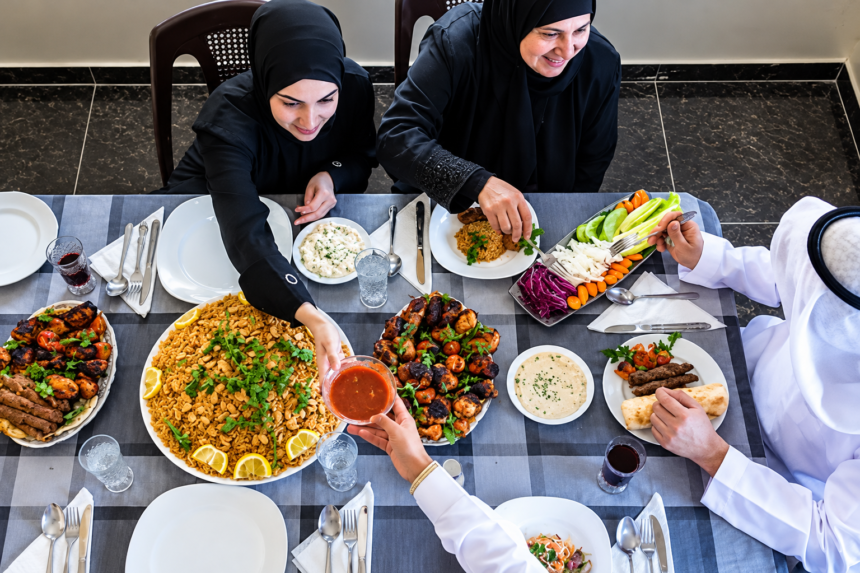
Many Arabic and Middle Eastern meals are designed to be shared. Mezze, grilled meats, salads and breads may be placed in the centre of the table for everyone.
Visitors should wait until everyone has been served or follow the host’s lead rather than immediately reaching across the table.
Do not worry about making minor mistakes
Dubai residents are used to people from many cultures. Most hosts and restaurant staff are unlikely to expect international visitors to understand every traditional custom.
Being polite, observant and respectful is usually enough.
Reservations, Timing and Restaurant Behaviour Matter
Dubai’s restaurant scene can become busy during weekends, public holidays and major events. Reservations are particularly useful for restaurants offering skyline views, brunches, beachfront tables or special menus.
Arriving on time is courteous, especially when the restaurant has allocated a specific table or dining period.
Be aware of cancellation rules
Premium restaurants sometimes require credit-card details or deposits. Late cancellation or failure to arrive may result in a charge.
Read booking conditions before confirming, especially for large groups.
Tell the restaurant if you are running late
If your plans change, contact the venue rather than simply arriving much later. Some popular restaurants may release the table after a certain period.
Dubai traffic can become heavy during busy evenings, so allow extra travel time.
Treat staff respectfully
Dubai’s hospitality workforce is highly international. Speaking politely and patiently to servers, hosts, valets and other staff is basic dining etiquette.
Avoid shouting, insulting employees or creating confrontations over minor issues. If there is a genuine problem, ask calmly to speak with the manager.
Keep noise appropriate
Some restaurants are designed to be energetic and loud, while others are quiet family or fine-dining venues.
Match your behaviour to the setting. A large group celebration may be perfectly normal at a brunch but disruptive in a quiet restaurant.
Family Dining, Children and Public Behaviour in Dubai
Dubai is generally a family-friendly dining destination. Many restaurants provide children’s menus, high chairs and family seating, especially in shopping malls, hotels and tourist areas.
However, some lounges, bars and late-night restaurants have age restrictions. Always check before booking if travelling with children or teenagers.
Children are welcome in many restaurants
Families commonly dine together in Dubai, including later in the evening than visitors from some countries may expect.
That does not mean children should be allowed to run unsupervised through a busy dining room. Parents should keep safety and the comfort of other diners in mind.
Public displays of affection
Visit Dubai advises visitors to keep excessive public displays of affection to a minimum. Holding hands is generally acceptable, but behaviour that is highly intimate may not be appropriate in public settings.
Restaurant visitors should therefore behave as they would in a respectful public family environment.
Photography
Taking photographs of your own meal is generally normal, particularly in tourist restaurants.
However, avoid deliberately photographing other diners without permission. If you want to photograph restaurant staff, chefs or a private event, asking first is courteous.
Smoking
Smoking policies vary according to the restaurant and location. Use only clearly designated smoking areas and follow venue rules.
Do not assume outdoor seating automatically means smoking is permitted at every table.
Common Dubai Restaurant Etiquette Mistakes Visitors Should Avoid
Most dining mistakes in Dubai are minor, but a little preparation can prevent unnecessary embarrassment.
One common mistake is assuming every restaurant serves alcohol. Alcohol is limited to licensed establishments, so visitors who specifically want wine or cocktails should check before booking.
Another mistake is assuming tipping is compulsory. A 10% to 15% tip is commonly suggested for good restaurant service, but Visit Dubai clearly states that tipping is appreciated rather than mandatory.
Visitors should also avoid arriving at a high-end venue wearing beachwear without checking the dress code. A restaurant may turn guests away if clothing does not meet its published requirements.
During Ramadan, tourists should not assume that all restaurants close during daylight hours. Many remain open, and non-Muslims can eat normally, although checking operating hours and behaving considerately remains sensible.
Another mistake is treating Dubai’s dining scene as culturally uniform. A traditional Emirati meal, South Asian neighbourhood restaurant, luxury French venue and hotel brunch may all have very different atmospheres.
The safest strategy is to pay attention to the restaurant you are actually visiting rather than relying on one stereotype about dining in Dubai.
Dubai Restaurant Etiquette: Quick Visitor Checklist
The easiest way to enjoy Dubai’s restaurant scene is to keep a few simple habits in mind.
| Situation | Best Approach |
|---|---|
| Casual restaurant | Neat casual clothing is usually fine |
| Fine dining | Check the venue’s dress code |
| Reservation | Arrive on time and check cancellation terms |
| Tipping | Optional; around 10–15% for good service is common |
| Service charge | Check the bill before adding a tip |
| Alcohol | Only at licensed venues for guests aged 21+ |
| Ramadan | Restaurants operate, but remain culturally considerate |
| Traditional meal | Follow the host’s lead |
| Family dining | Check age restrictions for bars or lounges |
| Photography | Avoid photographing strangers without permission |
| Staff interaction | Be polite and patient |
| Transport after alcohol | Use a taxi or other safe option |
Dubai restaurant etiquette is ultimately straightforward because the city serves people from hundreds of nationalities every day.
Visitors do not need to memorise complicated cultural rules before making a reservation. The most important habits are to dress appropriately for the venue, arrive on time, respect restaurant staff and understand that different establishments may have different policies.
Tipping is appreciated but not mandatory, with Visit Dubai suggesting around 10% to 15% for good restaurant service. Alcohol is available only in licensed establishments to guests aged 21 and over, and visitors should always avoid drunk or disorderly behaviour.
During Ramadan, restaurants remain accessible to visitors, and non-Muslims do not need to fast. The most appropriate approach is simply to remain respectful of the Holy Month and the people observing it.
Whether you are eating at a Deira café, enjoying Emirati hospitality, attending a Dubai brunch or booking a luxury restaurant overlooking the skyline, the same basic principle applies.
Good Dubai restaurant etiquette is less about formal rules and more about respect, awareness and understanding the setting you are in.
Do follow us on Instagram
Read More – How to Plan a Gulf Cruise Holiday: 10 Essential Tips for a Smooth Trip