


What Is Ramadan and Why Is It Important?
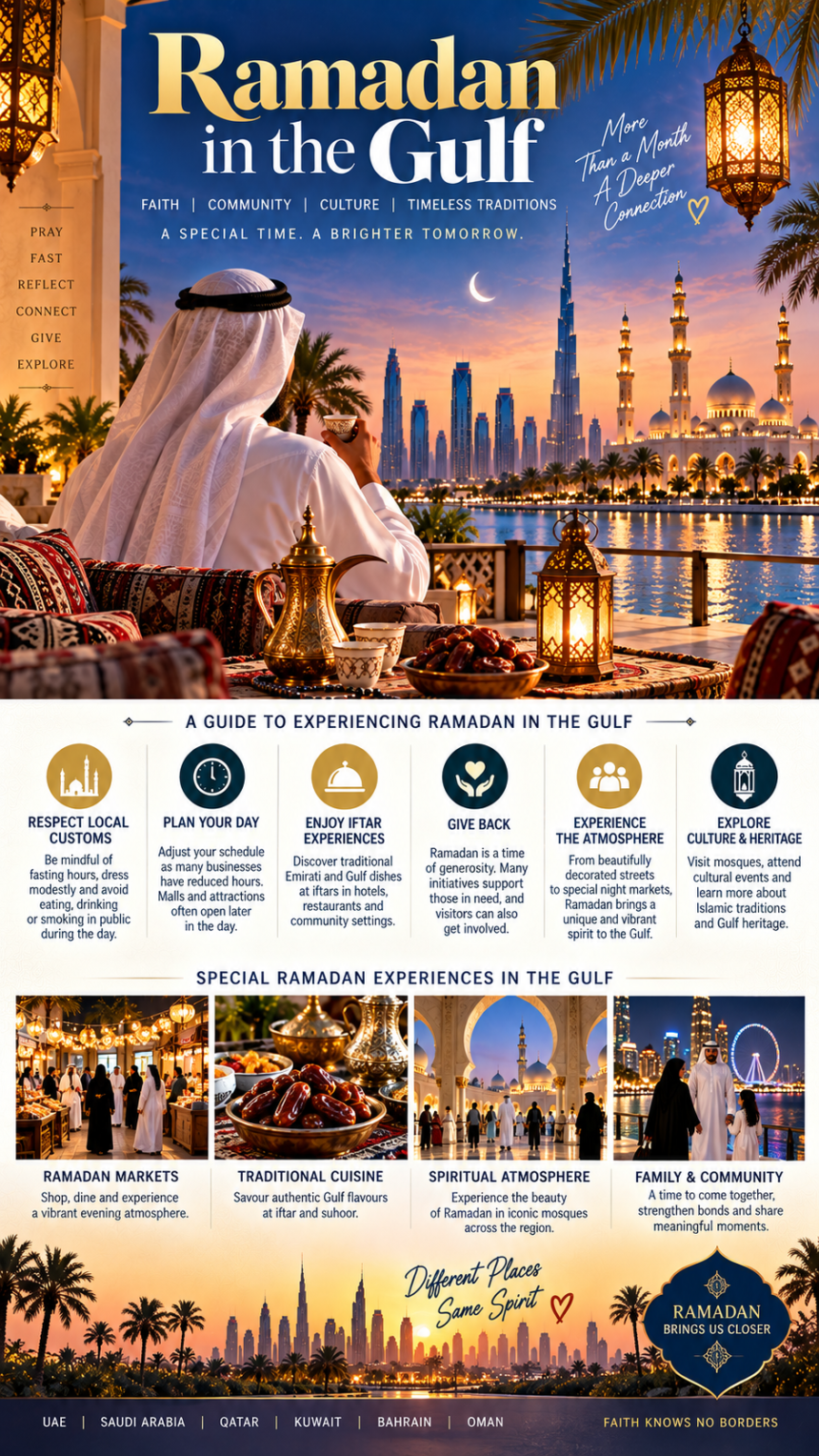
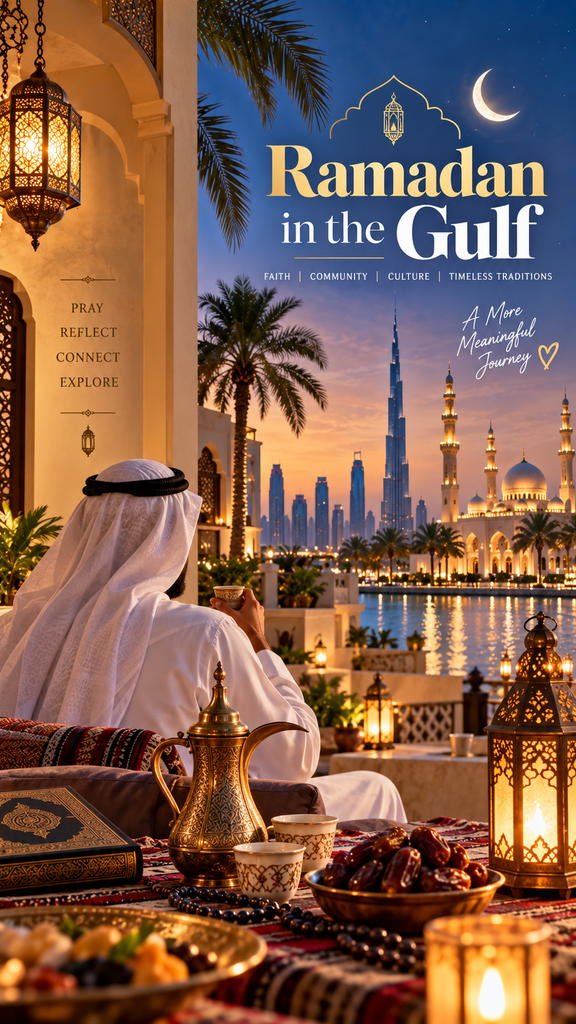
Travelling to the Gulf during Ramadan can give visitors a completely different view of the region. Days often become quieter, families gather around sunset, restaurants prepare elaborate iftar meals and cities become increasingly active after dark.
- What Is Ramadan and Why Is It Important?
- Is Ramadan a Good Time to Visit the Gulf?
- Do Tourists Have to Fast During Ramadan?
- Eating and Drinking During Daylight Hours
- What Happens at Iftar?
- What Is Suhoor?
- Dress More Modestly During Ramadan
- Restaurants and Cafes During Ramadan
- Shopping Malls and Attraction Opening Hours
- Public Behaviour and Ramadan Etiquette
- Visiting Mosques During Ramadan
- Ramadan in the UAE
- Ramadan in Saudi Arabia
- Ramadan in Qatar
- Ramadan in Bahrain
- Ramadan in Oman
- Ramadan in Kuwait
- How Transport and Traffic Change During Ramadan
- What Visitors Should Know About Eid Al-Fitr
- Ramadan in the Gulf Travel Checklist
- Final Thoughts on Visiting the Gulf During Ramadan
Understanding Ramadan in the Gulf is therefore useful even for travellers who are not Muslim. The holy month influences restaurant schedules, shopping hours, traffic patterns, cultural events and the general rhythm of daily life across the UAE, Saudi Arabia, Qatar, Bahrain, Oman and Kuwait.
Visitors are not generally expected to participate in the fast simply because they are travelling during Ramadan. However, local rules and expectations around eating, drinking, smoking, clothing and public behaviour can vary between GCC countries. Abu Dhabi’s official tourism guidance, for example, says tourists do not need to fast but should avoid eating, drinking or smoking openly in public during daylight hours out of respect. Oman states more strictly that public eating, drinking and smoking during fasting hours are prohibited by law and custom. Kuwait also has a law prohibiting public eating and drinking during Ramadan.
That is why visitors should not assume that the same rules apply everywhere in the Gulf.
What Is Ramadan and Why Is It Important?
Ramadan is the ninth month of the Islamic lunar calendar and one of the most important periods of the year for Muslims.
During the month, Muslims who are observing the fast abstain from food and drink from dawn until sunset. The period is also associated with prayer, charity, reflection, family gatherings and community life.
The exact dates change every year because the Islamic calendar follows lunar cycles. Visit Qatar explains that Ramadan moves approximately ten days earlier each year and that the beginning and end depend on the sighting of the crescent moon. A lunar month normally lasts either 29 or 30 days.
This also means travellers should avoid relying on old travel blogs for Ramadan dates. Check official local announcements before travelling.
Is Ramadan a Good Time to Visit the Gulf?
Yes. For culturally curious travellers, it can be one of the most interesting periods to experience the GCC.
The pace of cities changes noticeably. Daytime can feel quieter, particularly around restaurants and commercial districts, while the hours after sunset become much more social.
Abu Dhabi Tourism specifically describes Ramadan as an excellent time to visit, with attractions remaining open and evening life becoming particularly vibrant. Cultural events, Ramadan markets, iftar experiences and late-night shopping become a major part of the visitor experience.
Oman’s tourism authority similarly describes the holy month as a period when life slows during the day and becomes more socially active after sunset.
However, travellers who want a conventional daytime food-focused holiday or nightlife-centred itinerary should understand that Ramadan may alter normal operating schedules.
Do Tourists Have to Fast During Ramadan?
Non-Muslim visitors are not expected to observe the religious fast.
Abu Dhabi’s official visitor guidance clearly states that tourists and non-Muslims do not need to fast.
The important distinction is between fasting yourself and respecting people who are fasting.
In some Gulf destinations, visitors can eat inside operating restaurants, hotels or designated areas during daylight hours. However, eating openly while walking through public spaces can be discouraged or legally restricted depending on the country.
Visitors should therefore plan meals rather than assuming they can eat or drink anywhere as they normally would.
Eating and Drinking During Daylight Hours
This is one of the areas where GCC rules vary most.
In Abu Dhabi, restaurants can serve non-Muslims during Ramadan, including during daylight hours, but official tourism guidance asks visitors to avoid eating, drinking or smoking openly in public outdoor areas. Some restaurants may use designated dining spaces.
Qatar Tourism similarly asks visitors to refrain from eating, drinking and smoking in public during daylight hours. Hotels may continue serving guests in areas that are not publicly visible.
Oman is stricter. Its official Ramadan tourism guidance says eating, drinking and smoking in public during daylight hours are prohibited by law and custom.
Kuwait also has legislation prohibiting public eating and drinking during Ramadan, with penalties possible for violations.
Because regulations can be updated, always check the rules for the specific country you are visiting.
What Happens at Iftar?
Iftar is the meal eaten at sunset to break the daily fast.
Across the Gulf, this can be one of the most memorable parts of Ramadan for visitors. Restaurants, hotels and community venues prepare special meals, while families and friends gather together as sunset approaches.
Dates and water are commonly used to break the fast before a larger meal follows.
Visitors do not need to be Muslim to book an iftar restaurant experience, and many hotels actively welcome international guests.
The period immediately around sunset can become busy because large numbers of people are travelling home, meeting relatives or heading to restaurants.
If you have a reservation, leave additional time for the journey.
What Is Suhoor?
Suhoor, sometimes written as sahur, is the pre-dawn meal eaten before fasting begins again.
In many Gulf cities, Ramadan evenings can continue extremely late. Restaurants, tents, cafés and hotels may host suhoor experiences after the main iftar period.
This means Ramadan nightlife is not necessarily quieter. It is simply different.
Instead of conventional late-night entertainment, visitors may find families dining together at midnight, cafés operating into the early hours and shopping centres remaining open much later than normal.
In Abu Dhabi, official tourism information notes that some shopping centres extend opening hours to around 1am or 2am during Ramadan weekends.
Dress More Modestly During Ramadan
Modest clothing is advisable throughout much of the Gulf, but visitors should be particularly conscious of it during Ramadan.
Exact expectations vary by destination and venue.
Oman’s official Ramadan visitor guidance recommends that both men and women keep shoulders and knees covered and avoid tight, transparent or revealing clothing in public. Swimwear should generally remain within hotel pools and private beach areas.
Qatar similarly recommends avoiding short or revealing clothing during the holy month.
In Abu Dhabi, tourism guidance recommends modest clothing in city environments and Ramadan events, while normal holiday swimwear remains acceptable at appropriate hotel pools and beaches.
A practical rule is simple: beachwear belongs at appropriate beach or hotel locations rather than shopping malls, heritage sites or Ramadan markets.
Restaurants and Cafes During Ramadan
Visitors should not assume that every restaurant will operate on its usual schedule.
Some restaurants remain open throughout the day, particularly inside hotels, tourism districts and major malls. Others may open only later in the afternoon or around iftar.
Abu Dhabi states that many restaurants continue operating and that those which close during the daytime reopen by iftar.
Qatar advises visitors to check timings because many businesses may close earlier or reopen later during Ramadan.
Oman also provides specific Ramadan guidance covering dining, working hours and shopping because schedules differ from ordinary months.
Do not rely solely on standard opening hours displayed months earlier. Check the restaurant’s current website, social media or reservation system before travelling across the city.
Shopping Malls and Attraction Opening Hours
Ramadan does not mean Gulf cities shut down.
In fact, evenings can be among the busiest periods for shopping and entertainment.
Abu Dhabi says major attractions, museums and entertainment centres remain open during Ramadan, although schedules may be modified. Shopping centres often stay open later in the evening.
Qatar Tourism also advises checking operating hours because shops may alter their daytime and nighttime schedules.
The safest approach is to build a flexible itinerary:
| Time | What to Expect |
|---|---|
| Morning | Quieter streets and attractions |
| Afternoon | Some restaurants or shops may have altered hours |
| Before sunset | Traffic can increase significantly |
| Iftar | Many streets and dining areas temporarily become quieter or highly concentrated |
| Evening | Restaurants, malls and events become active |
| Late night | Shopping and social activity may continue unusually late |
This rhythm can actually work well for visitors who prefer slower mornings and energetic evenings.
Public Behaviour and Ramadan Etiquette
Visitors do not need to change their personality during Ramadan, but slightly more awareness is appreciated.
Avoid playing loud music in public, particularly during fasting hours and around religious areas. Qatar Tourism specifically advises against loud music and public swearing during Ramadan.
Oman says loud music in public spaces and vehicles is prohibited during Ramadan, and nightlife entertainment is generally reduced or suspended.
Abu Dhabi also recommends avoiding arguments, offensive language, loud music and overt public displays of affection.
Visitors can also use common Ramadan greetings such as Ramadan Kareem or Ramadan Mubarak. Abu Dhabi and Qatar both identify these greetings as appropriate during the holy month.
Visiting Mosques During Ramadan
Mosques become especially busy during Ramadan, particularly around prayer times and during the final ten nights.
Visitors should never assume that normal tourist access arrangements remain unchanged.
Dress modestly, avoid entering prayer areas during crowded worship periods unless specifically permitted and follow instructions from mosque staff.
Saudi Arabia requires particular attention because Makkah and Madinah have unique religious access conditions. Visit Saudi states that non-Muslims may visit many mosques elsewhere in the Kingdom, but Makkah and Madinah contain religious areas subject to specific access restrictions.
Visitors travelling for religious purposes during Ramadan should check official permit platforms and current regulations before travelling.
Ramadan in the UAE
Dubai and Abu Dhabi are among the easier Gulf destinations for international visitors during Ramadan because tourism infrastructure continues functioning throughout the month.
Abu Dhabi clearly states that tourists do not need to fast and that restaurants can serve visitors. Attractions remain open, while the city becomes particularly active after sunset through markets, iftars and community events.
Visit Dubai also actively promotes Ramadan as a cultural experience centred on reflection, community and local traditions rather than presenting the month as a period tourists should avoid.
Visitors should still respect people who are fasting and avoid openly eating, drinking or smoking in inappropriate public spaces during daylight hours.
Good experiences: Iftar dining, Ramadan markets, cultural districts, mosque architecture and late-night shopping.
Ramadan in Saudi Arabia
Ramadan has particularly deep religious importance in Saudi Arabia because the Kingdom is home to Makkah and Madinah.
Visit Saudi describes Ramadan in these cities as a period when daily routines revolve strongly around prayer, fasting and worship. Activity continues late into the night, particularly around Taraweeh prayers.
The final ten nights become especially significant, and crowds can increase substantially around the holy mosques.
Visitors travelling to Makkah or Madinah for religious purposes should plan around prayer times, expect larger evening crowds and check the official Nusuk platform for current permits and guidance.
In Riyadh, Jeddah and other cities, restaurants, shopping areas and family gatherings similarly become increasingly active after sunset.
Good experiences: Traditional iftars, heritage districts after dark and Ramadan cultural events.
Ramadan in Qatar
Qatar retains several distinctive Ramadan traditions.
Visit Qatar highlights the Ramadan cannon, which announces iftar and can be experienced at locations including Souq Waqif, Katara and other prominent sites.
The country also celebrates Garangao, a traditional mid-Ramadan occasion particularly associated with children, sweets and community gatherings.
Visitors should avoid eating, drinking or smoking publicly during fasting hours and should dress more modestly. Restaurant and shopping schedules should be checked in advance.
Evenings can be lively, with iftar, ghabga gatherings, cultural programming and late shopping giving Doha a distinctive nighttime atmosphere.
Good experiences: Souq Waqif, Ramadan cannon ceremonies, iftar and cultural traditions.
Ramadan in Bahrain
Bahrain combines modern Ramadan dining and events with older Gulf traditions.
One of the most distinctive is the iftar cannon. Bahrain Tourism says the tradition dates to the 1930s, and cannon ceremonies now take place across the Kingdom’s governorates. A cannon is fired at iftar during Ramadan.
Muharraq also hosts traditional Ramadan cultural events. Bahrain Tourism has promoted the “Farewell to Ramadan” celebration along the UNESCO-listed Pearling Path, where traditional songs and community gatherings mark the closing period of the holy month.
Because commercial hours can change around Ramadan and individual venues set their own schedules, visitors should confirm restaurant and attraction hours before arrival.
Good experiences: Iftar cannon, Muharraq, traditional food and evening family events.
Ramadan in Oman
Oman provides one of the clearest official visitor guides to Ramadan etiquette.
Visitors are expected to dress modestly, with shoulders and knees covered in public. Public eating, drinking and smoking during daylight fasting hours are prohibited, and nightlife becomes considerably quieter.
Oman’s tourism authority describes the month as a contrast between peaceful daytime reflection and more vibrant evening hospitality.
For visitors interested in culture rather than nightlife, this can be an especially rewarding period.
Traditional Omani food, family gatherings, souqs and Ramadan evenings provide an opportunity to see a slower and more community-focused side of the country.
Good experiences: Muscat after sunset, traditional iftar, souqs and cultural evenings.
Ramadan in Kuwait
Visitors to Kuwait need to take public fasting rules seriously.
Kuwait Government Online records legislation prohibiting eating or drinking publicly during Ramadan and notes that violations can lead to penalties.
This means travellers should use hotels, private areas and venues operating legally for daytime meals rather than eating or drinking openly in public.
Ramadan is also deeply connected with Kuwait’s family traditions. Government cultural information describes traditional preparations for the month, including customs surrounding the preparation of foods such as harees.
The mid-Ramadan Gerga’aan period is another important family occasion, with children and neighbourhood celebrations forming part of the season.
Good experiences: Traditional food, evening markets and local family-oriented Ramadan traditions.
How Transport and Traffic Change During Ramadan
The biggest transport issue usually occurs around sunset.
People leave workplaces, head home for iftar, travel to mosques or meet relatives and friends. Roads can become significantly busier immediately before the fast ends.
Visitors should avoid scheduling airport transfers or important reservations with extremely tight timing around sunset.
After iftar, roads may become active again as people head towards shopping centres, restaurants and events.
In Makkah and Madinah, evening crowds can be particularly significant during the final ten nights of Ramadan. Visit Saudi specifically advises travellers to expect larger evening crowds and plan around prayer times.
Allowing additional travel time is one of the simplest Ramadan planning strategies.
What Visitors Should Know About Eid Al-Fitr
Ramadan ends with Eid Al-Fitr, one of the most important celebrations in the Islamic calendar.
The exact beginning depends on the lunar calendar and official moon-sighting announcements. Qatar Tourism notes that Islamic lunar months last either 29 or 30 days.
Eid usually brings family gatherings, special meals, shopping, entertainment and public holidays.
For travellers, this can mean:
- Busier airports
- Increased regional travel
- Higher hotel demand
- Crowded shopping centres
- Special events
- Changed government and business hours
- Busy roads around holiday periods
If your departure falls immediately before or during Eid, arrive at airports with plenty of time.
Eid can also be an enjoyable period to remain in the Gulf because cities often become highly festive after the quieter daytime rhythm of Ramadan.
Ramadan in the Gulf Travel Checklist
Before travelling during Ramadan, use this simple checklist:
- Confirm the expected Ramadan dates, remembering they depend on moon sighting.
- Check the specific rules of the GCC country you are visiting.
- Verify attraction opening hours.
- Confirm daytime restaurant availability.
- Avoid public eating, drinking and smoking where restricted or considered inappropriate.
- Dress modestly in public environments.
- Keep music and public behaviour respectful.
- Allow additional travel time before sunset.
- Book popular iftar restaurants in advance.
- Expect shopping and dining to continue later at night.
- Check mosque visitor arrangements before arriving.
- Confirm alcohol regulations individually by country and venue.
- Expect larger crowds during the final nights of Ramadan.
- Check Eid travel dates before booking flights.
- Learn simple greetings such as Ramadan Kareem or Ramadan Mubarak.
The most important advice is not to assume that customs or legal restrictions are identical across all six GCC countries.
Final Thoughts on Visiting the Gulf During Ramadan
Ramadan in the Gulf should not be viewed as a month when tourists need to avoid the region.
It can instead be one of the most culturally interesting periods to visit.
In the UAE, attractions remain active while iftar dining, markets and late-night shopping transform the evenings. Qatar preserves traditions such as the Ramadan cannon and community meals. Bahrain maintains its own historic iftar cannon tradition, while Oman provides visitors with a particularly reflective atmosphere built around modesty, quieter days and social evenings.
In Saudi Arabia, Ramadan is especially significant in Makkah and Madinah, where religious activity intensifies throughout the month and particularly during the final ten nights.
Kuwait requires visitors to pay particularly close attention to rules concerning public eating and drinking during fasting hours.
Across every GCC country, the same basic principle remains useful: observe how local people are treating the holy month and respond with respect.
Visitors do not need to fast or understand every tradition before arrival. A little preparation, modest behaviour and willingness to adapt to different opening hours are usually enough to make Ramadan not an inconvenience, but one of the most memorable cultural experiences of a Gulf trip.
Do follow us on Instagram
Read More – How to Stay Comfortable During Extreme Gulf Heat: 20 Smart Tips