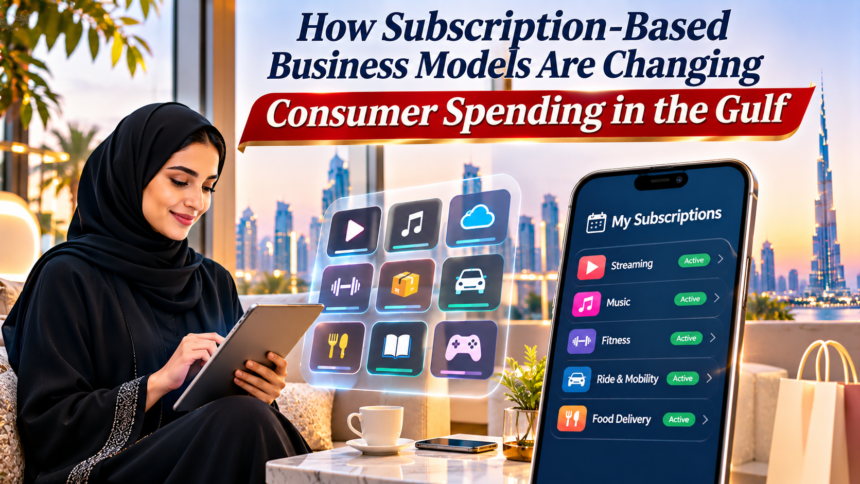
Why Subscription-Based Businesses Are Growing Across Gulf Markets
Consumer spending habits across the Arabian Gulf are experiencing a significant transformation as businesses introduce new ways for customers to access products and services. Instead of making individual purchases whenever they need something, consumers increasingly encounter membership plans that provide recurring access to entertainment, transportation benefits, food delivery, fitness facilities, software, and everyday conveniences. This shift is changing how people budget their money and how companies develop long-term customer relationships.
- 1. Why Subscription-Based Business Models Are Growing Across the Gulf
- 2. How Streaming, Delivery, and Membership Services Influence Consumer Habits
- 3. The Powerful Impact of Recurring Payments on Household Budgets
- 4. How Subscription Models Are Changing Business Revenue and Customer Loyalty
- 5. Consumer Protection, Automatic Renewals, and Subscription Transparency
- 6. Opportunities and Challenges for Subscription Businesses Across GCC Markets
- 7. The Future of Subscription-Based Business Models in the Gulf
- Conclusion
Subscription-based business models in the Gulf are becoming an important feature of the region’s digital consumer economy. From streaming services and online shopping memberships to premium delivery programmes and professional software, recurring payments are influencing purchasing decisions across the United Arab Emirates, Saudi Arabia, Qatar, Kuwait, Bahrain, and Oman.
For businesses, subscription models offer the possibility of predictable revenue, stronger customer relationships, and improved demand forecasting. For consumers, they can provide convenience, exclusive benefits, and more predictable access to services. However, the same model can also create challenges when households accumulate multiple recurring charges, overlook automatic renewals, or continue paying for services they rarely use.
As digital payments become increasingly integrated into everyday life, the subscription economy raises important questions about affordability, transparency, consumer loyalty, and financial awareness. Understanding these changes can help explain how the future of consumer spending in the Gulf may be shaped by the growing relationship between convenience and recurring financial commitments.
1. Why Subscription-Based Business Models Are Growing Across the Gulf
Subscription-based businesses operate through recurring payments that provide customers with ongoing access to products, services, or membership benefits. Rather than relying entirely on individual transactions, companies establish continuing relationships with subscribers.
These payments may occur monthly, quarterly, or annually, depending on the service and its contractual terms.
The subscription model is not new. Newspapers, telecommunications, and fitness memberships have used recurring billing arrangements for decades. However, digital technology has made subscriptions easier to introduce across a wider range of consumer industries.
The Shift From Ownership to Access
One important feature of subscription-based consumption is the distinction between owning a product and accessing a service.
Traditionally, a consumer purchasing software might have paid once to obtain a particular version. Today, many software services operate through ongoing subscriptions that provide access to updates and cloud-based features.
Entertainment has experienced a similar transformation. Instead of purchasing individual films or television programmes, consumers can subscribe to streaming platforms offering access to content libraries.
This approach can reduce certain upfront costs, although the cumulative expense of recurring payments may exceed the cost of individual purchases over time.
Why Digital Infrastructure Matters
Digital payments, mobile applications, and automated billing systems have made recurring subscriptions easier to manage.
Consumers can register through smartphones, select membership plans, and authorise payments without visiting physical service locations.
Businesses can also automate renewals, manage customer accounts, and analyse usage patterns.
These developments are particularly relevant to Gulf markets where digital commerce and smartphone-based services play visible roles in everyday consumer activity.
However, the adoption of subscription services differs by country, age group, income, and service category.
Types of Subscription-Based Business Models
| Subscription Model | How It Works | Common Examples |
|---|---|---|
| Access Subscription | Recurring payment for continued service access | Streaming and software |
| Membership Subscription | Payment for exclusive benefits | Retail and delivery memberships |
| Product Replenishment | Regular delivery of frequently used goods | Coffee, personal care, household supplies |
| Service Subscription | Scheduled access to services | Fitness and maintenance |
| Tiered Subscription | Different prices for different benefits | Basic, standard, and premium plans |
| Hybrid Model | Combines membership fees with additional purchases | Delivery platforms and retail loyalty programmes |
These models demonstrate that subscriptions are no longer limited to entertainment.
They can influence how households access essential services, discretionary purchases, and professional tools.
2. How Streaming, Delivery, and Membership Services Influence Consumer Habits
One of the most visible effects of the subscription economy is the integration of recurring services into everyday routines.
Consumers may use several subscriptions without thinking of them as part of the same spending category.
A household could maintain a streaming membership, a cloud storage plan, a gym subscription, and a premium delivery account.
Each service provides a different benefit, but together they create recurring financial commitments.
Streaming and Digital Entertainment
Streaming platforms demonstrate how subscriptions can change consumer expectations.
Customers can access libraries of films, series, music, and other content through periodic payments.
International platforms operate alongside regional entertainment services, including Arabic-language offerings.
Subscription-based entertainment provides flexibility because consumers can generally choose between plans with different features and prices.
However, content availability can change, and maintaining access to multiple platforms may become expensive.
The decision to subscribe may therefore depend on viewing habits, household preferences, and the availability of desired content.
Food Delivery and Premium Memberships
Delivery services are another example of subscription-based customer engagement.
In the UAE, Careem Plus provides a monthly membership offering benefits across eligible services, subject to applicable conditions.
Its benefits have included selected delivery-fee reductions and other platform-specific advantages.
The purpose of such programmes is to encourage customers to use a platform regularly rather than compare providers for every transaction.
For consumers who frequently place eligible orders, membership benefits may offset subscription charges.
For occasional users, however, the same membership may provide limited financial value.
Retail Loyalty Programmes
Retailers are also exploring subscriptions that offer benefits such as delivery privileges, exclusive discounts, and access to selected services.
These programmes differ from traditional loyalty schemes because customers may pay a recurring fee instead of receiving benefits solely through accumulated purchases.
A subscription-based loyalty model encourages consumers to evaluate an ongoing relationship with a retailer.
How Different Subscriptions Affect Spending
| Service Category | Consumer Benefit | Potential Spending Risk |
|---|---|---|
| Streaming | Access to entertainment libraries | Paying for unused platforms |
| Delivery Memberships | Reduced eligible delivery charges | Increased ordering frequency |
| Fitness | Regular access to facilities | Low attendance despite monthly fees |
| Software | Continued access and updates | Multiple overlapping applications |
| Retail Memberships | Discounts and delivery privileges | Spending more to justify membership |
| Product Delivery | Convenience and planned replenishment | Receiving products faster than needed |
The financial effect of subscriptions depends on how frequently customers use the services and whether the benefits justify their costs.
3. The Powerful Impact of Recurring Payments on Household Budgets
Subscription services can make individual purchases appear more affordable by distributing payments over time.
A monthly fee may seem relatively small compared with the cost of a larger one-time transaction.
However, recurring payments can become significant when several subscriptions operate simultaneously.
The Psychology of Smaller Payments
Consumers often evaluate purchases according to their immediate cost.
A subscription costing AED 30 per month may appear manageable when considered independently.
However, the same payment represents AED 360 over twelve months.
When combined with several other memberships, the total amount committed to subscriptions may be considerably higher than expected.
Recurring billing can also reduce the frequency with which consumers actively reconsider a purchase.
Once a subscription becomes part of a routine, payments may continue even when usage declines.
Illustrative Monthly Subscription Budget
The following example represents a fictional UAE household and does not reflect average subscription spending.
| Subscription Category | Monthly Cost |
|---|---|
| Video Streaming | AED 45 |
| Music Streaming | AED 25 |
| Cloud Storage | AED 35 |
| Fitness Membership | AED 180 |
| Delivery Membership | AED 30 |
| Professional Software | AED 75 |
| Total Monthly Spending | AED 390 |
| Total Annual Spending | AED 4,680 |
These figures demonstrate how modest recurring payments can accumulate into a substantial annual expense.
The appropriate level of subscription spending depends on household income, financial responsibilities, and the value received from each service.
Subscription Fatigue and Consumer Awareness

Subscription fatigue occurs when consumers become frustrated by the cost, complexity, or management of multiple recurring services.
International research suggests that some consumers value subscription convenience while also expressing concerns about price increases, overlapping services, and difficult cancellation procedures.
Deloitte’s 2025 Digital Media Trends research, for example, found growing concerns among surveyed US consumers about streaming subscription costs.
These results should not be interpreted as direct measurements of Gulf consumer behaviour, but they illustrate challenges that may also be relevant to subscription markets elsewhere.
Financial Planning in a Subscription Economy
Households can approach recurring expenses as part of their fixed or semi-fixed monthly commitments.
Useful practices include reviewing bank statements, identifying duplicate services, and evaluating how frequently subscriptions are used.
Consumers should also consider annual plans carefully.
A discounted annual subscription may reduce the monthly equivalent cost but can require a larger upfront payment and may offer different cancellation or refund conditions.
Financial awareness becomes especially important when promotional trial periods automatically convert into paid memberships.
4. How Subscription Models Are Changing Business Revenue and Customer Loyalty
Subscription-based business models are attractive to companies because they can create recurring revenue and longer customer relationships.
Traditional retailers often depend on customers making separate purchases at unpredictable intervals.
Subscription businesses seek to establish more consistent patterns of payment and service usage.
However, recurring revenue does not automatically guarantee profitability.
Companies must continue delivering value while managing operating costs and customer cancellations.
The Importance of Predictable Revenue
Recurring payments can make revenue planning easier when businesses understand subscriber numbers, pricing, and cancellation behaviour.
A company with a stable subscriber base may be better positioned to forecast income and allocate resources.
This can support staffing decisions, technology investment, inventory management, and service development.
Nevertheless, payment failures, cancellations, discounts, and changes in customer behaviour can reduce expected revenue.
Customer Retention and Loyalty
Subscription businesses often measure success through customer retention.
A customer who continues using a service over several months may generate more revenue than someone who makes a single purchase.
However, retaining customers requires ongoing satisfaction.
Subscribers may cancel when prices rise, competing services become more attractive, or their personal needs change.
Businesses therefore need to communicate the value of membership regularly.
The Role of Personalisation
Subscription services can use customer preferences and usage patterns to recommend products, content, or service options.
For example, a digital entertainment platform may recommend programmes based on viewing history.
A product replenishment business might allow subscribers to adjust delivery frequency.
These features can improve convenience, but companies must handle customer information responsibly.
Personalisation should also provide meaningful benefits rather than simply encouraging unnecessary consumption.
Important Subscription Business Metrics
| Business Metric | What It Measures | Why It Matters |
|---|---|---|
| Monthly Recurring Revenue | Revenue associated with monthly subscriptions | Supports revenue forecasting |
| Customer Churn | Rate of customer cancellations | Helps identify retention problems |
| Customer Acquisition Cost | Cost of gaining new subscribers | Supports marketing efficiency |
| Customer Lifetime Value | Estimated value of a customer relationship | Helps assess long-term profitability |
| Average Revenue per User | Revenue generated per subscriber | Supports pricing analysis |
| Service Utilisation | How frequently benefits are used | Helps evaluate perceived value |
Businesses should consider these indicators together.
A company may increase subscriber numbers while experiencing poor profitability if acquisition expenses or service delivery costs remain too high.
5. Consumer Protection, Automatic Renewals, and Subscription Transparency
As subscriptions become more common, consumer protection becomes an important consideration.
Recurring payment arrangements require customers to understand what they are purchasing, how much they will be charged, and when their commitments renew.
Confusion can arise when pricing terms are difficult to locate or cancellation procedures are unclear.
The Importance of Clear Subscription Terms
Before accepting a subscription, consumers should understand the amount charged, billing frequency, renewal arrangements, and conditions for cancellation.
They should also review whether introductory prices change after a promotional period.
For example, a free trial may become a paid subscription if the customer does not cancel before the stated deadline.
The conditions vary between providers, so consumers should not assume that every service follows the same rules.
Consumer Protection in the UAE
The UAE’s Federal Law No. 15 of 2020 on Consumer Protection establishes a broad framework addressing consumer rights and supplier obligations.
The Central Bank’s Consumer Protection Standards also require licensed financial institutions to disclose applicable fees, including whether they are recurring and how frequently they will be charged.
These financial-sector requirements should not be treated as identical rules for every streaming, fitness, or retail subscription.
Consumers must consider the applicable regulations and contract terms for the particular service.
Automatic Renewals and Cancellation
Automatic renewal can be convenient because it prevents interruptions to services.
However, customers may overlook ongoing charges when renewal reminders or account information are unclear.
Businesses can strengthen consumer trust by providing accessible billing information and straightforward cancellation processes.
Customers should confirm whether cancellation immediately ends service access or prevents renewal at the end of the current billing period.
It is also important to distinguish cancellation of a subscription from blocking a payment method.
Stopping a card payment may not necessarily terminate contractual obligations.
Consumer Subscription Safety Checklist
- Confirm the complete price before subscribing.
- Check whether taxes or additional fees apply.
- Review the automatic renewal conditions.
- Record the expiration date of promotional trials.
- Understand cancellation and refund requirements.
- Use verified applications and payment channels.
- Monitor bank statements for unexpected charges.
- Keep records of cancellation confirmations.
- Avoid sharing sensitive banking information.
- Contact the provider through official channels when disputes arise.
Transparent subscription practices can benefit both consumers and businesses by reducing misunderstandings and improving customer relationships.
6. Opportunities and Challenges for Subscription Businesses Across GCC Markets
The Gulf’s subscription economy presents opportunities for businesses operating in digital services, retail, technology, hospitality, and consumer convenience.
However, commercial conditions differ across GCC countries.
Population characteristics, disposable income, consumer preferences, logistics infrastructure, and regulatory requirements can influence subscription adoption.
Opportunities in the UAE and Saudi Arabia
The UAE offers a digitally connected consumer environment with established e-commerce, entertainment, and service platforms.
Subscription businesses can explore opportunities involving premium delivery, digital entertainment, business software, and specialised consumer services.
Saudi Arabia’s large domestic market also provides opportunities for digital services, retail memberships, and recurring consumer products.
However, companies should not assume that strategies successful in one GCC country will automatically succeed elsewhere.
Pricing expectations, customer acquisition costs, service coverage, and consumer preferences may differ.
Subscription Opportunities Across Industries
Potential areas for subscription-based services include:
- Personal care and household product replenishment.
- Fitness and wellness programmes.
- Online education and professional learning.
- Cloud software and business productivity tools.
- Home maintenance and technical support.
- Entertainment and digital content.
- Retail membership benefits.
- Selected mobility and transportation services.
The commercial potential of each model depends on the frequency of customer need and the value provided.
The Challenge of Delivering Continuous Value
Subscription businesses must justify recurring payments throughout the customer relationship.
A service that appears attractive during a promotional period may struggle to retain subscribers if ongoing benefits are limited.
Consumers may also become more selective as they compare competing memberships.
Businesses should monitor customer satisfaction and avoid relying entirely on automatic renewals.
Challenges and Possible Business Responses
| Challenge | Potential Impact | Possible Response |
|---|---|---|
| Subscription Fatigue | Higher cancellations | Flexible plans and clear value |
| Price Sensitivity | Reduced sign-ups | Transparent pricing and suitable tiers |
| Payment Failures | Interrupted revenue | Secure billing and payment notifications |
| Low Service Usage | Reduced customer satisfaction | Usage insights and optional plan changes |
| Strong Competition | Customer switching | Service quality and relevant benefits |
| Data Privacy Concerns | Lower customer trust | Responsible data practices |
| Complex Cancellation | Complaints and disputes | Clear and accessible cancellation processes |
Sustainability and Product Subscriptions
Product subscription services may also raise environmental considerations.
Scheduled delivery of frequently used products can support planned distribution, but excessive packaging and unnecessary shipments may increase waste.
Businesses should consider delivery frequency, packaging, transportation efficiency, and customer demand.
Allowing subscribers to pause or adjust deliveries can reduce unwanted products while improving the customer experience.
7. The Future of Subscription-Based Business Models in the Gulf
The future of subscription-based business models in the Gulf will likely be influenced by consumers’ expectations of flexibility, affordability, convenience, and transparency.
Businesses may increasingly combine recurring memberships with usage-based payments and optional purchases.
Instead of offering only fixed monthly plans, providers could allow customers to customise services according to changing needs.
The Rise of Flexible Subscription Models
Flexible subscriptions may include temporary pauses, different billing frequencies, or adjustable service packages.
For consumers, these features can make recurring commitments easier to manage.
For businesses, flexibility may support customer retention by offering alternatives to permanent cancellation.
However, businesses must evaluate whether these features remain financially sustainable.
Subscription Bundling and Integrated Services
Bundling allows companies to combine several products or services into one membership.
For example, a platform may offer benefits across shopping, entertainment, delivery, and other eligible services.
This arrangement can simplify payment management and increase perceived value.
However, consumers should assess whether they use enough of the bundled services to justify the membership fee.
Paying for several unused benefits does not necessarily represent a saving.
Artificial Intelligence and Subscription Management
Artificial intelligence could support subscription businesses through improved demand forecasting, personalised recommendations, and customer service.
AI tools may also help consumers monitor recurring expenses and identify subscriptions they no longer use.
Mastercard’s April 2026 research highlighted consumer demand for improved subscription visibility and management through banking applications.
These findings reflect a broader international interest in giving users greater control over recurring payments.
The opportunity for Gulf financial technology providers is to develop tools that improve transparency while protecting customer information.
How Consumers Can Manage Subscription Spending
A practical approach is to evaluate subscriptions regularly rather than waiting for financial pressure to develop.
- Create a list of all active subscriptions.
- Record monthly or annual payment amounts.
- Identify renewal dates and promotional pricing periods.
- Review how frequently each service is used.
- Compare benefits with available alternatives.
- Check for overlapping memberships.
- Cancel or pause services that no longer provide sufficient value.
- Review recurring expenses whenever household priorities change.
This process allows consumers to make decisions based on actual usage and financial circumstances.
What Businesses Should Prioritise
Companies developing subscription services should consider several long-term priorities.
- Transparent Pricing: Explain charges, billing periods, and renewal arrangements.
- Customer Flexibility: Offer appropriate plan changes and cancellation options.
- Service Quality: Maintain benefits that justify continued payment.
- Data Protection: Handle customer information responsibly.
- Financial Sustainability: Balance subscriber growth with operating costs.
- Clear Communication: Inform customers about important service changes.
- Useful Personalisation: Provide relevant recommendations without encouraging unnecessary purchases.
Conclusion
Subscription-based business models in the Gulf are changing the relationship between businesses and consumers by transforming individual purchases into ongoing service commitments.
Streaming platforms, delivery memberships, fitness services, software applications, and retail programmes demonstrate how recurring payments are becoming integrated into everyday spending.
For businesses, subscriptions can support predictable revenue, customer retention, and long-term service relationships.
For consumers, they may provide convenience, accessibility, and financial benefits when services are used regularly.
However, the growth of recurring payments also creates challenges involving household budgeting, automatic renewals, subscription fatigue, and consumer protection.
As the UAE, Saudi Arabia, and other GCC markets continue developing their digital economies, subscription businesses will need to focus on genuine customer value rather than relying exclusively on recurring billing.
The most sustainable models are likely to combine transparent pricing, flexible membership options, reliable service quality, and responsible customer relationships.
Ultimately, the future of consumer spending in the Gulf will not be determined simply by how many subscriptions people maintain. It will depend on whether those services provide meaningful benefits that justify their continuing cost.
Do follow us on Instagram
Read More – Why Reverse Logistics Could Become a Major Growth Industry in the GCC