



UAE SAF Policy and International Aviation Regulations
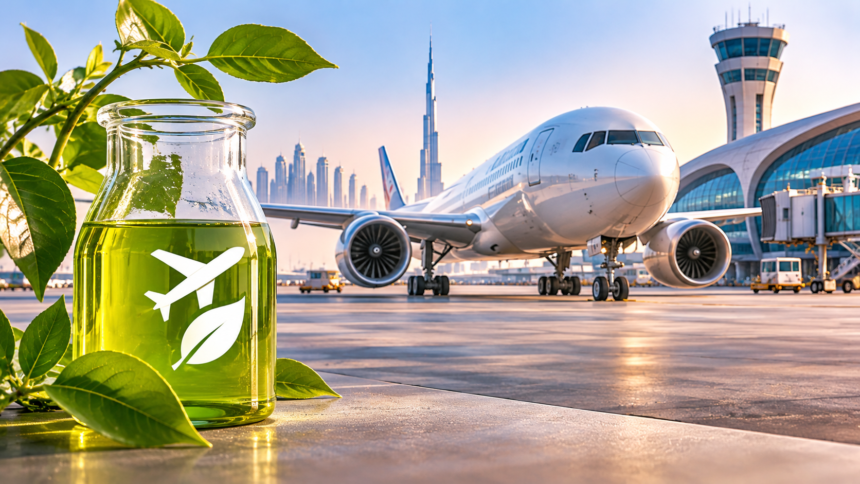
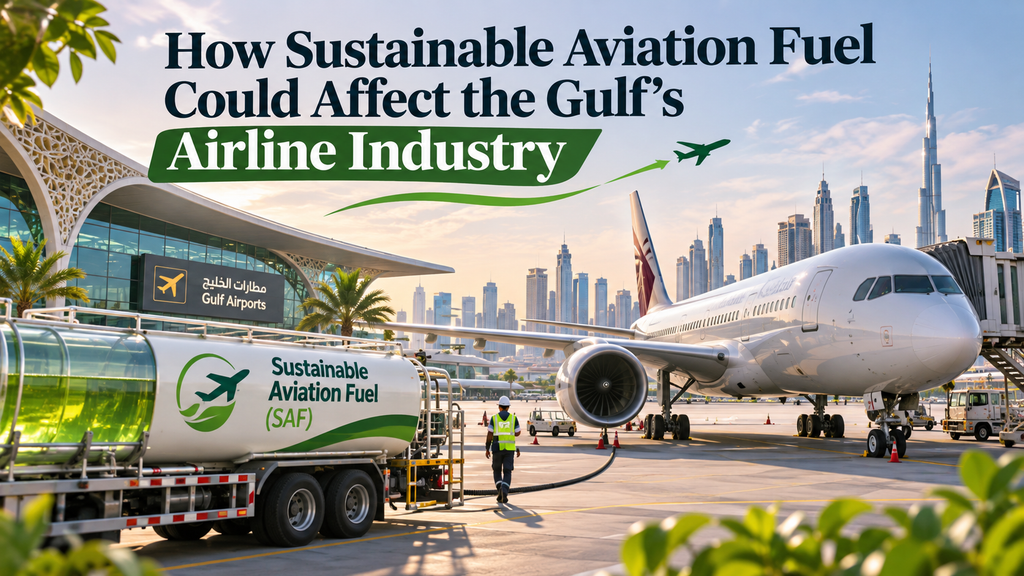
An Emirates aircraft preparing to depart Dubai International Airport may look no different from any other passenger jet. Yet the fuel powering its engines could gradually become one of the most important factors shaping the future of aviation. Across the Gulf, airlines, energy companies and governments are examining how sustainable aviation fuel can reduce the lifecycle carbon footprint of flying without requiring an immediate replacement of existing aircraft fleets.
- What Is Sustainable Aviation Fuel and Why Does It Matter for Gulf Airlines?
- 7 Powerful Ways Sustainable Aviation Fuel Could Change the Gulf Airline Industry
- Emirates, Etihad, Qatar Airways and Saudi Arabia: Regional SAF Initiatives
- UAE SAF Policy and International Aviation Regulations
- The Hidden Economics of Sustainable Aviation Fuel
- Environmental Benefits, Feedstocks and Sustainability Challenges
- How SAF Could Change Airports, Cargo and Passenger Travel
- The Future of Sustainable Aviation Fuel in the Gulf and FAQs
Sustainable Aviation Fuel in the Gulf is emerging as a strategic issue for airlines operating some of the world’s busiest international aviation hubs.
Dubai, Abu Dhabi, Doha and Riyadh serve extensive passenger and cargo networks. Their airlines depend on reliable fuel supplies, competitive operating costs and the ability to connect destinations across continents.
As international aviation works towards lower emissions, these strengths also create new challenges.
Traditional jet fuel remains essential to current airline operations, but sustainable aviation fuel, commonly known as SAF, offers a potential way to reduce lifecycle greenhouse gas emissions.
SAF can be produced from eligible feedstocks such as used cooking oil, certain waste materials and renewable-energy-based synthetic processes.
When certified to applicable fuel specifications, approved SAF blends can be used in existing aircraft and airport fuelling systems.
However, SAF is not emission-free.
Aircraft still release carbon dioxide when burning it. The environmental benefit comes primarily from differences in the fuel’s production and overall lifecycle compared with fossil-based aviation fuel.
The commercial challenge is substantial.
In June 2026, the International Air Transport Association estimated that global SAF production would reach approximately 2.4 million tonnes during the year, representing just 0.8% of total aviation fuel consumption.
The association also estimated an additional US$4.3 billion in annual airline fuel costs associated with SAF’s price premium.
For Gulf airlines, the transition could affect fuel procurement, operating margins, partnerships, airport infrastructure and environmental reporting.
The UAE has established an ambition to develop annual domestic SAF production capacity of 700 million litres, alongside a voluntary target for locally produced SAF to account for 1% of fuel supplied to national airlines at UAE airports by 2031.
Meanwhile, Emirates, Qatar Airways and Saudi energy companies have announced partnerships and supply initiatives related to alternative aviation fuels.
These developments suggest that SAF could become an important part of the Gulf’s aviation economy.
Its long-term influence, however, will depend on whether production can expand sustainably and whether airlines can obtain sufficient fuel at commercially manageable prices.
What Is Sustainable Aviation Fuel and Why Does It Matter for Gulf Airlines?
Sustainable aviation fuel is a category of aviation fuel produced through qualifying pathways using non-fossil feedstocks or other approved lower-lifecycle-emission processes.
It is designed to provide an alternative to conventional petroleum-based jet fuel while meeting demanding aviation safety and performance requirements.
How SAF Works
Aircraft engines require fuel with tightly controlled technical characteristics.
Approved SAF components can be blended with conventional jet fuel according to the applicable fuel specification and certified blending limits.
Several established pathways permit blends containing up to 50% SAF, although limits vary by production pathway.
A demonstration flight using 100% SAF in a particular engine does not mean that every commercial aircraft is already approved to operate routinely on neat SAF.
Where SAF Comes From
Different production pathways use different resources.
Some facilities convert used cooking oils and animal fats into aviation fuel through hydroprocessing.
Others explore agricultural residues, suitable municipal waste or synthetic fuels produced using electricity, hydrogen and captured carbon dioxide.
The sustainability of each pathway depends on its feedstock, production process, energy inputs and land-use effects.
SAF Compared With Conventional Jet Fuel
| Feature | Conventional Jet Fuel | Sustainable Aviation Fuel |
|---|---|---|
| Primary Source | Petroleum | Eligible waste, biomass or synthetic pathways |
| Aircraft Compatibility | Established | Approved blends meet fuel standards |
| Combustion CO₂ | Released | Also released |
| Lifecycle Emissions | Fossil-fuel baseline | Can be lower, depending on pathway |
| Global Supply | Established large market | Limited and developing |
| Cost | Generally lower | Currently carries a premium |
SAF’s significance lies in its potential to reduce lifecycle emissions while maintaining compatibility with much of the aviation infrastructure already in use.
7 Powerful Ways Sustainable Aviation Fuel Could Change the Gulf Airline Industry
The adoption of SAF could influence more than airline sustainability reports.
Fuel sourcing, passenger pricing, investment and competition may all be affected.
1. Changing Airline Fuel Procurement
Airlines traditionally negotiate fuel supply through established airport and energy-sector arrangements.
SAF introduces additional requirements involving eligible suppliers, sustainability certification, feedstock traceability and environmental documentation.
Airlines may increasingly negotiate long-term supply agreements to secure future availability.
2. Increasing Pressure on Operating Costs
Fuel is a major airline expense.
Because SAF currently costs more than conventional jet fuel, greater use can increase operating expenditure.
The effect will depend on fuel prices, purchased quantities, regulatory obligations and the airline’s overall financial position.
3. Encouraging New Energy Partnerships
Airlines cannot develop a large SAF market independently.
They need cooperation with energy companies, waste-management businesses, airport operators and investors.
This creates opportunities for joint studies, long-term purchasing agreements and potentially new production facilities.
4. Changing Environmental Reporting
Airlines may use certified eligible fuels to support appropriate lifecycle emissions claims.
However, reductions need to be calculated through recognised methodologies and supported by reliable documentation.
Purchasing SAF does not mean an individual flight produces zero emissions.
5. Creating New Industrial Opportunities
Domestic SAF production could support activity in refining, renewable energy, engineering, logistics and specialised waste processing.
However, proposed facilities should not be counted as completed industrial capacity.
Commercial investment depends on dependable demand and viable production economics.
6. Influencing Corporate Travel and Cargo Decisions
Companies purchasing air travel and cargo services may increasingly request information about aviation emissions.
Verified SAF programmes could become part of these commercial relationships.
However, companies must avoid double-counting environmental benefits or claiming reductions that have not been properly allocated.
7. Supporting Long-Term Aviation Transition Plans
Battery-electric and hydrogen-powered aircraft face significant technical limitations for many long-distance routes.
SAF could therefore play an important role in reducing the lifecycle emissions of existing long-haul fleets.
It remains one component of a wider strategy involving efficient aircraft, improved operations and other technologies.
Seven Industry Impacts Compared
| Impact | Potential Change | Main Challenge |
|---|---|---|
| Fuel Procurement | New suppliers and agreements | Limited availability |
| Operating Costs | Higher fuel expenditure | Price premium |
| Partnerships | Energy and airline cooperation | Commercial feasibility |
| Environmental Reporting | Verified lifecycle reductions | Certification |
| Industrial Development | New production investments | Capital and feedstocks |
| Corporate Travel | SAF-related purchasing arrangements | Transparent claims |
| Long-Term Strategy | Lower-emission fuel pathways | Scaling production |
The scale of these changes will depend on how rapidly SAF becomes available and affordable.
Emirates, Etihad, Qatar Airways and Saudi Arabia: Regional SAF Initiatives
Gulf aviation companies are approaching SAF through supply agreements, technical research and industrial partnerships.
However, these announcements represent different levels of commitment.
A feasibility study is not equivalent to a completed production plant, and an offtake agreement does not necessarily mean all contracted fuel has already been delivered.
Emirates and ENOC Group
In November 2025, Emirates and ENOC Group signed a memorandum of understanding to explore SAF supply opportunities at Emirates’ Dubai hub.
The agreement covers feasibility work involving potential production, distribution infrastructure and commercial viability.
Emirates has also conducted demonstration flights involving SAF and has purchased fuel at airports across its international network.
The airline reported procuring 7,519 tonnes of SAF during its 2024–25 financial year.
This is a historical procurement figure, not its confirmed total for 2026.
Etihad Airways and Abu Dhabi Partnerships
Etihad has participated in research and partnership initiatives involving alternative aviation fuels.
Its environmental reporting describes collaboration with entities including Masdar, ADNOC, bp and Tadweer to explore converting municipal waste and renewable hydrogen into aviation fuels.
These activities could support future production options, but feasibility work does not establish that a commercial facility is operating.
Etihad has also been involved in demonstration flights and research concerning fuel sustainability.
Qatar Airways’ Long-Term Supply Agreement
In October 2022, Qatar Airways announced an agreement with US producer Gevo to purchase 25 million US gallons of neat SAF over five years.
Deliveries were expected to begin in 2028 at selected airports in California.
The announcement establishes a future purchasing arrangement, not a completed delivery.
Qatar Airways has also identified sustainable fuel procurement as part of its broader environmental strategy.
Saudi Arabia’s Potential Production Capacity
In December 2024, Aramco, TotalEnergies and Saudi Investment Recycling Company signed an agreement to assess a potential SAF production facility in Saudi Arabia’s Eastern Province.
The proposed project would investigate processing feedstocks such as used cooking oil and animal fats.
The announcement concerned development assessment rather than the inauguration of a completed plant.
Saudi Aramco has also researched synthetic aviation fuel technologies involving captured carbon dioxide and hydrogen.
Regional Initiatives Compared
| Organisation | Documented Activity | Status |
|---|---|---|
| Emirates and ENOC | Dubai SAF supply feasibility | Exploration agreement |
| Etihad and Partners | Waste-to-fuel and hydrogen research | Feasibility collaboration |
| Qatar Airways and Gevo | 25 million US gallons over five years | Contracted future supply |
| Aramco, TotalEnergies and SIRC | Saudi SAF plant assessment | Development study |
| UAE Government | Domestic SAF capacity ambition | National policy target |
These initiatives indicate increasing engagement across the Gulf, but commercial outcomes must be assessed as projects advance.
UAE SAF Policy and International Aviation Regulations
Government policies can influence demand for sustainable aviation fuel through production incentives, certification requirements and fuel-related obligations.
However, Gulf countries do not all have identical SAF policies.
The UAE’s Production Ambition
The UAE’s General Policy for Sustainable Aviation Fuel was introduced in 2023.
It seeks to develop a domestic SAF production industry and strengthen the country’s position in lower-carbon aviation fuels.
The government’s official policy documentation identifies an ambition to develop approximately 700 million litres of annual SAF production capacity.
It also establishes a voluntary target for locally produced SAF to represent 1% of fuel supplied to national airlines at UAE airports by 2031.
The production ambition and the voluntary airline supply target are distinct measures.
Neither should be presented as proof that the intended production volume is already available.
The Role of ICAO and CORSIA
The International Civil Aviation Organization manages the Carbon Offsetting and Reduction Scheme for International Aviation, commonly known as CORSIA.
Under its framework, eligible aviation fuels can support reductions in an operator’s calculated offsetting requirements.
However, airlines must satisfy applicable sustainability, lifecycle calculation, reporting and verification rules.
Not every fuel marketed as sustainable automatically qualifies.
Why Lifecycle Accounting Matters
Lifecycle emissions accounting considers the processes involved in producing and using fuel.
These can include feedstock production, processing, transportation, fuel manufacture and combustion.
Certain pathways may also require assessment of land-use changes.
This makes independent certification essential for credible environmental claims.
International Requirements Affect Gulf Flights
Airlines operating internationally may face different fuel requirements depending on the jurisdictions they serve.
For example, European Union aviation fuel rules create obligations for fuel suppliers at covered airports.
These requirements can affect Gulf carriers operating routes to Europe, even though they do not impose an identical SAF mandate across every Gulf airport.
Airlines therefore need to manage a combination of local and international obligations.
The Hidden Economics of Sustainable Aviation Fuel
The cost of SAF is one of the most significant barriers to wider adoption.
Airlines operate in a competitive industry where fuel expenditure can strongly influence profitability.
A relatively small increase in average fuel costs can become substantial when applied across thousands of flights.
Why SAF Costs More
SAF production depends on developing supply chains, specialised processing and eligible raw materials.
Many facilities operate at much smaller scales than established petroleum refineries.
Producers may also face higher financing, energy and certification expenses.
In June 2026, IATA estimated that SAF production would remain below 1% of total global jet fuel consumption during the year.
Its outlook also projected an average SAF price of US$2,872 per tonne for 2026, compared with an implied conventional fuel price of roughly US$800 per tonne.
These are industry-wide forecasting assumptions, not the prices necessarily paid under any Gulf airline contract.
Illustrative Airline Fuel Cost Model
Consider a fictional airline purchasing 100,000 tonnes of aviation fuel annually.
Assume a conventional fuel price of US$900 per tonne and SAF priced at US$2,700 per tonne.
| Annual Fuel Measure | Conventional Only | 5% SAF Blend by Mass |
|---|---|---|
| Conventional Fuel | 100,000 tonnes | 95,000 tonnes |
| SAF | 0 tonnes | 5,000 tonnes |
| Conventional Fuel Cost | US$90 million | US$85.5 million |
| SAF Cost | US$0 | US$13.5 million |
| Total Fuel Cost | US$90 million | US$99 million |
| Additional Annual Cost | — | US$9 million |
This hypothetical example assumes fixed prices and equal quantities by mass for simplicity.
Actual procurement contracts, energy content, blending arrangements and fuel-related charges may produce different outcomes.
The illustration also excludes possible incentives and other compliance costs.
Could Passengers Pay More?
Higher airline fuel expenses may eventually influence ticket prices.
However, airlines do not necessarily pass every cost increase directly to passengers.
Ticket prices also depend on demand, competition, route profitability, taxes and commercial strategy.
It would therefore be misleading to predict a fixed SAF surcharge for all Gulf passengers.
Could Local Production Improve Economics?
Domestic production may reduce some logistical dependencies and create new supply options.
However, local facilities will still need affordable feedstocks, reliable technology, suitable financing and sustained demand.
Producing fuel locally does not automatically make it cheaper than imports.
Environmental Benefits, Feedstocks and Sustainability Challenges
SAF can reduce aviation’s lifecycle greenhouse gas emissions, but its environmental performance is not identical across every production pathway.
The source of the raw materials and the energy used during production are particularly important.
Used Cooking Oil and Waste Materials
Used cooking oil and certain animal fats are established feedstocks for some SAF production technologies.
Recovering these materials can create value from suitable waste streams.
However, their availability is limited, and demand from other industries may create competition.
Responsible sourcing is necessary to prevent fraud and ensure that materials are genuinely eligible.
Municipal Waste and Agricultural Residues
Certain waste streams may provide additional production opportunities.
However, processing mixed waste into aviation fuel can involve complex technologies and substantial investment.
Not every municipal waste component is suitable for SAF production.
Synthetic Aviation Fuels
Power-to-liquid technologies can combine hydrogen with captured carbon dioxide to produce synthetic fuels.
Their lifecycle performance depends heavily on the electricity and hydrogen production methods used.
These technologies may expand future supply options, but they are not yet available at the scale needed to replace conventional aviation fuel globally.
Understanding Emissions Reductions
Some qualifying SAF pathways may achieve lifecycle emissions reductions of around 80% compared with conventional jet fuel.
This is not a universal figure.
The European Union Aviation Safety Agency explains that combustion emissions are broadly comparable to those of fossil fuel, while most potential lifecycle benefits arise elsewhere in the production system.
Claims should therefore specify the relevant feedstock, methodology and lifecycle boundary.
Environmental Trade-Offs
| Feedstock or Pathway | Potential Advantage | Main Concern |
|---|---|---|
| Used Cooking Oil | Established conversion technology | Limited feedstock supply |
| Animal Fats | Suitable waste-resource recovery | Sustainability and availability |
| Agricultural Residues | Uses selected residual materials | Collection and competing uses |
| Municipal Waste | Potential waste diversion | Processing complexity |
| Power-to-Liquid | Additional synthetic fuel pathway | Renewable electricity and cost |
The challenge is to expand production without creating unacceptable environmental impacts in other parts of the supply chain.
How SAF Could Change Airports, Cargo and Passenger Travel
Wider SAF adoption would affect the aviation industry beyond airline fuel purchasing.
Airport operators, fuel distributors, logistics businesses and corporate travel buyers may all need to adapt.
Airport Fuel Infrastructure
SAF must meet relevant technical and quality requirements before entering aircraft fuelling systems.
Approved blended fuels can generally use existing aviation infrastructure, but airports and suppliers still need suitable handling, documentation and quality controls.
The largest challenge may be securing reliable quantities rather than replacing entire airport fuel systems.
Long-Term Supply Agreements
Airlines may increasingly use purchasing agreements to support the development of new production facilities.
These contracts can provide producers with greater demand certainty.
However, they may also expose airlines to pricing commitments or delivery risks.
Cargo and Corporate Customers
Companies shipping products by air may seek information about the lifecycle emissions associated with transportation.
Some airlines may offer verified SAF-related purchasing arrangements.
Such programmes require careful accounting so that the same environmental benefit is not claimed by multiple parties.
What Passengers Might Notice
Passengers are unlikely to experience a major difference in the aircraft cabin simply because a certified SAF blend is being used.
Changes may be more visible through airline sustainability reporting, optional contributions, corporate travel arrangements or possible fare effects.
However, an airline’s use of SAF does not mean an individual journey becomes carbon-neutral.
Practical Industry Preparation
- Assess future SAF supply requirements.
- Verify fuel certification and sustainability documentation.
- Compare purchasing agreements and financial exposure.
- Establish clear lifecycle emissions reporting.
- Coordinate fuel handling with airport operators.
- Evaluate potential domestic and international suppliers.
- Avoid unsupported environmental claims.
- Monitor production and regulatory developments.
For Gulf airlines, SAF planning is becoming both an environmental responsibility and a long-term fuel procurement challenge.
The Future of Sustainable Aviation Fuel in the Gulf and FAQs
The long-term influence of SAF will depend on whether supply expands fast enough to support demand.
IATA estimates that around 500 million tonnes of SAF could be needed annually by 2050 under its aviation net-zero pathway.
That projection is far above the estimated 2.4 million tonnes expected globally in 2026.
The difference illustrates the scale of the challenge.
Building a Regional SAF Industry
The UAE’s production ambitions and Saudi Arabia’s development partnerships suggest opportunities for new investment.
Gulf countries have established aviation hubs, energy expertise and logistical infrastructure that could support future production and distribution.
However, technical capability and policy ambition do not guarantee commercial success.
A Gradual Transition
SAF is unlikely to replace conventional jet fuel across the Gulf airline industry in the immediate future.
Limited production, high costs and competing international demand remain major barriers.
Airlines will continue relying on multiple measures, including efficient aircraft and improved operational performance.
Frequently Asked Questions
What is sustainable aviation fuel?
SAF is aviation fuel produced through qualifying pathways that can deliver lower lifecycle greenhouse gas emissions than conventional jet fuel.
Can existing aircraft use SAF?
Yes. Approved SAF blends can be used in existing aircraft when they meet applicable fuel specifications and blending limits.
Does SAF eliminate aircraft emissions?
No. Aircraft still emit carbon dioxide during combustion. The potential reduction concerns overall lifecycle emissions.
Why is SAF expensive?
Production remains limited, while feedstock, technology, financing and certification costs can be substantial.
Is Emirates using sustainable aviation fuel?
Emirates has conducted SAF demonstration flights and purchased SAF at airports across its international network.
What is the UAE’s SAF target?
The UAE aims to develop 700 million litres of annual domestic SAF production capacity and has a voluntary 1% locally produced SAF supply target for national airlines at UAE airports by 2031.
Is Saudi Arabia developing SAF production?
Yes. Aramco, TotalEnergies and Saudi Investment Recycling Company have announced a feasibility partnership for a potential production facility.
Will SAF increase ticket prices?
It could contribute to cost pressures, but passenger fare effects will depend on airline strategies, market conditions and applicable policies.
Can SAF be produced from waste?
Yes. Suitable used cooking oil, animal fats and certain other waste-derived materials can serve as feedstocks under approved pathways.
Is SAF the only way to decarbonise aviation?
No. Aircraft efficiency, operational improvements, new technologies and other measures also play important roles.
Final Thoughts
Sustainable aviation fuel could become an important factor in the future of the Gulf’s airline industry.
Its potential extends beyond reducing lifecycle emissions to reshaping fuel purchasing, industrial investment, airport operations and airline partnerships.
Emirates, Etihad, Qatar Airways and Saudi energy companies are already participating in different aspects of SAF development.
The UAE’s policy ambitions also demonstrate growing interest in building a domestic production industry.
However, international supply remains limited and costs are considerably higher than those of conventional jet fuel.
The environmental value of SAF will depend on verified lifecycle performance, responsible sourcing and credible reporting.
For Gulf airlines, success will require a balance between commercial competitiveness and meaningful emissions reduction.
Ultimately, Sustainable Aviation Fuel in the Gulf represents an opportunity to develop a more diversified aviation fuel system.
Whether it becomes a major part of the region’s airline operations will depend on the industry’s ability to expand supply, improve affordability and maintain genuine environmental standards.
Do follow us on Instagram
Read More – Urban Biodiversity in the Arabian Peninsula: 7 Powerful Benefits for Sustainable Cities