Dubai, Abu Dhabi and Riyadh: Urban Biodiversity in Practice
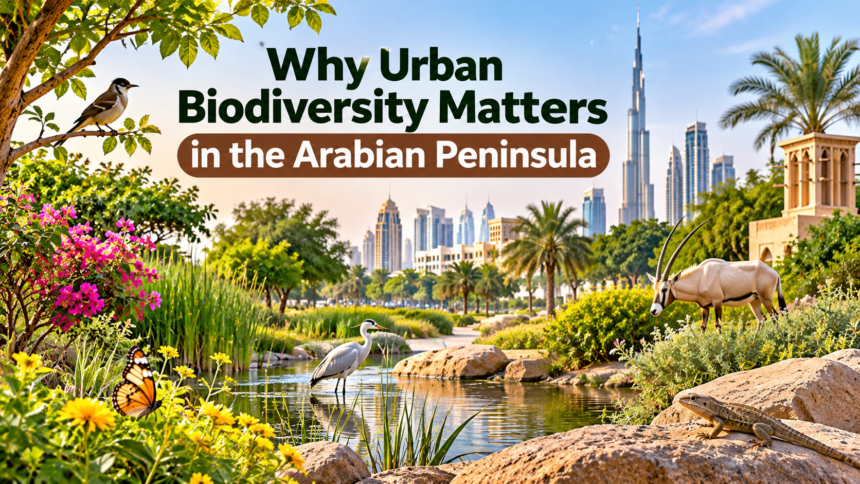
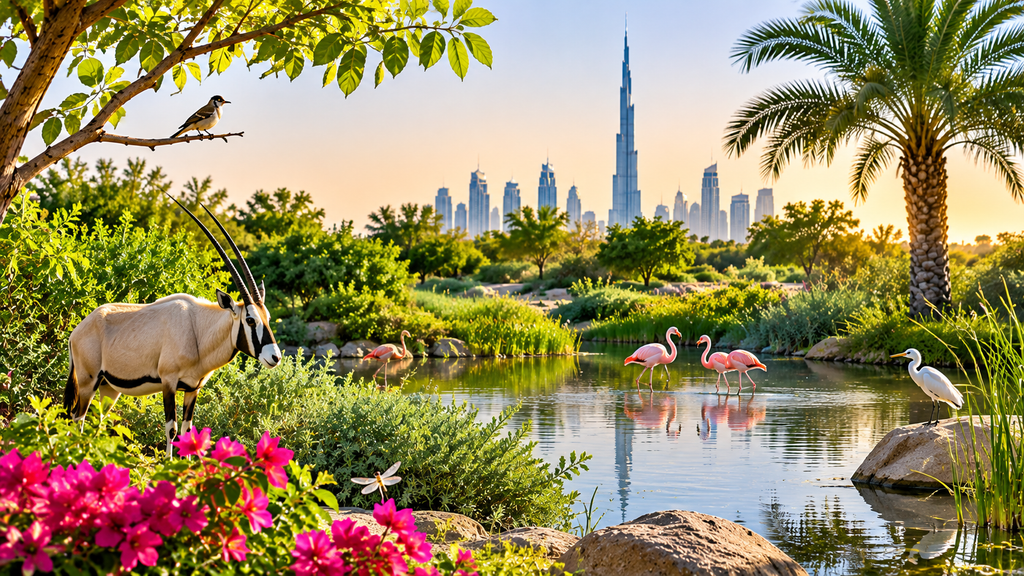
A flock of flamingos gathers in a wetland surrounded by Dubai’s highways and high-rise developments. In Abu Dhabi, mangrove forests provide habitats for fish, birds and other wildlife near busy urban areas. Meanwhile, new parks and tree-planting programmes are transforming parts of Riyadh’s landscape. These scenes demonstrate that nature is not limited to remote deserts, mountains or protected wilderness.
- Why Urban Biodiversity in the Arabian Peninsula Matters
- 7 Powerful Benefits of Urban Biodiversity for Gulf Cities
- Dubai, Abu Dhabi and Riyadh: Urban Biodiversity in Practice
- Native Plants, Wildlife Corridors and the Importance of Habitat Design
- The Economics of Biodiversity-Friendly Urban Development
- Challenges of Protecting Biodiversity in Desert Cities
- The Future of Urban Biodiversity in the Arabian Peninsula and FAQs
Urban Biodiversity in the Arabian Peninsula is becoming an important consideration as cities explore how to accommodate expanding populations while protecting native plants, animals and natural ecosystems.
The Arabian Peninsula is often associated with desert landscapes, high temperatures and limited rainfall. However, its natural environment contains a wide variety of ecosystems, including coastal wetlands, mangrove forests, mountain habitats, gravel plains, dunes and seasonal waterways.
These environments support different forms of life adapted to challenging conditions.
As cities expand, natural habitats may become fragmented or replaced by roads, buildings and landscaped developments.
Yet urbanisation does not necessarily mean that all wildlife must disappear.
Parks, natural reserves, coastal areas, suitable gardens and connected green corridors can provide opportunities to protect or restore selected species.
The importance of these spaces extends beyond environmental conservation.
Healthy urban ecosystems can contribute to cooling, soil protection, pollination, recreation and ecological resilience.
In September 2026, Dubai Municipality launched its Greenery and Plantation Manual, introducing guidance for sustainable landscaping, biodiversity and climate-responsive public spaces.
In July 2026, Environment Agency – Abu Dhabi launched its Mangrove Observatory to monitor habitat restoration projects.
Saudi Arabia is also expanding green infrastructure through programmes such as Green Riyadh, which aims to plant more than 7.5 million trees by 2030.
These initiatives demonstrate increasing attention to integrating natural environments into urban development.
However, biodiversity should not be measured simply by counting newly planted trees.
A park containing thousands of ornamental plants may provide fewer suitable habitats than a smaller area designed around appropriate native vegetation.
The future of urban biodiversity in the Arabian Peninsula will depend on protecting functioning ecosystems, managing water responsibly and ensuring that development does not unnecessarily damage the natural environment.
Why Urban Biodiversity in the Arabian Peninsula Matters
Urban biodiversity describes the variety of living organisms and ecosystems found within cities and their surrounding urban landscapes.
It includes trees, shrubs, grasses, insects, birds, mammals, reptiles, soil organisms and aquatic life.
The concept also considers how these species interact and whether suitable habitats allow them to survive.
A Region With Diverse Ecosystems
The Arabian Peninsula contains natural environments that are often overlooked in discussions about urban development.
Coastal wetlands support migratory birds and marine organisms.
Desert habitats provide suitable conditions for specialised plants, reptiles and other wildlife.
Mountain environments and seasonal valleys support species adapted to different elevations and moisture conditions.
The ecological requirements of these habitats differ considerably.
A plant suitable for a coastal salt marsh may not survive in a desert park, while vegetation adapted to rocky mountains may require different soil conditions.
Why Urban Expansion Matters
Construction can remove vegetation, alter drainage and divide natural habitats into smaller areas.
Roads may also create barriers to animal movement.
Pollution, artificial lighting and recreational activity can place additional pressure on wildlife.
However, the severity of these effects depends on the development and the species involved.
Biodiversity Is More Than Greenery
A landscaped boulevard may contain hundreds of trees but relatively few plant species.
Some ornamental vegetation provides shade and visual appeal without supporting many locally adapted insects or birds.
By contrast, a carefully managed natural habitat can support multiple ecological relationships.
This is why conservation programmes increasingly consider species diversity and habitat quality alongside vegetation coverage.
Urban Greenery vs Urban Biodiversity
| Urban Greenery | Urban Biodiversity |
|---|---|
| Focuses on vegetation coverage | Focuses on species and ecosystems |
| May prioritise appearance | Prioritises ecological function |
| Can include ornamental plants | Includes native and suitable adapted species |
| Often measured by planted area | Requires habitat and species monitoring |
| May need intensive irrigation | Considers ecological suitability |
| Improves selected urban amenities | Supports interconnected habitats |
Greenery and biodiversity can complement one another, but they are not identical objectives.
7 Powerful Benefits of Urban Biodiversity for Gulf Cities
Biodiversity can contribute to several aspects of urban life.
However, benefits depend on the condition, location and management of natural spaces.
1. Helping Cities Manage Extreme Heat
Trees and vegetation can provide shade and influence local temperatures through evapotranspiration.
The United Nations Environment Programme identifies urban nature as an important component of strategies addressing the urban heat island effect.
However, cooling performance depends on vegetation, water availability, surrounding surfaces and local conditions.
Planting trees alone does not guarantee a specific reduction in temperature.
2. Supporting Birds and Pollinators
Suitable flowering plants can provide food for insects and other pollinating organisms.
Urban wetlands may support migratory birds, while appropriate gardens can offer shelter and feeding opportunities for smaller wildlife.
Different species require different resources, so diverse habitat design is important.
3. Improving Ecological Resilience
A functioning ecosystem contains relationships among plants, animals, microorganisms and environmental conditions.
Protecting this diversity can help maintain important ecological processes.
However, biodiversity does not make an ecosystem immune to drought, pollution or climate change.
4. Supporting Coastal Environments
Mangroves and coastal wetlands provide habitat for fish, birds and other organisms.
Under suitable conditions, mangroves can also help reduce wave energy and influence coastal sediment processes.
Their protective effect varies according to habitat width, health and local conditions.
5. Creating Opportunities for Recreation
Accessible natural spaces can provide opportunities for walking, wildlife observation and outdoor learning.
Residents may benefit from spending time in suitable green and blue spaces.
However, recreational access must be managed carefully where sensitive habitats could be disturbed.
6. Supporting Environmental Education
Urban nature reserves can introduce children and adults to local wildlife.
Birdwatching, guided visits and conservation programmes provide opportunities to understand how natural ecosystems function.
This can encourage informed participation in environmental protection.
7. Strengthening Long-Term Urban Sustainability
Healthy ecosystems can contribute to urban planning objectives involving soil stability, water management and environmental quality.
Protecting natural habitats may also reduce the need for some artificial interventions.
However, benefits should be assessed according to the specific project rather than assumed for every green space.
Seven Benefits Compared
| Benefit | Relevant Habitat | Potential Contribution |
|---|---|---|
| Urban Cooling | Trees and Shaded Landscapes | Better Thermal Comfort |
| Pollination | Flowering Vegetation | Support for Pollinators |
| Ecological Resilience | Diverse Habitats | Functioning Ecosystems |
| Coastal Protection | Mangroves and Wetlands | Habitat and Wave Attenuation |
| Recreation | Parks and Nature Areas | Outdoor Experiences |
| Education | Urban Wildlife Reserves | Environmental Awareness |
| Sustainability | Connected Green Infrastructure | Ecosystem Services |
The strongest outcomes generally occur when green spaces are planned as functioning ecological systems rather than purely decorative landscapes.
Dubai, Abu Dhabi and Riyadh: Urban Biodiversity in Practice
Several cities in the Arabian Peninsula are introducing programmes that recognise the importance of biodiversity.
These initiatives differ in objectives, scale and implementation.
Some protect existing ecosystems, while others focus on restoration or new urban green spaces.
Dubai’s Ras Al Khor Wildlife Sanctuary
Ras Al Khor Wildlife Sanctuary offers a notable example of wildlife conservation close to a major urban centre.
The protected wetland covers approximately 10.13 square kilometres.
Dubai Municipality identifies it as a habitat for migratory birds, fish, reptiles, invertebrates and vegetation.
The sanctuary became the UAE’s first Ramsar Wetland of International Importance in 2007.
Greater flamingos are among its most recognisable visitors.
However, the sanctuary’s importance extends beyond one species.
Its mudflats, mangroves and intertidal habitats support ecological processes that depend on suitable environmental conditions.
Dubai’s Wider Protected Areas
Dubai Municipality manages eight designated protected areas representing desert, mountain, coastal and marine environments.
According to the municipality, they collectively cover approximately 31% of the emirate’s territory.
This figure describes protected areas throughout Dubai, not the percentage of its built-up city covered by urban parks.
The protected areas include Ras Al Khor, Al Marmoom and Jabal Ali Wildlife Sanctuary.
These different environments demonstrate why biodiversity conservation cannot rely on one type of habitat.
Dubai’s 2026 Landscaping Guidance
The Greenery and Plantation Manual 2026 provides guidance for parks, green corridors, roadsides and other public spaces.
It promotes sustainable irrigation, appropriate plant selection, biodiversity and climate-responsive design.
Dubai Municipality also reported planting 216,500 trees in 2024, including species such as Ghaf, Sidr and Samar.
However, tree planting figures should not be interpreted as evidence that all planted trees have survived or generated measurable biodiversity improvements.
Abu Dhabi’s Mangrove Observatory
In July 2026, Environment Agency – Abu Dhabi introduced a digital monitoring platform covering 19 active mangrove restoration projects.
The platform tracks information across more than 1,775 hectares of restored habitat.
It records more than 18.5 million mangroves planted and provides information about growth and restoration performance.
The programme illustrates why monitoring survival and ecosystem conditions matters more than announcing planting totals alone.
New Research on Abu Dhabi’s Coastal Wildlife
An October 2026 study led by Sorbonne University Abu Dhabi, in collaboration with Environment Agency – Abu Dhabi and French researchers, used environmental DNA to investigate marine biodiversity at four urban coastal sites.
Researchers detected 83 vertebrate taxa.
The findings included 75 bony-fish taxa, two shark-and-ray taxa, one marine mammal taxon and five bird taxa.
The research highlights the value of advanced monitoring in understanding wildlife within urban coastal ecosystems.
However, detections from four study sites should not be treated as a complete inventory of Abu Dhabi’s marine biodiversity.
Riyadh’s Urban Greening Programme
Green Riyadh aims to plant more than 7.5 million trees by 2030.
The Royal Commission for Riyadh City identifies expanding green space, improving air quality and supporting residents’ quality of life as key programme objectives.
The programme also promotes treated-water use for irrigation.
However, increasing tree cover and improving biodiversity are related but separate outcomes.
Species selection, habitat connectivity and long-term ecological monitoring will influence the programme’s biodiversity benefits.
Regional Initiatives Compared
| Location | Initiative | Main Biodiversity Relevance |
|---|---|---|
| Dubai | Ras Al Khor Wildlife Sanctuary | Wetland habitat conservation |
| Dubai | Protected Areas Network | Desert, mountain and coastal ecosystems |
| Dubai | Greenery Manual 2026 | Biodiversity-conscious landscaping |
| Abu Dhabi | Mangrove Observatory | Habitat restoration monitoring |
| Abu Dhabi | Marine eDNA Research | Wildlife diversity assessment |
| Riyadh | Green Riyadh | Urban greening and potential habitat creation |
These programmes illustrate different pathways towards more nature-conscious urban development.
Native Plants, Wildlife Corridors and the Importance of Habitat Design
Native plants are an important component of biodiversity planning because they have developed within local ecological conditions.
However, not every native plant is suitable for every urban site.
Soil characteristics, water availability, exposure and maintenance requirements must still be considered.
The Role of Native Vegetation
Species such as Ghaf, Sidr and Samar are used in UAE landscaping programmes.
Appropriate native vegetation may provide food, shelter or other resources for locally adapted wildlife.
Some species may also require less irrigation than unsuitable ornamental alternatives after establishment.
However, water demand depends on site conditions and planting practices.
Why Habitat Diversity Matters
A landscaped area containing only one type of tree offers different resources from one combining suitable shrubs, trees, flowering plants and undisturbed soil.
Different species may require nesting places, ground cover, feeding opportunities or seasonal vegetation.
Habitat design should consider the needs of target species rather than simply maximising the number of plants.
Connecting Green Spaces
Wildlife corridors can help connect habitats separated by roads and development.
These connections may include vegetated routes, protected drainage channels or suitable crossings.
However, effectiveness varies by species.
A route useful for birds may not provide safe movement for terrestrial mammals or reptiles.
Avoiding Invasive Species
Some introduced plants and animals can spread beyond intended areas and disrupt local ecosystems.
The UAE’s biodiversity conservation guidance identifies invasive alien species as one of several threats to native biodiversity.
Landscape managers should assess ecological risks before introducing unfamiliar species.
Landscape Design Compared
| Design Approach | Potential Biodiversity Outcome | Main Consideration |
|---|---|---|
| Single-Species Planting | Limited Habitat Variety | Pest and Ecological Risk |
| Mixed Native Planting | Diverse Habitat Resources | Site Suitability |
| Connected Green Corridors | Wildlife Movement Opportunities | Continuity and Safety |
| Natural Wetland Protection | Aquatic and Bird Habitat | Water Quality |
| Ornamental Landscaping | Visual and Recreational Value | Ecological Compatibility |
| Habitat Restoration | Recovery of Ecological Functions | Long-Term Monitoring |
The objective is not to eliminate ornamental landscaping but to design public spaces that support both people and appropriate local wildlife.
The Economics of Biodiversity-Friendly Urban Development
Urban biodiversity requires investment in planning, habitat restoration, maintenance and monitoring.
However, natural infrastructure can also provide benefits that are difficult to capture through conventional property or construction budgets.
The Value of Ecosystem Services
Ecosystem services are the benefits people receive from functioning natural systems.
Examples include shade, selected forms of pollution reduction, recreational opportunities and coastal protection.
The World Bank’s research on urban nature examines how these services can be considered in city planning and economic assessments.
However, ecosystem benefits are not the same as guaranteed financial returns.
Why Initial Costs Can Be Misleading
A landscaped park with inexpensive planting may appear more economical than one requiring ecological surveys and specialised restoration.
Yet unsuitable plants may create higher long-term irrigation or replacement costs.
Similarly, a natural habitat may require careful protection rather than extensive artificial landscaping.
Illustrative Urban Biodiversity Budget
Consider a fictional municipality upgrading a five-hectare public green space.
| Investment Item | Hypothetical Cost |
|---|---|
| Ecological Survey and Planning | AED 150,000 |
| Site Preparation | AED 250,000 |
| Native and Adapted Planting | AED 400,000 |
| Water-Efficient Irrigation | AED 350,000 |
| Habitat Features and Signage | AED 200,000 |
| Initial Monitoring and Maintenance | AED 250,000 |
| Illustrative Total | AED 1,600,000 |
These figures are hypothetical and do not represent actual Gulf municipal project costs.
The example excludes land acquisition, major infrastructure construction and extended lifecycle expenses.
Assessing Long-Term Value
Authorities can examine whether a project provides sustained habitat, acceptable maintenance costs and useful community access.
However, a green project’s environmental performance should not be judged solely by the money spent or the number of trees planted.
Independent biodiversity indicators can help evaluate whether the investment produces meaningful ecological improvement.
Challenges of Protecting Biodiversity in Desert Cities
Supporting biodiversity in the Arabian Peninsula involves distinctive environmental and development challenges.
High temperatures, water scarcity, urban construction and coastal pressures create difficult conditions for some species.
Water Scarcity
Maintaining extensive vegetation can require significant irrigation.
Urban greening programmes should consider whether planting designs are suitable for local water resources.
Treated wastewater may provide an alternative supply for some approved landscaping applications, subject to relevant standards.
Extreme Temperatures
Some native species are adapted to harsh climatic conditions.
However, rising temperatures and changing weather patterns can create additional pressures.
Urban habitats must be designed around realistic environmental conditions rather than assumptions that all vegetation will thrive.
Habitat Fragmentation
Buildings, roads and other infrastructure can separate wildlife populations.
Smaller habitat patches may support fewer ecological functions or become more vulnerable to disturbance.
Protecting connectivity is therefore an important planning consideration.
Pollution and Artificial Lighting
Traffic pollution, waste and excessive lighting can affect wildlife.
Artificial light may disrupt certain nocturnal species and influence ecological behaviour.
The effects vary by species and setting.
Human-Wildlife Interaction
As green spaces attract more animals, cities may need to manage interactions between wildlife, pets and residents.
Feeding wild animals or disturbing nesting areas can create problems.
Clear visitor rules and environmental education can help.
Challenges and Responses
| Challenge | Potential Effect | Practical Response |
|---|---|---|
| Water Scarcity | High irrigation demand | Climate-appropriate planting |
| Extreme Heat | Habitat stress | Suitable species and design |
| Urban Construction | Habitat fragmentation | Ecological planning |
| Invasive Species | Native ecosystem pressure | Species screening |
| Artificial Lighting | Wildlife disturbance | Responsible lighting |
| Poor Maintenance | Habitat deterioration | Long-term management |
| Weak Monitoring | Uncertain outcomes | Ecological indicators |
Biodiversity protection should be treated as an ongoing management responsibility rather than a one-time landscaping project.
The Future of Urban Biodiversity in the Arabian Peninsula and FAQs
The future of Arabian Peninsula cities will depend partly on whether biodiversity becomes a routine consideration in urban planning.
Protecting nature should not be limited to a few isolated conservation areas.
Suitable neighbourhood parks, coastal spaces, green corridors and public facilities can also contribute to ecological objectives when appropriately designed.
Biodiversity as a Planning Standard
The Kunming-Montreal Global Biodiversity Framework includes Target 12, which addresses the quality, connectivity and accessibility of urban green and blue spaces.
It encourages cities to integrate biodiversity into planning while supporting human well-being.
This approach recognises that urban nature requires ecological quality rather than greenery alone.
New Monitoring Technologies
Satellite imagery, environmental DNA and automated monitoring systems can help scientists investigate biodiversity.
Abu Dhabi’s recent research and Mangrove Observatory demonstrate how these methods are being applied regionally.
However, technology must be supported by field research and long-term data collection.
Cooperation Across Urban Sectors
Urban biodiversity involves municipal planners, conservation agencies, developers, landscape architects and local communities.
Projects may require coordination between land-use planning, transport infrastructure and environmental regulation.
Urban Biodiversity Planning Checklist
- Identify existing natural habitats before development.
- Conduct suitable ecological surveys.
- Protect sensitive and threatened species.
- Select appropriate native and adapted plants.
- Consider habitat connectivity.
- Evaluate irrigation water requirements.
- Manage invasive species risks.
- Reduce unnecessary habitat disturbance.
- Establish measurable biodiversity indicators.
- Monitor long-term ecological performance.
Frequently Asked Questions
What is urban biodiversity?
Urban biodiversity refers to the diversity of plants, animals, microorganisms and ecosystems found within cities and their surrounding urban environments.
Why is biodiversity important in desert cities?
It helps maintain ecological functions and can support suitable vegetation, wildlife habitats, environmental resilience and opportunities for people to connect with nature.
Does Dubai have urban wildlife?
Yes. Ras Al Khor Wildlife Sanctuary supports migratory birds and other species close to major urban developments.
Why are mangroves important in Abu Dhabi?
Mangroves provide habitats for marine organisms and birds, contribute to coastal processes and support biodiversity conservation.
Can planting more trees improve biodiversity?
It can, particularly when suitable species and habitat designs are used. However, tree numbers alone do not demonstrate biodiversity improvement.
Are native plants always better than ornamental plants?
Not necessarily in every situation. Native plants can support local ecosystems, but suitability depends on the site, species and intended purpose.
What is Green Riyadh?
Green Riyadh is a Saudi urban greening programme aiming to plant more than 7.5 million trees by 2030.
Can biodiversity help reduce urban heat?
Vegetation can contribute to shade and cooling under suitable conditions, although the effects vary by design and climate.
What threatens urban biodiversity in the Gulf?
Threats include habitat fragmentation, pollution, unsuitable development, invasive species, water pressures and climate change.
How can residents support biodiversity?
Residents can avoid disturbing wildlife, choose appropriate plants, reduce litter and participate in authorised conservation or community activities.
What is the difference between a green park and a biodiverse park?
A green park may prioritise vegetation and recreation, while a biodiverse park also aims to support appropriate species and ecological relationships.
Will smart cities automatically protect biodiversity?
No. Digital monitoring can support conservation, but biodiversity protection requires suitable planning, habitat management and environmental standards.
Final Thoughts
Urban biodiversity is an increasingly important part of sustainable development across the Arabian Peninsula.
As cities expand, the protection of native plants, wildlife habitats and natural ecosystems can help balance urban growth with environmental resilience.
Dubai’s protected wetlands, Abu Dhabi’s mangrove restoration programmes and Riyadh’s green infrastructure projects demonstrate different approaches to integrating nature into urban environments.
However, the effectiveness of these initiatives should be measured through habitat quality, species diversity and long-term ecological performance rather than planting numbers alone.
For developers and municipal authorities, biodiversity-conscious planning offers opportunities to create public spaces that are both environmentally functional and enjoyable for residents.
For communities, accessible natural environments can encourage recreation, environmental learning and greater appreciation of regional wildlife.
Ultimately, Urban Biodiversity in the Arabian Peninsula is not simply about making desert cities greener.
It is about protecting the living ecosystems that help cities function while ensuring that future development respects the environmental characteristics of the region.
The cities that succeed will be those that treat biodiversity as essential urban infrastructure rather than an optional decorative feature.
Do follow us on Instagram
Read More – Can Gulf Cities Reduce Food Waste Through Better Packaging and Storage?