


Traditional Gulf Cuisine: What Makes Gulf Food So Unique?
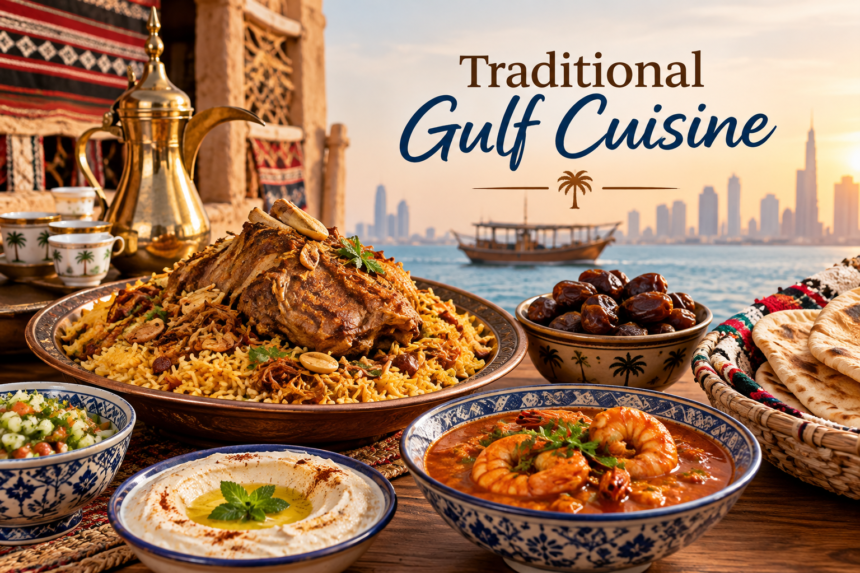
What makes Traditional Gulf Cuisine so special? The food of the Arabian Gulf is much more than a collection of recipes. It represents centuries of history, hospitality, trade, geography, and cultural traditions shared across countries including the United Arab Emirates, Saudi Arabia, Qatar, Kuwait, Bahrain, and Oman. Gulf cuisine has developed around the region’s desert environment, coastal communities, pearl-diving heritage, livestock farming, fishing traditions, and centuries of trade with Asia, Africa, and other parts of the Middle East.
- What Is Traditional Gulf Cuisine?
- Why Is Gulf Cuisine Important to Arabian Culture?
- Which Countries Are Known for Traditional Gulf Cuisine?
- What Are the Main Ingredients Used in Traditional Gulf Cuisine?
- Why Is Rice So Important in Gulf Cuisine?
- What Is Machboos and Why Is It Popular?
- What Is Kabsa and How Is It Different From Machboos?
- What Is Harees in Traditional Gulf Cuisine?
- What Is Thareed?
- What Role Does Seafood Play in Gulf Cuisine?
- How Important Are Dates in Traditional Gulf Food?
- Why Is Arabic Coffee Served With Gulf Food?
- What Spices Are Commonly Used in Gulf Cuisine?
- What Are Popular Traditional Gulf Breads?
- What Are the Most Popular Traditional Gulf Desserts?
- What Is Luqaimat and Why Is It Popular?
- How Has Trade Influenced Traditional Gulf Cuisine?
- How Does Gulf Cuisine Differ From Other Middle Eastern Food?
- What Role Does Food Play During Ramadan in the Gulf?
- What Traditional Gulf Foods Are Served During Celebrations?
- How Is Traditional Gulf Food Usually Served?
- Is Traditional Gulf Cuisine Healthy?
- How Is Traditional Gulf Cuisine Preserved Today?
- Why Should Travelers Try Traditional Gulf Cuisine?
- What Are the Must-Try Traditional Gulf Foods?
- How Can You Experience Authentic Gulf Cuisine?
- Why Is Traditional Gulf Cuisine More Than Just Food?
- What Is the Future of Traditional Gulf Cuisine?
Traditional Gulf food is known for fragrant rice dishes, tender meat, fresh seafood, dates, aromatic spices, flatbreads, sauces, and sweet desserts. Although every Gulf country has its own specialties and cooking methods, many dishes share common ingredients and culinary traditions.
From a family gathering to a wedding celebration, religious occasion, or everyday meal, food continues to play an important role in Gulf culture. But what are the most famous dishes, ingredients, cooking techniques, and traditions associated with authentic Gulf cuisine? Let’s explore.
What Is Traditional Gulf Cuisine?
What exactly does Traditional Gulf Cuisine mean? Traditional Gulf Cuisine refers to the food traditions that developed throughout the Arabian Gulf region. These culinary traditions have been influenced by the region’s geography, climate, available ingredients, cultural exchanges, and history.
The Gulf region includes countries with extensive coastlines as well as vast desert landscapes. This combination created a cuisine based on both land and sea. Fish and seafood became important in coastal communities, while dates, dairy products, grains, rice, meat, and locally available vegetables played important roles in inland communities.
Over time, merchants and travelers introduced ingredients and cooking techniques from India, Persia, East Africa, and other regions. This is one reason Gulf dishes often contain spices such as cardamom, saffron, cinnamon, cloves, cumin, turmeric, and black pepper.
Despite modern influences, traditional recipes continue to be prepared in homes and restaurants throughout the region.
Why Is Gulf Cuisine Important to Arabian Culture?
Why does food have such an important place in Gulf society? In many Gulf communities, serving food is closely connected with hospitality, generosity, family, and social relationships.
Guests are often welcomed with Arabic coffee and dates before larger meals are served. Sharing food from large communal dishes can create a sense of togetherness, particularly during family gatherings and celebrations.
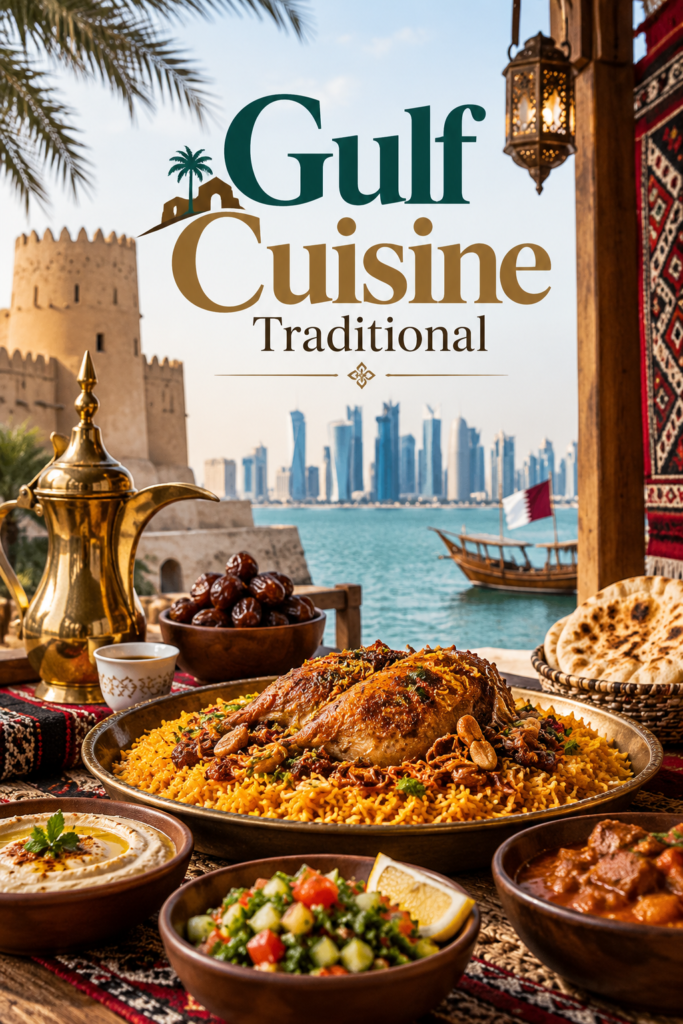
Traditional meals can also communicate respect for guests. Preparing an abundant meal for visitors has long been considered an important part of Gulf hospitality.
Food traditions are also passed from one generation to another. Parents and grandparents teach younger family members how to prepare traditional dishes, measure spices, prepare rice, and use traditional cooking methods.
Which Countries Are Known for Traditional Gulf Cuisine?
Which countries contribute to Gulf culinary traditions? The main countries associated with Gulf cuisine include:
- United Arab Emirates
- Saudi Arabia
- Qatar
- Kuwait
- Bahrain
- Oman
Each country has developed distinctive dishes and regional variations. For example, Emirati cuisine includes dishes such as machboos, harees, thareed, and luqaimat, while Saudi cuisine is known for dishes such as kabsa, jareesh, and mutabbaq.
Qatari, Kuwaiti, Bahraini, and Omani cuisines also feature distinctive rice, seafood, bread, meat, and dessert traditions.
Although recipes differ from one location to another, many ingredients and cooking techniques overlap across the Gulf.
What Are the Main Ingredients Used in Traditional Gulf Cuisine?
What ingredients give Gulf food its recognizable flavor? Traditional Gulf recipes typically use a combination of grains, rice, meat, seafood, spices, dates, dairy products, vegetables, and herbs.
Some common ingredients include:
- Rice
- Dates
- Lamb
- Chicken
- Goat meat
- Beef
- Fish
- Shrimp
- Wheat
- Flour
- Milk and yogurt
- Onions
- Garlic
- Tomatoes
- Cardamom
- Cinnamon
- Cloves
- Saffron
- Turmeric
- Cumin
- Black pepper
- Dried limes
- Fresh herbs
The combination of these ingredients creates dishes that can be aromatic, savory, mildly spicy, sweet, or richly seasoned.
Why Is Rice So Important in Gulf Cuisine?
Why do so many traditional Gulf dishes feature rice? Rice became an important ingredient through centuries of trade and cultural exchange across the Indian Ocean and Arabian Sea.
Today, fragrant rice is the foundation of many popular Gulf dishes. It is commonly cooked with meat, chicken, fish, or seafood and flavored with spices.
Rice dishes are especially important during large gatherings because they can be prepared in generous quantities and served communally.
Popular rice-based dishes include:
- Machboos
- Kabsa
- Majboos
- Madfoon
- Omani rice dishes
- Various seafood rice preparations
Although the names and recipes vary across countries, these dishes generally feature aromatic rice combined with seasoned meat, poultry, or seafood.
What Is Machboos and Why Is It Popular?
What is one of the most recognizable dishes in Gulf cuisine? Machboos, also known by regional variations of the name, is one of the most popular rice-based dishes in the Arabian Gulf.
It generally consists of rice cooked with meat, chicken, fish, or seafood and a blend of spices. The ingredients are often cooked together so that the rice absorbs the rich flavors of the meat and seasoning.
Depending on the region and family recipe, machboos may include dried lime, cardamom, cinnamon, cloves, saffron, onions, tomatoes, and other spices.
Machboos is commonly served during:
- Family gatherings
- Weddings
- Religious celebrations
- Festive meals
- Special occasions
- Large social gatherings
Its versatility is one of the reasons it remains so popular.
What Is Kabsa and How Is It Different From Machboos?
What is kabsa? Kabsa is a famous Saudi Arabian rice dish that is also widely enjoyed in other parts of the Gulf.
The dish generally combines seasoned rice with meat, chicken, or other ingredients. The exact recipe varies depending on the region and household.
Both kabsa and machboos use aromatic rice and spices, but their seasoning combinations, cooking methods, and regional variations can differ.
Kabsa often features a rich combination of spices, tomatoes, onions, and meat or chicken, resulting in a fragrant and hearty meal.
What Is Harees in Traditional Gulf Cuisine?
What is harees, and why is it considered an important traditional dish? Harees is a slow-cooked dish made primarily from wheat and meat. The ingredients are cooked for an extended period until they become soft and form a smooth, thick consistency.
Harees is particularly associated with Ramadan, religious occasions, weddings, and other celebrations.
The dish demonstrates an important feature of traditional Gulf cooking: patience. Slow cooking allows simple ingredients to develop a rich texture and satisfying flavor.
Harees is often served warm and may be finished with ghee or other traditional accompaniments.
What Is Thareed?
What is thareed? Thareed is a traditional Gulf dish that combines pieces of bread with a flavorful stew containing meat or vegetables.
The bread absorbs the broth, creating a soft and flavorful texture. Different households and regions prepare thareed in different ways.
The dish has strong cultural associations and is particularly popular during Ramadan and family gatherings.
It demonstrates how traditional Gulf cooking often transforms simple ingredients into filling and flavorful meals.
What Role Does Seafood Play in Gulf Cuisine?
Why is seafood so important in Traditional Gulf Cuisine? The Arabian Gulf has a long coastline, and fishing has historically been an important source of food and livelihood for coastal communities.
Traditional Gulf seafood includes fish, shrimp, crab, and other varieties depending on the location and season.
Fish can be grilled, fried, baked, stewed, or cooked with rice. Seafood is also incorporated into traditional sauces and rice dishes.
Common seafood preparations include:
- Grilled fish
- Fried fish
- Fish with spiced rice
- Shrimp stews
- Seafood machboos
- Dried or preserved fish preparations
Seafood traditions also reflect the Gulf’s historic connection with fishing, sailing, pearl diving, and maritime trade.
How Important Are Dates in Traditional Gulf Food?
Why are dates such an important part of Gulf culture? Dates have been cultivated in the Arabian Peninsula for centuries and have historically provided an important source of energy and nutrition in the region’s challenging climate.
Dates remain a central part of Gulf hospitality. Visitors are frequently offered dates alongside Arabic coffee.
Dates can also be used in desserts and other preparations. Their natural sweetness makes them an important traditional ingredient.
Popular varieties differ by region, and dates may be served fresh, dried, stuffed, or incorporated into sweets.
Why Is Arabic Coffee Served With Gulf Food?
What makes Arabic coffee an important part of Gulf hospitality? Arabic coffee, often known regionally as gahwa, is traditionally associated with welcoming guests and social interaction.
It is typically prepared using lightly roasted coffee beans and flavored with spices such as cardamom. Some regional preparations may include saffron or other aromatic ingredients.
Arabic coffee is usually served in small cups and is commonly accompanied by dates.
The ritual surrounding coffee is as important as the drink itself. Serving coffee to guests represents hospitality, generosity, and respect.
What Spices Are Commonly Used in Gulf Cuisine?
What gives traditional Gulf food its distinctive aroma? Spices play an important role in the cuisine, but the flavor profile is often aromatic rather than overwhelmingly hot.
Common spices include:
- Cardamom
- Cinnamon
- Cloves
- Saffron
- Turmeric
- Cumin
- Coriander
- Black pepper
- Dried lime
- Bay leaves
Spice combinations vary from one recipe to another. Some dishes use a simple blend, while others may contain several aromatic spices.
Dried lime, in particular, is an important ingredient in many Gulf and wider Middle Eastern dishes. It provides a distinctive tangy flavor to rice and stew preparations.
What Are Popular Traditional Gulf Breads?
What kinds of bread are eaten with Gulf meals? Bread has historically been an important part of Arabian cuisine. Different Gulf communities have developed their own flatbreads and bread-making techniques.
Traditional breads can be served alongside meat, seafood, stews, dips, and other dishes.
Some breads are thin and crisp, while others are soft and chewy. Bread may be cooked on a hot surface, griddle, or traditional oven.
Bread also serves a practical purpose: it can be used to scoop up food and sauces, making communal dining more interactive.
What Are the Most Popular Traditional Gulf Desserts?
What desserts are associated with Gulf cuisine? Traditional Gulf sweets often combine ingredients such as dates, flour, nuts, sugar, saffron, cardamom, rose water, and honey.
One of the best-known Gulf sweets is luqaimat, small fried dumplings that are typically drizzled with date syrup, honey, or another sweet topping.
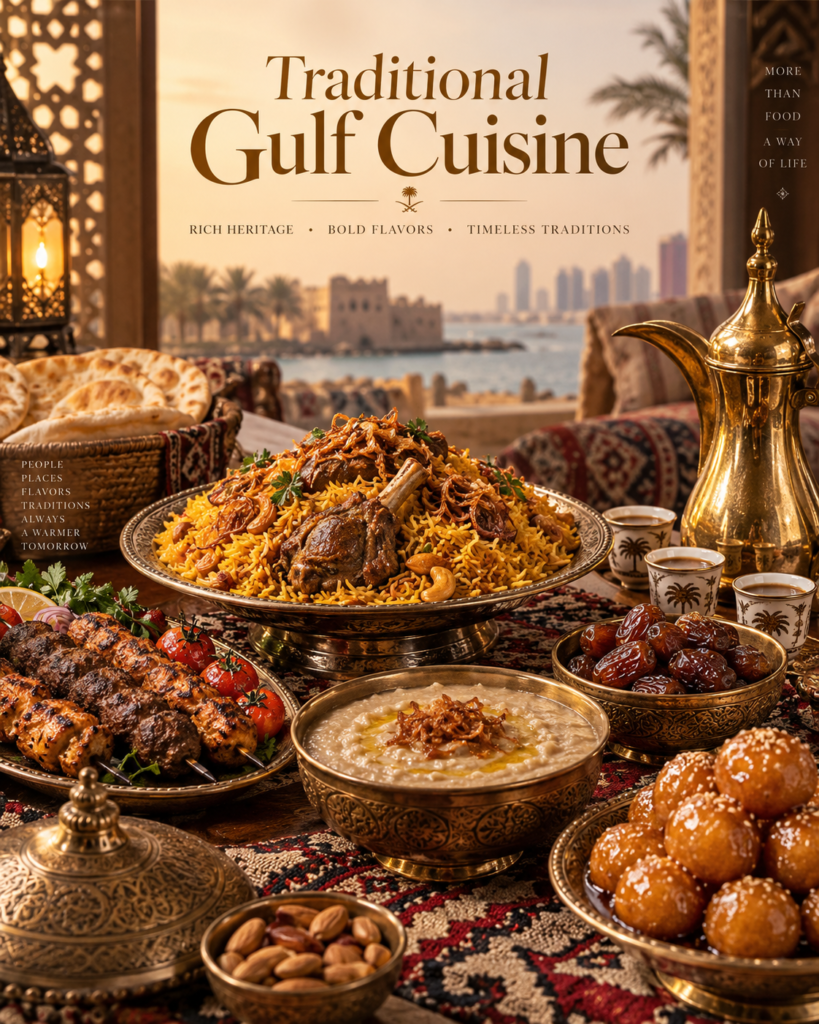
Other traditional sweets may include:
- Date-based sweets
- Halwa
- Maamoul-style pastries
- Semolina desserts
- Rice-based sweets
- Nut-filled pastries
- Saffron and cardamom sweets
Desserts are particularly important during Ramadan, Eid, weddings, and family celebrations.
What Is Luqaimat and Why Is It Popular?
What are luqaimat? Luqaimat are small, round fried dough balls that are crisp on the outside and soft inside. They are commonly topped with date syrup, honey, or other sweet sauces.
Luqaimat are popular across the Gulf and are especially associated with festive occasions and Ramadan.
The contrast between the crisp exterior and soft interior makes them a favorite traditional dessert.
How Has Trade Influenced Traditional Gulf Cuisine?
How did international trade shape Gulf food? The Arabian Peninsula has historically been located at an important crossroads between Asia, Africa, and the Middle East.
Merchants traveled across the Arabian Sea and Indian Ocean, bringing spices, rice, ingredients, and culinary ideas to Gulf communities.
This history helps explain why Gulf dishes can contain ingredients that originated far beyond the Arabian Peninsula.
Indian, Persian, East African, and other culinary influences can be found throughout the region, while local ingredients and traditions give Gulf food its own identity.
How Does Gulf Cuisine Differ From Other Middle Eastern Food?
Is Gulf cuisine the same as Middle Eastern cuisine? Not exactly. Gulf food is part of the broader Middle Eastern culinary landscape, but it has its own distinctive characteristics.
Gulf cuisine is particularly shaped by the region’s relationship with the sea, desert environment, dates, rice, seafood, livestock, and maritime trade.
While dishes such as hummus, bread, rice, grilled meat, and salads may be found across the Middle East, their preparation and seasoning can vary significantly.
The Gulf’s culinary identity comes from the way these ingredients are combined with regional cooking methods and cultural traditions.
What Role Does Food Play During Ramadan in the Gulf?
Why does food become especially significant during Ramadan? Ramadan is a major period for family gatherings, hospitality, and communal meals across the Gulf.
After the daily fast is broken, families and communities often gather for iftar meals featuring a variety of traditional foods.
Dates and water are commonly associated with breaking the fast, followed by soups, rice dishes, meat, bread, desserts, and other foods depending on the household and region.
Ramadan also provides an opportunity to preserve and share traditional recipes with younger generations.
What Traditional Gulf Foods Are Served During Celebrations?
What foods are prepared for weddings, Eid, and other celebrations? Large gatherings often call for generous dishes that can be shared among many people.
Popular celebratory foods may include:
- Machboos
- Kabsa
- Harees
- Thareed
- Grilled meats
- Seafood dishes
- Traditional breads
- Dates
- Luqaimat
- Halwa
- Arabic coffee
The specific menu depends on the country, family, occasion, and local traditions.
How Is Traditional Gulf Food Usually Served?
How do people traditionally enjoy Gulf meals? Communal dining is an important part of the food culture. Large dishes may be placed in the center of the table so that everyone can share.
In traditional settings, food may be served on large platters, particularly when feeding a large family or group of guests.
The emphasis is often on generosity and togetherness rather than individual portions.
Guests may also be offered multiple rounds of coffee, tea, dates, and sweets as part of the hospitality experience.
Is Traditional Gulf Cuisine Healthy?
Can Gulf food be part of a balanced diet? Traditional Gulf cuisine includes many nutritious ingredients, including fish, dates, vegetables, grains, legumes, dairy products, and spices.
However, some traditional dishes can also contain significant amounts of rice, meat, oil, butter, or sugar. As with any cuisine, balance and portion size are important.
A balanced approach could include:
- More vegetables and salads
- Moderate portions of rice
- Grilled or baked seafood
- Leaner cuts of meat
- Fresh fruit
- Adequate hydration
- Moderate portions of traditional sweets
Traditional food does not have to be avoided to maintain a balanced lifestyle.
How Is Traditional Gulf Cuisine Preserved Today?
How are traditional Gulf food traditions surviving in the modern world? Despite rapid urbanization and changing lifestyles, traditional recipes remain an important part of family and cultural life.
Restaurants specializing in local cuisine help introduce traditional dishes to younger generations and international visitors. Cultural festivals and heritage events also provide opportunities to showcase traditional cooking.
Families continue to prepare traditional recipes at home, especially during Ramadan, Eid, weddings, and other celebrations.
Food documentation, cooking programs, culinary tourism, and social media have also helped introduce Gulf cuisine to audiences around the world.
Why Should Travelers Try Traditional Gulf Cuisine?
Why should visitors experience traditional Gulf food when traveling through the region? Food provides a direct connection to local culture.
Trying a traditional meal allows travelers to experience regional ingredients, cooking techniques, hospitality customs, and family traditions.
Visitors can explore local restaurants, traditional markets, food festivals, cultural villages, and heritage destinations to discover authentic flavors.
Some dishes may be familiar, while others can introduce completely new combinations of spices, textures, and ingredients.
What Are the Must-Try Traditional Gulf Foods?
If someone is experiencing Gulf cuisine for the first time, which dishes should they try? While preferences vary, the following foods provide a good introduction to the region’s culinary traditions:
- Machboos: Aromatic rice served with meat, chicken, or seafood.
- Kabsa: A famous Saudi rice and meat or chicken dish.
- Harees: Slow-cooked wheat and meat with a smooth consistency.
- Thareed: Bread combined with flavorful stew.
- Luqaimat: Small fried sweet dumplings served with syrup or honey.
- Arabic coffee: Aromatic coffee commonly flavored with cardamom.
- Dates: A traditional symbol of Gulf hospitality.
- Grilled seafood: A reflection of the Gulf’s long coastal heritage.
- Traditional breads: Flatbreads served with stews, meats, and dips.
- Halwa: A traditional sweet found in several Gulf countries.
Trying several dishes is one of the best ways to appreciate the diversity of Gulf cuisine.
How Can You Experience Authentic Gulf Cuisine?
Where can you experience authentic Traditional Gulf Cuisine? Travelers and residents can discover Gulf food through local restaurants, family-style dining establishments, traditional markets, cultural festivals, and heritage areas.
When choosing a restaurant, look for establishments that specialize in local cuisine rather than international dishes. Asking about regional specialties can also help you discover less familiar foods.
Food markets and cultural events can provide another excellent opportunity to experience traditional flavors in a more informal environment.
Why Is Traditional Gulf Cuisine More Than Just Food?
Why does Gulf cuisine matter beyond its flavors? Food carries memories, traditions, identity, and stories. A family recipe can represent generations of knowledge, while a communal meal can bring relatives and friends together.
Traditional Gulf cuisine also tells the story of the region itself. Rice and spices reflect international trade. Seafood reflects the Gulf’s maritime heritage. Dates reflect the importance of the date palm and desert agriculture. Meat and dairy traditions reflect pastoral lifestyles.
Every dish has the potential to reveal something about the people and places that created it.
What Is the Future of Traditional Gulf Cuisine?
Will traditional Gulf cuisine remain popular in the future? There is strong potential for traditional food to become even more widely recognized internationally.
Modern chefs are increasingly presenting traditional ingredients and recipes in contemporary ways while maintaining connections to regional culinary heritage.
At the same time, families, local restaurants, cultural organizations, and food festivals continue to preserve classic recipes.
The future of Gulf cuisine may therefore combine traditional cooking with modern presentation, international culinary techniques, and new interpretations of classic dishes.
Final Thoughts: Why Is Traditional Gulf Cuisine Worth Exploring?
So, what makes Traditional Gulf Cuisine worth exploring? It is a culinary tradition built on history, hospitality, geography, trade, and family. From fragrant machboos and kabsa to comforting harees, flavorful seafood, sweet luqaimat, aromatic Arabic coffee, and naturally sweet dates, Gulf food offers an impressive variety of flavors and experiences.
Traditional Gulf cuisine also provides a window into the culture of the Arabian Peninsula. The ingredients, cooking techniques, communal meals, and hospitality traditions all tell stories about generations of people who lived along the coast, traveled through the desert, traded across the seas, and developed recipes using the resources available to them.
Whether you are a food lover, traveler, cultural enthusiast, or someone discovering Gulf cuisine for the first time, exploring these traditional dishes can be an unforgettable experience.
From everyday family meals to grand celebrations, Traditional Gulf Cuisine continues to bring people together and preserve an important part of Arabian heritage. Its combination of aromatic spices, rice, seafood, meat, dates, breads, and traditional sweets makes it one of the region’s most distinctive and culturally meaningful culinary traditions.
Do follow us on Instagram
Read More – Traditional Gulf Foods