

UAE New Dirham Symbol Gets Its Biggest Digital Upgrade Yet
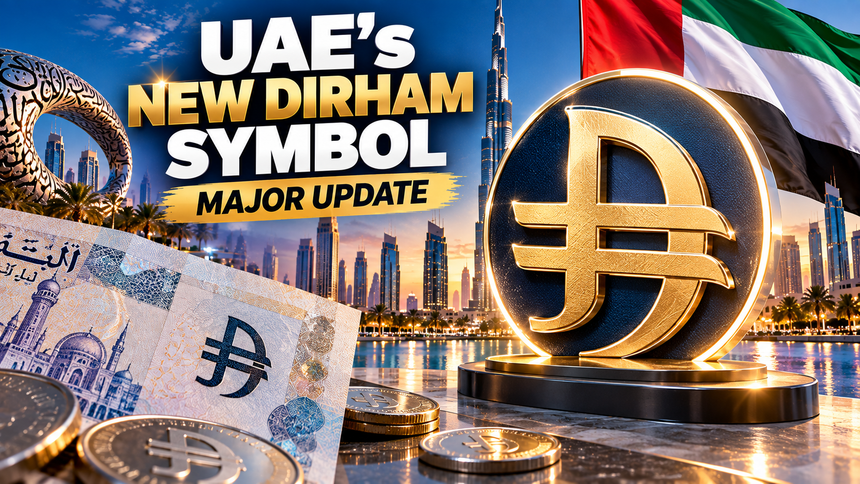
The UAE new dirham symbol has just reached one of the most important milestones since it was first revealed, and this time the change is less about how the symbol looks and more about where people will eventually be able to use it.
- UAE New Dirham Symbol Gets Its Biggest Digital Upgrade Yet
- Why Unicode 18.0 Is Such an Important Step
- Will the UAE Dirham Symbol Now Appear on Keyboards
- What the New Dirham Symbol Actually Looks Like
- Where People Could Start Seeing the Symbol
- What This Means for UAE Businesses and Consumers
- How the Update Fits Into the UAE Digital Finance Push
- Why the Change Matters Beyond the UAE
- What Happens Next for the UAE Dirham Symbol
The UAE dirham sign has officially been added to Unicode 18.0, the global digital standard used to represent letters, numbers, currency signs, emojis and thousands of other characters across phones, computers, applications and websites. The UAE currency symbol has been assigned the code U+20C3, giving technology companies a standard digital identity they can build into operating systems, keyboards, financial software and online platforms.
For residents, visitors and businesses in the UAE, the change could eventually mean something very simple: instead of writing AED, Dh or Dhs every time a price is displayed, the official dirham symbol could become as easy to use as the dollar, pound, euro or yen signs.
The symbol itself is not new. The Central Bank of the UAE unveiled it on March 27, 2025. What has changed in September 2026 is its digital status. The sign has moved from being an officially approved design to becoming part of the international character system that modern technology depends on.
UAE New Dirham Symbol Gets Its Biggest Digital Upgrade Yet
When the Central Bank unveiled the new dirham symbol in 2025, it introduced a visual identity intended to give the UAE currency a stronger and more recognisable presence internationally.
The design is based on the English letter D for dirham and features two horizontal lines. According to UAE authorities, those lines reflect the stability of the national currency and take inspiration from the UAE flag.
However, creating an official currency sign does not automatically mean people can type it on their phones.
Digital systems need a standard code that tells different devices and software platforms that a particular character exists. Without that common code, companies may have to display the dirham sign as an image, use a specially created font or continue writing AED instead.
That is why Unicode 18.0 represents such a major step.
The Unicode Consortium released version 18.0 in September 2026, adding the UAE dirham sign alongside new currency symbols for the Omani rial and Maldivian rufiyaa. Unicode described the currency signs as some of the most anticipated characters in the new version.
For the UAE dirham, the new code is U+20C3.
That number may not mean much to the average shopper, but for software companies, operating system developers and financial technology platforms, it gives the symbol a standard identity that can be recognised consistently across digital systems.
Why Unicode 18.0 Is Such an Important Step
Unicode works quietly behind almost everything people type digitally.
Every letter, punctuation mark, emoji or currency sign needs to be represented consistently so that the same character does not turn into a blank box or incorrect symbol when it moves from one device to another.
Think about the familiar symbols used for global currencies.
| Currency | Common Symbol |
|---|---|
| US Dollar | $ |
| British Pound | £ |
| Euro | € |
| Japanese Yen | ¥ |
| UAE Dirham | New official dirham sign |
Until now, the UAE symbol faced a practical problem. Although the design had official approval, there was no universally standardised Unicode character available for ordinary digital use.
That created a gap between the official identity of the currency and the technology people use every day.
Unicode 18.0 helps close that gap.
The update means developers can begin integrating the dirham sign as an actual text character rather than relying on graphics or custom workarounds.
This is particularly important because the Central Bank expects the symbol to eventually appear across both physical and digital environments, including receipts, invoices, price labels, online stores, banking applications, ATMs, accounting systems, foreign exchange platforms and trading services.
In other words, the symbol was designed for widespread use. Unicode makes that goal much easier technically.
Will the UAE Dirham Symbol Now Appear on Keyboards
Possibly, but users should not expect every phone and laptop to suddenly show the symbol immediately.
Unicode standardisation creates the technical foundation. Individual technology companies still have to implement the character.
Apple, Google, Microsoft, Samsung and other device or operating system providers can now develop support for the sign through future software updates, keyboard layouts and fonts.
The Central Bank has previously published guidelines illustrating how the currency symbol could be incorporated into keyboard layouts, including an example that places it around the number 6 key. The final implementation, however, depends on keyboard and technology companies.
This means users may experience a gradual rollout.
Some platforms could support the character quickly, while others may take longer. Older devices may never receive native keyboard support if manufacturers no longer provide software updates.
Unicode itself has warned that new currency characters can take time to become widely available on older hardware and software.
So if you check your phone today and cannot immediately find the dirham symbol, that does not mean the Unicode update has failed.
The infrastructure has been approved. Device support comes next.
What the New Dirham Symbol Actually Looks Like
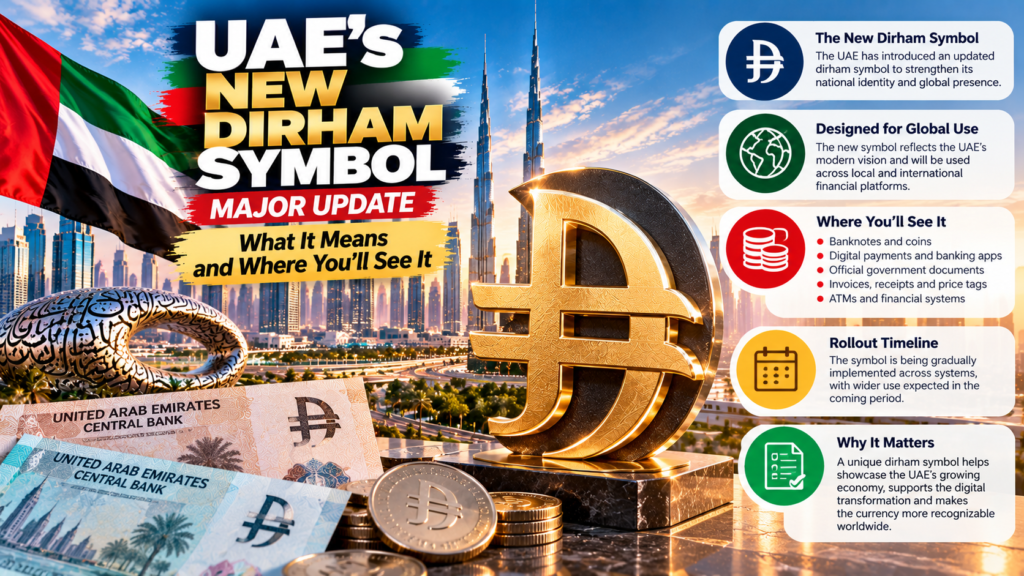
The official design takes its main form from the letter D, representing dirham.
Two horizontal bars run through the character. These bars are designed to remain a recognisable part of the symbol even when different fonts or weights are used.
Central Bank design guidelines say the core structure should remain consistent, while minor adjustments can be made so that the sign works with different typefaces. The position and spacing of the horizontal lines should still preserve the symbol’s identity.
The design is intended to communicate several ideas at once.
It connects the symbol with the English name of the currency, gives the dirham a recognisable international identity and incorporates lines inspired by the UAE flag and the idea of monetary stability.
There is also a separate visual treatment for the Digital Dirham. When the symbols were first introduced, the Central Bank showed the digital version with the physical dirham symbol placed inside a circle using UAE flag colours.
This distinction reflects the UAE’s wider plan to modernise both its traditional currency identity and its future digital payment infrastructure.
Where People Could Start Seeing the Symbol
The biggest impact of Unicode support will probably be gradual rather than dramatic.
Over time, UAE residents could begin seeing the official dirham sign in many of the places where AED currently appears.
These may include:
- Mobile banking and payment applications
- Online shopping websites
- Restaurant menus and digital price lists
- Retail receipts and invoices
- Accounting and finance software
- Foreign exchange websites
- Trading platforms
- ATMs and banking systems
- Government platforms
- Digital wallets
- Hotel and travel booking systems
- Point of sale systems
Central Bank guidance also specifies how the sign should behave in digital interfaces.
For example, official guidelines state that it should appear to the left of a numerical value in digital applications and should maintain alignment, proportional scaling and readable spacing. A recommended minimum size of 12 pixels is given for smaller digital screens.
That means the change is not simply about putting a new logo beside prices.
The UAE has developed detailed rules intended to make the symbol look consistent across different environments.
What This Means for UAE Businesses and Consumers
For most consumers, the immediate change may initially feel small.
People will still be able to recognise AED, and businesses are not suddenly expected to replace every existing price format overnight.
The longer term impact is more significant.
A widely supported national currency symbol can make prices easier to recognise and give the dirham a stronger visual identity, particularly in international digital environments.
Consider an online traveller comparing prices.
A hotel may currently display AED 1,200. In the future, the official symbol could perform the same role that £, € or $ already perform for their currencies.
For UAE companies operating internationally, this could also create greater consistency across invoices, e-commerce platforms and financial software.
What changes now
Unicode gives the symbol an internationally standardised digital code.
What does not change immediately
The value of the dirham does not change.
The existing AED abbreviation does not suddenly become invalid.
Businesses do not need to assume that every customer’s device already supports the new character.
The update is primarily technological rather than monetary.
This distinction is important because headlines about a new currency symbol can sometimes create confusion. The UAE has not introduced a new currency. It has given the existing dirham a new official visual identity and is now strengthening its digital compatibility.
How the Update Fits Into the UAE Digital Finance Push
The timing of the Unicode update also makes sense when viewed alongside the UAE’s broader financial technology strategy.
The Central Bank has been working on the Digital Dirham as part of its Financial Infrastructure Transformation programme.
Unlike cryptocurrencies such as Bitcoin, a central bank digital currency is an official form of national currency issued and regulated by the monetary authority.
The UAE’s legal framework now explicitly recognises currency in digital form, and Central Bank rules state that digital currency issued by the Central Bank can serve as legal tender alongside physical money.
That makes the currency symbol more than a branding exercise.
Modern currencies increasingly operate inside digital payment networks, financial applications, automated systems and cross border platforms. For those systems to work smoothly, standardised digital identifiers matter.
The Unicode update therefore fits into a much larger transformation.
The UAE is building infrastructure designed for an economy where digital payments, financial technology and international connectivity play an increasingly important role.
The dirham’s appearance in Unicode may seem like a tiny technical change compared with major banking or digital currency projects, but everyday technology relies on exactly these kinds of standards.
A symbol cannot become truly universal if devices do not know how to display it.
Why the Change Matters Beyond the UAE
Currency symbols also carry international recognition.
The dollar sign is immediately understood in much of the world. The euro and pound symbols perform similar roles.
The UAE has increasingly positioned the dirham within international finance, investment and cross border business.
When the new symbol was first announced in March 2025, the move coincided with the UAE Central Bank joining the FX Global Code, making it the first central bank in the Arab region to join the initiative.
The decision to create an official international style symbol therefore forms part of a wider effort to strengthen the identity of the currency.
Unicode support takes that effort from visual branding into digital infrastructure.
That difference is important.
An official symbol displayed in a Central Bank document has limited practical reach. A character recognised by global operating systems can potentially be typed, transmitted, searched, stored and displayed across billions of devices.
That is when a currency symbol can begin moving into everyday use.
What Happens Next for the UAE Dirham Symbol
The next phase will depend largely on technology companies, banks, retailers and software developers.
Unicode 18.0 gives them the code they need, but implementation will happen at different speeds.
Font designers need to support the new character.
Keyboard developers need to decide how users can type it.
Operating systems need to include it.
Financial applications need to update formatting tools.
Businesses may then begin using the sign more regularly once they are confident that customers can view it correctly.
This gradual adoption is normal for new Unicode characters.
For now, UAE residents should expect a transition period in which AED, Dh, Dhs and the official new symbol may all appear in different places.
The important change is that the technical obstacle has now been removed.
The UAE new dirham symbol started as an official national design in March 2025. By September 2026, it had become part of Unicode, giving it a path toward smartphones, laptops, websites, banking software and digital payment systems around the world.
That may not sound as dramatic as a new banknote or major currency policy announcement, but for everyday digital life, it is a significant milestone.
The next time someone types a restaurant price, sends an invoice, checks a banking app or pays for something online in the UAE, the official dirham symbol could eventually become a normal part of that experience.
For a country building an increasingly digital economy, that small character could soon become one of the UAE’s most frequently seen national symbols.
Do follow us on Instagram
Read More – UAE Petrol Price Prediction October 2026: Could Fuel Prices Fall?