

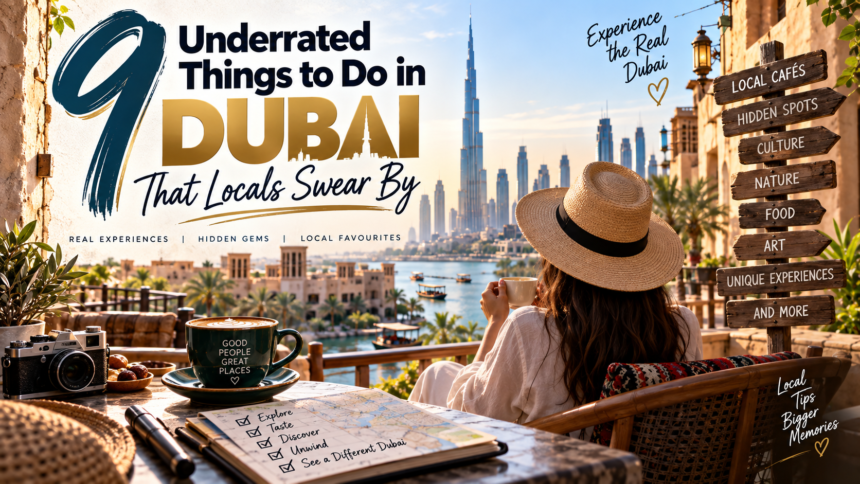
Underrated Things to Do in Dubai Beyond the Famous Attractions
Dubai is famous for its skyscrapers, luxury shopping malls, massive attractions and spectacular landmarks. Burj Khalifa, Palm Jumeirah, Dubai Mall and the city’s famous beaches naturally appear on almost every first-time visitor’s itinerary. But after living in or repeatedly visiting the city, many people begin looking beyond the headline attractions.
- Underrated Things to Do in Dubai Beyond the Famous Attractions
- Why Explore the Less Obvious Side of Dubai
- 1. Spend an Afternoon at Alserkal Avenue
- 2. Watch Flamingos at Ras Al Khor Wildlife Sanctuary
- 3. Explore Old Dubai Around Al Fahidi
- 4. Cycle Through the Al Qudra Desert
- 5. Escape to Hatta for a Mountain Day
- 6. Discover Dubai’s Creative Side in Al Quoz
- 7. Slow Down at Jameel Arts Centre and Jaddaf Waterfront
- 8. Explore Al Marmoom Desert Conservation Reserve
- 9. Spend a Quiet Evening Around Dubai Creek
- Which Dubai Experience Should You Choose
- Best Underrated Dubai Experiences by Interest
- How to Plan a More Local Dubai Day
- What to Pack for These Experiences
- Common Mistakes Visitors Make
- Underrated Things to Do in Dubai Quick Checklist
- Final Thoughts on Underrated Things to Do in Dubai
That is where Underrated Things to Do in Dubai become interesting.
The city has an entirely different personality away from its most photographed landmarks. You can watch flamingos with the Dubai skyline in the background, explore contemporary art inside converted warehouses, cycle through desert landscapes, wander through historic neighbourhoods or spend a day in the mountains of Hatta.
Some of these places are not exactly secret. In fact, several are officially promoted by Dubai’s tourism and government organisations. What makes them feel underrated is that they often receive less attention from first-time visitors compared with the city’s biggest attractions.
Dubai itself encourages visitors to explore the city beyond its conventional tourist experiences, highlighting neighbourhoods, hidden gems, arts and culture, nature and local experiences.
If you have already done the major attractions, or simply want to experience a quieter and more interesting side of the emirate, these nine options are worth adding to your list.
Underrated Things to Do in Dubai Beyond the Famous Attractions
Dubai is often presented as a city of extraordinary scale.
The tallest buildings are bigger, the malls are larger and the entertainment experiences are designed to make a strong first impression. That approach works well for first-time visitors, but it can also hide another side of the city.
There is a Dubai where people spend a morning cycling through the desert instead of shopping, where artists work from former industrial warehouses and where migratory birds gather in a wetland surrounded by skyscrapers.
There is also a Dubai where traditional neighbourhoods, creekside communities and small cultural spaces tell stories that cannot be understood from a luxury hotel lobby.
| Experience | Best For | Time Needed |
|---|---|---|
| Alserkal Avenue | Art and culture | 2 to 4 hours |
| Ras Al Khor | Wildlife and photography | 1 to 2 hours |
| Al Fahidi | Heritage and history | 2 to 4 hours |
| Al Qudra | Cycling and desert scenery | 2 to 4 hours |
| Hatta | Adventure and nature | Full day |
| Al Quoz | Creative experiences | 2 to 4 hours |
| Jameel Arts Centre | Contemporary art | 1 to 3 hours |
| Al Marmoom | Desert and wildlife | Half or full day |
| Dubai Creek | Heritage and evening walks | 2 to 4 hours |
Times are general planning estimates rather than official attraction durations.
Why Explore the Less Obvious Side of Dubai
The less obvious side of Dubai can offer something that the city’s biggest attractions sometimes cannot: a slower pace.
Instead of moving between crowded landmarks, visitors can spend more time in one neighbourhood or environment.
This can be particularly appealing for people who have already visited Dubai several times.
The biggest advantages include:
- More relaxed experiences
- Opportunities for photography
- Stronger cultural connections
- Outdoor activities
- Creative and artistic experiences
- Nature and wildlife
- Fewer conventional tourist attractions
- Better options for repeat visitors
Another advantage is variety.
You can begin the day surrounded by contemporary art, spend the afternoon in a historic neighbourhood and finish beside Dubai Creek.
That contrast is part of what makes the city interesting.
1. Spend an Afternoon at Alserkal Avenue
Alserkal Avenue in Al Quoz is one of Dubai’s most interesting creative districts.
The area developed from a former industrial setting into a major cultural destination containing contemporary art galleries, creative organisations, design spaces, food concepts and cultural venues.
Alserkal describes the district as a platform for emerging artists, creative entrepreneurs and homegrown initiatives. The organisation says the Avenue is now home to more than 100 creative organisations and has welcomed more than two million visitors each year.
That makes it a completely different experience from Dubai’s conventional luxury attractions.
What can you do there?
You can explore exhibitions, visit galleries, discover design spaces, stop for coffee or food and simply walk around the industrial lanes.
The district also hosts events and community programmes.
Its current programme includes creative spaces, galleries, food concepts and weekend activities, including markets and cultural activations.
Why it feels underrated
Visitors often associate Dubai with futuristic architecture.
Alserkal shows another version of the city, where warehouses become galleries and creative businesses become part of the urban landscape.
It is particularly suitable for:
- Art lovers
- Photographers
- Design enthusiasts
- Couples
- Solo travellers
- Repeat Dubai visitors
Best approach
Do not rush through the district.
Give yourself a few hours to explore different spaces rather than visiting one gallery and leaving.
Programmes and opening times can vary, so check the official schedule before visiting.
2. Watch Flamingos at Ras Al Khor Wildlife Sanctuary
One of the strangest and most memorable sights in Dubai is also one of the easiest to overlook.
Ras Al Khor Wildlife Sanctuary is a wetland surrounded by the city’s urban landscape.
Dubai Municipality describes it as a wetland of international importance covering about 10.13 square kilometres. The sanctuary supports hundreds of species, including migratory birds, with flamingos among its best-known attractions.
Think about that for a moment.
You can be surrounded by Dubai’s skyscrapers and, within the same general city environment, watch large groups of flamingos feeding in a natural wetland.
Dubai Municipality says the sanctuary can host thousands of greater flamingos and that winter bird numbers can reach around 25,000 across 201 recorded bird species.
Why visit
This is not another attraction built around a dramatic architectural structure.
The attraction is the wildlife itself.
The sanctuary has bird hides that allow visitors to observe birds from designated locations without entering sensitive habitat areas.
Dubai Municipality currently lists Flamingo, Lagoon and Mangrove hides, although availability can vary and the Mangrove Hide is currently listed as temporarily closed.
Photography tip
Bring binoculars if you have them.
A camera with a useful zoom lens can also make the experience much better.
Inside the bird hides, Dubai Municipality asks visitors to maintain a quiet environment and prohibits phones, pets, food, drinks and smoking in the hide areas.
Best time
Winter months are generally particularly interesting for migratory bird activity.
However, Dubai Municipality provides year-round visitor timings, with seasonal hours. Check the current schedule before travelling.
3. Explore Old Dubai Around Al Fahidi
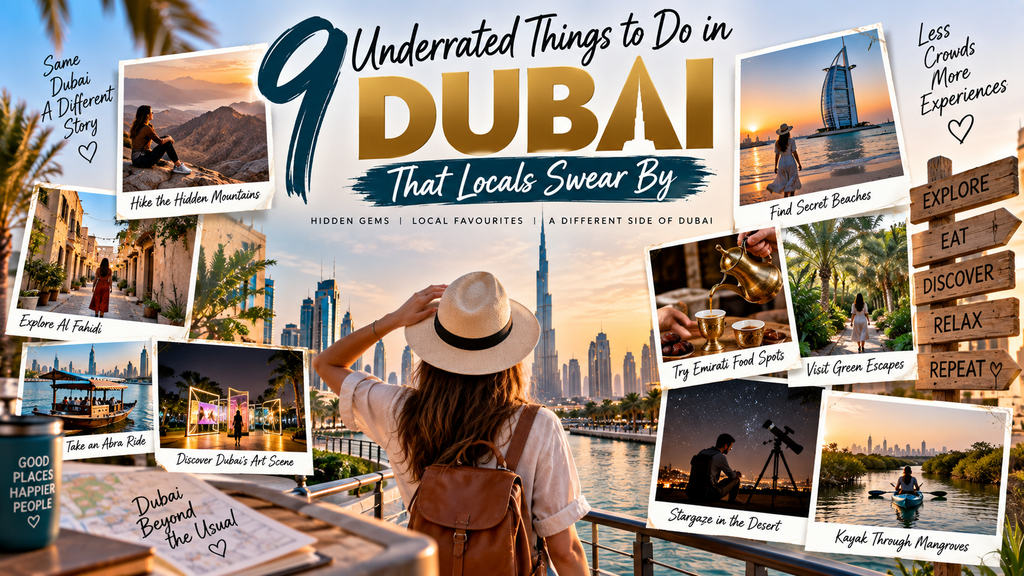
If your idea of Dubai is mostly skyscrapers and luxury malls, the Al Fahidi area can feel like another city.
Historic lanes, traditional architecture, courtyards and cultural spaces provide a very different perspective on Dubai’s past.
The area is particularly useful for visitors who want to understand how the city developed before the modern skyline transformed its global image.
What makes it special
The experience is not about completing a checklist of attractions.
It is about walking.
Take your time through the lanes, look at the architecture and visit cultural spaces when they are open.
You can combine the area with a broader Old Dubai itinerary involving Dubai Creek, traditional markets and an abra ride.
A simple half-day route
| Stop | Experience |
|---|---|
| Al Fahidi Historic District | Architecture and heritage |
| Cultural spaces | Local history |
| Dubai Creek | Waterfront views |
| Abra ride | Traditional transport |
| Deira souks | Markets and shopping |
The route works particularly well for people who want to understand the contrast between old and new Dubai.
Why repeat visitors should go
The city changes quickly, but historic neighbourhoods preserve stories that cannot be recreated inside a new development.
If you have already photographed the Burj Khalifa from every possible angle, spend a few hours photographing traditional doors, courtyards, narrow lanes and creekside life instead.
The visual contrast can be extraordinary.
4. Cycle Through the Al Qudra Desert
For travellers who want to experience Dubai outdoors, Al Qudra offers a very different activity from the city’s indoor attractions.
The desert cycling routes provide opportunities to exercise while experiencing open landscapes, desert scenery and wildlife.
This is particularly popular with residents who want an active morning away from traffic and high-rise buildings.
Who should consider it?
- Cyclists
- Fitness enthusiasts
- Outdoor photographers
- Couples
- Adventure travellers
You do not need to be an elite cyclist to appreciate the landscape, but preparation matters.
Dubai’s heat can be intense, particularly during warmer months.
Before going
Carry plenty of water and check weather conditions.
Use sun protection.
Make sure your bicycle is appropriate for the route.
Avoid attempting long distances without preparation.
If you are not an experienced cyclist, consider a shorter route or organised experience.
Why it feels different
There are few experiences quite like cycling through a desert while watching Dubai’s skyline disappear into the distance.
The city suddenly feels much larger and quieter.
Instead of looking down at Dubai from a skyscraper, you experience the landscape at ground level.
5. Escape to Hatta for a Mountain Day
Hatta is technically within the Emirate of Dubai but feels dramatically different from central Dubai.
The landscape changes from skyscrapers and highways to mountains, hiking routes, wadis and the turquoise waters of Hatta Dam.
Visit Dubai highlights hiking, kayaking, mountain biking and camping among Hatta’s outdoor experiences.
The official Hatta map also highlights Hatta Heritage Village, Hatta Wadi Hub, Hatta Dam, the Hatta Honeybee Garden and Discovery Centre and several accommodation options.
What can you do in Hatta?
You could:
- Kayak on Hatta Dam
- Hike mountain trails
- Try mountain biking
- Explore Hatta Heritage Village
- Visit Hatta Wadi Hub
- Stay overnight
- Enjoy a picnic
- Explore local nature
Hatta Dam is particularly appealing for visitors looking for a calm outdoor experience.
Kayaking allows you to see the rugged mountain landscape from the water rather than from the road.
Can you visit Hatta in one day?
Yes.
Visit Dubai has a dedicated two-day Hatta itinerary, but many of the major experiences can also be combined into a full-day trip depending on what you want to do.
Planning tip
Do not attempt to combine every Hatta activity into one day.
Choose one major adventure, one cultural stop and enough time to enjoy the landscape.
That makes the experience much less rushed.
6. Discover Dubai’s Creative Side in Al Quoz
Al Quoz is often associated with warehouses and industrial businesses.
But behind those industrial facades is one of the most interesting creative communities in Dubai.
Alserkal Avenue is the best-known example, but the wider Al Quoz area has become associated with galleries, studios, workshops, design businesses, cafés and creative projects.
This is one of the places where Dubai’s transformation is particularly visible.
A former industrial district has developed into a cultural and creative environment.
What makes Al Quoz different?
The area does not feel like a conventional tourist district.
That is exactly the attraction.
You may find:
- Contemporary art
- Photography
- Design
- Independent food concepts
- Creative studios
- Cultural events
- Workshops
Alserkal says its wider cultural ecosystem includes more than 100 creative organisations and has delivered thousands of public programmes.
Who should visit?
This area is particularly good for travellers who enjoy discovering how cities develop creative communities.
It is also a strong choice for people who have already seen Dubai’s major attractions.
Instead of asking, “What is Dubai’s biggest attraction?” you start asking, “What are people creating here?”
That produces a completely different travel experience.
7. Slow Down at Jameel Arts Centre and Jaddaf Waterfront
Dubai’s cultural scene extends beyond Alserkal Avenue.
Jameel Arts Centre in Jaddaf Waterfront provides another opportunity to explore contemporary art in a quieter setting.
The wider Jaddaf area is also interesting because of its waterfront location and cultural institutions.
For visitors who have spent several days moving between shopping malls, restaurants and major attractions, this can provide a slower afternoon.
How to make the most of it
Give yourself enough time to actually look at the exhibitions.
Do not treat a gallery as a quick photo stop.
Read the descriptions.
Think about the ideas behind the work.
Take a walk around the surrounding waterfront afterward.
This kind of experience works especially well when you want something cultural but do not want a full-day excursion outside the city.
Good for
| Visitor Type | Why |
|---|---|
| Art lovers | Contemporary exhibitions |
| Couples | Relaxed cultural outing |
| Solo travellers | Easy independent visit |
| Photographers | Architecture and art |
| Repeat visitors | Different side of Dubai |
The broader lesson is that Dubai’s cultural identity is still developing.
The city is not only building attractions for tourists. It is also creating spaces for artists, designers and cultural organisations.
8. Explore Al Marmoom Desert Conservation Reserve
Dubai’s desert is more than a backdrop for dune-bashing photographs.
Al Marmoom Desert Conservation Reserve provides an opportunity to experience the emirate’s desert environment in a more conservation-focused setting.
Dubai Municipality lists Al Marmoom among Dubai’s protected areas alongside Ras Al Khor, Hatta Mountain Reserve and other protected landscapes.
The reserve is particularly interesting for travellers who want to understand the natural environment around Dubai.
Possible experiences can include:
- Desert wildlife observation
- Nature photography
- Cycling
- Camel experiences
- Stargazing
- Guided desert activities
The experience depends on the operator and current programme, so visitors should check what is officially available before booking.
Why choose this instead of a standard desert safari?
A traditional desert safari can be entertaining and remains popular.
Al Marmoom appeals to people who want to slow down and pay more attention to the landscape.
The desert becomes the main attraction rather than simply the location for an activity.
Photography opportunity
Early morning and sunset can create beautiful light across the dunes.
However, visitors should remember that a conservation reserve is not an unrestricted playground.
Stay on permitted routes, follow operator instructions and avoid disturbing wildlife.
9. Spend a Quiet Evening Around Dubai Creek
Dubai Creek may not sound underrated.
It is one of the city’s best-known historic areas.
But many visitors experience the Creek only as a quick stop before moving on to another attraction.
That is where they miss the point.
The Creek becomes more interesting when you slow down.
Watch traditional boats move across the water.
Walk along the waterfront.
Explore the surrounding historic areas.
Visit the markets.
Take an abra ride.
Stop for food.
Observe how modern Dubai developed around this waterway.
Dubai Municipality notes that Ras Al Khor’s history is connected with traditional fishing and that the wider Creek environment played a role in the development of early Dubai settlements including Deira, Shindaga and Bur Dubai.
A simple evening plan
Start around the historic side of Dubai.
Spend time walking through the traditional neighbourhoods.
Cross the Creek by abra.
Explore Deira.
Finish with dinner.
This can be one of the most rewarding ways to spend an evening without booking an expensive attraction.
Why it works
The Creek shows Dubai as a living city rather than simply a collection of landmarks.
There are people commuting, trading, eating, working and meeting.
That everyday energy can sometimes be more memorable than another observation deck.
Which Dubai Experience Should You Choose
Not every traveller wants the same kind of hidden experience.
Use this quick guide.
| If You Want | Choose |
|---|---|
| Art | Alserkal Avenue |
| Wildlife | Ras Al Khor |
| History | Al Fahidi |
| Cycling | Al Qudra |
| Mountains | Hatta |
| Creative culture | Al Quoz |
| Contemporary art | Jameel Arts Centre |
| Desert nature | Al Marmoom |
| Heritage and atmosphere | Dubai Creek |
This also makes it easier to build a day around your interests.
For example, an art lover could combine Al Quoz with Jaddaf.
A history enthusiast could spend the day around Al Fahidi and Dubai Creek.
An outdoor traveller could choose Al Qudra or Hatta.
Best Underrated Dubai Experiences by Interest
For couples
Choose Alserkal Avenue, Jaddaf Waterfront or Dubai Creek.
These places allow you to spend time together without constantly moving between major attractions.
For families
Hatta can provide a mixture of outdoor activities, nature and cultural experiences.
Ras Al Khor can also be interesting for children who enjoy wildlife.
For photographers
Ras Al Khor offers wildlife against a remarkable urban backdrop.
Al Fahidi provides traditional architecture.
Al Quoz offers industrial and creative visuals.
Al Qudra provides open desert landscapes.
For solo travellers
Alserkal Avenue, Al Fahidi and Dubai Creek are particularly easy to explore at your own pace.
For adventure seekers
Hatta and Al Qudra offer more active experiences.
For first-time visitors
Combine one major attraction with one underrated experience.
You do not need to ignore Burj Khalifa or Palm Jumeirah.
Instead, balance them with something different.
How to Plan a More Local Dubai Day
A good alternative itinerary does not need to be complicated.
Option 1: Culture Day
Morning: Al Fahidi
Afternoon: Dubai Creek and Deira
Evening: Traditional dinner
Option 2: Art Day
Morning: Alserkal Avenue
Afternoon: Al Quoz creative spaces
Evening: Jaddaf Waterfront
Option 3: Nature Day
Morning: Ras Al Khor
Afternoon: Al Qudra
Evening: Desert sunset
Option 4: Mountain Day
Morning: Drive to Hatta
Midday: Hatta Dam
Afternoon: Hiking or kayaking
Evening: Return to Dubai or stay overnight
Option 5: Desert Day
Morning: Al Marmoom
Afternoon: Desert experience
Evening: Stargazing or sunset activity
The key is not trying to see everything.
Choose one theme and enjoy it properly.
What to Pack for These Experiences
Dubai’s weather can change how enjoyable an outdoor experience becomes.
For outdoor activities, consider:
- Reusable water bottle
- Sunscreen
- Sunglasses
- Hat
- Comfortable walking shoes
- Lightweight clothing
- Power bank
- Camera or binoculars
- Small first-aid kit
For Hatta or hiking activities, proper footwear becomes particularly important.
For Ras Al Khor, binoculars can make wildlife observation much better.
For Al Fahidi and Creek walks, comfortable shoes are more useful than fashionable footwear.
What about summer?
Outdoor activities can become uncomfortable during extreme heat.
Plan outdoor experiences around cooler periods of the day and check current weather conditions before leaving.
At Ras Al Khor, Dubai Municipality provides seasonal opening hours, with earlier opening during the hotter months.
Common Mistakes Visitors Make
Trying to see too much
Dubai looks compact on a map, but traffic and distance can consume significant time.
Choose experiences that are geographically close to one another.
Ignoring the weather
A desert cycling route at midday in extreme heat is very different from the same route during cooler conditions.
Treating wildlife areas like normal parks
Ras Al Khor is a protected ecosystem.
Visitors must stay within designated areas and follow quiet-zone rules.
Visiting creative districts without checking programmes
Some galleries and cultural spaces have specific opening schedules.
Check current information before travelling.
Turning every experience into a photo session
Some places become more enjoyable when you put the camera away for a few minutes.
Assuming hidden means completely empty
Popular local experiences can still become busy on weekends and during pleasant weather.
If you want a quieter visit, choose early morning or less busy periods where possible.
Underrated Things to Do in Dubai Quick Checklist
Before heading out, ask yourself:
Do I want culture?
Choose Al Fahidi, Alserkal or Jaddaf.
Do I want nature?
Choose Ras Al Khor or Al Marmoom.
Do I want adventure?
Choose Hatta or Al Qudra.
Do I want a relaxed evening?
Choose Dubai Creek.
Do I want something creative?
Choose Alserkal Avenue or Al Quoz.
Do I want wildlife photography?
Choose Ras Al Khor.
Do I want to escape the city?
Choose Hatta.
Do I want a more traditional Dubai experience?
Choose Al Fahidi and Dubai Creek.
Do I want something completely different from a mall?
Almost any option on this list will work.
Final Thoughts on Underrated Things to Do in Dubai
The most interesting Underrated Things to Do in Dubai are not necessarily places that nobody knows about.
Some are well established.
Some are officially promoted.
Some are increasingly popular with residents and repeat visitors.
What makes them underrated is that they are often overshadowed by Dubai’s biggest attractions.
A visitor who spends the entire trip moving between skyscrapers, malls and luxury resorts can leave without seeing some of the city’s most distinctive character.
Alserkal Avenue reveals Dubai’s creative side.
Ras Al Khor shows that a major international city can exist alongside an important wetland ecosystem.
Al Fahidi and Dubai Creek connect visitors with the city’s earlier history.
Al Qudra offers open desert landscapes.
Hatta provides mountains, water and outdoor adventure.
Jaddaf introduces another part of Dubai’s growing cultural scene.
Al Marmoom demonstrates the importance of desert conservation.
Together, these places tell a more complete story about Dubai.
The city is not only about how high its buildings are or how luxurious its hotels can become.
It is also about art, wildlife, history, community, nature and the landscapes that existed long before the modern skyline.
For first-time visitors, these experiences can be added alongside the famous attractions.
For residents and repeat travellers, they can become a reason to explore familiar parts of the emirate again.
The best approach is simple.
Choose one place you have never visited.
Give yourself enough time to actually experience it.
Look beyond the obvious photo.
Talk to people where appropriate.
Walk instead of rushing.
And allow Dubai to surprise you outside the places you already know.
That is often where the city’s most memorable experiences begin.
Do follow us on Instagram
Read More – Best Cities for Business and Investment in 2026