


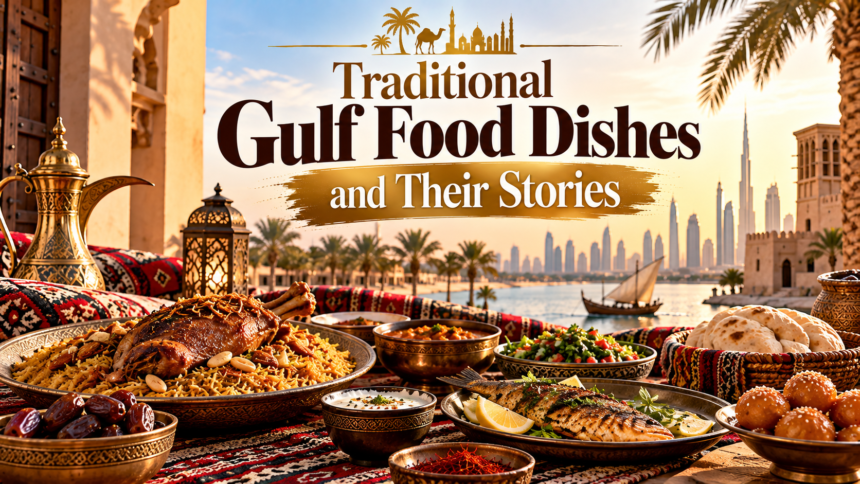
Ultimate Guide to Traditional Gulf Food Dishes and Their Stories: A Journey Through Arabian Cuisine
Traditional Gulf food dishes represent much more than delicious meals. They tell stories of ancient trade routes, desert journeys, pearl diving, fishing communities, family gatherings, and the generous hospitality that defines Arabian culture. Across the Gulf region, including the United Arab Emirates, Saudi Arabia, Qatar, Oman, Bahrain, and Kuwait, food has long played an important role in bringing people together and preserving cultural traditions.
- 1. What Is Gulf Cuisine, and How Did It Develop?
- 2. What Is Machboos, and Why Is It a Favourite Gulf Dish?
- 3. What Is Kabsa, and What Is Its Story in Saudi Arabia?
- 4. Why Is Harees Important During Ramadan and Special Occasions?
- 5. What Is Thareed, and Why Does It Have a Special Place in Gulf Culture?
- 6. What Makes Omani Shuwa One of the Gulf’s Most Celebrated Foods?
- 7. What Is Balaleet, and Why Is Sweet-and-Savoury Food Popular in the Gulf?
- 8. What Is Madrouba, and How Is It Traditionally Prepared?
- 9. Why Is Seafood So Important in Traditional Gulf Cuisine?
- 10. What Are Bahrain’s Traditional Food Specialities?
- 11. What Traditional Dishes Should Visitors Try in Kuwait?
- 12. What Are Qatar’s Most Popular Traditional Gulf Dishes?
- 13. Why Are Dates and Arabic Coffee Essential to Gulf Hospitality?
- 14. Which Traditional Gulf Desserts Should Food Lovers Try?
- 15. How Did Trade Influence the Flavours of Gulf Food?
- 16. How Does Gulf Food Reflect Family Life and Hospitality?
- 17. How Is Traditional Gulf Cuisine Changing Today?
Gulf cuisine is known for its fragrant rice dishes, slow-cooked meats, freshly caught seafood, aromatic spices, sweet desserts, dates, and traditional Arabic coffee. Ingredients such as cardamom, saffron, cinnamon, dried limes, cloves, and turmeric give many dishes their distinctive flavours. However, the ingredients and cooking methods differ from one country to another, creating a rich variety of regional specialities.
The history of Gulf cuisine also reflects centuries of interaction with India, Persia, East Africa, and other parts of the Middle East. Merchants travelling across the Arabian Sea introduced new ingredients and culinary techniques, while local communities developed recipes suited to their environment and available resources.
But what makes these dishes truly memorable is the history behind them. From the comforting taste of harees during Ramadan to the festive aroma of Omani shuwa, traditional Gulf foods connect modern families with generations of cultural heritage.
1. What Is Gulf Cuisine, and How Did It Develop?
Gulf cuisine refers to the traditional food and cooking practices of the Arabian Gulf countries. Although each country has its own specialities, many regional dishes share common ingredients, cooking techniques, and cultural influences.
Historically, life in the Gulf revolved around several important activities, including fishing, pearl diving, livestock farming, date cultivation, and maritime trade. Coastal communities relied heavily on fish and seafood, while desert communities used ingredients such as dates, milk, meat, and grains.
Rice became a particularly important ingredient as trade expanded between the Arabian Peninsula and Asia. Spices arriving through maritime trading networks gradually became part of local cooking traditions. As a result, many traditional Gulf rice dishes combine locally available meat or seafood with fragrant spices and long-grain rice.
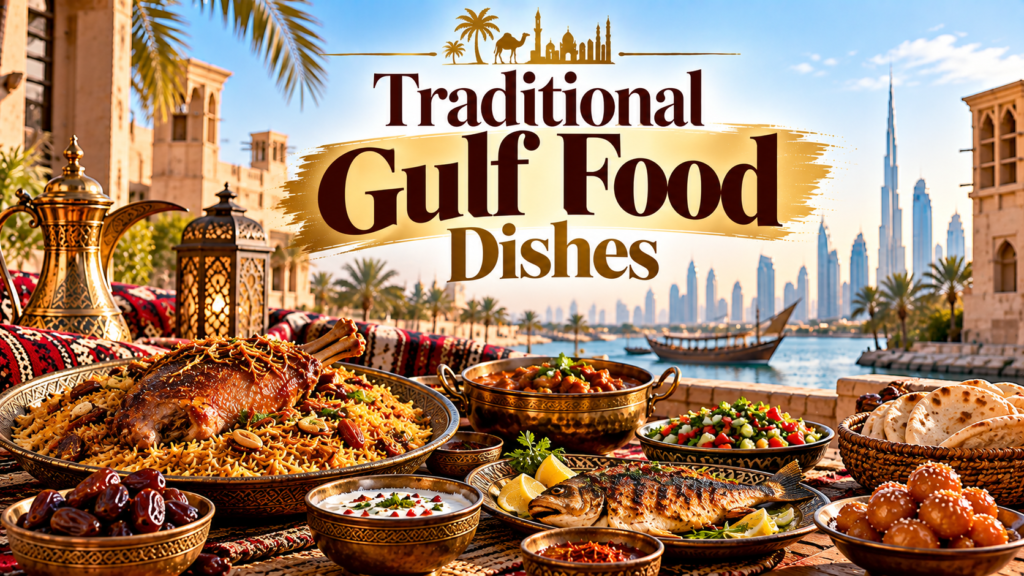
Common ingredients in Gulf cuisine include:
- Rice, wheat, and other grains used in everyday meals and traditional recipes.
- Lamb, goat, chicken, and occasionally camel meat in regional meat dishes.
- Fish, prawns, and other seafood in coastal communities.
- Dates, honey, and flour in traditional desserts.
- Cardamom, saffron, cinnamon, turmeric, cloves, and dried limes for flavour.
- Yoghurt, ghee, and clarified butter in selected dishes.
Today, Gulf cuisine continues to evolve as restaurants, home cooks, and chefs combine traditional recipes with modern cooking methods. Nevertheless, many families still prepare heritage dishes during religious occasions, weddings, national celebrations, and family gatherings.
2. What Is Machboos, and Why Is It a Favourite Gulf Dish?
Machboos is one of the best-known traditional Gulf food dishes. Popular in the UAE, Bahrain, Qatar, and Kuwait, it is a fragrant rice preparation typically cooked with chicken, lamb, fish, or other seafood.
The dish generally consists of rice cooked with seasoned meat or seafood, onions, tomatoes, and a mixture of aromatic spices. Depending on the regional recipe, ingredients may include cardamom, cinnamon, cloves, turmeric, black pepper, and dried lime, which adds a distinctive tangy flavour.
Machboos is closely associated with family meals and hospitality. Large portions are often prepared when relatives and guests gather, making it a practical and satisfying dish for sharing.
Although recipes differ across the Gulf, the cooking process commonly involves preparing the meat or seafood with spices before cooking the rice in the resulting seasoned stock. This allows the rice to absorb the flavours of the other ingredients.
Why is machboos so culturally important? Its popularity reflects the Gulf tradition of preparing generous meals for guests and celebrating special occasions around a shared dish. The ingredients also demonstrate the region’s historical connections to international spice and rice trade.
In modern Gulf households, machboos remains a favourite for weekend lunches, festive gatherings, and celebrations. It is also a popular introduction for visitors who want to discover authentic Arabian cuisine.
3. What Is Kabsa, and What Is Its Story in Saudi Arabia?
Kabsa is one of Saudi Arabia’s most recognisable traditional dishes. It is a seasoned rice meal prepared with chicken, lamb, or other meat and cooked with spices, onions, and tomatoes.
Although kabsa and machboos share similarities, their spice combinations and preparation methods vary by household and region. Some recipes use dried lime, while others emphasise cinnamon, cardamom, black pepper, cloves, or bay leaves. Raisins, almonds, or other garnishes may also be added.
Kabsa has a strong association with Saudi family hospitality. It is frequently served at large lunches, weddings, gatherings, and celebratory meals. Traditionally, a large platter placed at the centre of the dining area encourages people to share food and conversation.
The story of kabsa is closely linked to the importance of rice and meat in Arabian hospitality. Rice became increasingly central to regional cuisine through trade, while locally available meat and spices shaped the dish into the familiar meal enjoyed today.
Why do many visitors consider kabsa an essential Saudi food experience? Its balanced combination of fragrant rice, tender meat, and warm spices offers an accessible introduction to the flavours of the Arabian Peninsula.
4. Why Is Harees Important During Ramadan and Special Occasions?
Harees is a traditional Gulf dish prepared primarily from wheat and meat, usually chicken or lamb. The ingredients are cooked slowly with water until they form a soft, thick, porridge-like mixture.
The preparation requires patience because the wheat must soften thoroughly and combine with the meat. Some cooks use traditional methods to achieve a smooth consistency, while modern households may use pressure cookers or other equipment to shorten the cooking time.
Harees is especially popular during Ramadan and on festive occasions such as Eid. It is also served at weddings and community gatherings in parts of the UAE, Qatar, Saudi Arabia, and other Gulf countries.
What makes harees different from ordinary wheat dishes? Its texture, slow cooking process, and simple ingredients create a comforting meal that is both filling and deeply connected to family traditions.
The dish also reflects an older style of Arabian cooking in which grains and meat were transformed into nourishing meals using relatively few ingredients. In many families, preparing harees remains a way of maintaining a connection with previous generations.
Recipes vary, but harees is often finished with ghee or clarified butter. Its mild flavour makes it a distinctive contrast to the stronger spices found in dishes such as machboos and kabsa.
5. What Is Thareed, and Why Does It Have a Special Place in Gulf Culture?
Thareed is a traditional Arabian dish made with thin bread layered or served with a meat and vegetable stew. The bread absorbs the rich cooking liquid, creating a soft, flavourful meal.
Depending on the recipe, thareed may contain lamb or chicken, potatoes, carrots, pumpkin, tomatoes, and other vegetables. The stew is usually seasoned with a selection of spices, although the precise combination differs between households and countries.
Thareed is particularly associated with Ramadan meals and traditional Emirati cuisine. It is also enjoyed in Qatar and other parts of the Arabian Peninsula.
Why has thareed remained popular for generations? It combines everyday ingredients in a practical way, making it suitable for family meals and communal dining. The bread absorbs the stew’s flavours, while the meat and vegetables create a hearty dish.
Thareed also demonstrates the importance of bread in traditional Gulf food culture. Before modern kitchens and convenience foods became widespread, bread was a fundamental part of daily meals. Serving it with a stew provided a satisfying way to make the most of available ingredients.
Today, thareed continues to appear on traditional dining tables, particularly during Ramadan, when families seek familiar dishes that connect them with their cultural heritage.
6. What Makes Omani Shuwa One of the Gulf’s Most Celebrated Foods?
Omani shuwa is a traditional celebratory dish made from meat, often lamb or goat, marinated with spices and cooked slowly for many hours.
In traditional preparations, the seasoned meat is wrapped in protective leaves or other suitable materials and placed in an underground pit containing hot embers. The pit is covered, allowing the meat to cook slowly and develop a tender texture and rich flavour.
The preparation of shuwa can involve substantial community participation. Families may prepare the dish ahead of important celebrations, including Eid al-Adha, when relatives and neighbours gather and share food.
What makes shuwa special is not only its flavour but also the time and cooperation involved in preparing it. The traditional cooking process connects modern Omanis with older methods of preparing food for important occasions.
Spice mixtures vary, but may include garlic, coriander, cumin, pepper, and other seasonings. After cooking, the tender meat is often served with rice or other accompaniments.
Shuwa also illustrates the diversity of Gulf cuisine. While rice dishes dominate many regional menus, Omani shuwa highlights a different culinary tradition centred on slow cooking, marination, and communal celebration.
For visitors exploring Omani food, tasting shuwa offers an opportunity to experience a dish closely associated with the country’s hospitality and festive culture.
7. What Is Balaleet, and Why Is Sweet-and-Savoury Food Popular in the Gulf?
Balaleet is a traditional Gulf breakfast dish made with thin vermicelli noodles, sugar, cardamom, saffron, and other flavourings. It is often served with an egg omelette or fried egg placed on top.
The dish combines sweetness with savoury elements, creating a distinctive contrast that makes it different from many conventional breakfast foods.
Balaleet is particularly popular in the UAE, Bahrain, Kuwait, and Qatar, although recipes vary across the region. Some versions are strongly flavoured with saffron and cardamom, while others use different amounts of sugar or rose water.
Why is balaleet associated with traditional breakfasts and celebrations? Its ingredients are relatively simple, but its unusual flavour combination makes it a memorable part of regional food culture. Families may prepare it for breakfast during holidays, special mornings, or festive gatherings.
The use of vermicelli also reflects the wider movement of ingredients and cooking ideas across trade-connected regions. Over time, local cooks adapted available ingredients to suit Gulf tastes and traditions.
Balaleet is a useful reminder that traditional Arabian cuisine is not limited to savoury rice and meat dishes. Sweet breakfasts, breads, desserts, and small dishes are equally important to the region’s diverse culinary identity.
8. What Is Madrouba, and How Is It Traditionally Prepared?
Madrouba is a comforting Gulf dish prepared with rice, meat or chicken, and spices. The ingredients are cooked together until the rice becomes extremely soft, after which the mixture is beaten or stirred to produce a thick, smooth consistency.
The name is associated with the Arabic word for beating or pounding, reflecting the technique traditionally used to achieve the dish’s characteristic texture.
Madrouba is enjoyed in parts of the UAE, Qatar, Bahrain, and other Gulf communities. Recipes differ, and some versions include additional ingredients or use different proportions of meat and rice.
The slow cooking process allows the ingredients to blend together, producing a rich dish that is often served warm. Depending on local preference, the preparation may be finished with ghee or additional seasoning.
Why does madrouba remain a valued traditional food? It represents a style of cooking in which simple ingredients are transformed through time, patience, and technique rather than complicated presentation.
Madrouba is especially suitable for family meals and occasions when a soft, satisfying dish is preferred. Its preparation also reflects a broader tradition of grain-based meals across the Arabian Peninsula.
9. Why Is Seafood So Important in Traditional Gulf Cuisine?
Seafood has played a major role in Gulf food culture for centuries. Before oil transformed the region’s economies, fishing and pearl diving were important sources of livelihood for many coastal communities.
Fish, prawns, and other seafood provided essential food for families living near the Arabian Gulf and the Gulf of Oman. Traditional cooks developed recipes using local catches, rice, spices, and other available ingredients.
Popular seafood preparations include grilled fish, fish machboos, seasoned prawns, and regional rice dishes served with freshly caught seafood. Depending on the country and coastal location, cooks may use kingfish, hammour, sardines, or other locally available species.
In Bahrain, fish has long been an important part of traditional coastal food culture. Omani cuisine also reflects the country’s extensive coastline and historical maritime connections. In the UAE and Qatar, seafood remains part of both traditional home cooking and contemporary restaurant menus.
How did maritime trade influence seafood dishes? Traders travelling across the Indian Ocean connected Gulf ports with South Asia, East Africa, and Persia. These exchanges contributed to the movement of ingredients, spices, and culinary ideas, helping create the region’s varied food traditions.
Today, seafood dishes remain an important link between Gulf communities and their maritime past. They also offer visitors a different perspective on Arabian cuisine beyond the familiar rice-and-meat platter.
10. What Are Bahrain’s Traditional Food Specialities?
Bahraini cuisine reflects the country’s island geography, trading history, and connections with neighbouring Gulf communities.
One popular speciality is muhammar, a sweet rice dish often served with fish. Its characteristic sweetness may come from dates or sugar, depending on the recipe. The combination of sweet rice and savoury seafood illustrates the variety of flavour pairings found in Gulf cooking.
Bahrain is also known for machboos, a seasoned rice dish prepared with meat or fish. Because the country has a strong maritime heritage, seafood versions have a particularly natural place in its culinary traditions.
Another important speciality is Bahraini halwa, a rich sweet preparation made with ingredients that may include sugar, starch, ghee, saffron, rose water, and nuts. Its colour, texture, and precise recipe vary between producers.
Why is Bahraini cuisine distinctive? Its food traditions combine familiar Arabian ingredients with influences developed through centuries of commercial and cultural exchange.
The country’s historical position along maritime trading routes helped connect local communities with merchants and travelers from other regions. These relationships shaped not only its economy but also its food culture.
Traditional Bahraini dishes continue to be served during family gatherings, festive occasions, and visits with friends, preserving a culinary heritage that remains central to the country’s identity.
11. What Traditional Dishes Should Visitors Try in Kuwait?
Kuwaiti cuisine shares many characteristics with other Gulf food traditions but also has distinctive specialities shaped by the country’s history and coastal environment.
Mutabbaq samak is a well-known Kuwaiti fish-and-rice dish. It is commonly prepared with fish served alongside seasoned rice, with the precise preparation varying by recipe. The dish reflects the historical importance of fishing and maritime trade in Kuwait.
Kuwaiti machboos is another favourite, often made with chicken, lamb, or fish. Aromatic spices and carefully cooked rice create the flavourful combination that makes the dish popular for family gatherings.
Margoog is another traditional dish found in Kuwaiti and neighbouring Arabian food traditions. It typically consists of a stew containing vegetables and pieces of thin dough, sometimes accompanied by meat. The dough cooks in the broth, absorbing its flavour and creating a hearty meal.
What do these foods reveal about Kuwaiti culture? They demonstrate how coastal ingredients, grain-based meals, and shared cooking traditions developed into a distinctive national cuisine.
For visitors, exploring Kuwait’s traditional food is a way to understand the country’s history beyond its modern skyline. These dishes preserve memories of fishing communities, home kitchens, and the importance of welcoming guests with generous meals.
12. What Are Qatar’s Most Popular Traditional Gulf Dishes?
Qatari cuisine shares many ingredients and cooking techniques with neighbouring Gulf countries, but it also has specialities associated with local celebrations and family traditions.
Machboos is among the most recognisable dishes, often prepared with lamb, chicken, or fish. Its combination of rice and spices makes it suitable for large family meals and festive occasions.
Thareed is another important dish, particularly during Ramadan. Its combination of bread, vegetables, and meat reflects the traditional use of simple ingredients to create a satisfying communal meal.
Madrouba is also enjoyed in Qatar, where its soft texture and rich flavour make it a familiar comfort food. Sweet preparations such as balaleet may be served for breakfast or during special occasions.
Why does Qatari food culture place such importance on shared meals? Hospitality has long been an important social value across the Arabian Peninsula. Serving food allows hosts to demonstrate generosity, strengthen relationships, and welcome visitors.
Qatar’s historical links with fishing, pearling, and maritime trade also contributed to its culinary development. Seafood, rice, meat, and spices became important elements of the local diet, while regional exchanges helped recipes evolve over time.
Today, traditional Qatari food is enjoyed in homes, restaurants, heritage events, and national celebrations. These dishes help preserve the country’s cultural identity while introducing visitors to the flavours of the Gulf.
13. Why Are Dates and Arabic Coffee Essential to Gulf Hospitality?
Dates and Arabic coffee are among the most recognisable symbols of Gulf hospitality. They are frequently served to guests in homes, offices, cultural gatherings, and traditional reception settings.
Date palms have been cultivated across parts of the Arabian Peninsula for centuries. Dates provided a practical source of nourishment because they are energy-rich, store well, and can be incorporated into a variety of foods.
They are eaten fresh or dried and may be used in desserts, drinks, and other preparations. Dates are also an important part of Ramadan traditions, when many Muslims break their fast with dates and water.
Arabic coffee, commonly known as gahwa in Gulf settings, is usually prepared with lightly roasted coffee beans and spices such as cardamom. Some regional preparations include additional flavourings, and the strength and colour vary according to local preferences.
Why are coffee and dates offered together? Serving them expresses welcome, respect, and generosity. In traditional settings, coffee may be poured from a distinctive pot into small cups, with hosts offering additional servings to their guests.
The ritual surrounding coffee is as important as the drink itself. It reflects a wider cultural tradition in which receiving visitors warmly is considered an essential part of good manners.
For travellers, experiencing Arabic coffee and dates provides a simple yet meaningful introduction to Gulf culture.
14. Which Traditional Gulf Desserts Should Food Lovers Try?
Gulf desserts are known for their sweetness, fragrant spices, and use of ingredients such as dates, flour, sugar, honey, nuts, saffron, and rose water.
One of the most popular sweets is luqaimat, small fried dough balls traditionally coated with date syrup or drizzled with syrup or honey. They are crisp on the outside and soft inside, making them especially popular during Ramadan and festive occasions.
Another favourite is khanfaroosh, a traditional Gulf sweet made from a batter that may contain flour, eggs, sugar, cardamom, and saffron. Recipes differ across households, but the result is typically a fragrant, lightly sweetened treat.
Halwa is another important part of Gulf dessert culture. Different versions are found across the region, including distinctive Omani and Bahraini preparations. These sweets may contain sugar, starch, nuts, ghee, rose water, or other flavourings.
Why are desserts important in Gulf celebrations? Sweet dishes are often associated with generosity, family gatherings, religious festivals, and welcoming guests. Their preparation can also be a way for families to pass down recipes and cooking techniques.
Traditional desserts offer visitors a chance to discover the sweeter side of Arabian cuisine and understand how food contributes to the atmosphere of celebration.
15. How Did Trade Influence the Flavours of Gulf Food?
The Arabian Gulf has long been connected to international trade networks linking the Arabian Peninsula with India, Persia, East Africa, and other regions.
For centuries, merchants travelled across the Indian Ocean carrying goods such as spices, rice, textiles, and other valuable products. Ports along the Gulf became places where people, languages, customs, and ingredients came together.
These exchanges helped shape regional cooking. Rice became central to many celebratory dishes, while spices such as cardamom, cinnamon, cloves, and saffron added complexity to local recipes.
Connections with South Asia contributed to the movement of rice and spice traditions, while Persian and other regional culinary practices also influenced cooking across the Gulf. Coastal communities developed food traditions reflecting their contact with maritime travellers and neighbouring societies.
Does this mean Gulf cuisine is simply a mixture of foreign foods? No. Local communities adapted ingredients and techniques to their own tastes, environments, and cultural values. The resulting dishes became part of a distinctive Gulf culinary identity.
The history of Gulf food is therefore a story of both continuity and exchange. Traditional recipes preserve local heritage while demonstrating how centuries of travel and trade helped shape the flavours enjoyed today.
16. How Does Gulf Food Reflect Family Life and Hospitality?
Food occupies an important place in family life across the Gulf. Meals are often opportunities to bring relatives together, welcome visitors, celebrate achievements, and maintain relationships.
Large rice platters, slow-cooked meat dishes, traditional stews, and sweets are frequently prepared for gatherings. The amount and type of food depend on the occasion, household preferences, and regional customs.
Hospitality is especially visible when guests are welcomed with Arabic coffee, dates, and refreshments. At larger meals, hosts may prepare several dishes to ensure everyone has enough to eat.
Traditional cooking also provides a way to preserve family memories. Recipes passed between generations help younger family members understand the ingredients, techniques, and cultural practices associated with their heritage.
During Ramadan and Eid, food often takes on additional significance. Families gather for iftar, share special meals, and prepare dishes associated with the season. Weddings and other celebrations may feature large platters intended for relatives, neighbours, and guests.
Although modern lifestyles have changed how people shop and cook, traditional food continues to play a valuable role in maintaining social connections across Gulf communities.
17. How Is Traditional Gulf Cuisine Changing Today?
Traditional Gulf cuisine continues to develop as chefs, restaurants, and home cooks explore new ingredients, equipment, and presentation styles.
Many restaurants serve classic dishes such as machboos, kabsa, shuwa, and harees while adapting portion sizes and preparation methods to modern dining preferences. Some chefs experiment with contemporary presentation, lighter cooking techniques, or new combinations of traditional ingredients.
At the same time, cultural festivals, heritage restaurants, cooking demonstrations, and family recipes help preserve older food traditions.
Food tourism has also increased interest in regional specialities. Visitors often want to experience authentic local dishes rather than relying entirely on international restaurant menus. This interest creates opportunities for traditional food businesses and helps introduce Gulf cuisine to a wider audience.
Digital platforms have made traditional recipes easier to share. Home cooks can document family methods, publish cooking videos, and introduce regional dishes to people who may never have encountered them before.
However, preserving traditional food involves more than reproducing a recipe. It also means understanding the history, cultural meaning, and social customs associated with a dish.
The future of Gulf cuisine will likely involve a balance between innovation and preservation, allowing traditional flavours to remain relevant while respecting their cultural origins.
Conclusion: Why Should Everyone Explore Traditional Gulf Food Dishes?
Traditional Gulf food dishes offer a delicious way to explore the history, culture, and hospitality of the Arabian Peninsula. From fragrant machboos and Saudi kabsa to comforting harees, bread-based thareed, and celebratory Omani shuwa, each dish reflects the experiences and traditions of the communities that created it.
Seafood dishes preserve memories of fishing and pearl-diving communities, while dates and Arabic coffee continue to express generosity and welcome. Desserts such as luqaimat, regional halwa, and khanfaroosh bring sweetness to celebrations and family gatherings.
Gulf cuisine also demonstrates how international trade shaped local food culture. Rice, spices, and cooking techniques travelled across maritime routes, but local cooks transformed them into distinctive dishes rooted in Arabian traditions.
For food enthusiasts, travellers, and anyone interested in Middle Eastern culture, discovering traditional Gulf food is an opportunity to understand the region through its flavours and stories.
Whether enjoyed in a family home, a traditional restaurant, or a cultural festival, these dishes remind us that food is more than nourishment. It is a living expression of identity, history, hospitality, and the connections between generations.
Do follow us on Instagram
Read More – Traditional Gulf Cuisine Delicious & Local Food Explored