Latest Innovations, Trends and the Future of Mobile Phones: How Is Smartphone Technology Evolving?
Smartphones have become an essential part of modern life, transforming how people communicate, work, learn, shop, travel and entertain themselves. What once started as a simple communication device has evolved into a powerful pocket-sized computer capable of performing thousands of tasks. From artificial intelligence (AI) and advanced camera systems to foldable displays, faster connectivity and improved battery technology, smartphone technology is progressing at an extraordinary pace. Every year, manufacturers introduce new features designed to make mobile devices smarter, faster, more efficient and more convenient.
- 1. How Has Smartphone Technology Changed Over the Years?
- 2. How Is Artificial Intelligence Transforming Smartphone Technology?
- 3. Why Is 5G Connectivity Important for the Future of Smartphones?
- 4. How Are Smartphone Cameras Becoming More Advanced?
- 5. Are Foldable Smartphones Changing the Mobile Industry?
- 6. How Are Smartphone Processors Becoming Faster and More Efficient?
- 7. How Is Battery Technology Improving in Modern Smartphones?
- 8. Are Smartphone Displays Becoming More Advanced?
- 9. How Is Smartphone Security Becoming Stronger?
- 10. How Are Smartphones Supporting Augmented Reality and Virtual Reality?
- 11. Why Are Smartphones Becoming Important for Digital Payments?
- 12. How Are Smartphones Changing Healthcare and Fitness?
- 13. Are Smartphones Becoming More Environmentally Friendly?
- 14. How Are Smartphones Becoming More Connected With Smart Devices?
- 15. What Role Will Cloud Technology Play in Future Smartphones?
- 16. What Are the Biggest Smartphone Technology Trends to Watch in the Coming Years?
- 17. Will Smartphones Replace Computers in the Future?
- 18. What Should Consumers Consider Before Buying a Future-Ready Smartphone?
- 19. What Challenges Does the Smartphone Industry Still Face?
- 20. What Does the Future of Smartphone Technology Look Like?
But how is smartphone technology evolving, and what innovations are shaping the future of mobile phones? How are artificial intelligence, 5G connectivity, advanced processors and flexible displays changing the smartphone experience? As consumer expectations continue to grow, the smartphone industry is exploring new possibilities that could redefine how people interact with technology.
Let’s explore the latest smartphone technology innovations, emerging mobile trends and technological developments that are transforming the future of smartphones.
1. How Has Smartphone Technology Changed Over the Years?
Smartphone technology has experienced remarkable development over the past two decades. Early mobile phones were primarily designed for calling and sending text messages. Later, touchscreen displays, internet connectivity, mobile applications and advanced operating systems transformed mobile phones into multifunctional devices.
The introduction of smartphones with powerful processors and high-resolution displays created opportunities for mobile gaming, video streaming, online shopping and social networking. Today, smartphones can perform tasks that previously required separate computers, cameras, navigation systems and entertainment devices.
Modern smartphones combine hardware and software innovations to deliver a connected digital experience. They allow users to manage professional responsibilities, access educational resources, conduct financial transactions and communicate with people worldwide.
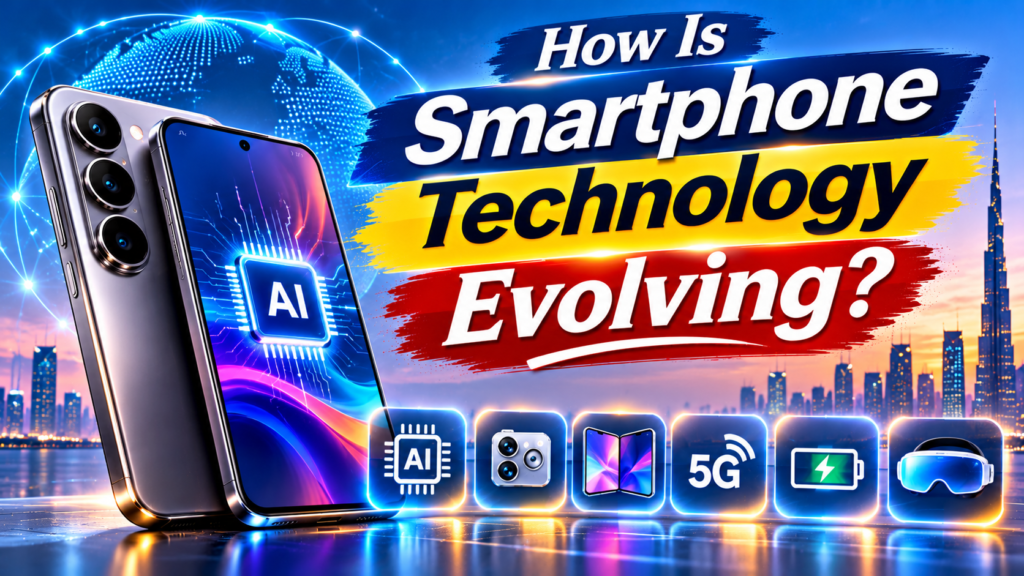
Some major developments in smartphone technology include:
- Touchscreen displays replacing traditional physical keyboards.
- High-speed mobile internet and advanced wireless connectivity.
- High-resolution cameras with professional photography features.
- Artificial intelligence-powered applications and assistants.
- Biometric security systems, including facial recognition and fingerprint sensors.
- Foldable and flexible display technology.
- Advanced mobile processors for demanding applications.
- Cloud-based services and wireless device integration.
These developments demonstrate how smartphones have evolved from basic communication tools into powerful digital companions.
2. How Is Artificial Intelligence Transforming Smartphone Technology?
Artificial intelligence is one of the most important developments shaping the future of smartphone technology. Modern smartphones increasingly use AI to understand user behaviour, improve device performance and provide personalised experiences.
AI-powered features are becoming more common in smartphone cameras, voice assistants, keyboards, security systems and productivity applications. Instead of relying entirely on manual settings, smartphones can analyse information and automatically adjust their functions.
For example, AI-powered camera systems can recognise different scenes, identify subjects and optimise lighting conditions. Similarly, intelligent assistants can help users write messages, organise schedules, summarise information and perform everyday tasks.
How is AI improving smartphone technology experiences?
Some important AI-powered smartphone features include:
- AI photography: Automatically improves brightness, colours, sharpness and image quality.
- Voice assistance: Understands spoken commands and helps users perform different tasks.
- Real-time translation: Helps users communicate across different languages.
- AI writing tools: Supports message drafting, grammar correction and content summarisation.
- Smart battery management: Analyses usage patterns to optimise battery consumption.
- Personalised recommendations: Suggests applications, settings and content based on user preferences.
- Intelligent photo editing: Removes unwanted objects, improves backgrounds and enhances images.
Another important development is the growth of generative AI on smartphones. These features allow users to create text, edit images, summarise documents and interact with intelligent assistants directly from their devices.
As AI smartphone technology continues to develop, smartphones are expected to become more proactive, personalized and capable of understanding everyday user needs. However, privacy, data security and responsible AI usage will remain important considerations.
3. Why Is 5G Connectivity Important for the Future of Smartphones?
Connectivity plays a major role in smartphone development, and 5G technology has significantly expanded the possibilities of mobile communication. Compared with earlier generations of mobile networks, 5G can deliver higher data speeds, lower latency and greater network capacity under suitable conditions.
These improvements make it easier to stream high-quality videos, participate in online meetings, download large files and enjoy multiplayer mobile gaming.
5G connectivity also supports emerging technologies that require fast and reliable communication.
What benefits does 5G bring to smartphone users?
- Faster downloads and uploads.
- Smoother high-definition video streaming.
- Improved online gaming experiences.
- More responsive video conferencing.
- Better support for connected devices.
- Greater possibilities for cloud-based applications.
- Improved connectivity in supported high-capacity networks.
The development of 5G is also creating opportunities for augmented reality, virtual reality, smart homes and connected transportation systems.
Although 5G availability and performance vary by location, network provider and device, its growing adoption is helping shape the next generation of mobile experiences.
Looking ahead, research into 6G technology could introduce even more advanced communication capabilities. However, widespread commercial 6G services are still a future development.
4. How Are Smartphone Cameras Becoming More Advanced?
Smartphone cameras have become one of the most competitive features in the mobile phone industry. Manufacturers are continuously improving camera sensors, image processing systems, optical zoom capabilities and computational photography.
Modern smartphones can capture detailed photographs and high-quality videos in different lighting conditions. Some premium devices offer multiple camera lenses, advanced stabilisation and specialised photography modes.
AI-powered image processing has also changed how smartphone cameras work. Devices can automatically recognise scenes, adjust exposure, improve colours and reduce image noise.
Which camera innovations are shaping modern smartphones?
- High-resolution sensors: Modern camera sensors capture detailed images suitable for editing and cropping.
- Night photography: Advanced image processing helps capture clearer pictures in low-light conditions.
- Optical zoom: Dedicated telephoto lenses allow users to photograph distant subjects with improved detail.
- Computational photography: Software combines multiple images to improve overall picture quality.
- Advanced video recording: Many smartphones offer high-resolution video, improved stabilisation and professional recording modes.
- AI image editing: Users can modify photographs, remove unwanted objects and enhance images using intelligent tools.
- Improved selfie cameras: Better front-facing sensors support clearer portraits and video calls.
Smartphone cameras are increasingly becoming alternatives to dedicated cameras for everyday photography, social media content and casual video production.
In the coming years, improvements in sensor technology, AI processing and optical systems could make smartphone photography even more sophisticated.
5. Are Foldable Smartphones Changing the Mobile Industry?
Foldable smartphones represent one of the most interesting hardware innovations in the mobile technology market. Unlike traditional smartphones, foldable devices use flexible display technology that allows the screen to bend.
These devices combine the portability of conventional smartphones with the larger screen experience of tablets.
There are generally two popular foldable designs:
- Book-style foldables: Open like a book to provide a larger display for multitasking, reading and entertainment.
- Flip-style foldables: Fold vertically into a compact form that is easier to carry in a pocket or small bag.
What advantages do foldable smartphones offer?
- Larger screens for watching videos and reading.
- Improved multitasking capabilities.
- Convenient portability when folded.
- Better opportunities for productivity applications.
- New ways to interact with mobile applications.
- Flexible viewing positions for photography and video calls.
However, foldable smartphones still face challenges related to durability, screen creases, repair costs and pricing. Manufacturers are working to improve hinge mechanisms, display materials and overall device reliability.
As production technology improves, foldable smartphones could become more accessible to a wider range of consumers.
6. How Are Smartphone Processors Becoming Faster and More Efficient?
The processor is one of the most important components of a smartphone. It determines how efficiently a device handles applications, games, photography, multitasking and AI-related activities.
Modern smartphone processors are designed to deliver high performance while consuming less energy. Manufacturers are developing advanced chipsets with multiple processing units, including central processing units (CPUs), graphics processing units (GPUs) and neural processing units (NPUs).
These specialised components help smartphones perform different tasks more efficiently.
Why are advanced smartphone processors important?
- They improve application loading speeds.
- They support demanding mobile games.
- They enhance AI-powered features.
- They improve image and video processing.
- They enable smoother multitasking.
- They help optimise battery efficiency.
- They support advanced security features.
Another important development is on-device AI processing. Instead of sending every request to remote servers, smartphones can perform certain AI tasks directly on the device.
This can improve response times, reduce dependence on internet connectivity and provide additional privacy benefits when data remains on the device.
As chip manufacturing technology advances, future smartphones are expected to deliver greater computing power without significantly increasing their physical size.
7. How Is Battery Technology Improving in Modern Smartphones?
Battery life remains one of the biggest considerations when purchasing a smartphone. Consumers increasingly expect devices that can operate throughout the day without frequent charging.
Manufacturers are responding by improving battery capacity, power management systems and charging technology.
Modern smartphones use intelligent software to monitor application activity and reduce unnecessary power consumption. Advanced processors also help improve energy efficiency.
What battery innovations are improving smartphone performance?
- Faster wired charging technology.
- Wireless charging capabilities.
- Reverse wireless charging on supported devices.
- Intelligent battery management systems.
- More energy-efficient processors and displays.
- Improved battery materials and manufacturing techniques.
- Adaptive charging features that help manage battery ageing.
Silicon-carbon battery technology is another emerging development in the smartphone industry. It offers manufacturers opportunities to increase battery energy density while maintaining relatively compact device designs.
However, charging speeds, battery longevity and performance vary between smartphone models.
Future developments in battery chemistry and power management could make smartphones last longer between charges while reducing charging times.
8. Are Smartphone Displays Becoming More Advanced?
Smartphone displays have changed dramatically, moving from small, low-resolution screens to large, high-definition panels with impressive brightness and colour reproduction.
Modern smartphones increasingly feature OLED and AMOLED display technology, offering deep blacks, vibrant colours and improved contrast.
High refresh rate displays have also become popular, particularly in premium smartphones. They make scrolling, gaming and animations appear smoother.
Which display technologies are shaping the smartphone market?
- OLED displays: Deliver excellent contrast and vibrant colours.
- AMOLED technology: Offers rich visuals and flexible display possibilities.
- High refresh rates: Provide smoother scrolling and gaming experiences.
- Adaptive refresh rates: Automatically adjust screen refresh rates to balance performance and battery consumption.
- Higher brightness levels: Improve screen visibility in bright outdoor environments.
- Flexible displays: Enable foldable and innovative smartphone designs.
- Improved screen protection: Helps protect displays against scratches and accidental damage.
Manufacturers are also working on reducing bezels, improving under-display camera technology and developing stronger screen materials.
These innovations are making smartphones more immersive and visually appealing.
9. How Is Smartphone Security Becoming Stronger?
As smartphones store personal photographs, financial information, professional documents and private conversations, security has become increasingly important.
Modern smartphones include multiple security features designed to protect personal information from unauthorised access.
Biometric authentication is among the most widely used developments. Fingerprint sensors and facial recognition allow users to unlock devices without relying entirely on traditional passwords.
What security features are available in modern smartphones?
- Fingerprint authentication.
- Facial recognition.
- Device encryption.
- Secure application permissions.
- Two-factor authentication support.
- Security updates and vulnerability patches.
- Secure payment authentication.
- Anti-theft and remote device-locking features.
AI is also contributing to mobile security by helping identify suspicious activity, detect spam and improve threat detection.
However, smartphone security is not determined by hardware alone. Users should install official software updates, download applications from trusted sources, avoid suspicious links and use strong authentication methods.
As mobile financial services and digital payments become more common, protecting smartphone data will remain a major priority for manufacturers and software developers.
10. How Are Smartphones Supporting Augmented Reality and Virtual Reality?
Augmented reality (AR) and virtual reality (VR) are creating new opportunities for smartphone technology.
Augmented reality adds digital elements to the real-world environment through a device’s camera and display. Virtual reality, on the other hand, creates immersive digital environments, generally using dedicated headsets.
Modern smartphones can support different AR experiences through cameras, sensors, motion tracking and specialised applications.
How are AR and VR being used with smartphone technology?
- Virtual furniture placement before purchasing home products.
- Interactive educational experiences.
- AR-based gaming.
- Virtual product demonstrations.
- Navigation with digital information overlays.
- Interactive shopping experiences.
- Virtual tours of destinations and properties.
These technologies could become increasingly useful in education, tourism, retail, entertainment and professional training.
Although smartphones already support various AR applications, more advanced immersive experiences may require specialised hardware and accessories.
11. Why Are Smartphones Becoming Important for Digital Payments?
Smartphones are transforming the way people manage money and conduct financial transactions. Mobile payment applications, digital wallets and contactless payment systems have made everyday transactions more convenient.
Instead of carrying physical cash or multiple cards, users can make payments through supported smartphone applications and services.
In countries such as India, the growth of UPI has made smartphone-based digital payments an important part of everyday financial activities.
What makes smartphone-based payments popular?
- Quick digital transactions.
- Convenient QR code payments.
- Contactless payment support.
- Digital wallet integration.
- Transaction history and spending records.
- Online shopping payments.
- Banking and financial management applications.
Security technologies such as biometric authentication, encryption and transaction verification help protect digital payments.
However, users should remain cautious about fraudulent payment requests, fake applications and suspicious messages.
The integration of smartphones with financial services is expected to continue growing as digital banking and cashless payment systems expand.
12. How Are Smartphones Changing Healthcare and Fitness?
Smartphones are increasingly supporting personal health management and fitness activities. Combined with wearable devices and specialised applications, they can help users monitor different aspects of their daily routines.
Fitness applications can track steps, physical activity, exercise sessions and other wellness-related information. Smartphones can also connect with smartwatches and fitness bands to provide additional insights.
How are smartphones contributing to digital healthcare?
- Tracking physical activity and daily steps.
- Monitoring exercise performance.
- Supporting medication reminders.
- Providing access to telemedicine services.
- Managing health appointments.
- Supporting sleep tracking through connected devices.
- Offering access to health education and wellness information.
Smartphones are also helping healthcare professionals communicate with patients through remote consultation services and digital health platforms.
However, smartphone applications and consumer wearables should not be considered substitutes for professional medical diagnosis or treatment.
As healthcare technology develops, smartphones could play a greater role in making health information and digital healthcare services more accessible.
13. Are Smartphones Becoming More Environmentally Friendly?
Environmental sustainability is becoming an important consideration in the smartphone industry. The production, transportation and disposal of electronic devices can create environmental challenges.
Manufacturers are increasingly exploring ways to reduce waste, improve product durability and use more sustainable materials.
What are smartphone companies doing to improve sustainability?
- Using recycled materials in selected components.
- Reducing unnecessary packaging.
- Improving energy efficiency.
- Developing longer-lasting batteries.
- Offering software support for extended periods.
- Supporting repair and replacement services.
- Encouraging responsible electronic waste recycling.
Another important trend is the development of repair-friendly smartphones. Devices designed with replaceable components can potentially remain useful for longer periods.
Consumers can also contribute by choosing durable smartphones, repairing devices when practical and recycling old electronics through authorised collection programmes.
Sustainability could become an increasingly important factor in smartphone purchasing decisions.
14. How Are Smartphones Becoming More Connected With Smart Devices?
The growth of the Internet of Things (IoT) is transforming smartphones into central control systems for connected devices.
Modern smartphones can communicate with smart televisions, speakers, watches, home appliances, security cameras and other compatible devices.
Through dedicated applications and wireless technologies, users can control multiple aspects of their homes and personal environments.
What devices can smartphones connect with?
- Smartwatches and fitness trackers.
- Smart televisions and streaming devices.
- Wireless headphones and speakers.
- Smart lighting systems.
- Home security cameras.
- Smart thermostats and appliances.
- Connected vehicles.
- Smart home automation systems.
These connections create a more integrated digital lifestyle.
For example, users can control lighting, monitor home security and manage entertainment systems through their smartphones.
As connectivity standards and device compatibility improve, smartphones could become even more important in managing connected environments.
15. What Role Will Cloud Technology Play in Future Smartphones?
Cloud technology is changing how smartphone users store information, access applications and manage digital services.
Instead of depending entirely on internal storage and device processing power, users can access cloud-based platforms to store photographs, documents, videos and other files.
Cloud computing also supports applications that require significant processing capabilities.
How does cloud technology benefit smartphone users?
- Provides access to files across multiple devices.
- Supports automatic photo and document backups.
- Reduces dependence on physical storage.
- Enables cloud-based gaming.
- Supports online collaboration.
- Makes remote application access easier.
- Helps users synchronise information across devices.
Cloud services can also support advanced AI applications by providing access to powerful remote computing resources.
However, cloud technology depends on internet connectivity, service availability, privacy protections and subscription costs in some cases.
The combination of cloud computing and on-device processing will likely shape the future of smartphone applications.
16. What Are the Biggest Smartphone Technology Trends to Watch in the Coming Years?
The smartphone industry continues to evolve as manufacturers invest in new hardware, software and connectivity technologies.
Some developments are already available in selected devices, while others are still being researched or refined.
Here are some important smartphone technology trends to watch:
1. More advanced AI smartphones
AI features will become increasingly integrated into cameras, personal assistants, communication tools and productivity applications.
2. Improved foldable displays
More durable flexible screens and advanced hinge mechanisms could make foldable smartphones more practical.
3. Better battery technology
New battery materials and energy-efficient processors could improve battery life and charging performance.
4. Satellite connectivity
Selected smartphones already support emergency satellite communication. Future developments could expand satellite-based communication capabilities where supported.
5. More powerful mobile processors
Advanced chipsets will support increasingly demanding applications, gaming and AI processing.
6. Improved mobile photography
New camera sensors, computational photography and optical technologies could deliver more professional-quality results.
7. Greater privacy protection
Smartphone manufacturers will continue improving device security, encryption and user control over personal information.
8. Sustainable smartphone manufacturing
Recycled materials, longer software support and improved repairability could become more important industry priorities.
9. More immersive digital experiences
AR and spatial computing technologies could introduce new ways to interact with digital information.
10. Advanced wireless connectivity
Research into future communication technologies, including 6G, could eventually transform mobile networking.
These trends suggest that the next generation of smartphones will focus not only on speed and performance but also on intelligence, convenience, security and sustainability.
17. Will Smartphones Replace Computers in the Future?
Smartphones already perform many tasks traditionally associated with personal computers. Users can write documents, attend online meetings, edit photographs, manage spreadsheets and access professional applications through their mobile devices.
Modern smartphones also support wireless keyboards, external displays and other accessories that improve productivity.
However, smartphones are unlikely to completely replace computers in every situation.
Computers continue to offer advantages for complex professional work, advanced software development, high-end video editing, specialised applications and extensive multitasking.
The future may involve greater integration between smartphones, computers and cloud services.
For example, users could begin a task on their smartphones and continue working on a laptop or tablet without losing progress.
Rather than completely replacing computers, smartphones are likely to become increasingly connected to other computing devices.
18. What Should Consumers Consider Before Buying a Future-Ready Smartphone?
With so many technological innovations entering the market, choosing the right smartphone can be challenging.
Consumers should look beyond marketing claims and consider how different features match their everyday requirements.
Important factors to consider include:
- Processor performance: Choose a chipset suitable for everyday activities, gaming or professional applications.
- Battery life: Look for a device that can comfortably support your daily usage.
- Camera quality: Consider sensor performance, image processing, video capabilities and optical zoom.
- Display technology: Check screen brightness, resolution, refresh rate and durability.
- Software support: Consider the manufacturer’s operating system and security update policy.
- Storage capacity: Select sufficient internal storage for applications, photographs and videos.
- Connectivity: Check support for 5G, Wi-Fi, Bluetooth and other required technologies.
- Security: Look for reliable biometric authentication and regular security updates.
- Build quality: Consider durability, water resistance and repair options.
- Price and value: Compare features, performance and long-term usability before purchasing.
A smartphone does not need to offer every premium feature to be useful. The best device is one that provides the right combination of performance, reliability and affordability.
19. What Challenges Does the Smartphone Industry Still Face?
Despite significant technological progress, the smartphone industry continues to face several challenges.
Increasing consumer expectations mean manufacturers must regularly introduce meaningful improvements while managing production costs and competition.
Some major challenges include:
- Rising smartphone prices: Advanced processors, camera systems and display technologies can increase manufacturing costs.
- Battery limitations: Consumers still want longer battery life and faster charging.
- Electronic waste: Frequent smartphone replacements contribute to growing electronic waste.
- Data privacy concerns: AI applications and connected services raise questions about personal information.
- Cybersecurity threats: Smartphones remain potential targets for malware, scams and digital attacks.
- Hardware durability: Foldable displays and complex components require continued improvements.
- Software fragmentation: Different manufacturers provide varying levels of software support.
- Limited innovation in some segments: Consumers increasingly expect meaningful improvements rather than minor annual upgrades.
Addressing these challenges will be essential for building a sustainable and consumer-friendly smartphone ecosystem.
20. What Does the Future of Smartphone Technology Look Like?
The future of smartphone technology will likely be defined by greater intelligence, improved connectivity and deeper integration with everyday activities.
Artificial intelligence could make smartphones more capable of understanding natural language, recognising user requirements and assisting with complex tasks. Improved battery technology could reduce charging interruptions, while advanced displays and camera systems could create more immersive experiences.
Foldable devices may become more durable and affordable, while connectivity improvements could expand the possibilities of smart homes, digital healthcare and mobile entertainment.
Smartphones could also become more personalised, adapting their interfaces and functions to individual preferences.
However, future smartphone development will not depend on hardware improvements alone. Privacy protection, software reliability, environmental responsibility and accessibility will be equally important.
The most successful smartphones will likely be those that combine advanced technology with practical benefits, making everyday activities easier without creating unnecessary complexity.
Conclusion: How Is Smartphone Technology Evolving?
Smartphone technology is evolving through continuous improvements in artificial intelligence, mobile connectivity, camera systems, processors, battery performance and display innovation. Modern smartphones have moved far beyond their original purpose of communication and have become essential tools for entertainment, productivity, education, healthcare and digital payments.
Emerging technologies such as foldable displays, generative AI, satellite connectivity and advanced mobile processors are creating new possibilities for the future. At the same time, manufacturers are focusing on security, sustainability and longer device lifespans to address changing consumer expectations.
As innovation continues, smartphones will become more intelligent, connected and personalized. Their role in everyday life is likely to expand further, making them one of the most influential technologies shaping the digital future.
Do follow Gulf Prime on Instagram
Read More – 15 Future Technologies That Could Transform the World