Why Flexible Apartment Layouts Matter for Gulf Households
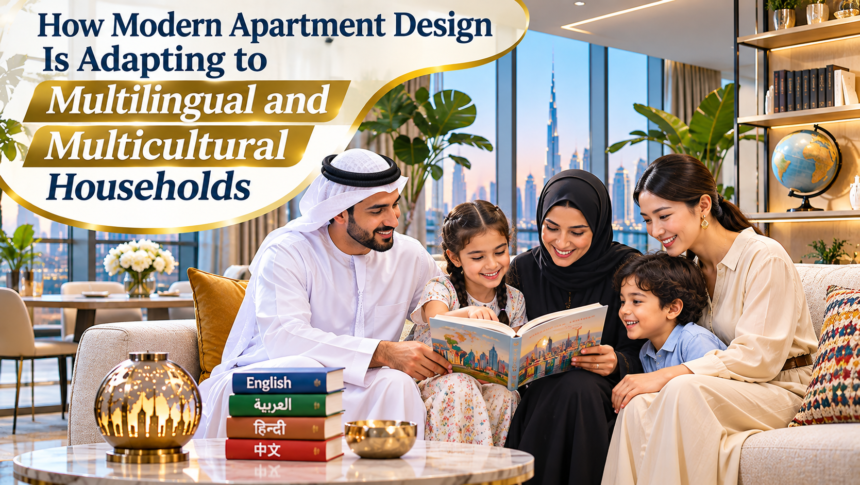
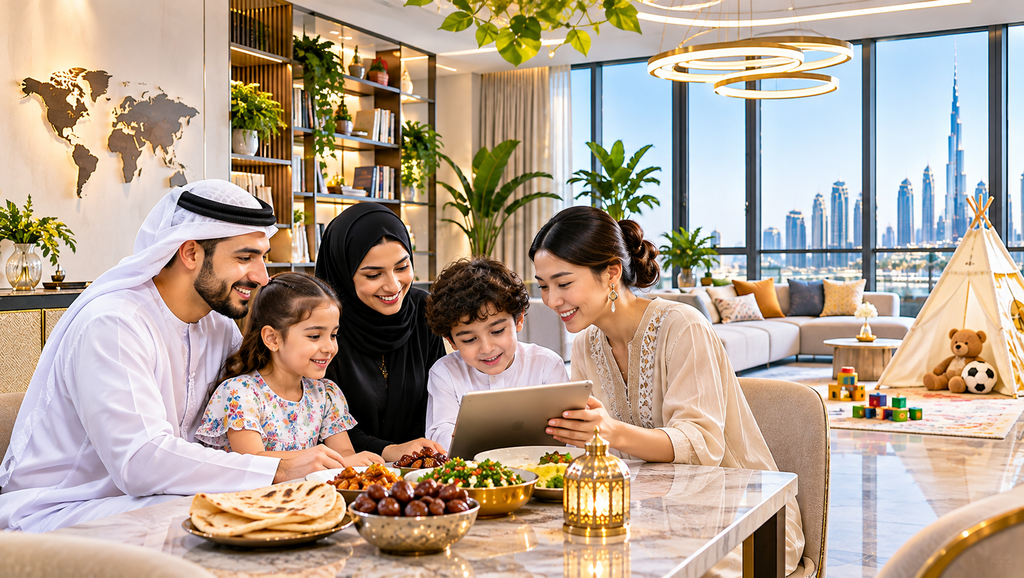
In many Gulf cities, the meaning of home is becoming increasingly diverse. An apartment may accommodate a family that speaks several languages, a couple from different cultural backgrounds, three generations living together, or professionals sharing accommodation while maintaining different daily routines.
- 1. Why Multicultural Apartment Design Is Becoming More Relevant in Gulf Cities
- 2. How Flexible Layouts Are Supporting Different Household Traditions
- 3. How Kitchens and Dining Areas Reflect Multicultural Living
- 4. How Multilingual Smart Homes Could Improve Everyday Living
- 5. Why Multigenerational Living and Accessibility Matter in Apartment Design
- 6. The Challenges of Designing Affordable and Culturally Responsive Apartments
- 7. The Future of Multicultural Apartment Design in Gulf Residential Development
These households may have different preferences concerning privacy, cooking, entertainment, family gatherings, and the use of shared spaces.
As a result, residential design is facing a new challenge: creating homes that can accommodate different ways of living without assuming that every household follows the same routine.
This is encouraging greater interest in multicultural apartment design, an approach that considers how housing can respond to linguistic diversity, cultural practices, family structures, and changing lifestyles.
The issue is particularly relevant to the Gulf Cooperation Council, where international migration, urban development, and economic diversification have contributed to socially diverse cities.
The UAE is one prominent example. Government information identifies approximately 200 nationalities living and working in the country. Meanwhile, Dubai’s population reached approximately 4.58 million at the end of 2025, according to Digital Dubai.
These figures highlight the scale and diversity of the urban population, although they do not independently establish how many households are multilingual or what apartment features they prefer.
Modern residential architecture is increasingly exploring flexible rooms, adaptable furniture, multifunctional kitchens, private work areas, accessible circulation, and digital home systems.
Such features may help households accommodate different cultural practices without requiring entirely different types of buildings.
However, successful design should not be based on stereotypes.
People who speak the same language or share a nationality may have very different housing preferences. Similarly, a household’s needs can change as children grow, older relatives move in, or employment arrangements evolve.
Research into adaptable housing suggests that flexible apartment layouts may offer practical advantages over fixed arrangements when occupants’ needs change.
In Gulf cities, this flexibility could become important not only for multicultural households but also for families seeking long-term comfort, affordability, and accessibility.
Understanding these design considerations reveals how residential architecture can become more responsive to the people who live within it.
1. Why Multicultural Apartment Design Is Becoming More Relevant in Gulf Cities
Apartment design traditionally relies on assumptions about how residents use domestic space.
A typical layout may include bedrooms, a living room, a kitchen, bathrooms, and perhaps a dining area.
However, the same arrangement can be used differently depending on the household.
The Diversity of Modern Urban Households
One household may prefer an open living and dining area where family members spend time together.
Another may require a separate room for receiving guests.
A third may need quiet work areas because several occupants attend online meetings or study from home.
These differences are not necessarily determined by nationality.
They often reflect family size, working arrangements, individual habits, accessibility requirements, and personal preferences.
Why Language Can Affect the Home Environment
Households using several languages may require spaces that support different forms of communication and activity.
Children might complete schoolwork in one language while speaking another with relatives.
Family members may attend remote meetings with colleagues in different countries.
Residents may also use digital devices or entertainment services in several languages.
The apartment itself does not need to assign separate rooms to each language.
Instead, appropriate acoustics, flexible workspaces, and accessible technology can make varied activities easier to manage.
The Role of Dubai’s Urban Development
Dubai’s 2040 Urban Master Plan aims to develop inclusive communities and improve residents’ quality of life.
Its broader planning approach addresses neighbourhood access, housing, public facilities, and recreational infrastructure.
In 2025, Dubai also approved a residential planning model focused on family welfare and neighbourhood quality.
These initiatives concern urban development at a wider scale.
They should not be interpreted as mandatory specifications for multilingual apartment interiors.
Different Household Needs
| Household Situation | Possible Design Requirement |
|---|---|
| Multilingual Family | Quiet study and communication spaces |
| Multigenerational Household | Accessible rooms and privacy |
| Shared Apartment | Personal storage and acoustic separation |
| International Couple | Adaptable cooking and social spaces |
| Family With Young Children | Safe play and flexible storage |
| Remote-Working Household | Reliable connectivity and work areas |
| Household With Frequent Guests | Flexible seating and visitor circulation |
Why Personalisation Matters
A successful multicultural apartment should accommodate its actual occupants.
Designers should ask how residents live rather than assume what they need based on their background.
2. How Flexible Layouts Are Supporting Different Household Traditions
Flexibility is becoming an important principle in residential architecture.
A room designed for one function may need to serve another purpose as the household changes.
This is particularly relevant when apartment space is limited.
The Limitations of Fixed Floor Plans
A permanently divided apartment may work well for its original occupants but become less suitable when circumstances change.
For example, a guest room may later need to become a nursery, home office, or bedroom for an older family member.
Major renovations can be expensive and disruptive.
Adaptable layouts may reduce the need for repeated structural changes.
What Research Says About Adaptability
A study published in the Journal of Housing and the Built Environment examined modifications made by residents in 313 contemporary Swedish apartments.
The research investigated how occupants changed their homes and what these changes revealed about adaptable design.
Although the study was not conducted in the Gulf, it provides evidence that apartment users may need configurations different from those originally supplied.
A 2026 study in the Proceedings of the Design Society also explored residential flexibility across different life stages, highlighting changing needs involving bedrooms and workspaces.
Movable Partitions and Multifunctional Rooms
Sliding partitions, folding doors, and appropriately designed movable furniture can allow a space to serve multiple purposes.
A living room might become a temporary study area during the day and return to a family gathering space in the evening.
However, not every partition provides sufficient acoustic privacy.
Designers must consider whether the chosen system offers the level of separation actually required.
Guest Areas and Personal Privacy
Some residents prefer distinct guest and family zones, while others favour completely open layouts.
An entrance buffer or flexible internal door can help accommodate different preferences.
However, separate guest reception rooms should not be treated as universal requirements for Arab or Gulf households.
Research on Saudi housing preferences demonstrates that residents can value modern open layouts while also expressing concerns about combining guest and family living areas.
Flexible Design Features
| Design Feature | Possible Benefit | Important Limitation |
|---|---|---|
| Sliding Partitions | Reconfigurable rooms | Variable sound insulation |
| Foldaway Furniture | More usable floor space | Durability and maintenance |
| Modular Storage | Adaptable organisation | Space and installation requirements |
| Multipurpose Rooms | Support changing activities | Scheduling conflicts |
| Separate Entrance Zone | Optional privacy | Reduces usable floor area |
| Convertible Guest Room | Accommodation for visitors or family | Furniture and storage needs |
Why Structural Safety Matters
Not all apartment walls can be moved.
Alterations may affect structural elements, fire protection, mechanical systems, or building approvals.
Residents should verify permitted modifications before renovating.
3. How Kitchens and Dining Areas Reflect Multicultural Living
The kitchen is often one of the most actively used spaces in a home.
For multicultural households, it may need to support different cooking methods, meal schedules, ingredient storage practices, and social arrangements.
However, these needs are not exclusive to culturally diverse families.
Different Cooking Practices
Some households frequently prepare dishes involving extended cooking times, multiple ingredients, or substantial food preparation.
Others prefer simple meals or rely more heavily on prepared food.
A household may alternate between different culinary traditions throughout the week.
Designers can respond through appropriate counter space, storage, ventilation, and safe equipment arrangements.
The Importance of Ventilation
Cooking can release heat, moisture, and airborne particles.
Adequate kitchen ventilation is important regardless of cuisine.
The World Health Organization identifies ventilation and indoor air quality as important elements of healthy housing.
However, the correct ventilation design depends on the building, equipment, cooking load, and applicable technical requirements.
A decorative extractor hood does not necessarily provide adequate performance.
Flexible Food Storage
Different households may purchase ingredients in different quantities or use a wide range of cooking equipment.
Adjustable shelving, appropriate pantry storage, and suitable refrigeration can improve usability.
However, storage should reflect actual needs rather than assumed cultural characteristics.
Dining as a Social Space
Some families regularly gather around a large dining table.
Others prefer smaller arrangements or informal meals.
Extendable tables and movable seating can support different group sizes without permanently occupying large amounts of floor space.
Kitchen and Dining Design Considerations
| Feature | Possible Benefit |
|---|---|
| Adequate Ventilation | Better indoor air quality |
| Adjustable Shelving | Flexible ingredient storage |
| Durable Worktops | Support for varied preparation activities |
| Additional Preparation Space | Easier shared cooking |
| Flexible Dining Furniture | Adaptation to group size |
| Accessible Storage | Usability for different household members |
| Easy-to-Clean Surfaces | Simplified maintenance |
Why Designers Should Avoid Cultural Assumptions
It would be inaccurate to prescribe one kitchen format for all residents from a particular region.
The most useful approach is to discuss actual cooking frequency, appliances, household size, and dining practices.
4. How Multilingual Smart Homes Could Improve Everyday Living
Smart-home technology introduces new opportunities for residents to control lighting, temperature, security, and household equipment.
However, the usefulness of these systems depends partly on whether every relevant household member can understand and operate them.
Language Accessibility in Home Controls
Some residents may prefer using digital services in Arabic, English, Hindi, Urdu, or another language.
A home management interface that supports the household’s preferred languages may improve usability.
However, language availability differs between products and voice assistants.
Designers should verify actual supported languages rather than relying on promotional claims.
Visual and Manual Alternatives
Voice control can be convenient but should not be the only way to operate important household functions.
Residents may have different accents, speech abilities, or levels of comfort with voice technology.
Simple physical switches, clear icons, and accessible mobile controls can provide alternatives.
This is particularly important for children, older adults, and visitors.
Interoperability and Smart-Home Systems
Matter is a smart-home connectivity standard supported by the Connectivity Standards Alliance.
Its Multi-Admin capability enables compatible devices to be controlled through more than one supported smart-home ecosystem.
This may help households where different members use different technology platforms.
However, interoperability does not automatically mean that every device supports multiple spoken languages.
Language support and device connectivity are separate features.
Privacy in Connected Apartments
Smart devices may collect information about occupancy, activity, voice commands, and household routines.
Residents should understand which data is collected, how it is stored, and who can access it.
Shared apartments may need particularly clear arrangements for permissions and administrator accounts.
Smart-Home Design Priorities
| Feature | Potential Advantage | Important Consideration |
|---|---|---|
| Multilingual Interfaces | Easier use across language preferences | Actual language support |
| Voice Assistants | Hands-free control | Recognition and privacy |
| Physical Switches | Reliable alternative controls | Accessibility and placement |
| Matter-Compatible Devices | Cross-platform interoperability | Product compatibility |
| Adjustable Lighting | Support for different activities | Proper installation |
| Smart Thermostats | Temperature management | User control and efficiency |
| Shared Access Permissions | Multiple household users | Account security |
Why Technology Should Remain Optional
A modern apartment should remain functional when an internet connection fails or a smart device stops working.
Essential systems should have suitable manual or local controls where required.
5. Why Multigenerational Living and Accessibility Matter in Apartment Design
Multicultural households are not necessarily multigenerational.
However, apartments occupied by grandparents, parents, children, or other relatives may require additional flexibility.
These needs can also arise in households that are not culturally diverse.
Designing for Different Ages
Young children and older adults may have different mobility and safety requirements.
A family may need clear circulation routes, suitable bathroom layouts, and storage that is accessible to people of different heights.
Design choices should respond to residents’ current and foreseeable needs.
Universal Design Principles
Universal design aims to make environments usable by a broad range of people.
In apartment design, this may involve step-free circulation, suitable door widths, accessible controls, and safe bathroom arrangements.
However, not every apartment can accommodate every accessibility requirement without modification.
Specific standards and building regulations determine which features are mandatory.
Dubai’s Universal Design Code
Dubai Municipality maintains the Dubai Universal Design Code.
It also operates the Wosool accessibility assessment and certification system for existing buildings.
Dubai’s building legislation includes accessibility provisions relating to common areas of residential buildings and applicable accessible residential units.
These frameworks show how accessibility is being incorporated into the built environment.
However, a particular apartment’s compliance must be established through the relevant approval and assessment processes.
Privacy Between Generations
Some multigenerational households may benefit from private bedrooms positioned away from busy living spaces.
Others may prefer closer proximity for caregiving.
Appropriate layouts depend on mobility, family relationships, household size, and personal choice.
Accessibility Features Worth Considering
| Feature | Potential Benefit |
|---|---|
| Step-Free Access | Easier movement |
| Wider Clear Circulation | Support for mobility aids |
| Accessible Bathroom Planning | Safer daily use |
| Appropriate Lighting | Improved visibility |
| Non-Slip Flooring | Reduced slipping hazards |
| Reachable Controls | Greater independence |
| Acoustic Privacy | Rest and concentration |
| Flexible Bedroom Arrangement | Adaptation as household needs change |
Why Housing Should Adapt Over Time
A family that does not currently require accessibility features may need them later.
Designing for future adaptation can help avoid disruptive changes.
However, the benefits should be balanced against space, affordability, and construction constraints.
6. The Challenges of Designing Affordable and Culturally Responsive Apartments
Although flexible and inclusive apartments offer potential benefits, developers must manage practical limitations.
Urban housing projects involve land costs, construction budgets, building regulations, and commercial demand.
Additional features may increase costs or reduce usable floor area.
The Trade-Off Between Space and Flexibility
A separate guest room can provide privacy but occupies space that might otherwise support a larger living area.
A movable partition provides flexibility but may not offer the same acoustic separation as a permanent wall.
Designers must establish which features create meaningful value for residents.
Housing Affordability
Flexible layouts do not automatically make housing more affordable.
Modular systems, additional insulation, smart controls, and specialised fittings can introduce upfront costs.
Saudi Arabia’s 2026 housing affordability research emphasises the importance of considering residents’ actual design preferences alongside financial constraints.
A separate study on compact housing in Saudi Arabia found interest in certain modern layouts while identifying reservations about reduced privacy in guest and living arrangements.
These findings suggest that space-saving designs should not ignore social and household preferences.
Acoustic and Visual Privacy
Multiple occupants may undertake work, study, religious activities, phone calls, or entertainment simultaneously.
Appropriate sound insulation and privacy can help reduce conflicts.
However, lightweight partitions may be unsuitable when strong acoustic separation is required.
Designers should assess actual noise transmission rather than relying on appearance.
Heat and Energy Efficiency
Gulf apartments often depend on cooling systems for comfort.
Flexible design should not compromise ventilation, cooling performance, or energy efficiency.
WHO housing guidance identifies indoor thermal conditions and ventilation as important considerations for health.
However, building performance depends on construction quality, climate, equipment, and maintenance.
Risks and Possible Responses
| Challenge | Potential Consequence | Practical Response |
|---|---|---|
| Excessive Customisation | Higher construction costs | Modular options |
| Limited Floor Area | Crowded spaces | Efficient layouts |
| Poor Acoustic Separation | Reduced privacy | Suitable sound insulation |
| Complex Smart Systems | User frustration | Simple, accessible controls |
| Inflexible Furniture | Difficult reconfiguration | Adaptable products |
| Cultural Stereotyping | Poor design fit | Resident consultation |
| Unapproved Alterations | Safety or legal issues | Professional review |
| High Cooling Demand | Increased energy costs | Climate-responsive design |
Why Consultation Is Essential
Developers should not assume that nationality, language, or religion determines how a household wishes to live.
Resident interviews, post-occupancy evaluations, and design workshops may provide more reliable information than demographic stereotypes.
7. The Future of Multicultural Apartment Design in Gulf Residential Development
The future of apartment design in Gulf cities may involve greater emphasis on flexibility, accessibility, personal choice, and the ability to adapt homes over time.
However, these changes will not occur uniformly across every development.
Residential markets include different budgets, building types, and consumer preferences.
Designing for Changing Household Structures
An apartment may be occupied by a single professional, a couple, a family with children, or several generations over its lifetime.
Adaptable interiors could help the same property accommodate different residents.
However, flexibility should be considered during the design stage rather than achieved through unsafe alterations later.
Resident-Centred Development
Developers may benefit from asking prospective residents which features they actually value.
Some may prioritise a separate kitchen, while others may prefer additional workspace.
Some households may require accessible bathrooms, while others may value larger shared living areas.
A range of suitable options can be more useful than one supposedly universal multicultural layout.
The Role of Neighbourhood Design
An apartment does not exist independently of the surrounding community.
Residents also rely on schools, healthcare, shops, parks, public transport, and shared amenities.
Dubai’s 2040 Urban Master Plan emphasises connected communities and the development of neighbourhood services.
Such planning may complement apartment design by improving access to everyday facilities.
However, broader urban development programmes do not guarantee the quality of individual homes.
A Practical Multicultural Apartment Design Checklist
- Ask residents about their household routines and priorities.
- Identify the languages used for digital controls and instructions.
- Provide appropriately flexible living and dining areas.
- Consider whether optional guest privacy is required.
- Assess home-working and study needs.
- Design kitchens around actual cooking habits.
- Provide sufficient storage for household activities.
- Evaluate acoustic privacy between rooms.
- Offer simple and accessible technology controls.
- Plan for children, older adults, and future accessibility needs.
- Assess ventilation, cooling, and natural lighting.
- Confirm relevant building and fire safety requirements.
- Check whether proposed modifications are permitted.
- Compare initial costs with long-term usability.
- Obtain feedback from occupants after moving in.
How Developers Should Measure Success
The number of flexible partitions or smart devices installed does not necessarily indicate that an apartment works well.
Design quality should be assessed through actual resident experiences, safety, adaptability, and operating performance.
Suggested Performance Indicators
| Indicator | What It Measures |
|---|---|
| Resident Satisfaction | Quality of everyday living |
| Layout Adaptability | Ability to change room functions |
| Acoustic Comfort | Privacy and noise control |
| Accessibility | Usability across different needs |
| Kitchen Functionality | Suitability for residents’ cooking habits |
| Smart-Home Usability | Ease of operation |
| Energy Performance | Efficiency of building systems |
| Storage Adequacy | Organisation and convenience |
| Modification Costs | Expense of future adaptation |
| Maintenance Performance | Long-term reliability |
Opportunities for Gulf Designers and Manufacturers
Multicultural and adaptable apartment design could create opportunities for architects, interior designers, furniture manufacturers, acoustic specialists, accessibility consultants, and smart-home technology businesses.
Companies may develop modular storage, adaptable furniture, multilingual interfaces, or residential products designed for compact spaces.
However, commercial claims should be supported by product testing and resident feedback.
Why Flexibility May Have Long-Term Value
A home that can adjust to changing needs may remain suitable for residents for a longer period.
This could reduce the need for some renovations or relocations.
However, the financial and environmental benefits depend on actual use, product durability, and the construction materials involved.
A More Inclusive Understanding of Home
Multicultural apartment design should not be limited to decorative references such as patterns, colours, or culturally associated furniture.
The more important questions concern usability.
Can residents communicate comfortably? Can they prepare food, rest, work, and receive visitors according to their preferences? Can the apartment adapt when their circumstances change?
These questions offer a more practical foundation for design.
Conclusion
Modern apartment design is gradually moving toward greater flexibility and inclusivity as Gulf cities accommodate diverse household structures and lifestyles.
Multilingual and multicultural households may have different preferences concerning privacy, cooking, work, family gatherings, and technology.
However, these differences cannot be reliably predicted from nationality or language alone.
The UAE’s diverse population, Dubai’s inclusive urban planning objectives, and international research on adaptable housing provide useful context for considering how residential design can respond to changing needs.
Features such as flexible room arrangements, appropriate acoustic separation, adaptable kitchens, accessible circulation, and user-friendly smart-home systems could help residents use their homes more comfortably.
However, these features must be balanced against affordability, safety, maintenance, and realistic space limitations.
For developers, the opportunity lies in offering housing that reflects actual resident preferences rather than relying on one fixed model of family life.
For architects and interior designers, it involves creating spaces that can accommodate different activities while protecting comfort and privacy.
For technology providers, it means making connected homes accessible to users with different languages, abilities, and technical preferences.
Ultimately, successful multicultural apartment design is not about creating a separate architectural style for every community.
It is about providing comfortable, adaptable homes that allow individuals and families to organise their lives in ways that suit them.
As Gulf cities continue evolving, this resident-centred approach could become an important part of creating more inclusive and sustainable urban housing.
Do follow us on Instagram
Read More – Why Men’s Participation in Early Childhood Care Is Becoming an Important Social Conversation