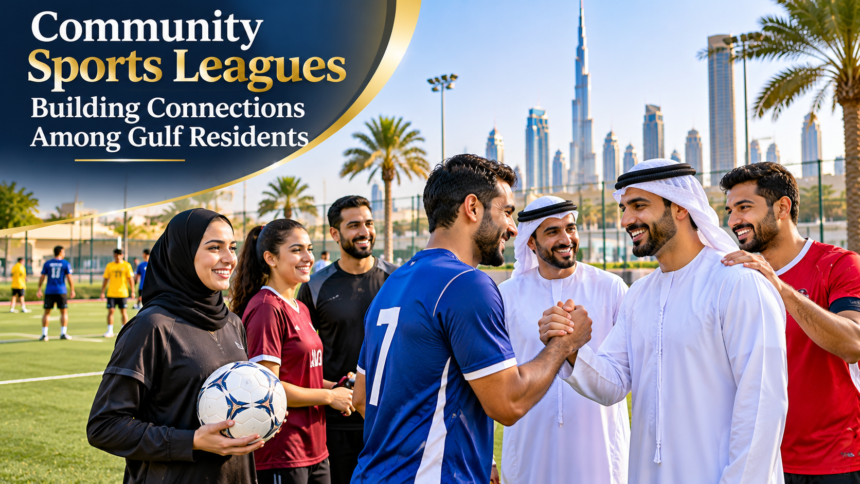
How Grassroots Sports Bring Gulf Residents Together
In the rapidly developing cities of the Gulf Cooperation Council, people from different nationalities, professional backgrounds, and generations share workplaces, neighbourhoods, shopping destinations, and public spaces. Yet living in the same city does not necessarily mean residents have regular opportunities to develop meaningful social relationships.
- 1. Why Community Sports Leagues in the Gulf Matter for Social Connection
- 2. How Dubai’s Community Sports Programmes Are Connecting Residents
- 3. What Saudi Arabia’s Sports for All Initiatives Reveal About Grassroots Participation
- 4. How Qatar and Bahrain Are Building Community Connections Through Sport
- 5. How Community Leagues Could Encourage Inclusion Across Cultures and Generations
- 6. The Challenges of Building Sustainable Community Sports Leagues
- 7. The Future of Community Sports Leagues in Gulf Urban Life
- Conclusion
Modern urban life can be busy. Work schedules, long commutes, changing family responsibilities, and frequent relocation can make it difficult for residents to establish lasting connections outside their immediate circles.
Community sports offer one possible response.
A weekly football match, neighbourhood basketball league, recreational cricket tournament, or amateur volleyball competition can bring people together around an activity they enjoy. These gatherings create opportunities to communicate, cooperate, develop friendships, and become familiar with people they might not otherwise meet.
This is why community sports leagues in the Gulf are becoming an important part of discussions about social connection, healthy lifestyles, and inclusive urban development.
Unlike professional sporting competitions, community leagues generally focus on participation by residents, workplaces, schools, recreational clubs, and local groups. Some involve formal tournaments and competitive rankings, while others provide regular opportunities for casual or recreational play.
The social value of these activities can extend beyond physical exercise.
A team may include people from different countries who work in unrelated industries. Parents may meet through children’s sporting activities, while young professionals may find opportunities to build friendships after moving to a new city.
For long-term residents, regular sports activities can also strengthen neighbourhood relationships and provide continuity as communities change.
Across the GCC, governments and sporting organisations are investing in grassroots participation.
Dubai’s Sports Sector Strategic Plan 2033 identifies community engagement as a major priority. Saudi Arabia’s Sports for All Federation supports community sports groups and recreational activities, while Qatar’s Sports for All Federation organises extensive programmes for residents across different age groups.
Bahrain has also highlighted community participation through initiatives such as the Khalid bin Hamad League.
However, participation in a sporting event does not automatically produce social inclusion.
Poorly designed leagues may exclude people because of cost, limited accessibility, scheduling, language barriers, or excessive competitiveness.
The most meaningful benefits emerge when organisers create environments where participants feel welcome, safe, and able to build relationships over time.
Understanding this distinction helps explain how community sports could contribute to stronger connections among Gulf residents.
1. Why Community Sports Leagues in the Gulf Matter for Social Connection
Social connection is an important part of everyday wellbeing.
People benefit from opportunities to interact with others, share experiences, and participate in activities that create a sense of belonging.
However, opportunities for regular interaction can be unevenly distributed.
The Challenge of Building Relationships in Large Cities
Residents moving to a new city may initially know only their colleagues or relatives.
Others may have lived in the same neighbourhood for years without knowing many people nearby.
This can be particularly noticeable in urban environments where daily routines revolve around work, transport, and private residential spaces.
Community sports offer a shared activity that may make introductions easier.
Participants do not necessarily need the same language, nationality, or profession to begin playing together.
Why Regular Activities Matter
A one-day sports event can create an enjoyable experience.
A league that meets every week may provide more opportunities for participants to become familiar with one another.
Over time, teammates may develop trust through cooperation, communication, and shared responsibilities.
However, repeated participation is not a guarantee of friendship. Social experiences depend on the quality of the environment and the willingness of participants to interact.
What International Research Suggests
The World Health Organization’s 2025 Commission on Social Connection identified social isolation and loneliness as important public health concerns.
Its recommendations include strengthening community groups and public environments where people can interact.
The International Olympic Committee and WHO have also supported community sport as one potential way to encourage physical activity and social connections.
These findings provide a foundation for considering sports leagues as social infrastructure.
However, the available evidence should not be interpreted as showing that every sports programme produces the same social benefits.
Different Types of Community Sports
| Activity | Typical Participants | Possible Social Contribution |
|---|---|---|
| Neighbourhood Football | Local residents | Regular team interaction |
| Recreational Cricket | Community teams | Cross-cultural participation |
| Workplace Volleyball | Employees | Relationships beyond daily work |
| Amateur Basketball | Youth and adults | Teamwork and social networks |
| Running Clubs | Different age groups | Recurring social activity |
| Family Sports Events | Parents and children | Household and neighbourhood connections |
| Adaptive Sports | Participants with different abilities | More inclusive recreation |
Why Belonging Matters More Than Registration
The number of people enrolled in a league is a useful measure of reach.
However, organisers should also assess whether participants enjoy the experience, continue attending, and feel respected within the group.
2. How Dubai’s Community Sports Programmes Are Connecting Residents
Dubai provides an important example of how community sports form part of wider urban development and quality-of-life planning.
The emirate hosts recreational competitions, fitness initiatives, workplace tournaments, and large public sporting events.
Dubai’s Sports Sector Strategic Plan 2033
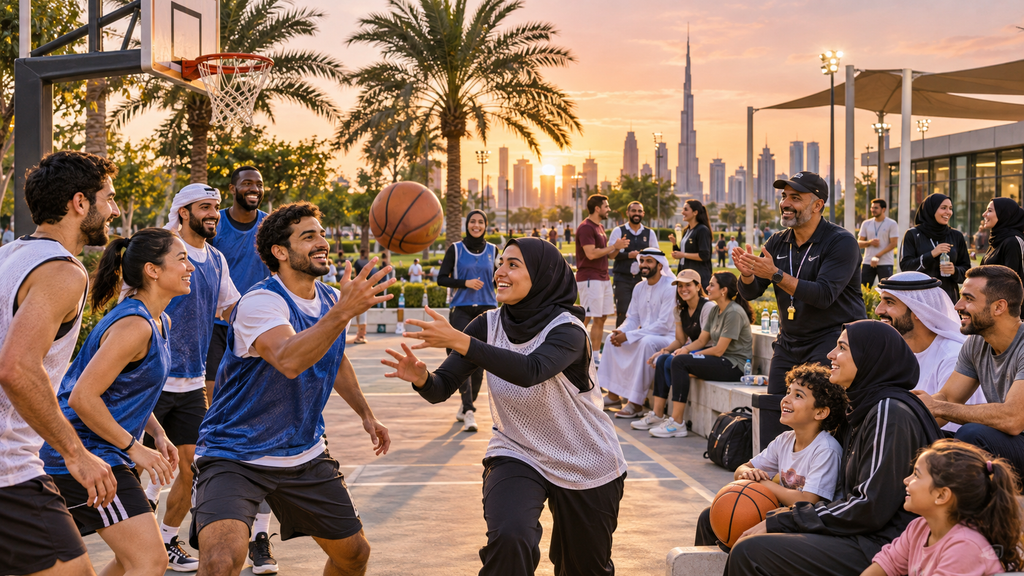
Launched in November 2025, Dubai’s Sports Sector Strategic Plan 2033 identifies community participation as one of its central priorities.
The plan aims to increase the number of residents actively involved in sports from 1.6 million to 2.6 million by 2033.
It includes programmes addressing community activities, sporting events, clubs, and talent development.
However, the figures represent a baseline and future target within the plan, not proof that the 2033 participation goal has already been achieved.
The Dubai District Games
The Dubai Sports Council announced the Dubai District Games for December 2025.
The competition was designed around football, three-on-three basketball, volleyball, and badminton.
According to the official announcement, more than 3,800 adults were expected to participate over 16 days.
The initiative illustrates how neighbourhood-based competitions can encourage residents to represent local communities.
However, announced participant numbers should be distinguished from independently verified attendance figures.
Sports Opportunities for Workers
Dubai’s Labour Sports Tournament provides another example of community-oriented competition.
The Dubai Sports Council has organised the event with government and institutional partners.
Earlier editions included sports such as football, basketball, cricket, badminton, volleyball, swimming, and kabaddi.
Competition venues have been distributed across areas where significant numbers of workers live or work.
This approach may reduce some travel barriers and provide opportunities for participation outside ordinary employment activities.
Indoor Community Sports
Dubai Sports World offers indoor facilities and organised activities during the hotter months.
Its 2026 edition ran from June 19 to August 25 and included community activities and a Summer League.
Indoor facilities can support participation when outdoor conditions are unsuitable.
However, access still depends on pricing, location, booking arrangements, and availability.
Dubai’s Community Sports Ecosystem
| Initiative | Main Focus | Possible Community Benefit |
|---|---|---|
| Dubai District Games | District-based team competitions | Neighbourhood identity |
| Labour Sports Tournament | Workplace and worker communities | Wider recreational access |
| Dubai Sports World | Indoor sport and fitness | Year-round participation |
| Dubai Fitness Challenge | Citywide physical activity | Shared community experiences |
| Sports Sector Strategic Plan 2033 | Long-term participation development | Supporting local sports infrastructure |
Why Smaller Leagues Still Matter
Large public events can introduce people to sports.
However, long-term social connections may depend on smaller groups that meet consistently throughout the year.
A local football league or weekly badminton group can provide repeated interaction after major public events conclude.
3. What Saudi Arabia’s Sports for All Initiatives Reveal About Grassroots Participation
Saudi Arabia has expanded its focus on community physical activity through the Sports for All Federation and related programmes.
These initiatives form part of broader efforts to encourage healthier lifestyles and more accessible recreational opportunities.
The Sports for All Federation
The Saudi Sports for All Federation promotes physical activity and sports participation across different age groups.
Its programmes include community sports groups, recreational challenges, sports facilities, and organised events.
The federation aims to make physical activity part of everyday life rather than an activity limited to professional athletes.
Reported Participation in 2025
The Saudi Press Agency reported in August 2025 that more than 234,000 people had participated in community sports events during the first half of the year.
These activities took place across 62 cities and governorates.
The figures demonstrate broad geographic reach.
However, event participation does not necessarily represent unique individuals, and it does not measure whether participants formed lasting social relationships.
Community Sports Groups
Community sports groups can provide a more continuous form of participation than occasional tournaments.
A group may organise recurring activities around running, football, cycling, fitness, or other sports.
These arrangements may allow participants to develop shared routines and social networks.
However, organisers must maintain appropriate standards for safety, fairness, and accessibility.
The Sports for All Dome
The federation’s 2024 annual report described its Sports for All Dome as a multipurpose sports facility supporting activities including football, basketball, volleyball, handball, tennis, badminton, and padel.
The report stated that activities at the facility attracted more than 110,000 participants during 2024.
This demonstrates the potential role of indoor facilities in maintaining activity during periods of extreme outdoor heat.
However, participation figures should not be interpreted as evidence of an equivalent number of unique users.
Supporting Women’s Participation
The federation has also highlighted women’s fitness groups and community initiatives.
Its Community Champions campaign features local sporting communities, including women’s groups.
These initiatives demonstrate the importance of providing different participation environments.
However, participation preferences vary, and programmes should be developed with input from the people they intend to serve.
Saudi Community Sports Approaches
| Programme Type | Main Function |
|---|---|
| Community Sports Groups | Regular organised participation |
| Sports for All Events | Public recreational activity |
| Indoor Sports Facilities | Activity during difficult weather |
| Women’s Community Groups | Relevant participation opportunities |
| Running and Cycling Events | Recreational movement |
| Community Challenges | Motivation and engagement |
Why Geographic Reach Matters
Sports opportunities concentrated in major city centres may be difficult for residents in peripheral neighbourhoods or smaller communities to access.
The development of local groups and facilities can help reduce travel requirements, provided programmes remain affordable and appropriately managed.
4. How Qatar and Bahrain Are Building Community Connections Through Sport
Qatar and Bahrain also have institutional programmes supporting community sports.
Their approaches demonstrate the importance of regular activities, partnerships, and public events.
Qatar Sports for All Federation
The Qatar Sports for All Federation operates under the country’s Ministry of Sports and Youth.
Established in 2015, it promotes regular physical activity and sports participation across age groups.
Its programmes include recreational races, walking challenges, women’s activities, school events, and other community sports.
Qatar’s 2025 Participation Figures
Qatar’s Sports for All Federation reported that its 2025 activities reached 215,506 participants.
The programme included hundreds of community events and competitions.
Its 2026 calendar subsequently identified more than 800 planned community sports events.
These figures illustrate the scale of organised activity.
However, they do not reveal how many individuals participated more than once or whether the events improved social connectedness.
National Sports Day
Qatar observes National Sports Day annually on the second Tuesday of February.
It provides a widely recognised opportunity for residents to participate in physical activity.
The initiative encourages public involvement across different communities.
However, a national event should be viewed as complementary to, rather than a replacement for, regular local sports programmes.
Community Partnerships
In 2026, Qatar’s Sports for All Federation worked with Doha Festival City on activities including the Mall Steps Challenge.
This example demonstrates how commercial venues can host accessible physical activities in partnership with public sporting organisations.
However, a walking challenge is not the same as a competitive sports league.
The social and organisational benefits of different activities should be evaluated separately.
Bahrain’s Community Sports Framework
Bahrain’s 2026 Voluntary National Review identifies the Khalid bin Hamad League as an initiative supporting participation across different sports, ages, and clubs.
The report connects sports participation with physical wellbeing and community development.
Bahrain also marks a national Sports Day, encouraging broader public involvement.
These programmes illustrate formal institutional support for grassroots activity.
Qatar and Bahrain Compared
| Country | Initiative | Main Contribution |
|---|---|---|
| Qatar | Sports for All Federation | Recurring community programmes |
| Qatar | National Sports Day | Broad public participation |
| Qatar | Summer Sports Programme | Seasonal recreational activities |
| Qatar | Mall Steps Challenge | Accessible indoor physical activity |
| Bahrain | Khalid bin Hamad League | Community sporting competition |
| Bahrain | Bahrain Sports Day | Public engagement with physical activity |
Why Different Formats Are Valuable
A formal league may appeal to residents interested in team competition.
A walking challenge may be more suitable for people seeking a less competitive introduction to physical activity.
Cities benefit from providing different options rather than assuming one format will meet every resident’s needs.
5. How Community Leagues Could Encourage Inclusion Across Cultures and Generations
One of the potential strengths of community sport is its ability to bring together people who might otherwise have limited opportunities to interact.
However, diversity within a team does not automatically produce inclusion.
The experience depends on how leagues are organised and how participants treat one another.
Connecting Residents From Different Backgrounds
Gulf cities include residents from different national and linguistic backgrounds.
A sports team may bring together neighbours or colleagues with different experiences.
Shared participation can create opportunities for informal communication.
However, language differences or established friendship groups may still affect whether newcomers feel welcome.
Organisers can address these barriers through clear rules, welcoming introductions, and mixed-team activities.
Sport as a Shared Activity
Participants do not need extensive personal knowledge about one another to begin playing a game.
Rules, team objectives, and repeated cooperation provide a starting point for interaction.
However, communication and mutual respect remain important.
Sports should not be presented as eliminating cultural differences or social inequalities automatically.
Intergenerational Participation
Community sports can also create opportunities for interaction between age groups.
Youth leagues may involve parents as volunteers or spectators.
Adult recreational programmes can include people at different stages of their careers.
Family sporting activities may bring children, parents, and older relatives into shared spaces.
However, competition formats should remain appropriate for participants’ ages and abilities.
Supporting People With Disabilities
Inclusive leagues may provide adapted equipment, accessible venues, qualified support, or modified rules.
Some participants may prefer integrated activities, while others may choose specialised sports formats.
The International Olympic Committee’s Olympism365 initiative supports projects that seek to improve inclusion through sport.
However, inclusion requires practical accessibility, not simply open invitations.
Opportunities for Women and Girls
Some potential participants may require women-focused sessions, suitable schedules, accessible facilities, or other arrangements.
The needs of a particular community should be identified through consultation.
Programmes should avoid assuming that all women or girls have identical preferences.
Inclusive League Design
| Potential Barrier | Possible Response |
|---|---|
| Language Differences | Clear multilingual communication |
| High Fees | Affordable registration options |
| Limited Transport | Neighbourhood-based venues |
| Disability Access | Suitable facilities and adapted activities |
| Newcomer Exclusion | Beginner-friendly introductions |
| Age Differences | Appropriate divisions and activities |
| Scheduling Conflicts | Multiple session times |
| Excessive Competitiveness | Recreational and competitive categories |
Why Inclusion Requires Ongoing Attention
A league may initially attract a diverse group of participants but still become socially exclusive over time.
Regular feedback and fair participation practices can help organisers understand who feels welcome and who may be leaving.
6. The Challenges of Building Sustainable Community Sports Leagues
Community leagues require more than finding a playing field.
Organisers must consider funding, facilities, safety, scheduling, equipment, and participant expectations.
Poorly managed programmes can become expensive, inaccessible, or difficult to sustain.
The Cost of Participation
League expenses may include venue rental, equipment, uniforms, referees, administration, insurance, and transport.
These costs can create financial barriers for residents.
Organisers should consider whether sponsorship, partnerships, or different pricing arrangements could improve access.
However, a league must also have sufficient resources to operate safely.
Heat and Seasonal Conditions
Outdoor physical activity in the Gulf requires particular attention to high temperatures and humidity.
Some sports may be more suitable during cooler periods or in approved indoor venues.
Organisers should follow relevant health and safety guidance and avoid exposing participants to unsuitable conditions.
Indoor facilities can help, but their rental costs may be higher.
Safety and Medical Preparedness
Sports involve risks of injury, particularly when activities are competitive.
Appropriate supervision, playing conditions, emergency arrangements, and access to first aid are important.
Organisers should consider the needs of participants with existing health conditions or disabilities.
However, community sport should not be treated as a substitute for individual medical advice.
Fair Competition
Disputes over refereeing, player eligibility, or competitive behaviour can damage relationships.
Clear rules, impartial administration, and procedures for resolving complaints help maintain trust.
Where leagues involve children, appropriate safeguarding arrangements are essential.
Volunteer Dependence
Many grassroots programmes depend on volunteers.
This can support community ownership, but it may also create challenges when individuals become unavailable.
Clear responsibilities, training, and realistic workloads can improve continuity.
Risks and Responses
| Challenge | Possible Consequence | Practical Response |
|---|---|---|
| High Registration Costs | Reduced access | Transparent and affordable fees |
| Limited Facilities | Cancelled activities | Venue partnerships |
| Extreme Heat | Unsafe participation | Seasonal and indoor scheduling |
| Poor Management | Participant dissatisfaction | Clear governance |
| Inconsistent Attendance | Unreliable fixtures | Flexible team arrangements |
| Exclusionary Behaviour | Loss of trust | Code of conduct |
| Insufficient Volunteers | Programme disruption | Training and succession planning |
| Weak Safeguarding | Risks to participants | Appropriate protection procedures |
Why League Quality Matters
A programme should not be evaluated only according to the number of matches organised.
Reliability, safety, fairness, and participant satisfaction are important foundations for long-term engagement.
7. The Future of Community Sports Leagues in Gulf Urban Life
Community sports could become an increasingly important element of neighbourhood planning as Gulf cities seek to encourage physical activity and strengthen public participation.
However, the future of grassroots sport will depend on the accessibility and quality of the opportunities available to residents.
Neighbourhood-Based Sports Infrastructure
Local courts, fields, walking areas, and multipurpose recreational centres can reduce the need for residents to travel long distances.
Developers and municipalities may consider how sports facilities fit into residential planning.
However, building a facility is not sufficient if programmes remain unaffordable or difficult to access.
Supporting Smaller Community Organisers
Local sports clubs and volunteer groups may benefit from venue access, administration support, training, and appropriate sponsorship.
Governments and institutions could help by providing clear information about facility booking, permits, and safety requirements.
However, arrangements must follow the applicable rules in each location.
Digital Platforms for League Management
Technology can help organisers manage registration, match schedules, team communication, payments, and results.
This may make participation more convenient.
However, digital systems should not become barriers for people with limited technical access.
Organisers must also protect personal information, particularly when collecting details about children.
A Practical Community Sports League Checklist
- Identify the community and its preferred sports.
- Consult residents before choosing activities and schedules.
- Verify venue permissions and applicable requirements.
- Establish clear registration and participation rules.
- Provide beginner-friendly entry options.
- Consider affordable fees and suitable sponsorship.
- Make reasonable accessibility arrangements.
- Establish heat-safety and emergency procedures.
- Train referees, coaches, and volunteers where appropriate.
- Implement clear safeguarding procedures for children.
- Create a participant code of conduct.
- Encourage respectful interaction between teams.
- Protect registration data and participant privacy.
- Gather feedback throughout the season.
- Review attendance, retention, and programme finances.
How Should Cities Measure Community Impact?
Participant numbers can show whether a league attracts interest.
However, evaluating its social contribution requires additional measures.
Surveys, interviews, and repeat-participation data may help establish whether residents feel more connected.
Suggested Performance Indicators
| Indicator | What It Measures |
|---|---|
| Registered Participants | Programme reach |
| Attendance Consistency | Regular engagement |
| Return Participation | Continued involvement |
| Newcomer Participation | Accessibility for new residents |
| Participant Satisfaction | Quality of the experience |
| Sense of Belonging | Self-reported social connection |
| Inclusive Participation | Reach across different groups |
| Volunteer Retention | Organisational sustainability |
| Safety Incidents | Operational safety |
| Programme Affordability | Financial accessibility |
Avoiding Misleading Claims
A league with 500 registered members should not automatically be credited with creating 500 meaningful friendships.
Similarly, increased physical activity does not prove that every participant experiences improved mental health.
Responsible programme evaluation should distinguish between intended benefits and measured outcomes.
Opportunities for Gulf Businesses
Community sports may create opportunities for fitness operators, equipment suppliers, sports facility managers, local sponsors, coaches, and recreational technology companies.
Businesses may also support staff sports programmes as part of workplace engagement.
However, commercial involvement should preserve affordability, fair access, and participant wellbeing.
Why Small Leagues Can Have Lasting Value
A major sports tournament may receive extensive public attention.
A smaller league meeting regularly in a neighbourhood may operate without similar visibility.
Yet that recurring activity can provide a familiar social environment where participants develop routines and relationships.
The value of such programmes should not be overlooked simply because their audiences are smaller.
Conclusion
Community sports leagues can play an important role in helping Gulf residents connect with one another through regular participation, shared experiences, and recreational activity.
Across the GCC, governments and sports organisations are strengthening programmes that encourage residents to remain active.
Dubai’s community sports planning, Saudi Arabia’s Sports for All initiatives, Qatar’s extensive recreational calendar, and Bahrain’s grassroots sporting programmes demonstrate different approaches to expanding participation.
However, the social value of sport cannot be measured through attendance alone.
Building genuine connections requires welcoming environments, consistent opportunities, affordable access, and respectful interaction.
For municipal authorities, the opportunity lies in making recreational facilities and organised activities accessible across neighbourhoods.
For league organisers, long-term success depends on safety, fairness, inclusion, and reliable administration.
For businesses, appropriate partnerships may help sustain local sporting opportunities.
For residents, community sport can provide a practical way to meet people and become involved in the places where they live.
Ultimately, the greatest contribution of community sports leagues may extend beyond competition or physical fitness.
When organised thoughtfully, they can turn shared sporting interests into recurring opportunities for friendship, mutual understanding, and stronger neighbourhood relationships.
As Gulf cities continue developing, supporting these everyday connections could become an increasingly valuable part of creating healthy, welcoming, and socially connected communities.
Do follow us on Instagram
Read More – How Multicultural Apartment Design Is Adapting to Multilingual and Multicultural Households