Why Heat-Resilient Workplaces Matter for Middle Eastern Cities
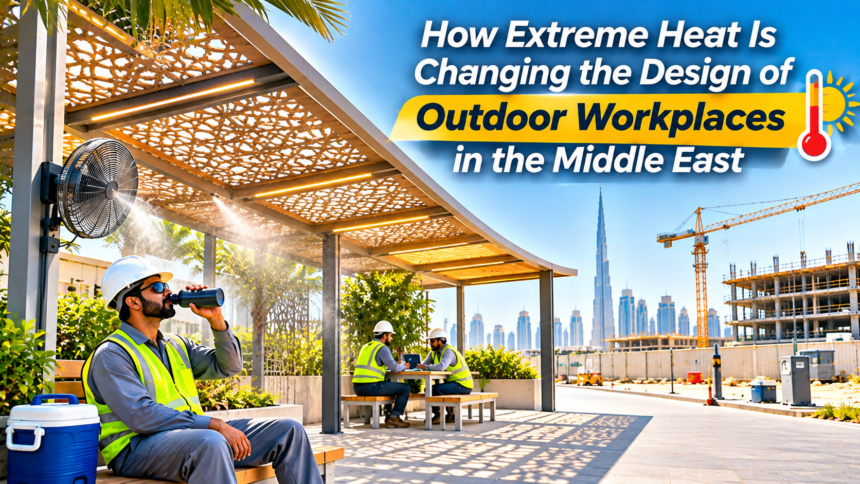
Across the Middle East, Extreme Heat Workplace Safety is changing design of construction sites, logistics yards, industrial facilities, agricultural operations, and public Extreme Heat Workplace areas are facing an increasingly important challenge: protecting employees who must work in environments exposed to intense heat. In cities such as Dubai, Abu Dhabi, Riyadh, Doha, Muscat, and Kuwait City, outdoor employment remains essential to infrastructure development and everyday urban services.
- 1. Why Extreme Heat Workplace Safety Is Becoming a Major Workplace Design Challenge
- 2. How Heat-Safe Outdoor Workplaces in the Middle East Are Being Redesigned
- 3. How UAE, Saudi Arabia, and Qatar Heat Regulations Are Influencing Workplaces
- 4. Why Cooling Stations, Drinking Water, and Recovery Spaces Are Essential
- 5. How Smart Sensors and Mechanisation Could Reduce Outdoor Heat Exposure
- 6. The Economic and Environmental Challenges of Heat-Resilient Workplace Design
- 7. The Future of Heat-Safe Outdoor Workplaces in the Middle East
- 1. Why Extreme Heat Is Becoming a Major Workplace Design Challenge
- 2. How Heat-Safe Outdoor Workplaces in the Middle East Are Being Redesigned
- 3. How UAE, Saudi Arabia, and Qatar Heat Regulations Are Influencing Workplaces
- 4. Why Cooling Stations, Drinking Water, and Recovery Spaces Are Essential
- 5. How Smart Sensors and Mechanisation Could Reduce Outdoor Heat Exposure
- 6. The Economic and Environmental Challenges of Heat-Resilient Workplace Design
- 7. The Future of Heat-Safe Outdoor Workplaces in the Middle East
However, high temperatures, humidity, direct sunlight, and physically demanding tasks can create dangerous working conditions. As awareness of occupational heat stress grows, employers are beginning to reconsider not only when people work outdoors, but also how workplaces are physically designed.
Developing heat-safe outdoor workplaces in the Middle East involves more than installing a shaded shelter or providing drinking water. Effective protection may require purpose-built cooling stations, carefully positioned work areas, ventilation systems, heat-reflective materials, accessible rest facilities, and equipment that reduces physical exertion.
The design of these workplaces is becoming relevant to employers, architects, engineering contractors, health and safety specialists, and government authorities.
Research from the World Health Organization and World Meteorological Organization highlights the growing health risks of occupational heat exposure. Across the GCC, countries have also introduced restrictions and guidance aimed at reducing the dangers associated with outdoor employment during the hottest months.
In 2026, the UAE, Saudi Arabia, and Qatar continued implementing summer work restrictions, although their prohibited hours and requirements differ.
These developments are creating new expectations for construction planning, worker facilities, equipment selection, and site management.
However, no single technology can eliminate heat stress. Workplaces must combine appropriate physical design with risk assessment, rest arrangements, hydration, training, and emergency preparedness.
Understanding these changes reveals how outdoor workplaces may evolve to become safer, more resilient, and better suited to the region’s increasingly challenging climatic conditions.
1. Why Extreme Heat Workplace Safety Is Becoming a Major Workplace Design Challenge
Outdoor work exposes people to several environmental factors that influence how effectively the body can regulate its temperature.
These include air temperature, humidity, direct solar radiation, and air movement.
Physical activity and protective clothing can increase the body’s heat burden.
Consequently, two workplaces with the same air temperature may present different levels of heat risk.
Understanding Occupational Heat Stress
Heat stress occurs when the combination of environmental conditions, physical exertion, and clothing places excessive demands on the body’s ability to regulate temperature.
If heat accumulates faster than it can be released, workers may experience heat strain.
Possible consequences include dehydration, exhaustion, impaired concentration, dizziness, and potentially life-threatening heatstroke.
The World Health Organization identifies occupational heat stress as a significant global public health concern.
Its 2025 guidance, developed with the World Meteorological Organization, estimates that more than 2.4 billion workers experience excessive workplace heat exposure worldwide.
This is a global figure, not an estimate of workers affected in GCC countries alone.
Why Middle Eastern Conditions Are Challenging
Many Gulf locations experience prolonged periods of high summer temperatures.
In coastal areas, humidity can make it harder for perspiration to cool the body.
Inland areas may experience intense solar radiation and very hot surfaces.
Workers handling heavy materials or operating near heat-generating equipment can experience additional thermal stress.
These conditions require workplace designs adapted to local climate and specific tasks.
The Economic Impact of Heat
Heat exposure can affect productivity when workers need to reduce their pace or spend additional time recovering.
A 2025 study of the Arabian Peninsula examined historical heat-stress conditions and modelled changes in outdoor labour productivity.
The findings identified particularly challenging conditions during peak daytime hours for physically demanding work.
However, modelled productivity changes should not be treated as measured losses for every business.
Main Sources of Heat Exposure
| Heat Factor | Workplace Implication |
|---|---|
| High Air Temperature | Increases environmental heat load |
| Direct Sunlight | Adds radiant heat exposure |
| High Humidity | Reduces evaporative cooling |
| Limited Air Movement | Can restrict heat dissipation |
| Heavy Physical Work | Increases metabolic heat generation |
| Protective Equipment | May trap heat or restrict evaporation |
| Hot Machinery and Surfaces | Adds local radiant or contact hazards |
The challenge is therefore not simply to reduce the temperature displayed on a weather application.
It is to assess the actual conditions experienced by workers.
2. How Heat-Safe Outdoor Workplaces in the Middle East Are Being Redesigned
Physical workplace design can help reduce the amount of heat workers encounter during daily operations.
The most effective interventions generally aim to reduce heat exposure at its source rather than relying entirely on individual protective equipment.
Creating Effective Shade
Shading structures can reduce direct solar radiation reaching workers.
On construction sites, this may involve temporary canopies positioned near active work areas.
In logistics yards, permanent covered loading zones may provide protection during material handling.
However, the location and design of shade matter.
A shelter exposed to hot surrounding surfaces and poor ventilation may still be uncomfortable or unsafe.
Designing Cooling and Recovery Areas
Workers require suitable places to recover from heat exposure.
These may include air-conditioned rooms, cooled cabins, or appropriately ventilated shelters.
Recovery areas should be accessible without requiring long journeys across exposed sites.
The US Occupational Safety and Health Administration identifies cooling, ventilation, shade, and appropriate work-rest arrangements as important controls.
Improving Air Movement
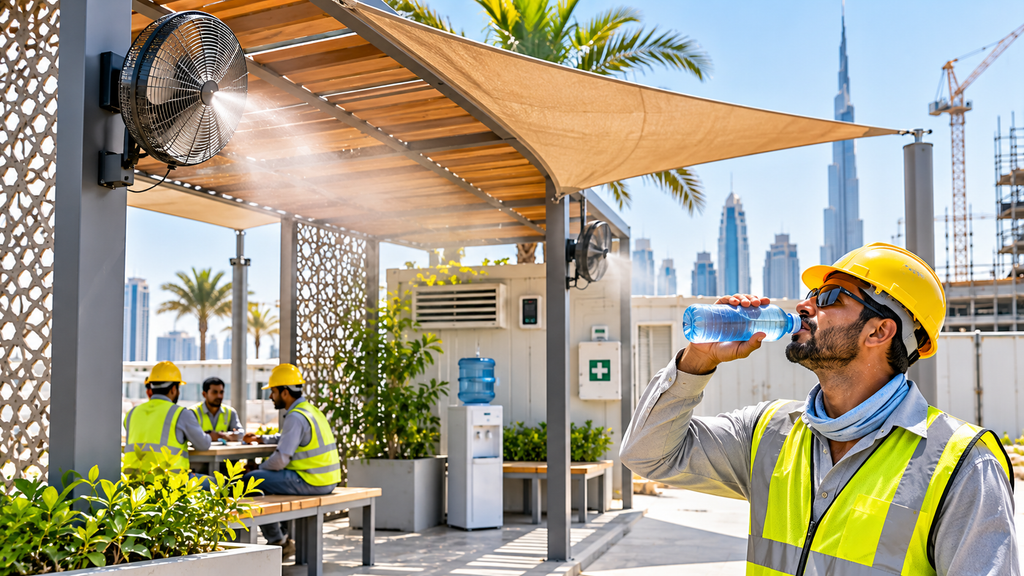
Fans and ventilation systems can help under suitable conditions.
However, airflow alone may be insufficient when environmental temperatures are extremely high.
In humid environments, the effectiveness of evaporative cooling may also be reduced.
Engineering assessments should determine whether a proposed system provides meaningful protection.
Using Heat-Reflective Materials
Selected roof and canopy materials can reduce solar heat absorption.
Reflective surfaces and insulated shelter roofs may improve conditions beneath structures.
However, highly reflective surfaces should be evaluated for glare and unintended radiant exposure.
Reflective materials cannot replace adequate ventilation or cooling.
Design Features Compared
| Workplace Feature | Potential Benefit | Important Limitation |
|---|---|---|
| Shaded Work Zones | Less direct solar exposure | Ambient heat remains |
| Air-Conditioned Rest Cabins | Cooler recovery environment | Electricity and maintenance |
| Ventilated Shelters | Improved airflow | May be insufficient in extreme heat |
| Reflective Roofing | Reduced heat absorption | Dust and material ageing |
| Covered Loading Areas | Less exposure during handling | Space and construction costs |
| Mechanised Equipment | Reduced physical exertion | Training and equipment investment |
Why Layout Matters
The distance between workstations, drinking water, and rest areas can influence how practical safety procedures are.
Well-designed sites place essential facilities close to where people work.
This can reduce unnecessary movement through exposed areas while making it easier to take required breaks.
3. How UAE, Saudi Arabia, and Qatar Heat Regulations Are Influencing Workplaces
Several Gulf countries have introduced seasonal restrictions designed to reduce occupational exposure during particularly hot periods.
These regulations influence project scheduling, workforce planning, and the provision of appropriate facilities.
However, requirements differ between jurisdictions.
The UAE’s Midday Work Ban
The UAE’s Occupational Heat Stress Prevention Policy restricts work under direct sunlight and in open areas from 12:30 p.m. to 3:00 p.m. between June 15 and September 15.
The restriction was implemented again in 2026.
Certain narrowly defined activities may qualify for exemptions under applicable regulations, but employers must still provide appropriate safeguards.
The policy encourages businesses to plan work schedules and recovery arrangements around predictable seasonal hazards.
Saudi Arabia’s Summer Restrictions
Saudi Arabia applied its 2026 prohibition on work under direct sunlight from June 15 to September 15, between noon and 3:00 p.m.
The Ministry of Human Resources and Social Development reported conducting 29,945 inspection visits during the 2026 implementation period.
It also reported a compliance rate of 95%.
These figures reflect enforcement activity and compliance with the specified restriction, not proof that every heat-related hazard has been eliminated.
Qatar’s Heat-Stress Requirements
Qatar’s Ministry of Labour applies summer restrictions from June 1 to September 15.
During this period, work in exposed outdoor areas and shaded areas without suitable ventilation is prohibited from 10:00 a.m. to 3:30 p.m.
Qatar also requires heat-risk assessments and preventive arrangements under its applicable rules.
In September 2026, the ministry reported closing 388 work sites for non-compliance during the summer enforcement period.
Comparison of Verified 2026 Restrictions
| Country | Summer Restriction Period | Prohibited Hours |
|---|---|---|
| UAE | June 15–September 15 | 12:30 p.m.–3:00 p.m. |
| Saudi Arabia | June 15–September 15 | 12:00 p.m.–3:00 p.m. |
| Qatar | June 1–September 15 | 10:00 a.m.–3:30 p.m. |
These are general summaries of the cited provisions. Exceptions, scope and additional obligations must be checked against current official rules.
Why Seasonal Bans Are Not Enough
Heat can create risks outside restricted hours and seasons.
A worker performing strenuous activity during a hot morning may still require protection.
Employers must therefore assess actual environmental conditions rather than assuming work is automatically safe whenever a seasonal prohibition is not in effect.
4. Why Cooling Stations, Drinking Water, and Recovery Spaces Are Essential
Outdoor workplace design increasingly requires consideration of supporting facilities.
Workers need accessible locations where they can drink, rest, recover from heat exposure, and obtain assistance when symptoms occur.
Planning Water Access
Drinking water should be available near work areas.
Placing water stations far from active tasks can discourage regular use and increase unnecessary walking.
Water supplies must also remain suitable for consumption and protected from contamination.
Employers should follow professional occupational health guidance on hydration rather than assume one fixed intake is appropriate for every worker.
Individual needs can differ according to exertion, sweating, health circumstances, and workplace conditions.
Designing Recovery Areas
Recovery spaces should be cooler than the active work environment.
Suitable facilities may include air-conditioned rooms, purpose-built cabins, or other arrangements that provide meaningful thermal relief.
Dubai Municipality’s technical heat-stress guidance emphasises appropriate work-rest schedules and the use of cool recovery locations.
The effectiveness of these areas depends on their capacity, accessibility, maintenance, and actual conditions.
Sanitation and Hygiene
Outdoor employees also require access to appropriate toilets and handwashing facilities.
Poorly designed welfare arrangements can increase discomfort and create additional hygiene concerns.
These facilities should be incorporated into the site layout rather than added as an afterthought.
Supporting New Workers
People beginning work in hot conditions may not yet be acclimatised.
Acclimatisation is a gradual physiological adaptation to heat exposure.
The process requires carefully managed workloads and recovery arrangements.
It does not make workers immune to heat-related illness.
Essential Worker Facilities
| Facility | Main Purpose |
|---|---|
| Drinking-Water Stations | Support regular hydration |
| Cooled Rest Areas | Provide recovery from heat |
| Shaded Access Routes | Reduce unnecessary sun exposure |
| Hygiene Facilities | Support sanitation and wellbeing |
| Emergency Contact Points | Enable requests for assistance |
| First-Aid Arrangements | Support immediate response |
| Heat Information Displays | Communicate relevant conditions and instructions |
The Importance of Emergency Response
Heatstroke is a medical emergency.
Workers and supervisors should understand warning signs and know how to activate emergency procedures.
Where severe heat illness is suspected, emergency medical assistance should be sought immediately while appropriate first-aid cooling measures begin.
Workplace design must allow responders to reach affected workers quickly.
5. How Smart Sensors and Mechanisation Could Reduce Outdoor Heat Exposure
Technology may support better heat-risk management by helping employers understand environmental conditions and reduce some physically demanding tasks.
However, devices and automated systems cannot replace sound engineering and occupational safety procedures.
Measuring Heat Exposure
Ordinary air temperature does not account for every factor influencing occupational heat stress.
Wet Bulb Globe Temperature, or WBGT, is one commonly used measurement that considers environmental heat conditions relevant to work.
Abu Dhabi’s Safety in Heat programme also uses the Thermal Work Limit framework.
Both approaches require appropriate interpretation by qualified personnel.
They should not be treated as interchangeable indicators without considering their methods and assumptions.
Environmental Monitoring Sensors
Workplaces may use instruments to monitor temperature, humidity, radiant heat, or other relevant conditions.
Data can help safety teams identify when preventive controls should be strengthened.
However, readings depend on correct sensor positioning, calibration, and maintenance.
A temperature sensor placed inside an air-conditioned office does not represent conditions experienced by workers in an exposed yard.
Wearables and Heat Monitoring
Some wearable devices aim to monitor physiological or environmental indicators associated with heat exposure.
Such devices may provide additional information in selected occupational settings.
However, performance varies between products, and physiological monitoring raises privacy and data-governance issues.
A wearable alert should not be treated as a guarantee that heat illness will be detected.
Mechanisation and Equipment Design
Reducing strenuous physical activity can lower the body’s internal heat production.
Material-handling equipment, lifting devices, forklifts, and suitable automated systems may reduce some manual exertion.
Air-conditioned vehicle cabins can also provide a more controlled environment for selected operators.
However, mechanisation introduces different safety and training requirements.
Technology Applications
| Technology | Potential Benefit | Main Limitation |
|---|---|---|
| Heat Monitoring Instruments | Better assessment of environmental conditions | Placement and calibration |
| Digital Safety Dashboards | More accessible risk information | Dependence on accurate data |
| Wearable Sensors | Selected physiological monitoring | Accuracy and privacy |
| Air-Conditioned Machinery Cabins | Lower exposure for certain operators | Maintenance and power |
| Automated Material Handling | Reduced physical workload | Cost and training |
| Digital Scheduling Tools | Support task and break planning | Require human oversight |
Why Human Oversight Remains Necessary
A digital system may flag challenging conditions, but a supervisor must ensure appropriate action follows.
Workers should also be able to report symptoms or unsafe conditions without waiting for an automated warning.
Technology is most valuable when it strengthens, rather than replaces, effective safety management.
6. The Economic and Environmental Challenges of Heat-Resilient Workplace Design
Improving outdoor workplaces can require investment in equipment, shelters, power systems, infrastructure, and maintenance.
These costs may create challenges for smaller contractors and businesses operating in competitive markets.
However, inadequate heat protection can also lead to disruptions, health consequences, and operational risks.
The Cost of Cooling Infrastructure
Air-conditioned rest cabins require electricity, space, and regular servicing.
Temporary sites may also need generators or appropriate electrical connections.
Businesses should assess operating costs throughout the project’s duration rather than focusing only on the purchase price of equipment.
Balancing Cooling and Energy Efficiency
Passive measures such as shading and insulation can reduce some heat exposure without continuous mechanical cooling.
However, passive strategies may be insufficient during extreme conditions.
A combined approach can use appropriate shade, ventilation, and targeted cooling according to the risk.
Energy efficiency should never be used as justification for inadequate worker protection.
Water Use in Cooling Systems
Some cooling technologies use water evaporation.
In dry environments, this may provide useful cooling under appropriate conditions.
However, high humidity can reduce effectiveness, and water consumption introduces additional environmental considerations.
Water-intensive systems should be evaluated against local climate and resource availability.
The Challenge of Temporary Workplaces
Construction sites change as projects progress.
A shaded area that is accessible during one phase may become distant or obstructed during another.
Temporary workplace design must therefore remain adaptable.
Safety teams should review facility locations as work activities move.
Financial and Environmental Trade-Offs
| Investment | Potential Value | Trade-Off |
|---|---|---|
| Permanent Shade | Long-term protection | Construction and space |
| Temporary Canopies | Flexible installation | Wind stability and upkeep |
| Cooled Cabins | Stronger recovery conditions | Electricity consumption |
| Reflective Materials | Lower solar absorption | Maintenance and glare |
| Misting Systems | Localised cooling in suitable conditions | Water demand |
| Mechanised Equipment | Reduced manual exertion | Capital and servicing costs |
Why Safety Outcomes Should Guide Investment
A company’s objective should not be to install the greatest number of cooling devices.
It should be to reduce actual worker exposure and provide effective recovery opportunities.
Investments should therefore be evaluated against measured site conditions and the practical needs of employees.
7. The Future of Heat-Safe Outdoor Workplaces in the Middle East
As climate risks become more important to infrastructure and employment planning, outdoor workplaces may increasingly incorporate heat protection into their original designs.
Rather than treating shade, water and recovery areas as temporary additions, employers may begin planning them alongside machinery, access roads and operational facilities.
Designing Workplaces Around Local Climate
A logistics facility in a humid coastal city may require different controls from a construction project in a dry inland location.
Wind conditions, solar exposure, work intensity, and available infrastructure all influence design decisions.
Climate-specific planning can help avoid ineffective or unnecessarily expensive installations.
Integrating Heat Protection Into Procurement
Project owners may include occupational heat-safety requirements in contractor specifications.
These may cover welfare facilities, shaded work areas, suitable monitoring, and maintenance responsibilities.
However, contract requirements should align with local legislation and established technical standards.
A Practical Outdoor Workplace Design Checklist
- Assess environmental heat risks for each work activity.
- Identify areas exposed to direct sunlight and radiant heat.
- Provide adequate shade near active work zones.
- Establish suitable cooled recovery facilities.
- Ensure convenient access to safe drinking water.
- Use appropriate heat-risk assessment methods.
- Develop suitable work-rest and acclimatisation arrangements.
- Reduce unnecessary physical exertion where practicable.
- Train supervisors and workers to recognise heat illness.
- Review emergency access and response procedures.
- Maintain shelters, cooling equipment, and monitoring devices.
- Update the design as site conditions change.
Measuring Whether Workplace Improvements Work
Employers can monitor several indicators to evaluate heat-protection arrangements.
These include environmental heat measurements, availability of suitable recovery facilities, equipment performance, staff training, and identified safety deficiencies.
Heat-related incidents and near misses should also be reviewed.
However, the absence of reported incidents does not prove that conditions are safe.
Key Performance Indicators
| Indicator | What It Evaluates |
|---|---|
| Heat Exposure Measurements | Environmental risk conditions |
| Rest Area Availability | Access to recovery facilities |
| Cooling Equipment Uptime | Reliability of installed systems |
| Water Supply Reliability | Availability of drinking water |
| Training Completion | Workforce preparedness |
| Reported Heat Incidents | Identified health and safety events |
| Corrective Action Completion | Response to identified hazards |
| Worker Feedback | Practical usability of safety measures |
Opportunities for Gulf Businesses
Demand for better workplace design could create opportunities for engineering consultants, cooling-equipment suppliers, modular building manufacturers, occupational safety specialists, and monitoring technology providers.
Companies may develop solutions suited to construction sites, ports, utilities, agricultural facilities, and logistics operations.
However, products should be evaluated through credible performance testing.
A device marketed as a heat-safety innovation should not be assumed effective without evidence.
The Importance of Worker Participation
Employees can provide valuable information about conditions experienced during actual work.
They may identify poorly positioned shelters, inaccessible water stations, or tasks involving unexpected heat exposure.
Involving workers in risk assessments can make workplace arrangements more practical.
Communication should be accessible to employees with different languages and literacy levels.
Conclusion
Extreme heat is changing how outdoor workplaces in the Middle East need to be designed, managed, and maintained.
Construction sites, logistics yards, industrial facilities, and public maintenance operations must account for environmental conditions that can threaten worker health and affect daily operations.
Countries including the UAE, Saudi Arabia, and Qatar have established seasonal work restrictions and occupational safety requirements that demonstrate the importance of heat protection.
However, compliance with prohibited working hours is only one part of effective prevention.
Employers also need appropriate shading, cooled recovery facilities, accessible drinking water, suitable work schedules, and emergency preparedness.
Emerging technologies may strengthen monitoring and reduce certain physical demands, but they cannot replace reliable engineering controls or professional safety judgement.
For developers and businesses, the greatest opportunity lies in incorporating heat resilience into workplace planning from the beginning.
Ultimately, heat-safe outdoor workplaces should not be viewed as optional improvements introduced only during extreme summer conditions.
They are part of the essential infrastructure required to protect employees and support dependable operations in a warming region.
By combining climate-responsive design, practical safety measures, and ongoing worker participation, Middle Eastern businesses can create outdoor environments better prepared for both present and future heat challenges.
Across the Middle East, construction sites, logistics yards, industrial facilities, agricultural operations, and public maintenance areas are facing an increasingly important challenge: protecting employees who must work in environments exposed to intense heat. In cities such as Dubai, Abu Dhabi, Riyadh, Doha, Muscat, and Kuwait City, outdoor employment remains essential to infrastructure development and everyday urban services.
However, high temperatures, humidity, direct sunlight, and physically demanding tasks can create dangerous working conditions. As awareness of occupational heat stress grows, employers are beginning to reconsider not only when people work outdoors, but also how workplaces are physically designed.
Developing heat-safe outdoor workplaces in the Middle East involves more than installing a shaded shelter or providing drinking water. Effective protection may require purpose-built cooling stations, carefully positioned work areas, ventilation systems, heat-reflective materials, accessible rest facilities, and equipment that reduces physical exertion.
The design of these workplaces is becoming relevant to employers, architects, engineering contractors, health and safety specialists, and government authorities.
Research from the World Health Organization and World Meteorological Organization highlights the growing health risks of occupational heat exposure. Across the GCC, countries have also introduced restrictions and guidance aimed at reducing the dangers associated with outdoor employment during the hottest months.
In 2026, the UAE, Saudi Arabia, and Qatar continued implementing summer work restrictions, although their prohibited hours and requirements differ.
These developments are creating new expectations for construction planning, worker facilities, equipment selection, and site management.
However, no single technology can eliminate heat stress. Workplaces must combine appropriate physical design with risk assessment, rest arrangements, hydration, training, and emergency preparedness.
Understanding these changes reveals how outdoor workplaces may evolve to become safer, more resilient, and better suited to the region’s increasingly challenging climatic conditions.
1. Why Extreme Heat Is Becoming a Major Workplace Design Challenge
Outdoor work exposes people to several environmental factors that influence how effectively the body can regulate its temperature.
These include air temperature, humidity, direct solar radiation, and air movement.
Physical activity and protective clothing can increase the body’s heat burden.
Consequently, two workplaces with the same air temperature may present different levels of heat risk.
Understanding Occupational Heat Stress
Heat stress occurs when the combination of environmental conditions, physical exertion, and clothing places excessive demands on the body’s ability to regulate temperature.
If heat accumulates faster than it can be released, workers may experience heat strain.
Possible consequences include dehydration, exhaustion, impaired concentration, dizziness, and potentially life-threatening heatstroke.
The World Health Organization identifies occupational heat stress as a significant global public health concern.
Its 2025 guidance, developed with the World Meteorological Organization, estimates that more than 2.4 billion workers experience excessive workplace heat exposure worldwide.
This is a global figure, not an estimate of workers affected in GCC countries alone.
Why Middle Eastern Conditions Are Challenging
Many Gulf locations experience prolonged periods of high summer temperatures.
In coastal areas, humidity can make it harder for perspiration to cool the body.
Inland areas may experience intense solar radiation and very hot surfaces.
Workers handling heavy materials or operating near heat-generating equipment can experience additional thermal stress.
These conditions require workplace designs adapted to local climate and specific tasks.
The Economic Impact of Heat
Heat exposure can affect productivity when workers need to reduce their pace or spend additional time recovering.
A 2025 study of the Arabian Peninsula examined historical heat-stress conditions and modelled changes in outdoor labour productivity.
The findings identified particularly challenging conditions during peak daytime hours for physically demanding work.
However, modelled productivity changes should not be treated as measured losses for every business.
Main Sources of Heat Exposure
| Heat Factor | Workplace Implication |
|---|---|
| High Air Temperature | Increases environmental heat load |
| Direct Sunlight | Adds radiant heat exposure |
| High Humidity | Reduces evaporative cooling |
| Limited Air Movement | Can restrict heat dissipation |
| Heavy Physical Work | Increases metabolic heat generation |
| Protective Equipment | May trap heat or restrict evaporation |
| Hot Machinery and Surfaces | Adds local radiant or contact hazards |
The challenge is therefore not simply to reduce the temperature displayed on a weather application.
It is to assess the actual conditions experienced by workers.
2. How Heat-Safe Outdoor Workplaces in the Middle East Are Being Redesigned
Physical workplace design can help reduce the amount of heat workers encounter during daily operations.
The most effective interventions generally aim to reduce heat exposure at its source rather than relying entirely on individual protective equipment.
Creating Effective Shade
Shading structures can reduce direct solar radiation reaching workers.
On construction sites, this may involve temporary canopies positioned near active work areas.
In logistics yards, permanent covered loading zones may provide protection during material handling.
However, the location and design of shade matter.
A shelter exposed to hot surrounding surfaces and poor ventilation may still be uncomfortable or unsafe.
Designing Cooling and Recovery Areas
Workers require suitable places to recover from heat exposure.
These may include air-conditioned rooms, cooled cabins, or appropriately ventilated shelters.
Recovery areas should be accessible without requiring long journeys across exposed sites.
The US Occupational Safety and Health Administration identifies cooling, ventilation, shade, and appropriate work-rest arrangements as important controls.
Improving Air Movement
Fans and ventilation systems can help under suitable conditions.
However, airflow alone may be insufficient when environmental temperatures are extremely high.
In humid environments, the effectiveness of evaporative cooling may also be reduced.
Engineering assessments should determine whether a proposed system provides meaningful protection.
Using Heat-Reflective Materials
Selected roof and canopy materials can reduce solar heat absorption.
Reflective surfaces and insulated shelter roofs may improve conditions beneath structures.
However, highly reflective surfaces should be evaluated for glare and unintended radiant exposure.
Reflective materials cannot replace adequate ventilation or cooling.
Design Features Compared
| Workplace Feature | Potential Benefit | Important Limitation |
|---|---|---|
| Shaded Work Zones | Less direct solar exposure | Ambient heat remains |
| Air-Conditioned Rest Cabins | Cooler recovery environment | Electricity and maintenance |
| Ventilated Shelters | Improved airflow | May be insufficient in extreme heat |
| Reflective Roofing | Reduced heat absorption | Dust and material ageing |
| Covered Loading Areas | Less exposure during handling | Space and construction costs |
| Mechanised Equipment | Reduced physical exertion | Training and equipment investment |
Why Layout Matters
The distance between workstations, drinking water, and rest areas can influence how practical safety procedures are.
Well-designed sites place essential facilities close to where people work.
This can reduce unnecessary movement through exposed areas while making it easier to take required breaks.
3. How UAE, Saudi Arabia, and Qatar Heat Regulations Are Influencing Workplaces
Several Gulf countries have introduced seasonal restrictions designed to reduce occupational exposure during particularly hot periods.
These regulations influence project scheduling, workforce planning, and the provision of appropriate facilities.
However, requirements differ between jurisdictions.
The UAE’s Midday Work Ban
The UAE’s Occupational Heat Stress Prevention Policy restricts work under direct sunlight and in open areas from 12:30 p.m. to 3:00 p.m. between June 15 and September 15.
The restriction was implemented again in 2026.
Certain narrowly defined activities may qualify for exemptions under applicable regulations, but employers must still provide appropriate safeguards.
The policy encourages businesses to plan work schedules and recovery arrangements around predictable seasonal hazards.
Saudi Arabia’s Summer Restrictions
Saudi Arabia applied its 2026 prohibition on work under direct sunlight from June 15 to September 15, between noon and 3:00 p.m.
The Ministry of Human Resources and Social Development reported conducting 29,945 inspection visits during the 2026 implementation period.
It also reported a compliance rate of 95%.
These figures reflect enforcement activity and compliance with the specified restriction, not proof that every heat-related hazard has been eliminated.
Qatar’s Heat-Stress Requirements
Qatar’s Ministry of Labour applies summer restrictions from June 1 to September 15.
During this period, work in exposed outdoor areas and shaded areas without suitable ventilation is prohibited from 10:00 a.m. to 3:30 p.m.
Qatar also requires heat-risk assessments and preventive arrangements under its applicable rules.
In September 2026, the ministry reported closing 388 work sites for non-compliance during the summer enforcement period.
Comparison of Verified 2026 Restrictions
| Country | Summer Restriction Period | Prohibited Hours |
|---|---|---|
| UAE | June 15–September 15 | 12:30 p.m.–3:00 p.m. |
| Saudi Arabia | June 15–September 15 | 12:00 p.m.–3:00 p.m. |
| Qatar | June 1–September 15 | 10:00 a.m.–3:30 p.m. |
These are general summaries of the cited provisions. Exceptions, scope and additional obligations must be checked against current official rules.
Why Seasonal Bans Are Not Enough
Heat can create risks outside restricted hours and seasons.
A worker performing strenuous activity during a hot morning may still require protection.
Employers must therefore assess actual environmental conditions rather than assuming work is automatically safe whenever a seasonal prohibition is not in effect.
4. Why Cooling Stations, Drinking Water, and Recovery Spaces Are Essential
Outdoor workplace design increasingly requires consideration of supporting facilities.
Workers need accessible locations where they can drink, rest, recover from heat exposure, and obtain assistance when symptoms occur.
Planning Water Access
Drinking water should be available near work areas.
Placing water stations far from active tasks can discourage regular use and increase unnecessary walking.
Water supplies must also remain suitable for consumption and protected from contamination.
Employers should follow professional occupational health guidance on hydration rather than assume one fixed intake is appropriate for every worker.
Individual needs can differ according to exertion, sweating, health circumstances, and workplace conditions.
Designing Recovery Areas
Recovery spaces should be cooler than the active work environment.
Suitable facilities may include air-conditioned rooms, purpose-built cabins, or other arrangements that provide meaningful thermal relief.
Dubai Municipality’s technical heat-stress guidance emphasises appropriate work-rest schedules and the use of cool recovery locations.
The effectiveness of these areas depends on their capacity, accessibility, maintenance, and actual conditions.
Sanitation and Hygiene
Outdoor employees also require access to appropriate toilets and handwashing facilities.
Poorly designed welfare arrangements can increase discomfort and create additional hygiene concerns.
These facilities should be incorporated into the site layout rather than added as an afterthought.
Supporting New Workers
People beginning work in hot conditions may not yet be acclimatised.
Acclimatisation is a gradual physiological adaptation to heat exposure.
The process requires carefully managed workloads and recovery arrangements.
It does not make workers immune to heat-related illness.
Essential Worker Facilities
| Facility | Main Purpose |
|---|---|
| Drinking-Water Stations | Support regular hydration |
| Cooled Rest Areas | Provide recovery from heat |
| Shaded Access Routes | Reduce unnecessary sun exposure |
| Hygiene Facilities | Support sanitation and wellbeing |
| Emergency Contact Points | Enable requests for assistance |
| First-Aid Arrangements | Support immediate response |
| Heat Information Displays | Communicate relevant conditions and instructions |
The Importance of Emergency Response
Heatstroke is a medical emergency.
Workers and supervisors should understand warning signs and know how to activate emergency procedures.
Where severe heat illness is suspected, emergency medical assistance should be sought immediately while appropriate first-aid cooling measures begin.
Workplace design must allow responders to reach affected workers quickly.
5. How Smart Sensors and Mechanisation Could Reduce Outdoor Heat Exposure
Technology may support better heat-risk management by helping employers understand environmental conditions and reduce some physically demanding tasks.
However, devices and automated systems cannot replace sound engineering and occupational safety procedures.
Measuring Heat Exposure
Ordinary air temperature does not account for every factor influencing occupational heat stress.
Wet Bulb Globe Temperature, or WBGT, is one commonly used measurement that considers environmental heat conditions relevant to work.
Abu Dhabi’s Safety in Heat programme also uses the Thermal Work Limit framework.
Both approaches require appropriate interpretation by qualified personnel.
They should not be treated as interchangeable indicators without considering their methods and assumptions.
Environmental Monitoring Sensors
Workplaces may use instruments to monitor temperature, humidity, radiant heat, or other relevant conditions.
Data can help safety teams identify when preventive controls should be strengthened.
However, readings depend on correct sensor positioning, calibration, and maintenance.
A temperature sensor placed inside an air-conditioned office does not represent conditions experienced by workers in an exposed yard.
Wearables and Heat Monitoring
Some wearable devices aim to monitor physiological or environmental indicators associated with heat exposure.
Such devices may provide additional information in selected occupational settings.
However, performance varies between products, and physiological monitoring raises privacy and data-governance issues.
A wearable alert should not be treated as a guarantee that heat illness will be detected.
Mechanisation and Equipment Design
Reducing strenuous physical activity can lower the body’s internal heat production.
Material-handling equipment, lifting devices, forklifts, and suitable automated systems may reduce some manual exertion.
Air-conditioned vehicle cabins can also provide a more controlled environment for selected operators.
However, mechanisation introduces different safety and training requirements.
Technology Applications
| Technology | Potential Benefit | Main Limitation |
|---|---|---|
| Heat Monitoring Instruments | Better assessment of environmental conditions | Placement and calibration |
| Digital Safety Dashboards | More accessible risk information | Dependence on accurate data |
| Wearable Sensors | Selected physiological monitoring | Accuracy and privacy |
| Air-Conditioned Machinery Cabins | Lower exposure for certain operators | Maintenance and power |
| Automated Material Handling | Reduced physical workload | Cost and training |
| Digital Scheduling Tools | Support task and break planning | Require human oversight |
Why Human Oversight Remains Necessary
A digital system may flag challenging conditions, but a supervisor must ensure appropriate action follows.
Workers should also be able to report symptoms or unsafe conditions without waiting for an automated warning.
Technology is most valuable when it strengthens, rather than replaces, effective safety management.
6. The Economic and Environmental Challenges of Heat-Resilient Workplace Design
Improving outdoor workplaces can require investment in equipment, shelters, power systems, infrastructure, and maintenance.
These costs may create challenges for smaller contractors and businesses operating in competitive markets.
However, inadequate heat protection can also lead to disruptions, health consequences, and operational risks.
The Cost of Cooling Infrastructure
Air-conditioned rest cabins require electricity, space, and regular servicing.
Temporary sites may also need generators or appropriate electrical connections.
Businesses should assess operating costs throughout the project’s duration rather than focusing only on the purchase price of equipment.
Balancing Cooling and Energy Efficiency
Passive measures such as shading and insulation can reduce some heat exposure without continuous mechanical cooling.
However, passive strategies may be insufficient during extreme conditions.
A combined approach can use appropriate shade, ventilation, and targeted cooling according to the risk.
Energy efficiency should never be used as justification for inadequate worker protection.
Water Use in Cooling Systems
Some cooling technologies use water evaporation.
In dry environments, this may provide useful cooling under appropriate conditions.
However, high humidity can reduce effectiveness, and water consumption introduces additional environmental considerations.
Water-intensive systems should be evaluated against local climate and resource availability.
The Challenge of Temporary Workplaces
Construction sites change as projects progress.
A shaded area that is accessible during one phase may become distant or obstructed during another.
Temporary workplace design must therefore remain adaptable.
Safety teams should review facility locations as work activities move.
Financial and Environmental Trade-Offs
| Investment | Potential Value | Trade-Off |
|---|---|---|
| Permanent Shade | Long-term protection | Construction and space |
| Temporary Canopies | Flexible installation | Wind stability and upkeep |
| Cooled Cabins | Stronger recovery conditions | Electricity consumption |
| Reflective Materials | Lower solar absorption | Maintenance and glare |
| Misting Systems | Localised cooling in suitable conditions | Water demand |
| Mechanised Equipment | Reduced manual exertion | Capital and servicing costs |
Why Safety Outcomes Should Guide Investment
A company’s objective should not be to install the greatest number of cooling devices.
It should be to reduce actual worker exposure and provide effective recovery opportunities.
Investments should therefore be evaluated against measured site conditions and the practical needs of employees.
7. The Future of Heat-Safe Outdoor Workplaces in the Middle East
As climate risks become more important to infrastructure and employment planning, outdoor workplaces may increasingly incorporate heat protection into their original designs.
Rather than treating shade, water and recovery areas as temporary additions, employers may begin planning them alongside machinery, access roads and operational facilities.
Designing Workplaces Around Local Climate
A logistics facility in a humid coastal city may require different controls from a construction project in a dry inland location.
Wind conditions, solar exposure, work intensity, and available infrastructure all influence design decisions.
Climate-specific planning can help avoid ineffective or unnecessarily expensive installations.
Integrating Heat Protection Into Procurement
Project owners may include occupational heat-safety requirements in contractor specifications.
These may cover welfare facilities, shaded work areas, suitable monitoring, and maintenance responsibilities.
However, contract requirements should align with local legislation and established technical standards.
A Practical Outdoor Workplace Design Checklist
- Assess environmental heat risks for each work activity.
- Identify areas exposed to direct sunlight and radiant heat.
- Provide adequate shade near active work zones.
- Establish suitable cooled recovery facilities.
- Ensure convenient access to safe drinking water.
- Use appropriate heat-risk assessment methods.
- Develop suitable work-rest and acclimatisation arrangements.
- Reduce unnecessary physical exertion where practicable.
- Train supervisors and workers to recognise heat illness.
- Review emergency access and response procedures.
- Maintain shelters, cooling equipment, and monitoring devices.
- Update the design as site conditions change.
Measuring Whether Workplace Improvements Work
Employers can monitor several indicators to evaluate heat-protection arrangements.
These include environmental heat measurements, availability of suitable recovery facilities, equipment performance, staff training, and identified safety deficiencies.
Heat-related incidents and near misses should also be reviewed.
However, the absence of reported incidents does not prove that conditions are safe.
Key Performance Indicators
| Indicator | What It Evaluates |
|---|---|
| Heat Exposure Measurements | Environmental risk conditions |
| Rest Area Availability | Access to recovery facilities |
| Cooling Equipment Uptime | Reliability of installed systems |
| Water Supply Reliability | Availability of drinking water |
| Training Completion | Workforce preparedness |
| Reported Heat Incidents | Identified health and safety events |
| Corrective Action Completion | Response to identified hazards |
| Worker Feedback | Practical usability of safety measures |
Opportunities for Gulf Businesses
Demand for better workplace design could create opportunities for engineering consultants, cooling-equipment suppliers, modular building manufacturers, occupational safety specialists, and monitoring technology providers.
Companies may develop solutions suited to construction sites, ports, utilities, agricultural facilities, and logistics operations.
However, products should be evaluated through credible performance testing.
A device marketed as a heat-safety innovation should not be assumed effective without evidence.
The Importance of Worker Participation
Employees can provide valuable information about conditions experienced during actual work.
They may identify poorly positioned shelters, inaccessible water stations, or tasks involving unexpected heat exposure.
Involving workers in risk assessments can make workplace arrangements more practical.
Communication should be accessible to employees with different languages and literacy levels.
Conclusion
Extreme heat is changing how outdoor workplaces in the Middle East need to be designed, managed, and maintained.
Construction sites, logistics yards, industrial facilities, and public maintenance operations must account for environmental conditions that can threaten worker health and affect daily operations.
Countries including the UAE, Saudi Arabia, and Qatar have established seasonal work restrictions and occupational safety requirements that demonstrate the importance of heat protection.
However, compliance with prohibited working hours is only one part of effective prevention.
Employers also need appropriate shading, cooled recovery facilities, accessible drinking water, suitable work schedules, and emergency preparedness.
Emerging technologies may strengthen monitoring and reduce certain physical demands, but they cannot replace reliable engineering controls or professional safety judgement.
For developers and businesses, the greatest opportunity lies in incorporating heat resilience into workplace planning from the beginning.
Ultimately, heat-safe outdoor workplaces should not be viewed as optional improvements introduced only during extreme summer conditions.
They are part of the essential infrastructure required to protect employees and support dependable operations in a warming region.
By combining climate-responsive design, practical safety measures, and ongoing worker participation, Middle Eastern businesses can create outdoor environments better prepared for both present and future heat challenges.
Do follow us on Instagram
Read More – Can Industrial Waste Heat Become a Useful Energy Resource in GCC Countries?