

Learn the Emirati Dishes You Should Look for on the Menu
Finding authentic Emirati food in Dubai can be surprisingly difficult for first-time visitors. The city has one of the most diverse restaurant scenes in the world, so international cuisines often receive more attention than the traditional food of the UAE itself.
- Start Your Search for Authentic Emirati Food in Dubai in Old Dubai
- Learn the Emirati Dishes You Should Look for on the Menu
- Try an Emirati Breakfast Instead of Only Looking for Dinner
- Look for Emirati Restaurants Rather Than Generic Arabic Restaurants
- Use Cultural Meals to Understand the Story Behind the Food
- Try Local Seafood and Understand Dubai’s Coastal Food Heritage
- Know Where Traditional Emirati Food Meets Modern Dubai
- Learn the Difference Between Emirati, Khaleeji and Middle Eastern Food
- Avoid Tourist Traps When Searching for Authentic Emirati Food
- Build a One-Day Emirati Food Experience in Dubai
- Authentic Emirati Food in Dubai: What First-Time Visitors Should Order
- How to Find Authentic Emirati Food in Dubai Without Overspending
A traveller can easily spend several days in Dubai eating Lebanese, Indian, Pakistani, Italian, Japanese or French food without trying a single Emirati dish. That would be a missed opportunity because local cuisine tells an important part of Dubai’s history.
Traditional Emirati food developed around the ingredients and conditions available in the Gulf. Rice, wheat, dates, fish, meat, dried limes and aromatic spices became central to many dishes. Trade with India, Persia and East Africa also influenced local cooking over generations.
Visit Dubai highlights dishes and drinks such as harees, chebab, luqaimat, gahwa and fouga deyay as part of the city’s Emirati culinary identity. The UAE Government also lists dishes including khuzi, machboos and madrooba among traditional Emirati foods.
The best way to experience this cuisine is not simply to search for the most expensive Arabic restaurant. Arabic food and Emirati food are related, but they are not exactly the same thing. A restaurant serving hummus, shawarma and Lebanese grills may be excellent without being an Emirati restaurant.
Visitors should instead look for restaurants that clearly identify Emirati or Khaleeji dishes, spend time in heritage neighbourhoods such as Al Fahidi and Old Dubai, try a traditional breakfast and, if possible, join a cultural meal where the food is explained alongside local customs.
This guide explains how to find genuinely local food, which dishes to order, where to look and how to tell the difference between a traditional Emirati meal and a generic Middle Eastern menu.
Start Your Search for Authentic Emirati Food in Dubai in Old Dubai
Old Dubai is one of the most useful places to begin because food, trade and the history of the city are closely connected around Dubai Creek.
Visit Dubai describes Bur Dubai and Deira as areas where restaurants often focus on local ingredients, nostalgia, traditional flavours and good value. The tourism authority also highlights Old Dubai’s cultural food experiences as an important way to understand the city’s culinary roots.
Explore Al Fahidi Historical Neighbourhood
Al Fahidi is particularly useful for visitors who want food and culture in the same outing. The traditional architecture, narrow lanes and heritage spaces create a very different atmosphere from the restaurants inside Dubai’s modern shopping malls.
One of the strongest experiences in the neighbourhood is the Sheikh Mohammed bin Rashid Al Maktoum Centre for Cultural Understanding, commonly known as SMCCU. The centre organises cultural meals where visitors can eat traditional Emirati food while learning about local customs, history and everyday life.
The meals are designed to be shared and are hosted in a cultural setting rather than functioning simply as a restaurant service. This makes them particularly useful for travellers who want someone to explain what they are eating and why certain dishes matter.
Walk towards Dubai Creek
After Al Fahidi, continue towards Dubai Creek and Al Seef. This wider district has long been connected with trade and food from across the Gulf.
You can combine a traditional meal with an abra crossing, the Spice Souk or the Gold Souk, turning lunch or breakfast into part of a broader cultural day.
Do not limit yourself to tourist streets
Some of the best local food experiences come from restaurants serving residents rather than visitors. If a restaurant’s menu includes dishes you do not immediately recognise and offers traditional breakfasts, rice dishes, seafood or gahwa, it may be worth investigating further.
Ask staff whether the recipes are Emirati, Khaleeji or inspired by another Gulf cuisine. The answer can help you understand what type of food you are actually ordering.
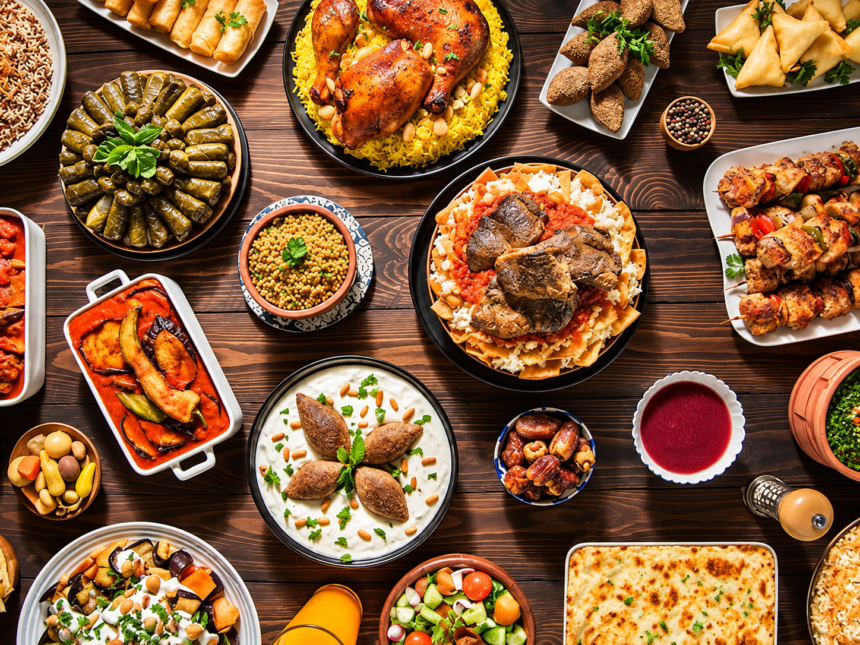
Learn the Emirati Dishes You Should Look for on the Menu
Recognising dish names is one of the easiest ways to find more authentic food.
If the menu contains only shawarma, hummus, mixed grills and falafel, you may be looking at a broader Middle Eastern restaurant rather than an Emirati one.
Traditional Emirati menus often include a more distinctive collection of dishes.
Machboos
Machboos is one of the most recognisable Gulf rice dishes. The UAE Government describes it as meat or chicken prepared with rice, spices and saffron.
Depending on the restaurant, it may be prepared with chicken, lamb or seafood.
The flavour usually comes from the combination of rice, spices and slow-cooked protein rather than from a very heavy sauce.
Harees
Harees is made from wheat and meat cooked until the ingredients become soft and blended.
Visit Dubai describes it as cracked or ground wheat mixed with meat and seasoned, while also noting its strong association with Ramadan and Eid.
It has a simple appearance, but it is an important traditional dish.
Madrooba
Madrooba is another traditional preparation recognised by the UAE Government. It can involve salted fish, spices and a thick sauce-like texture.
This is less familiar to many international visitors and can therefore be a useful dish to seek out if you want something beyond the obvious choices.
Fouga deyay
Visit Dubai describes fouga deyay as a rice dish served with grilled chicken marinated in Emirati spices.
It is another example of how rice and spice combinations play a major role in local food.
Balaleet
Balaleet combines sweet vermicelli with egg and aromatic flavours such as saffron.
The combination can surprise visitors because it moves between sweet and savoury flavours within the same dish.
Visit Dubai specifically highlights balaleet as a popular Emirati breakfast item at local restaurants.
Regag
Regag is a thin, crisp traditional bread.
It may be served with:
- Egg
- Cheese
- Honey
- Mahyawa
Visit Dubai describes regag as one of the signature breakfast dishes at Emirati restaurant SMAT.
Chebab
Chebab is often compared with pancakes, although the flavour profile reflects local spices and serving traditions.
It may be served with cheese, date syrup or other accompaniments.
Luqaimat
Luqaimat are small fried dumplings served as a sweet dish, often with date syrup.
Visit Dubai lists them among the best-known Emirati foods and describes them as sweet, sticky dumplings.
For first-time visitors, luqaimat can be one of the easiest local desserts to try.
Try an Emirati Breakfast Instead of Only Looking for Dinner
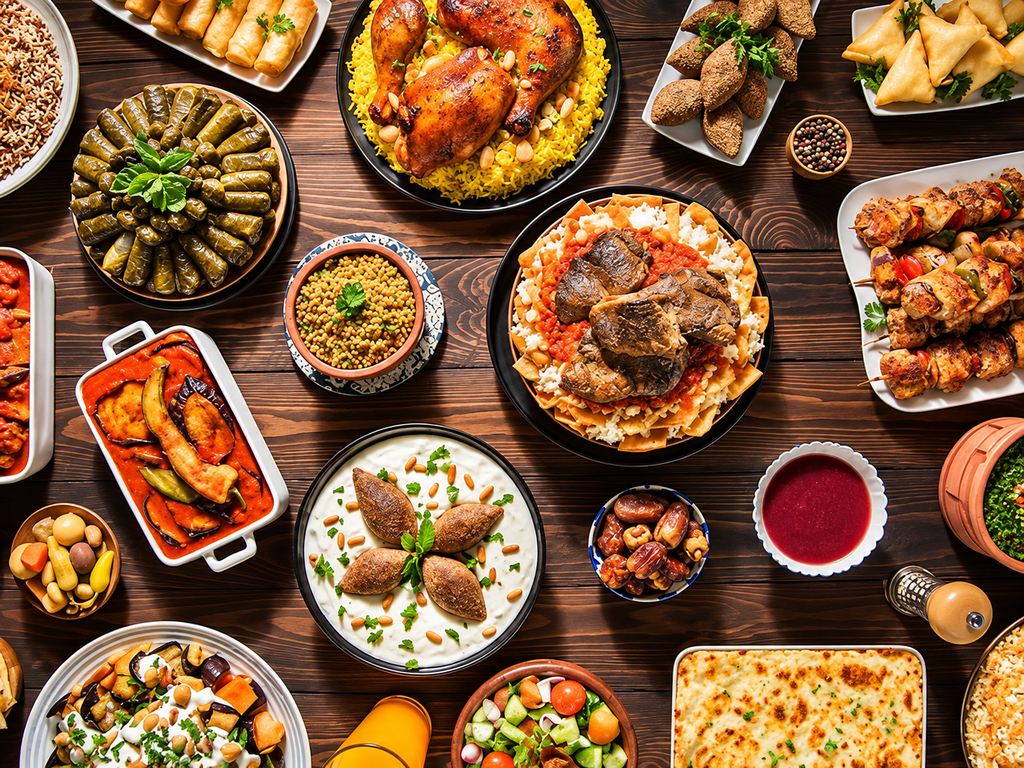
Many visitors search for traditional food only at dinner.
That can mean missing one of the most enjoyable parts of Emirati cuisine.
Breakfast menus often provide a wider selection of traditional breads, eggs, sweet dishes and tea.
What might an Emirati breakfast include?
Depending on the restaurant, you may find:
- Balaleet
- Chebab
- Regag
- Khameer
- Eggs
- Dango
- Gahwa
- Karak
Visit Dubai recommends several Emirati restaurants specifically for breakfast dishes and highlights chebab, khameer, balaleet and regag among the foods worth trying.
Why breakfast is a good starting point
Traditional breakfast dishes are usually easier for first-time visitors to sample because you can order several smaller items and share them.
Instead of committing immediately to a large rice and meat meal, you can try different textures and flavours.
For example, a group might order chebab, balaleet, regag and eggs with Arabic coffee or tea.
This provides a broader introduction to local food in a single sitting.
Khameer
Khameer is a traditional bread that can be served with cheese, date syrup or other accompaniments.
Visit Dubai highlights it as a common breakfast speciality at Emirati cafés.
Dango
Dango is made from seasoned chickpeas and may appear as part of a traditional breakfast spread.
At heritage-style restaurants, it is often served alongside breads, eggs and other sharing dishes.
A breakfast-focused visit can therefore be one of the most affordable and relaxed ways to explore Emirati cuisine.
Look for Emirati Restaurants Rather Than Generic Arabic Restaurants
One of the most important distinctions for visitors is the difference between Emirati cuisine and the wider category of Arabic food.
Dubai has excellent Lebanese, Syrian, Palestinian, Jordanian, Iraqi, Yemeni and other Arab restaurants.
These cuisines share some ingredients and dining traditions, but they are not interchangeable.
A restaurant serving hummus, tabbouleh, fattoush and shawarma may primarily represent Levantine cuisine.
That does not make it less authentic. It simply means it is authentic to a different regional tradition.
Check the restaurant description
Look for words such as:
- Emirati
- UAE cuisine
- Khaleeji cuisine
- Gulf cuisine
- Traditional local food
These descriptions usually provide a better indication than the word “Arabic.”
Look at the menu
A stronger Emirati menu may include combinations of:
Machboos
Harees
Regag
Chebab
Balaleet
Luqaimat
Local seafood
Traditional rice dishes
If these appear prominently, the restaurant is more likely to focus on local cuisine.
Ask restaurant staff
A simple question can help:
“Which dishes on the menu are traditional Emirati dishes?”
Staff at good local restaurants should be able to explain the distinction.
Do not confuse modern presentation with inauthenticity
Some restaurants reinterpret Emirati food using contemporary presentation or new techniques.
Visit Dubai includes restaurants that range from traditional concepts to venues combining local ingredients with modern styles.
Authenticity does not always mean food has to arrive in an old-fashioned setting.
The more important question is whether the recipe, ingredients or flavour profile genuinely connect with Emirati culinary tradition.
Use Cultural Meals to Understand the Story Behind the Food
For visitors who want more than a meal, cultural dining experiences can be especially valuable.
The Sheikh Mohammed bin Rashid Al Maktoum Centre for Cultural Understanding in Al Fahidi is one of the best-known examples.
Visit Dubai describes its meals as opportunities to enjoy traditional dishes prepared using family recipes while Emirati hosts explain local culture and customs.
The UAE Government also recommends the centre as a place where visitors can enjoy Emirati food while learning directly about UAE history and society.
Why this matters
Without context, a visitor may simply see:
Rice
Bread
Coffee
Dates
Meat
A cultural meal explains why these ingredients became important and how they are connected to hospitality, climate, religion and family traditions.
Learn about Arabic coffee
Gahwa is more than a drink.
Visit Dubai describes Arabic coffee as a symbol of Arabian hospitality and explains that it is traditionally served from a dallah into small cups called finjaan, often alongside dates.
The preparation may include aromatic flavours such as cardamom and saffron.
Understanding these customs turns the drink into a cultural experience rather than simply another coffee.
Ask questions
Cultural meals are specifically designed to encourage conversation.
Ask about:
- Family meals
- Ramadan food
- Wedding traditions
- Breakfast
- Seafood
- Coffee customs
- Traditional ingredients
This can provide a much deeper understanding than simply searching “best Emirati restaurant” and ordering one dish.
Try Local Seafood and Understand Dubai’s Coastal Food Heritage
Emirati cuisine is not only about lamb and chicken.
Dubai developed around the coast and Creek, so fish and seafood are an important part of local food history.
Visit Dubai highlights traditional Emirati restaurants serving dishes such as samak, maleh nashef and jesheed.
Samak
Samak simply refers to fish in Arabic, but local restaurant preparations may combine fish with rice, sauces or traditional spices.
Maleh
Salted fish traditions developed partly because preservation was essential before modern refrigeration.
A dish such as maleh nashef can provide a very different taste experience from fresh grilled seafood.
Jesheed
Visit Dubai describes jesheed as baby shark prepared with Arabic spices and lists it among the traditional dishes served at Al Fanar.
This is much less familiar internationally and can provide insight into older coastal food traditions.
Seafood and rice
Rice-based seafood dishes are also common.
For travellers who do not eat red meat, this makes it possible to explore Emirati cuisine without relying entirely on lamb dishes.
Look beyond luxury seafood restaurants
A very expensive seafood restaurant with imported ingredients is not automatically the best place to discover Emirati coastal traditions.
Look specifically for menus describing local preparations, regional spices and heritage recipes.
Know Where Traditional Emirati Food Meets Modern Dubai
Authentic Emirati food is not limited to heritage districts.
Modern Dubai also has Emirati-owned and Emirati-inspired restaurants that present local flavours in contemporary settings.
This reflects how the cuisine itself continues to evolve.
Visit Dubai’s “Made in Dubai” platform highlights homegrown concepts and Emirati entrepreneurs who combine local culinary identity with modern restaurant formats.
Modern Emirati cafés
Some restaurants focus on traditional breakfast dishes while presenting them in contemporary interiors.
SMAT in Dubai Design District is one example highlighted by Visit Dubai. Its menu includes regag and chebab alongside more modern interpretations of Gulf flavours.
Contemporary local cuisine
A restaurant can use local ingredients and traditional flavour combinations without reproducing old recipes exactly.
This can appeal to visitors who want to see how Emirati cuisine is developing rather than only how it was eaten in the past.
Heritage versus contemporary
Both experiences are valuable.
| Style | What You Get |
|---|---|
| Heritage meal | Traditional recipes and cultural context |
| Emirati café | Accessible local breakfast and casual dining |
| Contemporary restaurant | Modern interpretation of local flavours |
| Cultural centre | Food combined with history and discussion |
| Old Dubai restaurant | Traditional atmosphere and local dishes |
A strong food itinerary might include more than one style.
For example, try a traditional cultural breakfast one day and a contemporary Emirati dinner later in the trip.
Learn the Difference Between Emirati, Khaleeji and Middle Eastern Food
Food labels can sometimes be confusing.
Understanding a few terms can help visitors choose restaurants more accurately.
Emirati
Emirati cuisine refers specifically to food traditions associated with the United Arab Emirates.
Khaleeji
Khaleeji generally refers to the wider Gulf region.
A Khaleeji restaurant may serve dishes influenced by the UAE as well as Saudi Arabia, Kuwait, Bahrain, Qatar or Oman.
There can be considerable overlap between these cuisines.
Middle Eastern
Middle Eastern food is a much broader category.
It can include cuisines from:
- Lebanon
- Syria
- Jordan
- Palestine
- Iraq
- Gulf countries
- Other parts of the region
A “Middle Eastern restaurant” is therefore not necessarily Emirati.
Arabic food
This is also a broad description.
It does not identify one national cuisine.
Why the distinction matters
If your goal is to experience local Dubai food culture, specifically ask for Emirati dishes.
If you simply want excellent regional food, broader Khaleeji and Middle Eastern restaurants can also be worthwhile.
The important thing is knowing what you are eating rather than assuming all Arabic cuisines are identical.
Avoid Tourist Traps When Searching for Authentic Emirati Food
Tourist areas can contain excellent restaurants, but a heritage-style interior does not automatically guarantee authentic cooking.
Visitors should look beyond décor.
Check whether traditional dishes are central to the menu
A restaurant claiming to offer Emirati food should have more than one token local dish.
Look for a reasonable selection of:
- Rice dishes
- Traditional breakfast
- Seafood
- Local breads
- Desserts
- Gahwa
Be cautious with menus that are almost entirely international
If the menu focuses mostly on burgers, pasta and generic grills with one “Emirati platter,” the restaurant may be designed more around tourism than local food.
That does not mean the food is bad, but it may not be the strongest choice for cultural discovery.
Read recent reviews carefully
Look for comments specifically discussing:
- Traditional dishes
- Local diners
- Portion sizes
- Breakfast
- Recipe quality
Do not judge only by Instagram photographs.
Do not assume expensive means authentic
Some of the most useful Emirati food experiences are casual or moderately priced.
Visit Dubai’s official recommendations range from fine dining to casual cafés and heritage restaurants.
Price is therefore a poor measure of authenticity.
Ask what locals order
Restaurant staff can often recommend dishes that international visitors overlook.
Instead of ordering the most familiar item, ask which dishes best represent Emirati cooking.
Build a One-Day Emirati Food Experience in Dubai
Travellers who want to focus on local food can build an entire day around it without travelling constantly across the city.
A simple itinerary could begin in Old Dubai and finish with a more contemporary local dinner.
Morning
Start in Al Fahidi Historical Neighbourhood.
Book an Emirati breakfast or cultural meal at SMCCU if the timing works. The centre is one of the most established places for combining local food with cultural explanation.
Try several breakfast items rather than one large dish.
Look for:
Chebab
Balaleet
Traditional bread
Gahwa
Dates
Late morning
Walk through Al Fahidi and towards Dubai Creek.
Visit the Spice Souk or nearby markets to see ingredients associated with regional cooking.
Lunch
Choose an Emirati restaurant in Old Dubai, Al Seef or another nearby area.
Order a rice-based main dish such as machboos or a seafood preparation.
Share dishes if travelling with other people so you can try more than one.
Afternoon
Take a break rather than immediately eating again.
Visit a museum, return to the hotel or explore another nearby cultural site.
Evening
Choose a contemporary Emirati or Khaleeji restaurant.
This gives you a useful comparison between traditional and modern interpretations.
Finish with luqaimat and Arabic coffee.
Why this itinerary works
It allows visitors to experience:
- Traditional breakfast
- Local heritage
- Markets
- Rice dishes
- Seafood
- Arabic coffee
- Dessert
- Contemporary local dining
without turning the day into an endless list of restaurants.
Authentic Emirati Food in Dubai: What First-Time Visitors Should Order
If you only have one or two meals available, prioritise variety.
Instead of ordering several similar meat dishes, try food from different parts of the local tradition.
A good first meal might include:
| Category | Dish to Consider |
|---|---|
| Breakfast | Balaleet or chebab |
| Bread | Regag or khameer |
| Rice dish | Machboos |
| Traditional dish | Harees |
| Seafood | Local fish preparation |
| Sweet | Luqaimat |
| Drink | Gahwa |
This provides a much broader introduction than simply ordering one large plate of grilled meat.
Visit Dubai and the UAE Government both highlight many of these dishes as representative of Emirati food culture.
Do not expect every dish to be heavily spicy
Emirati food uses spices, but it is not necessarily defined by extreme heat.
Flavour may come from combinations of:
- Saffron
- Cardamom
- Dried lime
- Cinnamon
- Other aromatic spices
Rice, meat, seafood and wheat are often central to the meal.
Try dessert even if you normally skip it
Luqaimat provide one of the easiest introductions to Emirati sweets.
They are especially useful for visitors who want something recognisable but still culturally connected to the UAE.
Finish with Arabic coffee
Gahwa can bring the experience together because it connects food with local hospitality.
It is traditionally served in small portions and often accompanied by dates.
How to Find Authentic Emirati Food in Dubai Without Overspending
Trying local food does not need to become an expensive fine-dining experience.
Dubai has Emirati cafés, traditional restaurants and cultural meals at different price levels.
Start with breakfast
Traditional breakfast can often provide several dishes at a lower total cost than a premium dinner.
Sharing items such as chebab, regag, balaleet and eggs also helps a group try more food.
Explore Old Dubai
Bur Dubai and Deira generally offer more budget-friendly dining options than many luxury hotel areas.
Visit Dubai specifically notes that restaurants in the older neighbourhoods often combine value with local culinary character.
Share rice dishes
Traditional rice-and-meat dishes can be filling.
If restaurant portions are large, sharing allows visitors to order more variety without wasting food.
Spend on one cultural experience
Instead of booking multiple premium food tours, choose one meaningful cultural meal and explore other restaurants independently.
Avoid choosing restaurants only for views
A Burj Khalifa or waterfront view can increase the cost of a meal.
If the main purpose is understanding Emirati cuisine, focus on the food first.
Dubai’s local food culture can be explored at many price points.
Authenticity depends more on recipes, ingredients and tradition than on expensive surroundings.
Finding authentic Emirati food in Dubai becomes much easier once visitors know what to look for.
Start in areas connected to the city’s history, particularly Al Fahidi, Dubai Creek, Bur Dubai and Deira. Visit Dubai specifically highlights Old Dubai as an important place for discovering the city’s culinary roots.
Learn a few traditional dish names before entering the restaurant. Machboos, harees, balaleet, chebab, regag and luqaimat are far more useful indicators of Emirati cuisine than a generic menu of hummus and mixed grills.
Try breakfast as well as dinner. Order local seafood. Drink gahwa. Ask restaurant staff what Emirati families commonly order.
If possible, include a cultural meal at SMCCU, where traditional food is paired with explanations of local customs and history.
And remember that authentic food does not always have to look old-fashioned.
Dubai also has Emirati-owned and contemporary restaurants that reinterpret local flavours for a modern audience while remaining connected to the country’s culinary traditions.
The strongest food experience therefore combines both sides of the city.
Begin with heritage.
Understand the traditional dishes.
Then see how a new generation of restaurants is carrying those flavours into modern Dubai.
Do follow us on Instagram
Read More – Dubai Restaurant Etiquette: What Visitors Should Know