


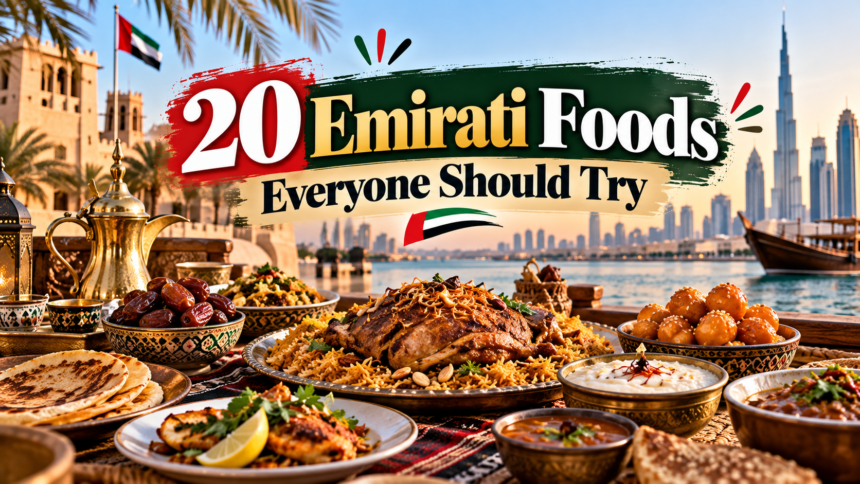
Ultimate Guide For 20 Emirati Foods Everyone Should Try
What makes Emirati foods special? Emirati cuisine is a flavorful reflection of the United Arab Emirates’ history, geography, culture, and traditions. Traditional Emirati foods developed around ingredients that were accessible in the Arabian Peninsula, including rice, wheat, dates, fish, meat, spices, and dairy products. Over generations, these ingredients have been transformed into comforting dishes that remain an important part of Emirati hospitality and family gatherings.
- 1. What Is Machboos and Why Is It One of the Most Popular Emirati Foods?
- 2. What Is Harees and Why Is It Important in Emirati Cuisine?
- 3. What Is Al Jasheed?
- 4. What Is Thareed and Why Should You Try It?
- 5. What Is Balaleet?
- 6. What Is Luqaimat and Why Is It a Favorite Emirati Dessert?
- 7. What Is Al Madam or Traditional Emirati Madrouba?
- 8. What Is Chicken Machboos?
- 9. What Is Samak Mashwi?
- 10. What Is Shorbat Adas?
- 11. What Is Regag Bread?
- 12. What Is Khameer Bread?
- 13. What Is Chebab Bread?
- 14. What Is Balaleet with Eggs?
- 15. What Is Khanfaroosh?
- 16. What Are Dates and Why Are They Important in Emirati Foods Culture?
- 17. What Is Arabic Coffee and Why Is It Essential to Emirati Hospitality?
- 18. What Is Camel Meat and How Is It Used in Emirati Cuisine?
- 19. What Is Stuffed Camel?
- 20. What Is Date-Based Emirati Dessert?
- Why Should Travelers Try Traditional Emirati Foods?
- What Are the Best Emirati Foods for First-Time Visitors?
- Where Can You Experience Authentic Emirati Cuisine?
- Is Emirati Food Spicy?
- How Does Emirati Food Reflect UAE Culture?
- What Should You Drink With Emirati Food?
- What Makes Emirati Desserts Different?
- What Is the Best Way to Explore Emirati Cuisine?
- Why Are Emirati Foods Becoming More Popular With Travelers?
For visitors discovering the UAE, trying traditional Emirati foods dishes is one of the best ways to experience the country beyond its modern architecture, shopping malls, and luxury destinations. From fragrant rice dishes and slow-cooked meats to sweet date-based desserts and popular Arabic snacks, Emirati foods offer a diverse combination of flavors and textures.
Whether you are visiting Dubai, Abu Dhabi, Sharjah, Ajman, Ras Al Khaimah, or another part of the UAE, you can find restaurants and cultural venues serving traditional Emirati cuisine. But which dishes should you try first? Here are 20 Emirati foods everyone should try to discover the authentic flavors of the UAE.
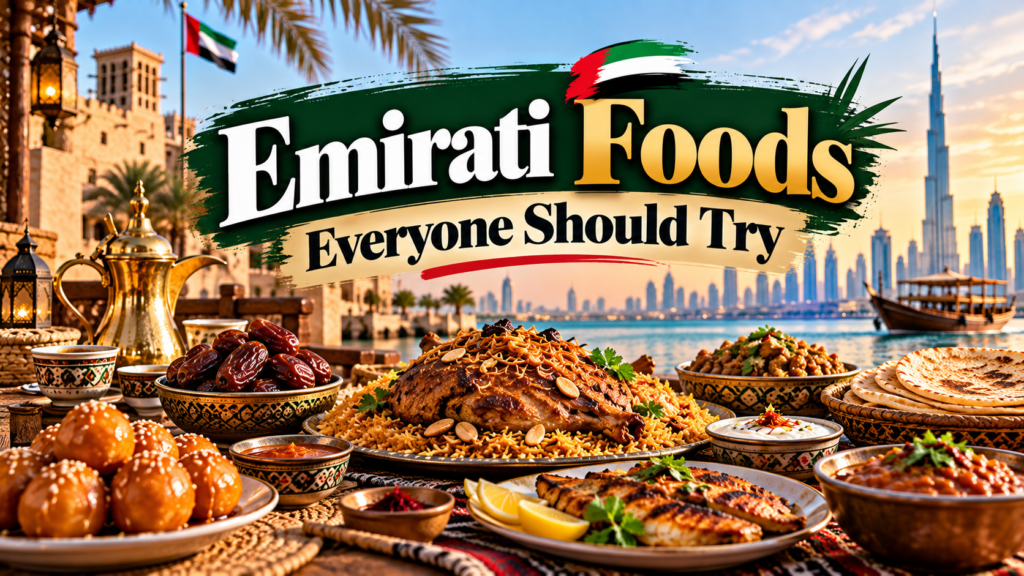
1. What Is Machboos and Why Is It One of the Most Popular Emirati Foods?
Machboos is one of the most recognizable traditional dishes in Emirati cuisine. It is a fragrant rice-based meal usually prepared with meat, chicken, or fish and seasoned with a distinctive combination of spices.
The rice absorbs the flavors of the meat and spices during cooking, creating a rich and aromatic dish. Ingredients such as dried lime, cardamom, cinnamon, cloves, and other spices can contribute to its characteristic taste.
Machboos is particularly popular during family gatherings, celebrations, and special occasions. Its combination of tender meat and flavorful rice makes it a satisfying introduction to traditional UAE food.
2. What Is Harees and Why Is It Important in Emirati Cuisine?
Harees is a traditional Emirati dish made primarily from wheat and meat. The ingredients are cooked together for an extended period until they develop a smooth, porridge-like consistency.
The preparation is simple compared with many heavily spiced dishes, but that simplicity is part of its appeal. Harees is especially associated with Ramadan, religious occasions, weddings, and other celebrations.
Why should you try harees?
- It is deeply connected to Emirati traditions.
- It has a soft and comforting texture.
- It is commonly served during special occasions.
- It demonstrates the importance of wheat and meat in traditional Gulf cuisine.
3. What Is Al Jasheed?
Al Jasheed is a traditional Emirati foods seafood dish that highlights the UAE’s connection with the Arabian Gulf. It is generally prepared using small shark meat or another suitable fish, depending on the recipe and availability.
The seafood is cooked with spices and other ingredients to create a flavorful dish that is traditionally served with rice.
For travelers interested in discovering authentic Emirati seafood, Al Jasheed provides an opportunity to experience a less internationally familiar part of UAE cuisine.
4. What Is Thareed and Why Should You Try It?
Thareed is a traditional UAE dish consisting of bread combined with a rich stew. The bread absorbs the flavorful broth, while vegetables and meat add substance to the meal.
The dish is particularly associated with traditional Arab cuisine and is widely enjoyed in the Gulf region.
Thareed can be especially appealing if you enjoy hearty comfort food. Its combination of soft bread, flavorful broth, vegetables, and meat creates a satisfying meal that showcases the homestyle character of Emirati cooking.
5. What Is Balaleet?
Balaleet is a popular Emirati dish made with sweetened vermicelli, usually flavored with cardamom, saffron, rose water, or other aromatic ingredients. It is often served with an egg omelet or eggs on top, creating an interesting contrast between sweet and savory flavors.
Balaleet is commonly enjoyed for breakfast or as part of traditional meals during special occasions.
What makes Balaleet unique is its unusual combination of flavors. If you have never tried sweet and savory food together, this traditional Emirati dish can be an excellent place to start.
6. What Is Luqaimat and Why Is It a Favorite Emirati Dessert?
Luqaimat is one of the most popular traditional Emirati desserts. These small, golden fried dumplings are crispy on the outside and soft on the inside.
They are often drizzled with date syrup or honey and may be topped with sesame seeds. The contrast between the crunchy exterior and soft center makes luqaimat a favorite among locals and visitors.
Luqaimat is frequently served during Ramadan, celebrations, family gatherings, and traditional meals.
If you enjoy Middle Eastern desserts, luqaimat should definitely be on your UAE food list.
7. What Is Al Madam or Traditional Emirati Madrouba?
Madrouba is a thick, comforting dish made by slowly cooking rice or grains with meat, fish, or chicken until the ingredients become soft and well combined.
Its name is associated with the traditional method of preparation, where the ingredients are mashed or beaten together to create a smooth consistency.
Madrouba is valued for its hearty texture and rich flavor. Different households may prepare it using slightly different ingredients, reflecting the diversity of Emirati home cooking.
8. What Is Chicken Machboos?
While machboos can be prepared using several types of meat and seafood, chicken machboos is particularly popular.
The dish combines tender chicken with fragrant rice and traditional spices. The chicken is cooked until flavorful, while the rice absorbs the aromatic cooking juices.
Chicken machboos is an excellent choice for people trying Emirati food for the first time because its flavors are aromatic and satisfying without necessarily being overwhelmingly spicy.
A typical plate may include:
- Spiced rice
- Tender chicken
- Dried lime
- Cardamom
- Cinnamon
- Onions
- Herbs and spices
9. What Is Samak Mashwi?
Samak Mashwi means grilled fish and is a traditional seafood preparation found in Emirati cuisine. Given the UAE’s long relationship with the Arabian Gulf, fish has historically been an important part of local food culture.
Fresh fish is seasoned and grilled, allowing its natural flavor to remain prominent while taking on a smoky character.
For seafood lovers, Samak Mashwi offers a simpler alternative to heavily seasoned rice dishes and provides a taste of the UAE’s coastal culinary heritage.
10. What Is Shorbat Adas?
Shorbat Adas, or lentil soup, is a comforting dish enjoyed across the Middle East and Gulf region. It is commonly prepared using lentils, vegetables, spices, and sometimes additional ingredients depending on the recipe.
The soup is warming, nutritious, and easy to enjoy alongside bread or a larger meal.
Although lentil soup may not be exclusive to Emirati cuisine, traditional versions are part of the broader food culture of the UAE and are worth trying when exploring local dishes.
11. What Is Regag Bread?
Regag is a very thin traditional Emirati bread that resembles a delicate flatbread. It can be eaten with different dishes or used as an accompaniment to stews and other traditional foods.
Regag has a simple ingredient base, but its preparation requires skill because the dough must be spread thinly and cooked properly.
Why is regag worth trying?
- It is a traditional Emirati bread.
- It pairs well with stews and sauces.
- It offers insight into everyday Emirati food traditions.
- Its thin texture makes it different from many other flatbreads.
12. What Is Khameer Bread?
Khameer is another traditional Emirati bread and is known for its soft, slightly sweet character. It can be enjoyed with tea, honey, cheese, dates, or savory foods.
Khameer is often prepared using ingredients such as flour, yeast, sugar, and sometimes cardamom or saffron.
The bread is particularly interesting for visitors because it can be enjoyed in both simple and elaborate ways. A freshly prepared piece of khameer paired with Arabic coffee can provide a classic taste of Emirati hospitality.
13. What Is Chebab Bread?
Chebab is a traditional Emirati pancake-like bread often eaten at breakfast. It is usually flavored with ingredients such as saffron and cardamom, giving it a distinctive aroma.
The bread is commonly served with honey, date syrup, cheese, or other accompaniments.
Chebab is a great choice for travelers who want to explore Emirati breakfast foods rather than only focusing on main courses.
Its combination of sweetness, spice, and soft texture makes it particularly appealing with a cup of Arabic coffee or tea.
14. What Is Balaleet with Eggs?
One of the most interesting traditional breakfast combinations in Emirati cuisine is balaleet with eggs.
The dish combines sweet vermicelli with a savory egg topping. Saffron, cardamom, and rose water can give the noodles a fragrant character, while the eggs provide a contrasting savory flavor.
Although the combination may seem unusual to first-time visitors, sweet-and-savory breakfasts are part of the culinary traditions of the region.
If you want to experience something genuinely different from a typical Western breakfast, balaleet with eggs is worth ordering.
15. What Is Khanfaroosh?
Khanfaroosh is a traditional Emirati sweet or fried cake made using ingredients such as flour or rice flour, eggs, sugar, and aromatic spices.
Cardamom and saffron may be used to give the dessert its distinctive Gulf flavor.
Khanfaroosh is often associated with traditional gatherings and hospitality. Its soft interior and lightly crisp exterior make it an enjoyable snack with Arabic coffee or tea.
For travelers exploring traditional Emirati desserts, khanfaroosh provides an alternative to the better-known luqaimat.
16. What Are Dates and Why Are They Important in Emirati Foods Culture?
Dates have an important place in Emirati culture and traditional food. The UAE has a long history of date cultivation, and dates have traditionally been valued as a source of energy and nourishment.
Dates are commonly served to guests, especially alongside Arabic coffee. They can also be incorporated into desserts and other recipes.
Popular varieties of dates may differ in flavor, softness, sweetness, and texture. Trying locally produced dates is therefore an easy and delicious way to experience an important part of UAE food culture.
Why are dates so important?
- They have deep cultural significance.
- They are commonly served as part of hospitality.
- They can be eaten fresh or dried.
- They are used in traditional desserts.
- They pair naturally with Arabic coffee.
17. What Is Arabic Coffee and Why Is It Essential to Emirati Hospitality?
Although Arabic coffee, known in the region as gahwa, is technically a beverage rather than a food, no exploration of Emirati cuisine is complete without trying it.
Traditional Emirati coffee is often lightly roasted and flavored with cardamom. Depending on the preparation, other spices may also be used.
Arabic coffee is strongly connected to hospitality. It is commonly offered to guests during gatherings and social occasions and is traditionally served in small cups.
For visitors, drinking Arabic coffee with dates can be one of the simplest ways to experience Emirati hospitality.
18. What Is Camel Meat and How Is It Used in Emirati Cuisine?
Camel meat has a long history in Arabian food culture and can be found in some traditional Emirati dishes. It may be prepared in different ways, including grilled, slow-cooked, or incorporated into rice dishes.
Camel meat is generally lean and has a distinctive flavor that can differ from beef or lamb.
Trying camel meat can be an interesting culinary experience for visitors who want to explore traditional ingredients associated with the Arabian Peninsula.
However, availability varies from restaurant to restaurant, so travelers interested in trying it should look for restaurants specializing in traditional Emirati cuisine.
19. What Is Stuffed Camel?
Stuffed camel is one of the most unusual dishes associated with traditional Gulf food culture. It is often described in connection with large celebrations and ceremonial feasts rather than everyday dining.
The concept involves stuffing smaller meats or other ingredients inside a camel before slow cooking. Because of the size and complexity involved, this is not typically an everyday restaurant meal.
For food enthusiasts, however, the dish represents the scale and communal nature of traditional Arabian feasting traditions.
It is best understood as a ceremonial food associated with special occasions rather than something visitors should expect to find on an ordinary restaurant menu.
20. What Is Date-Based Emirati Dessert?
Dates are used in numerous traditional sweets across the UAE. Date-based desserts can include combinations of dates with flour, nuts, spices, sesame, or other ingredients.
These desserts demonstrate how an important local ingredient can be transformed into different sweet dishes.
If you enjoy naturally sweet flavors, date-based Emirati desserts are an excellent way to finish a traditional meal.
Why Should Travelers Try Traditional Emirati Foods?
Why is Emirati foods worth trying when visiting the UAE? Food provides a direct connection to a country’s history and culture. The UAE is internationally known for its modern cities, luxury hotels, shopping destinations, and multicultural population, but its traditional cuisine reveals a different side of the country.
Traditional Emirati dishes reflect the lifestyles of communities that lived along the coast, in desert environments, and around oases. Seafood, dates, grains, meat, spices, and dairy products all played important roles in creating a cuisine suited to the region.
Trying local food can therefore turn an ordinary trip into a more meaningful cultural experience.
What Are the Best Emirati Foods for First-Time Visitors?
If you are trying Emirati cuisine for the first time, you do not need to order all 20 dishes at once. Start with several well-known options that offer different flavors and textures.
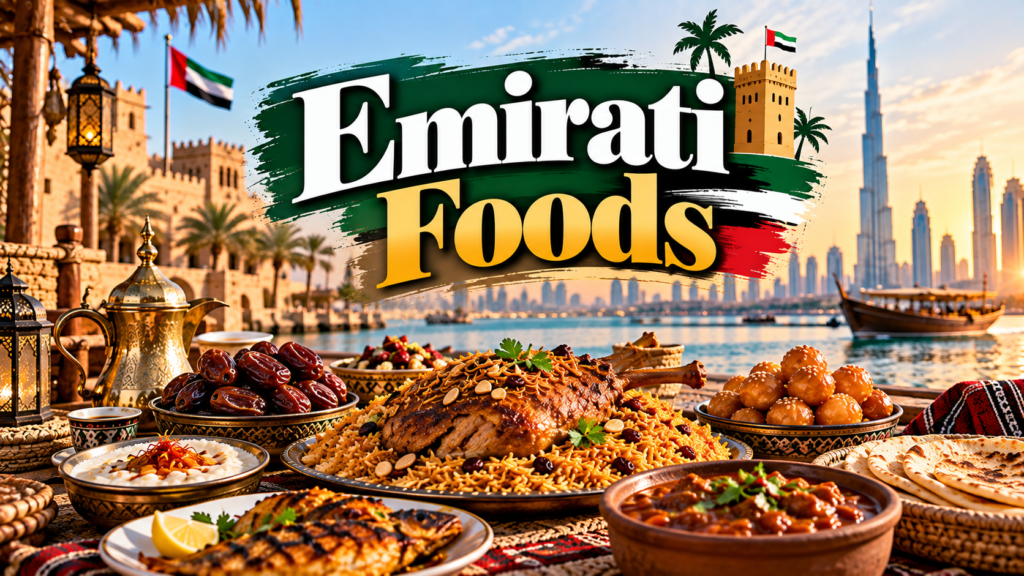
A good beginner-friendly selection could include:
- Chicken Machboos for a traditional rice-based meal
- Harees for a soft and hearty dish
- Thareed for bread and stew
- Luqaimat for dessert
- Balaleet for a sweet-and-savory breakfast
- Khameer for traditional bread
- Dates and Arabic coffee for a classic hospitality experience
This combination provides a broad introduction to Emirati flavors without overwhelming the palate.
Where Can You Experience Authentic Emirati Cuisine?
Where should you go to try traditional Emirati food? Visitors can discover Emirati cuisine at traditional restaurants, cultural centers, heritage villages, local food festivals, and selected hotels and restaurants across the UAE.
Dubai and Abu Dhabi offer particularly broad dining options, but travelers should also consider exploring local eateries in other emirates. Sharjah, Ajman, Ras Al Khaimah, Fujairah, and Umm Al Quwain can also provide opportunities to discover regional food traditions.
When choosing a restaurant, look for menus that specifically highlight traditional Emirati cuisine rather than only generic Middle Eastern dishes.
Is Emirati Food Spicy?
Is traditional Emirati food very spicy? Not necessarily. Emirati cuisine uses a variety of aromatic spices, but aromatic does not always mean extremely hot.
Ingredients such as cardamom, cinnamon, saffron, cloves, turmeric, dried lime, and black pepper are used to build flavor and fragrance. The level of chili heat can vary depending on the dish and restaurant.
For visitors who prefer mild food, many traditional Emirati dishes can be excellent choices because they rely more on fragrant spices than intense chili heat.
How Does Emirati Food Reflect UAE Culture?
How does food represent Emirati culture? Traditional food is closely connected with hospitality, family, celebrations, and community. Meals are often shared, and offering food and drinks to guests is an important part of hospitality.
The ingredients themselves also tell a story. Dates reflect the importance of oasis agriculture, while seafood reflects the UAE’s coastal heritage. Rice, wheat, meat, and spices demonstrate the influence of trade and the culinary traditions of the wider Arabian Peninsula.
This combination has created a cuisine that is both deeply traditional and open to influences from the region.
What Should You Drink With Emirati Food?
What drinks pair well with traditional Emirati dishes? Arabic coffee is one of the most traditional choices. It is often served in small cups and paired with dates.
Tea is another popular option, particularly after meals or with snacks and sweets. Depending on the restaurant, visitors may also find fresh juices and other regional beverages.
For the most traditional experience, try Arabic coffee with dates before or after your meal.
What Makes Emirati Desserts Different?
What makes Emirati desserts special? Traditional Emirati sweets frequently use ingredients such as dates, cardamom, saffron, rose water, honey, sesame, and nuts.
Rather than relying only on refined sweetness, many desserts combine sweetness with aromatic spices and rich textures.
Luqaimat is a perfect example. Its crispy exterior, soft center, and sweet topping create a combination that is simple but memorable.
What Is the Best Way to Explore Emirati Cuisine?
What is the best way to discover Emirati food? The best approach is to try a variety of dishes rather than focusing on one meal. Start with a traditional rice dish, add a bread-based or stew dish, and finish with a local dessert.
You can also explore Emirati breakfast foods such as balaleet, chebab, and khameer. These dishes provide a different perspective on local food traditions than the main courses typically served at dinner.
Most importantly, ask local residents or restaurant staff about their recommendations. Food traditions can vary between families and regions, so there is no single menu that represents every Emirati household.
Why Are Emirati Foods Becoming More Popular With Travelers?
Why are more travelers interested in Emirati cuisine? As travelers increasingly seek authentic cultural experiences, traditional food has become an important part of discovering new destinations.
The UAE attracts millions of visitors because of its modern attractions, but travelers are also becoming interested in its history and heritage. Traditional Emirati foods provides a way to experience that heritage through taste.
Social media, food festivals, cultural events, and the growing popularity of regional cuisine have also helped introduce Emirati dishes to international audiences.
Final Thoughts: Which Emirati Foods Should Everyone Try?
Which Emirati foods should everyone try at least once? Traditional UAE cuisine offers far more variety than many visitors initially expect. From fragrant machboos and comforting harees to delicate regag bread and sweet luqaimat, Emirati food combines simple ingredients with distinctive preparation methods and aromatic spices.
The 20 Emirati foods everyone should try include both everyday favorites and dishes connected with celebrations and heritage. Trying them is not simply about eating something new; it is also a way to understand the UAE’s relationship with the sea, desert, dates, hospitality, family, and community.
If you are planning a trip to the UAE, make traditional food part of your itinerary. Start with machboos, harees, thareed, or balaleet, sample traditional breads such as khameer and regag, and finish your meal with luqaimat and dates accompanied by Arabic coffee.
Emirati cuisine offers a delicious window into the country’s heritage—and every dish has a story worth discovering.
Do follow us on Instagram
Read More – Best Traditional Emirati Foods